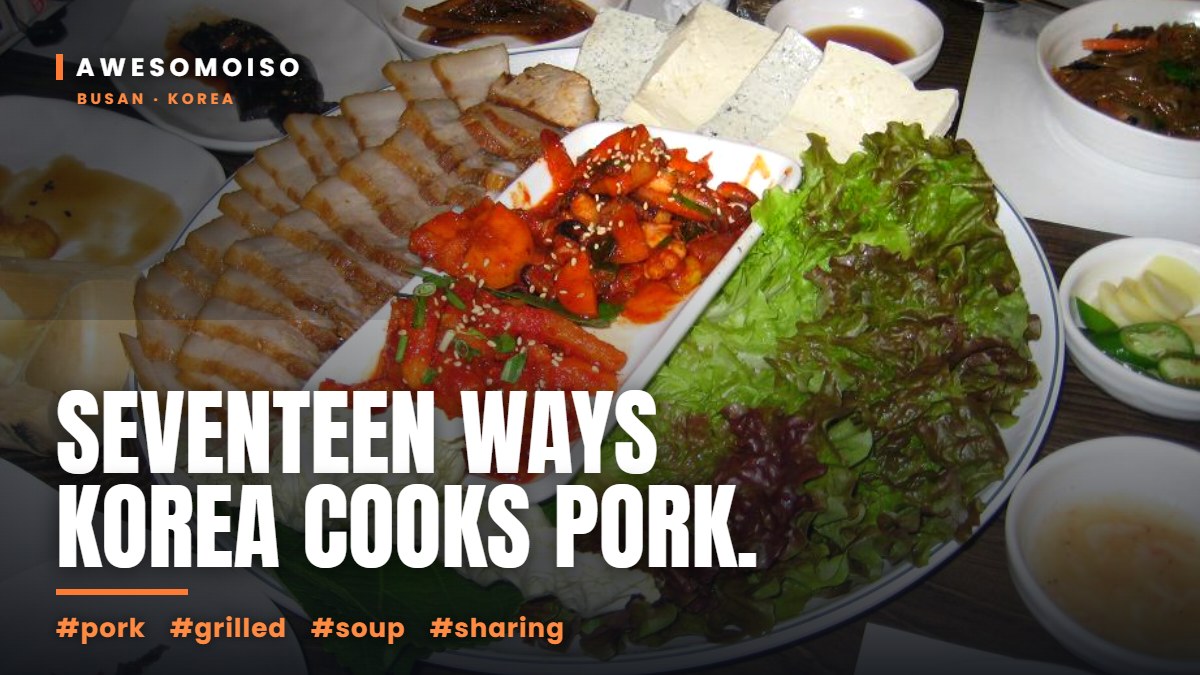
Pork is the spine of everyday Korean eating. Not a special-occasion meat, not a regional curiosity — the thing people actually eat on a Tuesday, in more forms than most visitors realise.
This is the full map: seventeen pork dishes, grouped by what the kitchen does to the pig. Grilled, simmered, boiled, fried, stir-fried — and the offal, which deserves its own section because it is its own decision.
Each entry tells you what it tastes like in terms you already know, and how to say it. Dishes we have written about in full are linked.
🔥 Grilled — at your table
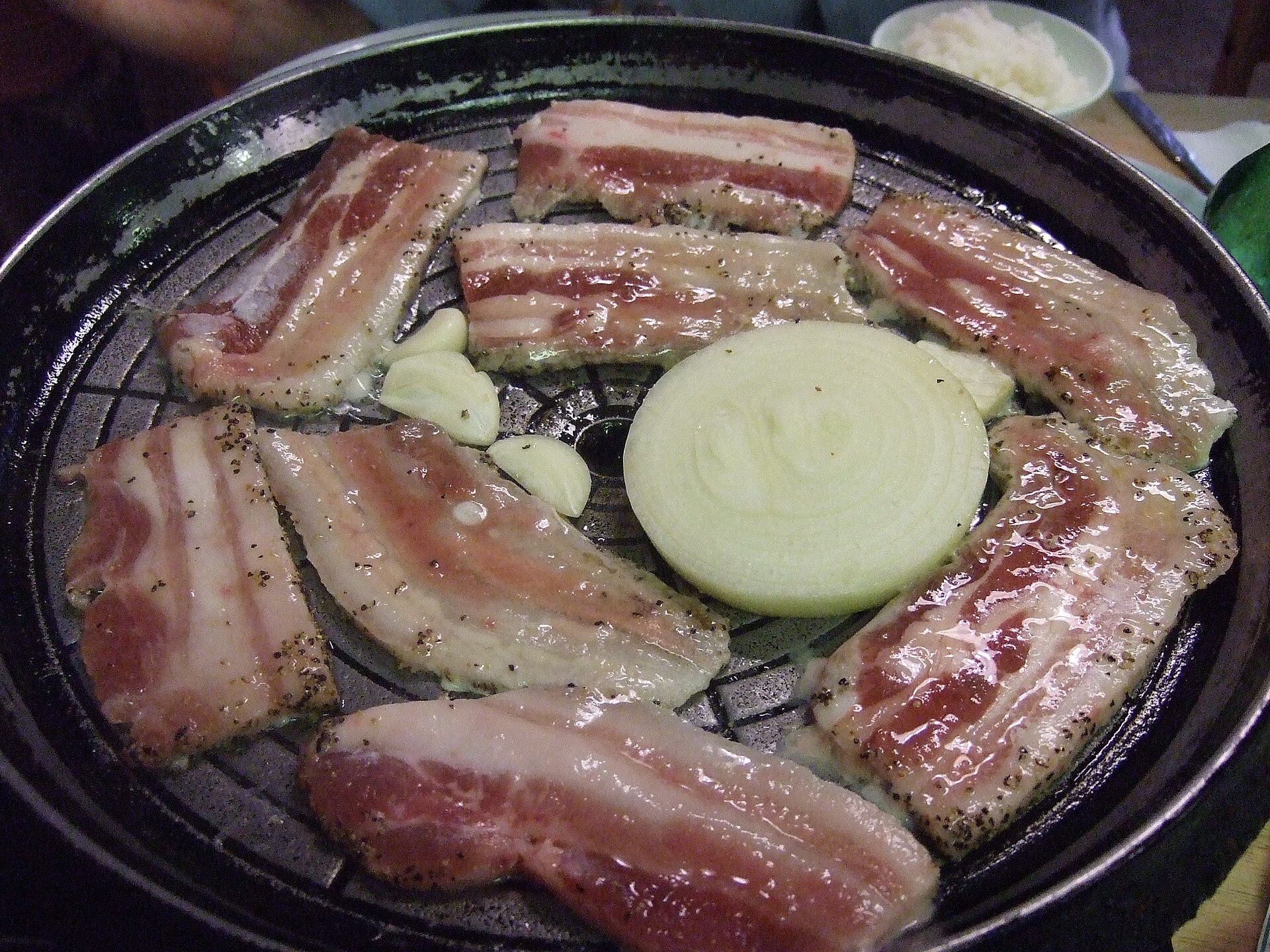
Korean barbecue is a room with a grill in the table. You cook it yourself, and almost everyone starts here.
Samgyeopsal · 삼겹살 · sam-gyeop-sal
Thick pork belly, unseasoned, grilled and wrapped in lettuce with garlic and soybean paste. All the flavour comes from what you wrap it with. If it is your first night in Korea, order this.
Dwaeji-galbi · 돼지갈비 · DWEH-ji-gal-bi
Pork rib in sweet soy marinade. Sweeter and stickier than samgyeopsal because the marinade caramelises on the grill — and harder to cook, for exactly the same reason. Full guide, including how not to burn it →
🍲 Soup and stew — the everyday half
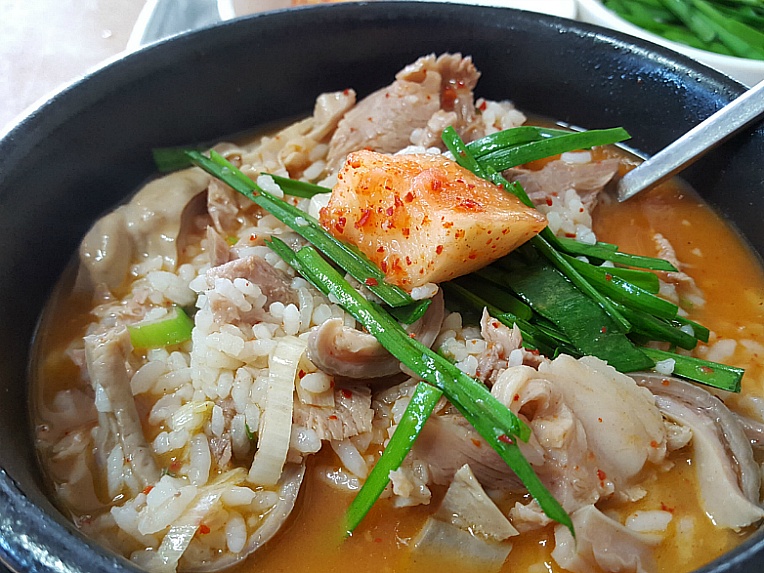
Dwaeji Gukbap · 돼지국밥 · dweh-ji-GOOK-bap · mild
Pork bone broth with sliced pork and rice, seasoned by you at the table. Like a clear, lighter tonkotsu ramen broth — but you add rice instead of noodles. Busan’s everyday meal; sold nationwide, but it is ordinary food there rather than a speciality. More on Busan’s version →
Gamjatang · 감자탕 · gam-ja-tang · spicy
Pork spine stew with potato and perilla leaves, from a shared pot. Rich, chilli-spiked, and you eat it with your hands — the meat comes off the bone. Closest to a spicy pork rib stew.
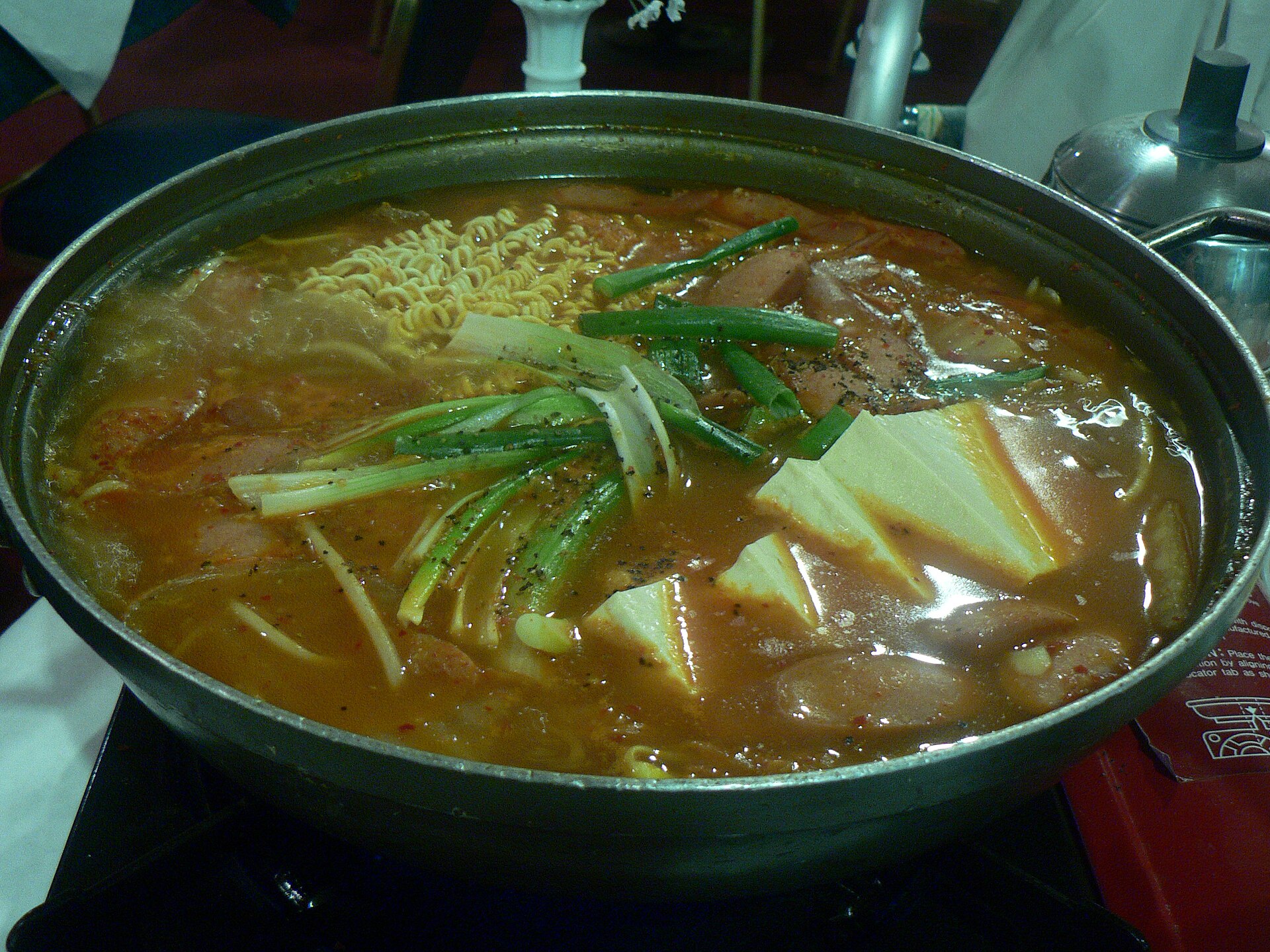
Budae Jjigae · 부대찌개 · boo-deh-JJI-gae · spicy
Army base stew: spam, sausage, kimchi, instant noodles and cheese in one pot. A mash-up of Korean stew and American processed meat, born near US bases after the war. Divisive and beloved in equal measure.
🥬 Boiled and braised — no fire at the table
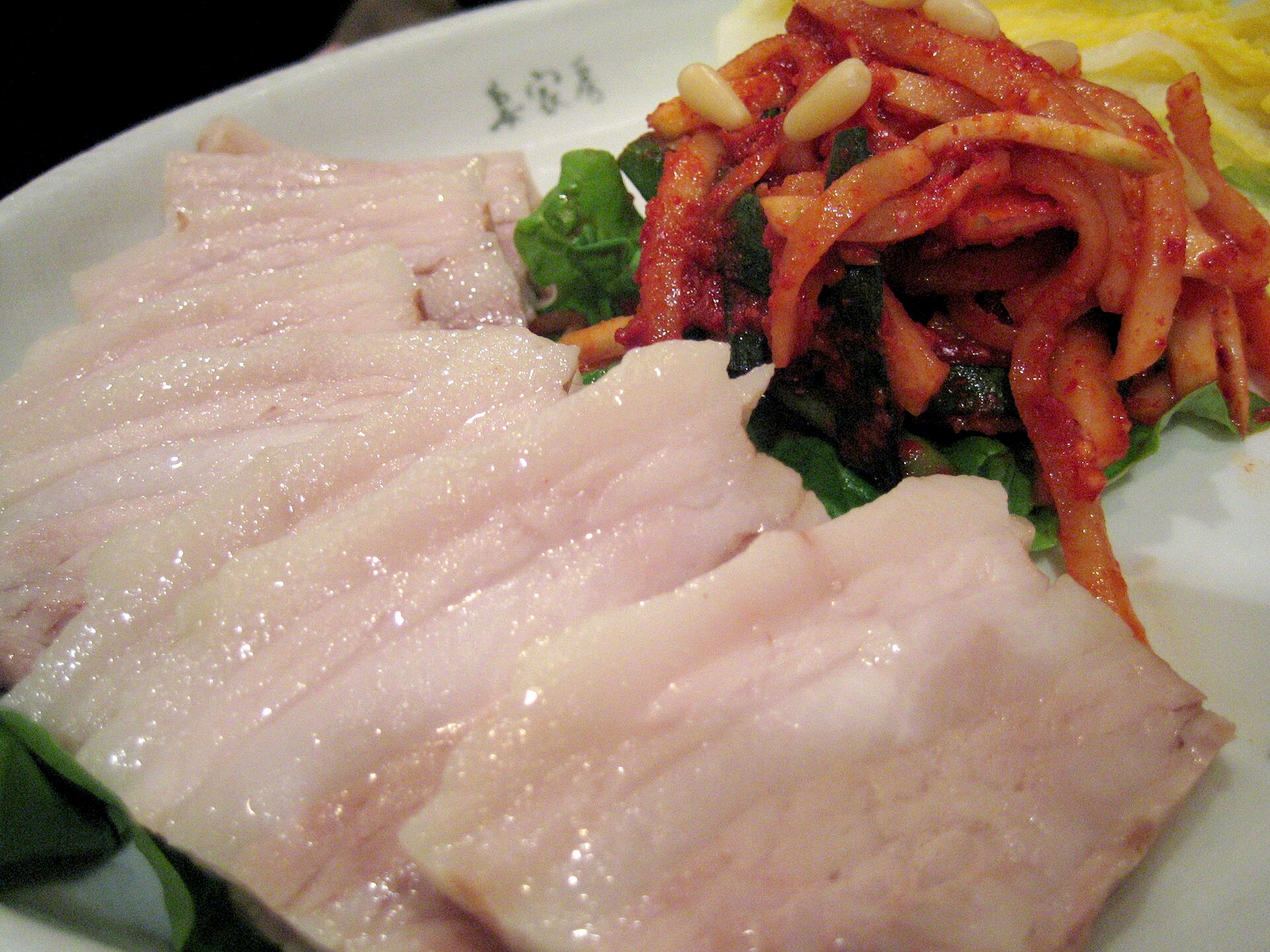
Bossam · 보쌈 · bo-ssam · mild
Boiled pork belly, sliced, served with fresh kimchi and cabbage leaves to wrap. Clean and not greasy — the pork is unseasoned and the kimchi does the work. A good choice if grilling sounds like effort.
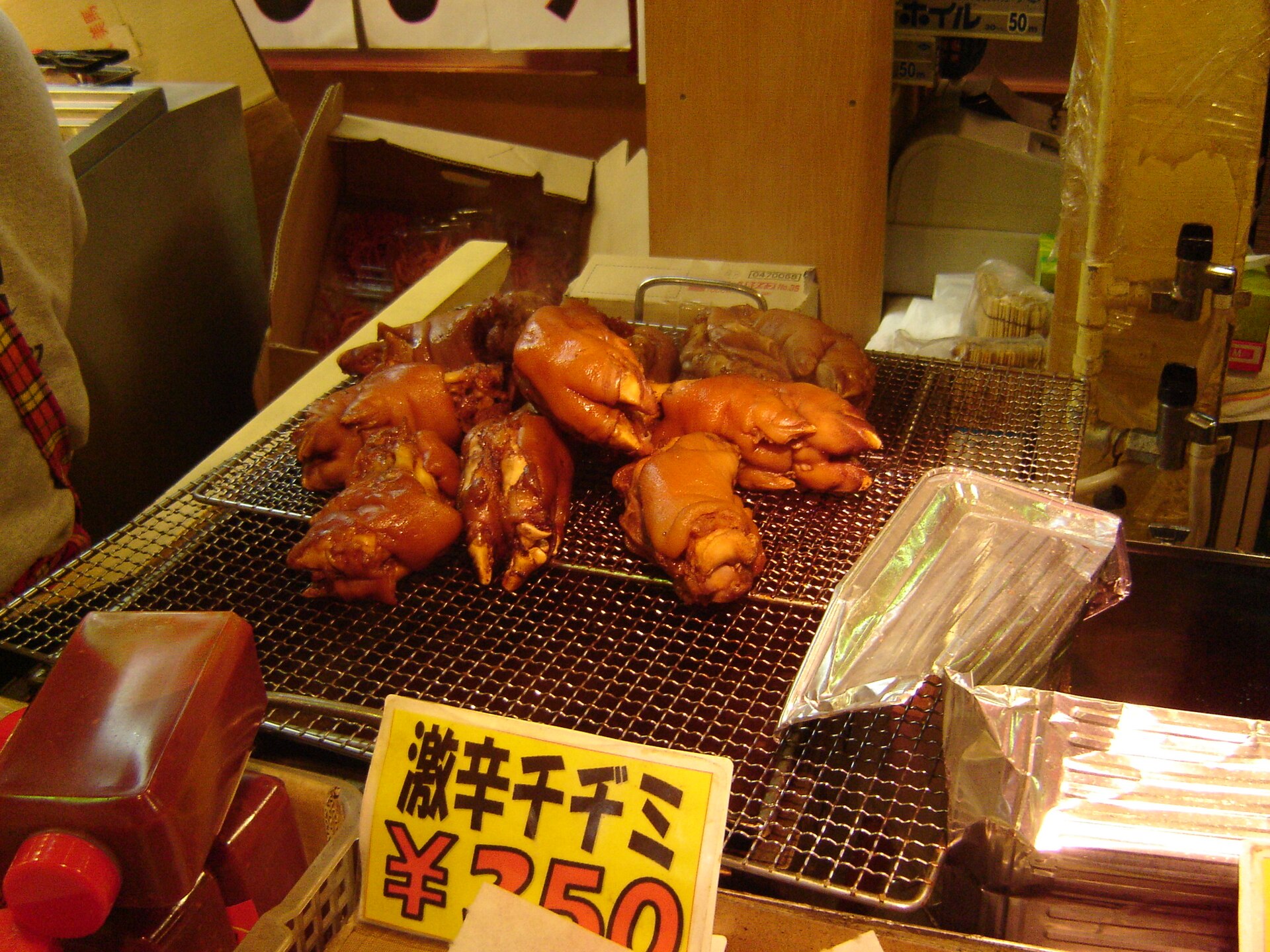
Jokbal · 족발 · jok-bal
Pig trotters braised in soy sauce and spices, sliced thin. Texture is the whole experience — gelatinous and collagen-rich, closer to German Eisbein but served in thin slices. Usually eaten late, usually with drinks.
🍳 Fried and stir-fried
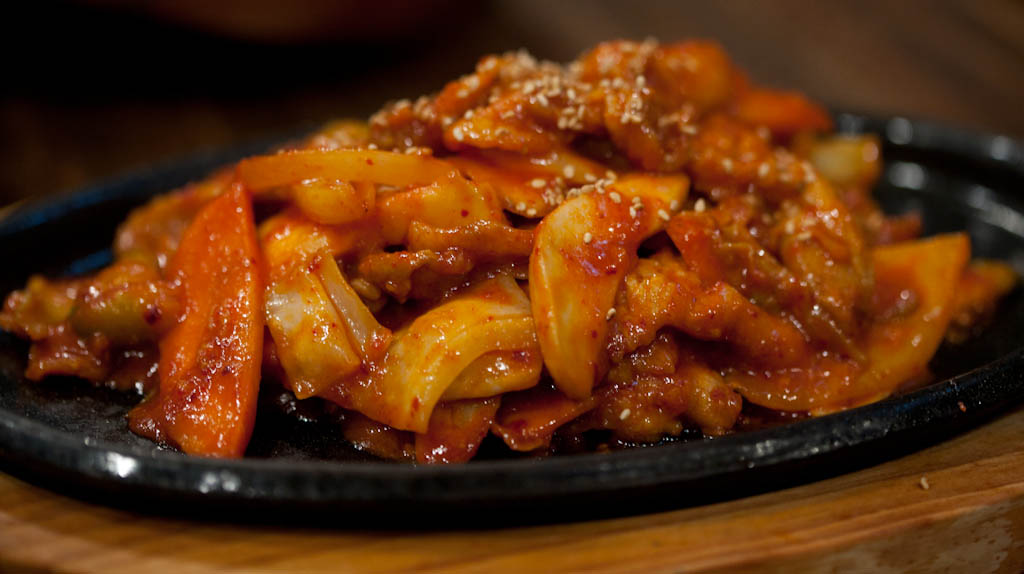
Jeyuk Bokkeum · 제육볶음 · je-yuk BOK-kkeum · spicy
Pork stir-fried in sweet-hot chilli paste. The default Korean lunch — if you like the sauce on Korean fried chicken, this is its savoury cousin. Comes with rice and it is meant to go on the rice.
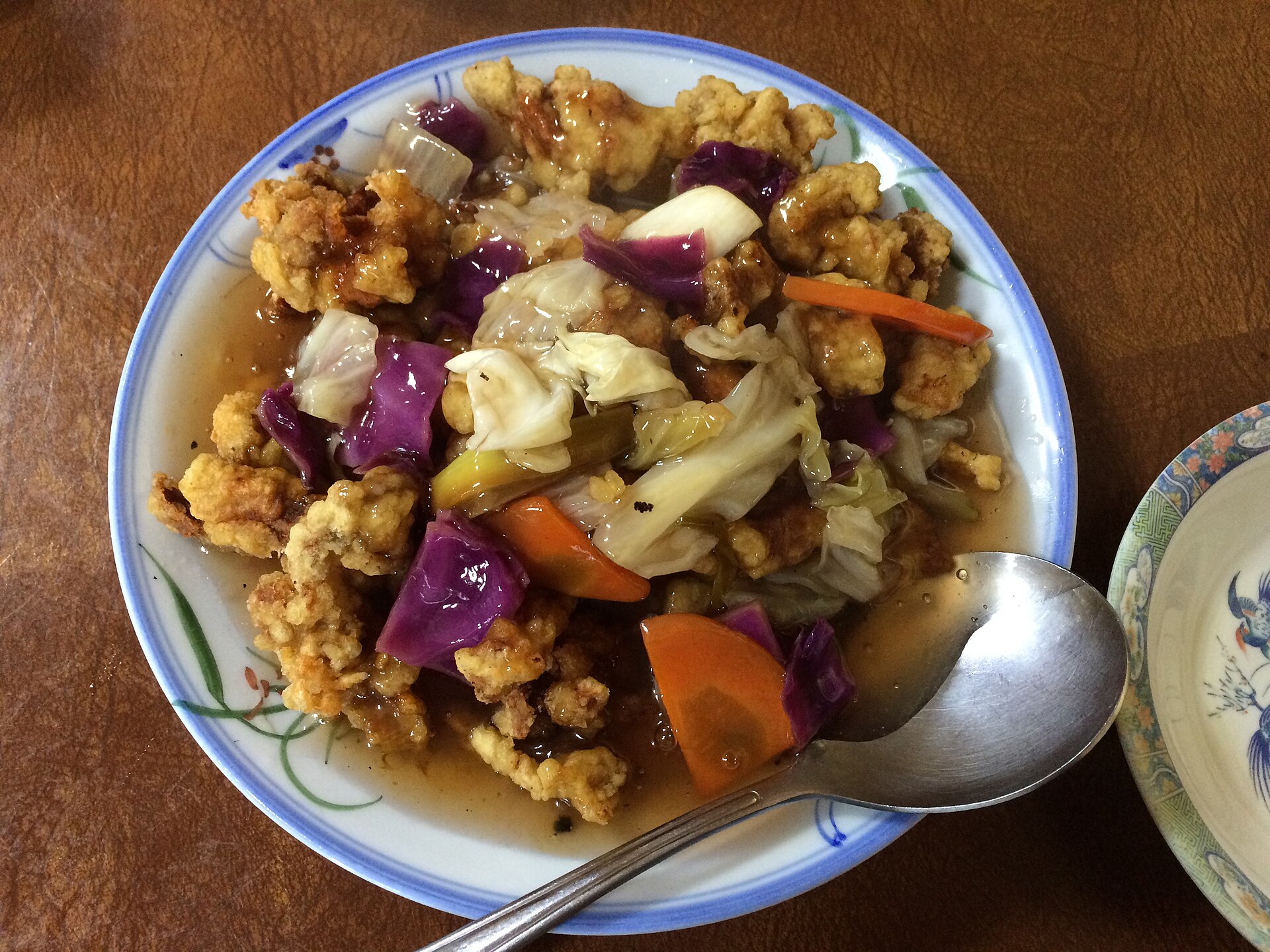
Tangsuyuk · 탕수육 · tang-su-yuk
Battered fried pork in sweet-and-sour sauce, from the Korean-Chinese menu. The batter is thicker and chewier than the Chinese-American version, and the sauce is clearer and less red. Ordered alongside jjajangmyeon, almost as a rule.
Donkkaseu · 돈까스 · don-kka-seu
Breaded pork cutlet. The Korean version is pounded flat, served whole under a brown demi-glace, with soup and rice — thinner and wider than Japanese tonkatsu, and the sauce is on it rather than beside it.
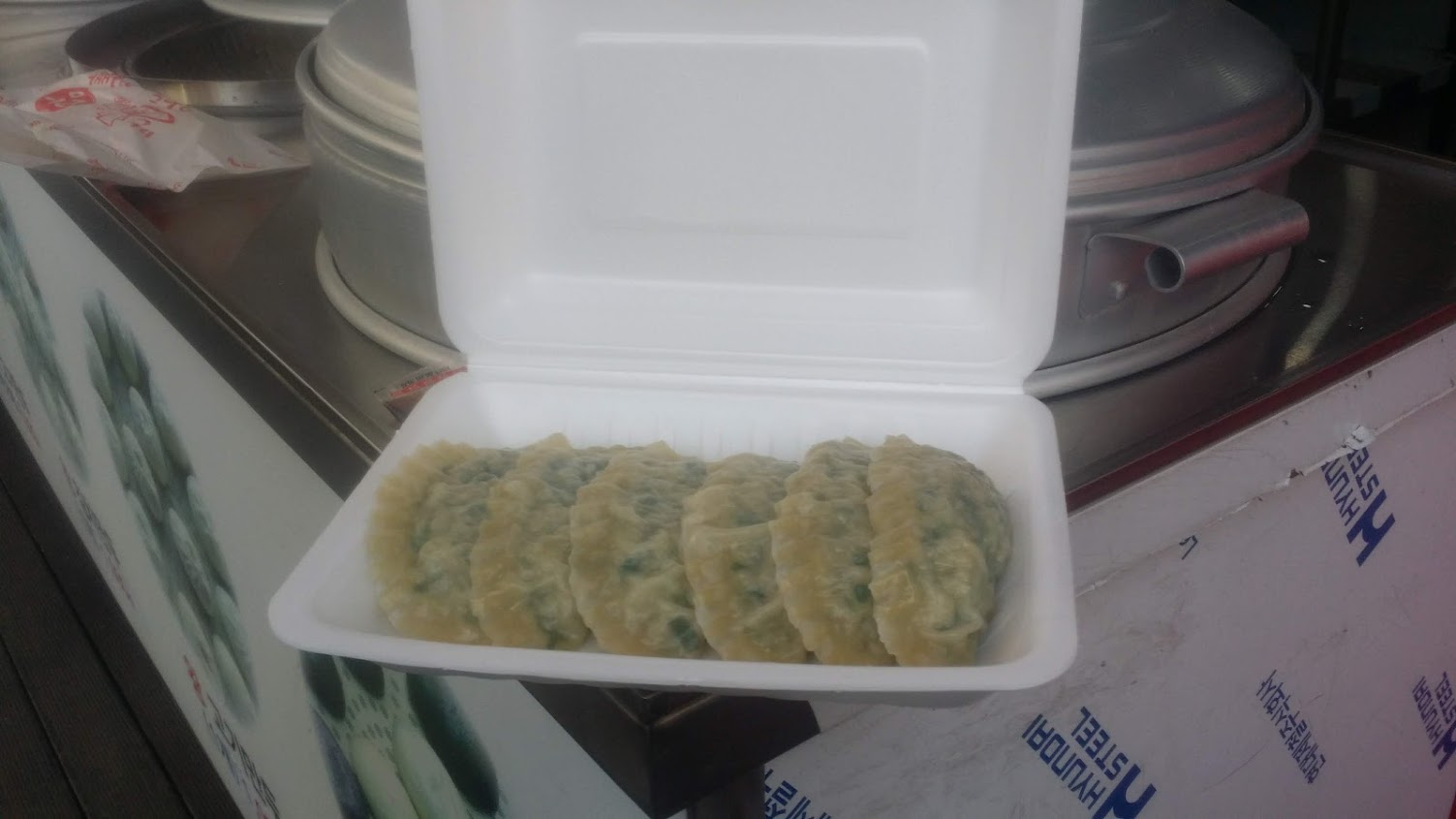
Mandu · 만두 · man-du
Dumplings, steamed or pan-fried, usually pork with tofu, glass noodles and kimchi. The filling is softer and more vegetable-heavy than Chinese dumplings, and the glass noodles are almost always in there.
🫀 Offal — a separate decision
Liking pork does not mean liking offal, and Koreans know that. Plenty of people here eat samgyeopsal every week and never touch gopchang. So this is grouped separately, not buried in the list above.
Two things worth knowing before you decide. A well-run shop smells of broth and seasoning, not of the animal — that difference is the kitchen’s work, not the nature of the dish. And gopchang and gopchang jeongol are usually beef rather than pork, despite sitting in this family; makchang is typically pork.
Sundae Gukbap · 순대국밥 · sun-deh-GOOK-bap · mild
Pork offal and blood sausage in cloudy broth with rice, usually with perilla seed powder stirred in. Earthier than dwaeji gukbap; the perilla makes it nutty and thick. A reasonable first step into offal, because the broth carries it.
Sundae · 순대 · sun-deh
Blood sausage stuffed with glass noodles, steamed and sliced, often served with liver and lung. Closest to European blood pudding, but lighter and noodle-filled. Street-food staple.
Gopchang · 곱창 · gop-chang
Grilled intestine, eaten with drinks. Intensely rich and chewy, with a burst of fat inside — offal-forward, and there is no way around that. Full guide to the three offal dishes →
Makchang · 막창 · mak-chang
Grilled fourth stomach, cut into rings, eaten with a bean-paste dip. Fatty and springy with a clear offal note. If gopchang was fine, this is one step further on.
Gopchang Jeongol · 곱창전골 · gop-chang JEONG-gol · medium
Intestine simmered at the table in red broth with vegetables and glass noodles — the boiled version rather than the grilled. Rich and peppery, closer to a spicy beef hotpot.
Nakgopsae · 낙곱새 · nak-gop-seh · very spicy
Octopus, intestine and shrimp stir-fried in a fierce chilli sauce — the name is the three ingredients shortened. Seriously hot, rich and chewy all at once, with three textures fighting in one pan. Busan does this one particularly well.
Where to start
- First time in Korea? Samgyeopsal, then dwaeji gukbap.
- Cannot eat spicy? Most of this list is mild. Samgyeopsal, bossam, jokbal, tangsuyuk, donkkaseu and dwaeji gukbap carry no chilli heat at all.
- Want spicy? Jeyuk bokkeum, gamjatang, budae jjigae — and nakgopsae if you mean it.
- Eating alone? Dwaeji gukbap, donkkaseu and jeyuk bokkeum are all normal solo meals. The grill and the shared pots are not.
- Curious about offal but unsure? Start with sundae gukbap, where the broth carries it.
Seventeen dishes, one animal. Nearly all of them are ordinary food you can eat tomorrow — not special-occasion cooking.
Tags in this series
This is part one of a nine-part series mapping Korean food by ingredient. Beef, chicken, seafood, noodles and the rest are on the way.
Also here: Korean chicken, all seven dishes · product reviews of what is on the shelves now.
8 thoughts on “Korean Pork, All 17 Ways — From Samgyeopsal to Offal”