If you searched “Korean BBQ,” you searched for a room, not a plate.
A table with a hole in it. A grill in the hole. Tongs, scissors, a pile of lettuce, and ten small dishes you did not order. Nothing on that table tells you what to order.
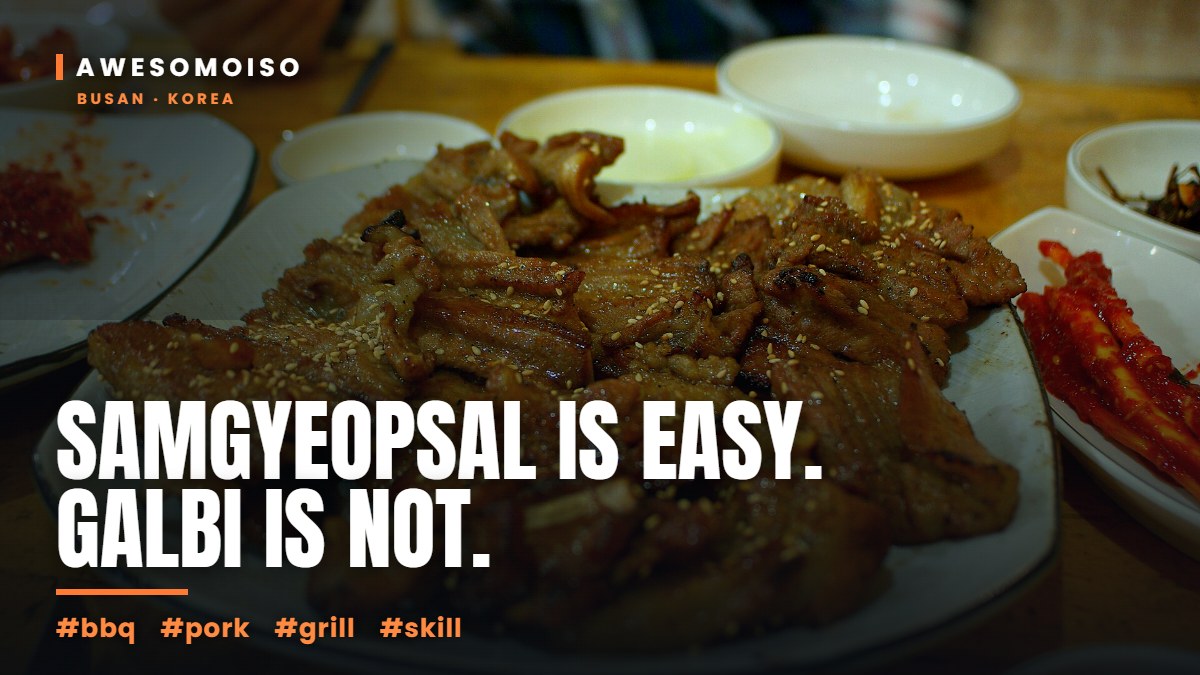
Almost everyone orders samgyeopsal — pork belly, unmarinated, three layers of fat and meat. It is the default, and it is a good default.
But it was not always the default. And the thing it replaced is still on the menu.
First — what “Korean BBQ” actually means
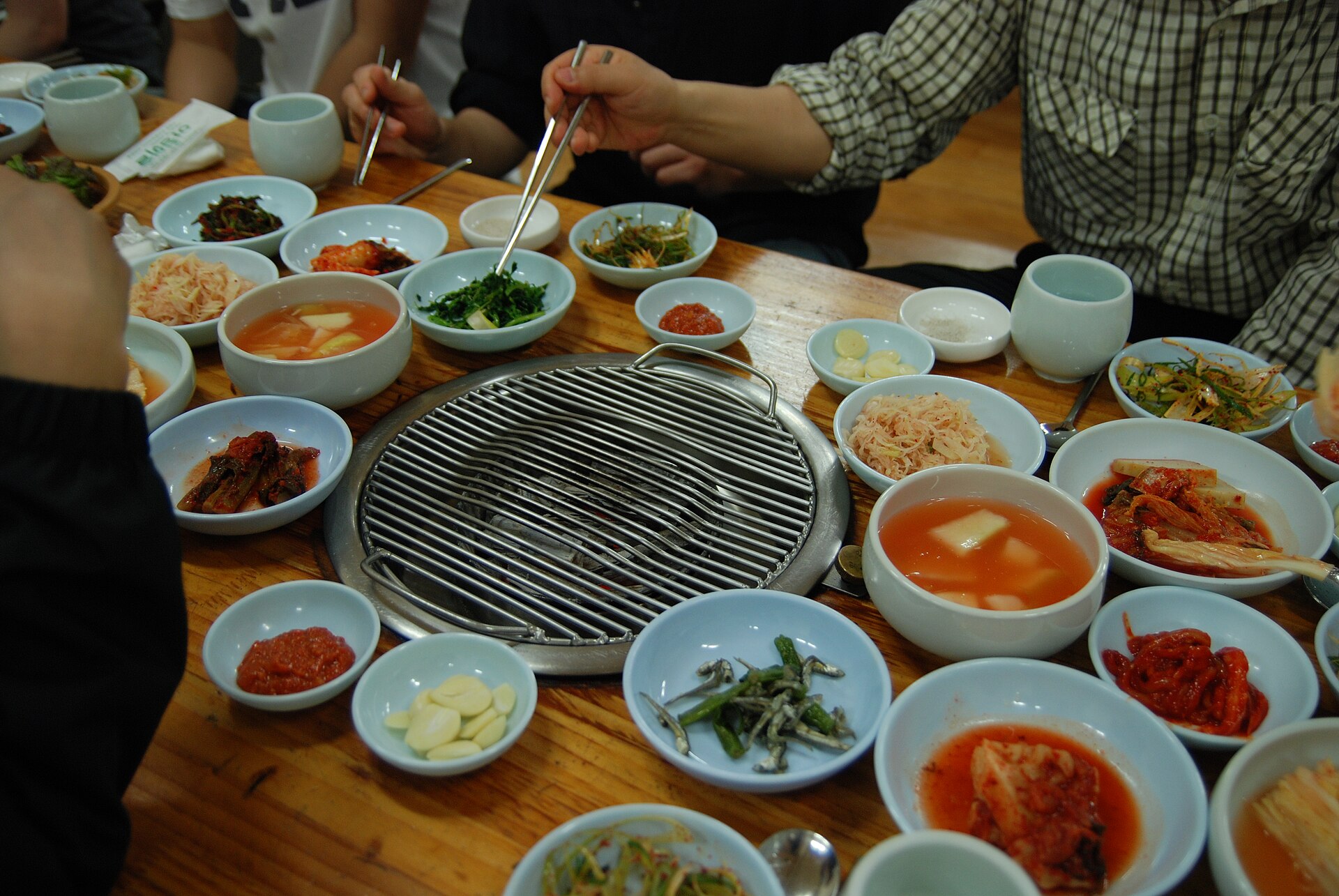
It is a format, not a dish. Here is what the format assumes you already know.
- You cook the meat. Not the kitchen — you, at your table. In most places this is simply how it works, and no one will come over to do it for you.
- One person usually takes charge of the grill. The oldest person, the host, or whoever is best at it. Letting meat burn is treated as a small failure, which is why everyone keeps glancing at the grill.
- The side dishes are free and, in most places, refillable. You did not order them and you are not paying extra for them.
- Many places have a two-portion minimum. If you are alone, ask before you sit down.
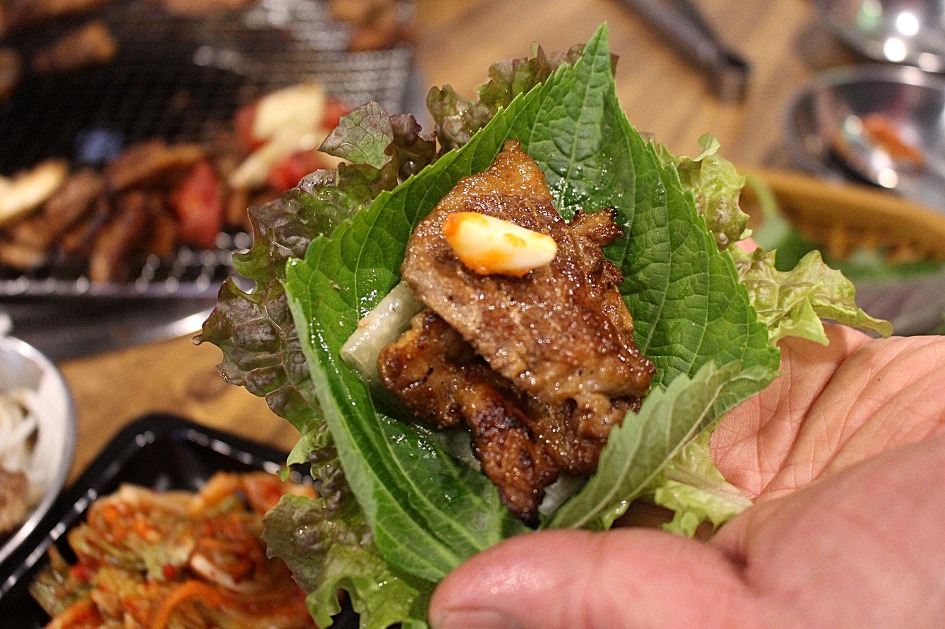
- Meat goes into a lettuce leaf with sauce and garlic, folded, and eaten in one bite. It is not cut smaller.
- If the grill plate turns black, ask for a new one. Say “불판 갈아주세요 (bul-pan GA-ra-joo-se-yo)” (bulpan garajuseyo). This is a completely normal request.
Samgyeopsal — why it won
Samgyeopsal is a recent winner. Korean restaurant culture in the 1960s was built around beef, and pork belly grilled plain was not the obvious thing to order. Four things changed that, and all four happened in the 1970s.
- Beef got expensive. Korean beef prices climbed sharply in the mid-1970s, and pork moved in as the affordable substitute.
- Pork stopped smelling. Castration and better feed became standard in the mid-to-late 1970s, and the strong odour that had always come with Korean pork dropped away. This is the one that matters.
- Export routes closed. A 1978 meat-market disruption cut off shipments to Japan, and the volume turned inward. Accounts differ on exactly how this played out.
- Slicing machines reached the butchers. Frozen pork belly could suddenly be cut thin and sold cheaply. By 1979, newspapers were already remarking on how many samgyeopsal restaurants were opening.
Point two deserves a second look. Before the smell went away, pork generally needed a marinade to be good company at the table. Once it did not smell, you could put a plain slice on a fire and it tasted like something.
Samgyeopsal did not win on flavour. It won because the pig stopped smelling, and because a machine could slice it thin.
The one it replaced — dwaeji galbi
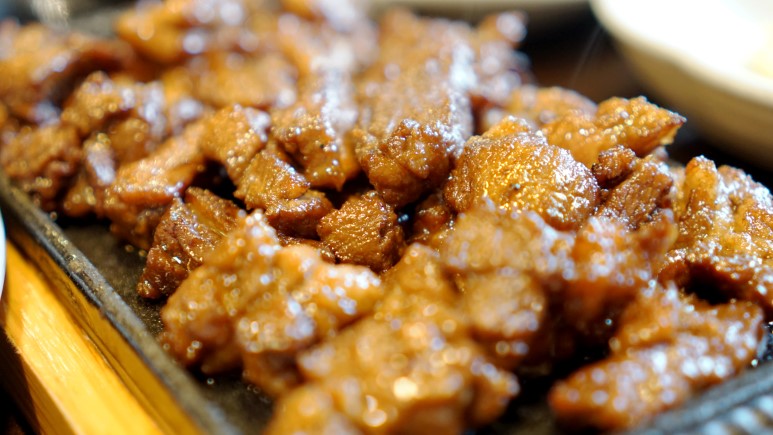
Dwaeji galbi (돼지갈비) is pork rib marinated in soy sauce, sugar, garlic and usually pear. It is the pork version of something older.
The older thing is beef galbi. The shop usually named as the starting point is Hwachunok, which opened in Suwon’s Yeongdong Market in 1945 and is reported to have put charcoal-grilled galbi on its menu in 1956 — though sources give different dates. In the 1960s a story spread that President Park Chung-hee had eaten there, and the name “Suwon galbi” travelled the country. That story is passed along as rumour rather than record. Suwon formally designated Suwon galbi a local speciality in 1985.
Beef galbi was expensive. Dwaeji galbi moved that table setting into a price ordinary families could pay. The marinade barely changed; only the animal did. That is why dwaeji galbi still carries the face of celebration food.
Samgyeopsal is what Koreans eat on a Tuesday. Dwaeji galbi is what the table looked like when something was being celebrated.
If you have had LA galbi, you already know the marinade
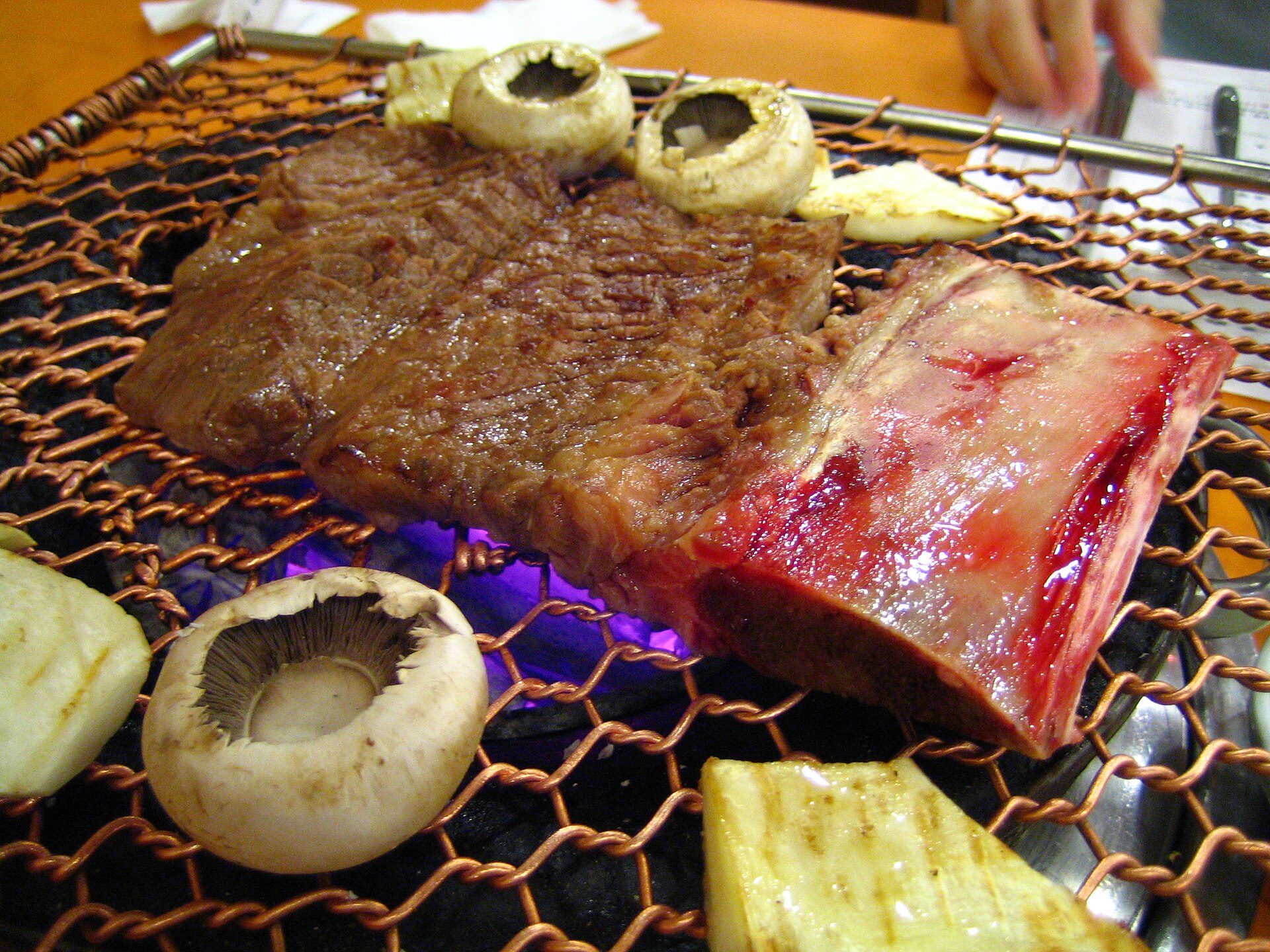
Most people outside Korea meet Korean barbecue as beef first. LA galbi — short rib sliced thin straight across the bone — was worked out by Korean immigrants in Los Angeles in the 1970s and 80s, adapting to how American butchers cut meat and to the band saws those butchers already owned. Whether the “LA” means Los Angeles or lateral, as in the cut, is still argued over.
Which means this: if LA galbi is a dish you order on purpose, dwaeji galbi is the one to try next. Soy, sugar, garlic — same family. Pork carries it differently, heavier and rounder and less clean than beef, but you are not starting from zero. You are moving one square over from something you already like.
Why it lost — the sugar
There is sugar in that marinade, and sugar burns before meat cooks. It begins to caramelise around 160–170°C, and the window between caramelised and ruined is narrow.
That is the whole difference:
- Samgyeopsal needs no skill. Lay it down, wait, flip, cut, eat.
- Dwaeji galbi needs skill. Too much heat and the outside is black while the inside is raw. The marinade welds itself to the plate. Over charcoal it is harder still — charcoal tastes best and burns fastest.
Samgyeopsal is forgiving. Dwaeji galbi is not. That is the story of how one replaced the other.
One more thing changed: the meat. A lot of dwaeji galbi restaurants use pork neck or shoulder rather than rib meat — cheaper and easier to handle. This is not a swindle. In Korea “dwaeji galbi” names a marinade and a format more than a specific cut. But a bone-in version and a boneless version are close to different dishes, and it is worth knowing which one you are looking at.
So ask, before you order: “Is this bone-in rib, or boneless marinated pork?” If the words do not land, show the Korean on your phone — 돼지갈비 — and point at the menu. Staff answer this question all day.
Skip all-you-can-eat dwaeji galbi. The meat keeps arriving and you have to grill every piece of it — the hardest meat on the grill, in the largest quantity, with no one helping. It is the worst possible introduction.
How to grill it
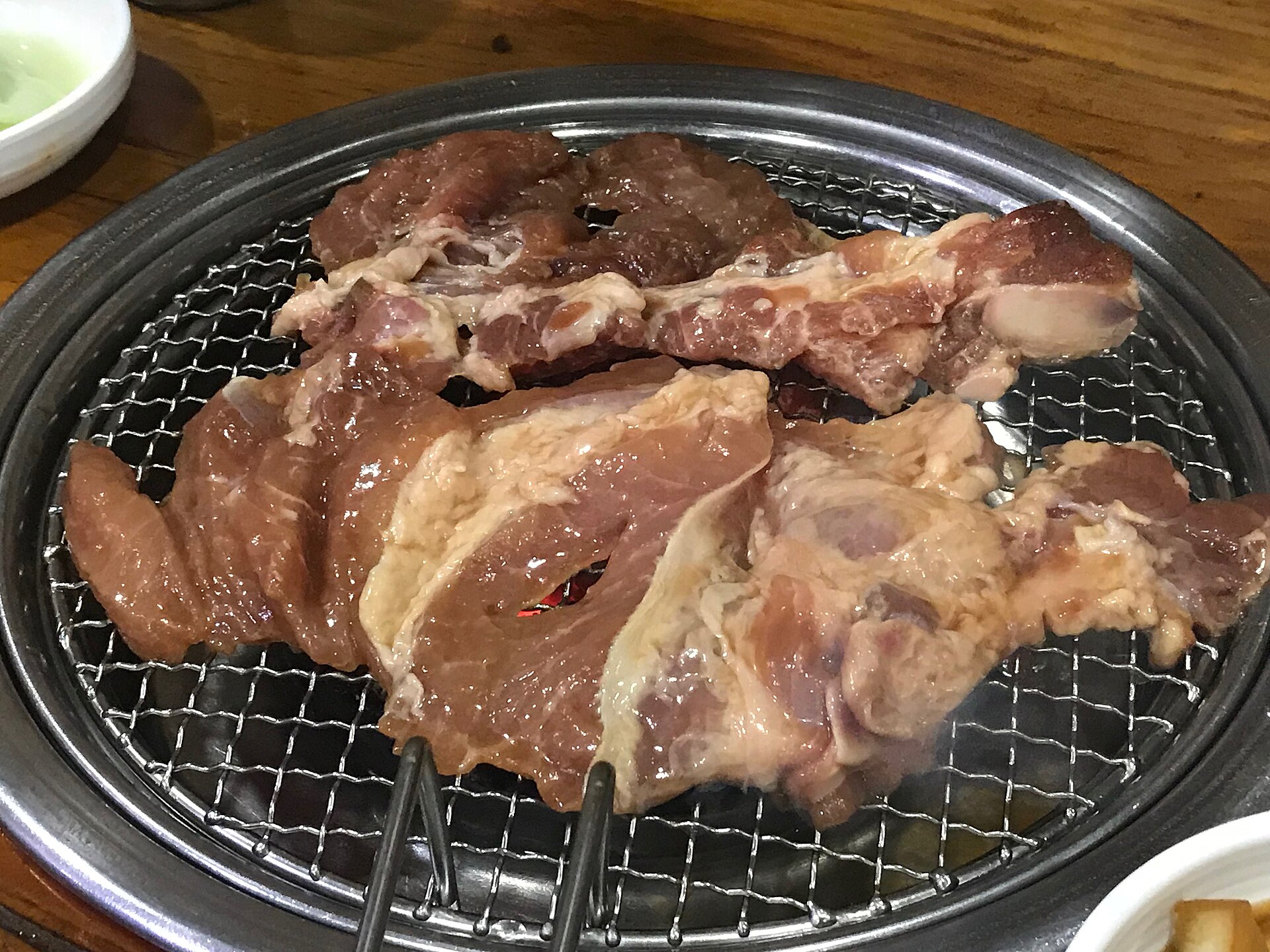
Korean home cooks and recipe sites disagree on plenty here, but they agree on these. Do these and you will be fine.
- Turn the heat down first. Medium or lower. This is the whole game.
- Cover the plate with meat. Bare metal is where the marinade scorches.
- Turn it often. This is the opposite of samgyeopsal. If you lay it down and wait, it burns.
- Cut it last. Grill the pieces whole and take the scissors to them near the end, or they dry out.
- If it starts to catch, add a splash of water and cover it. Cook the inside through, then uncover and finish the outside.
- Grill unmarinated meat first if you ordered both — while the plate is still clean.
- Ask for a fresh plate when it blackens. 불판 갈아주세요 (bul-pan GA-ra-joo-se-yo).
Low heat. Turn often. Cut last. That is the entire technique.
Two easier ways in
1. Find a place that grills it for you. These exist, but they are the exception — the default is that you do the cooking, and asking a server to take over is not something you should count on. You have to seek these places out in advance.
To find one, copy this into Naver or Kakao Map: 돼지갈비 직접 구워주는곳 — dweh-ji-gal-bi jik-jjeop GU-wo-joo-neun-got
2. Order marinated beef short rib instead — yangnyeom galbisal (양념 갈비살). Nearly the same marinade, on beef, sliced thin. It cooks in moments, and because it is beef rather than pork, Korean tables take it off the grill earlier — so you eat piece by piece as it comes, instead of standing guard over a plate of burning sugar. It costs more. Prices vary by restaurant, so read the menu.
On doneness: the US Department of Agriculture puts whole cuts of both beef and pork at 63°C (145°F) with a three-minute rest. What differs is custom, not the official number: Korean tables take beef off early and cook pork through. Ground meat is a separate case — it needs to be cooked fully. Cook the pork through.
So what do you order?
| Menu word | Korean | Marinade | Difficulty | Who it is for |
|---|---|---|---|---|
| Samgyeopsal | 삼겹살 | None | Easy | First time. Hard to get wrong. |
| Dwaeji galbi | 돼지갈비 | Soy, sugar, garlic | Hard | If you want to try the harder thing. |
| Yangnyeom galbisal | 양념 갈비살 | Soy, sugar, garlic | Easy | Same flavour family, beef, far easier. |
| Moksal | 목살 | None | Easy | Leaner than pork belly. |
| Bulgogi | 불고기 | Soy, sugar | Not grilled | No chilli at all. Safe for everyone. |
Copy-paste Korean
Show the Korean on your phone, or try saying it. The third column is written for an English speaker to read aloud as it looks, with capitals on the syllable to lean on. It will not be perfect — saying it badly still works better than silence.
| What you want | Show this | Say it |
|---|---|---|
| Pork belly | 삼겹살 | sam-gyeop-sal |
| Marinated pork ribs | 돼지갈비 | DWEH-ji-gal-bi |
| Marinated beef short rib | 양념 갈비살 | yang-nyeom GAL-bi-sal |
| Please change the grill plate | 불판 갈아주세요 | bul-pan GA-ra-joo-se-yo |
| A place that grills it for you (search this) | 돼지갈비 직접 구워주는곳 | dweh-ji-gal-bi jik-jjeop GU-wo-joo-neun-got |
In short: samgyeopsal if it is your first night. Dwaeji galbi if you want to earn it. And if the grill feels like more responsibility than you signed up for, yangnyeom galbisal gets you most of the way there for none of the stress.
Before you order — four things worth checking
None of these are rules so much as the questions that save a foreign visitor the most trouble.
- Check what the price is attached to. Menus may price by portion, by person, or by weight. These are not the same thing, and the cheapest-looking number is sometimes the smallest serving.
- Compare by weight, not by headline price. If two places list grams, that is the honest comparison. Prices move by city, neighbourhood, cut and grade, so a figure you read online is not a figure you can plan around.
- Ask about minimum orders. Two portions is a common floor, and marinated meats are more likely to have one.
- If you are eating alone, ask first. Some grill houses take solo diners happily and some do not. It varies shop by shop, and a quick question at the door beats being turned around at the table.
How to eat it — the lettuce wrap
The meat is only half of it. The rest of the table is there to be assembled, and nobody will explain this to you.
- Take a lettuce leaf in your open palm.
- Put one piece of grilled pork on it.
- Add a small amount of ssamjang, the thick brown paste. Less than you think — it is salty.
- Optional: a sliver of raw garlic, a slice of green chilli, a little rice.
- Fold it closed and eat the whole thing in one bite. It is not cut smaller, and it is not eaten in stages.
You do not have to use everything on the table. The point of the wrap is contrast — rich pork against cold lettuce and sharp garlic — so build whatever version of that you like and keep adjusting it through the meal.
Have you had dwaeji galbi, or only samgyeopsal? If you have grilled marinated ribs yourself and worked out something we did not mention, tell us in the comments — we will add what holds up.
3 thoughts on “Korean BBQ Explained: Samgyeopsal vs Dwaeji Galbi (Korean Pork Ribs)”