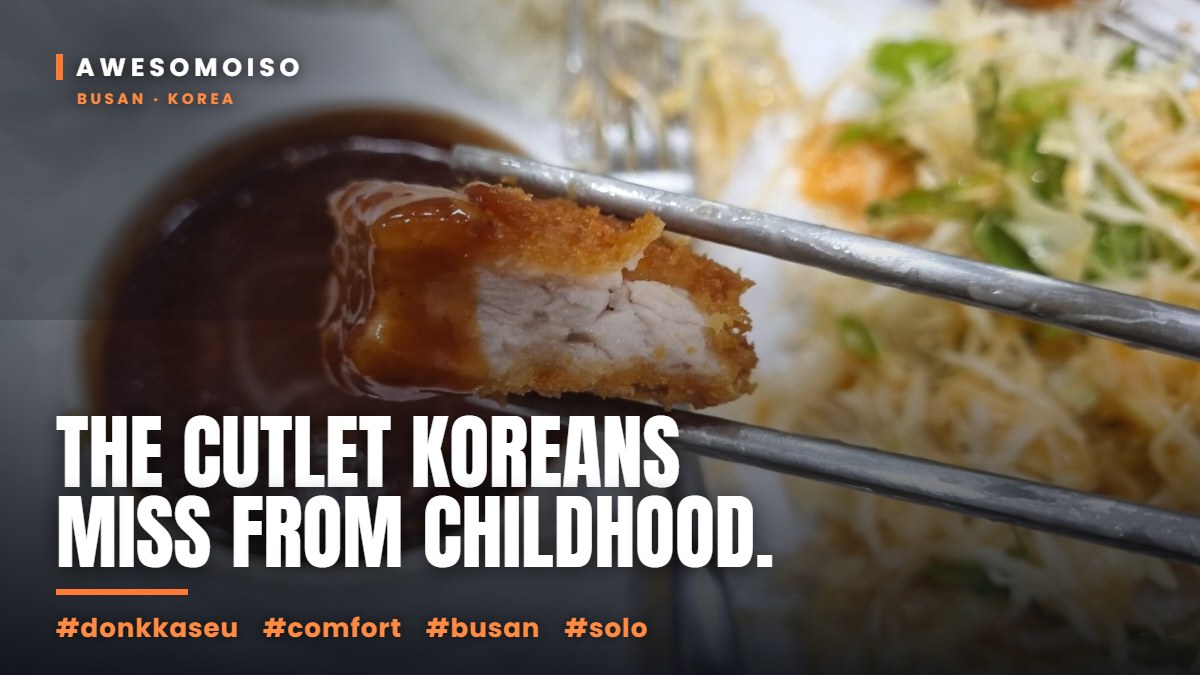
There is a kind of building in Korea you will walk past without seeing. From outside it is just signage — estate agents, an oriental medicine clinic, a hair salon, English academies, a study café, a clothing alterations shop, dog grooming. The signs cover the wall so completely that the building disappears behind them. There are signs stuck to the steps.
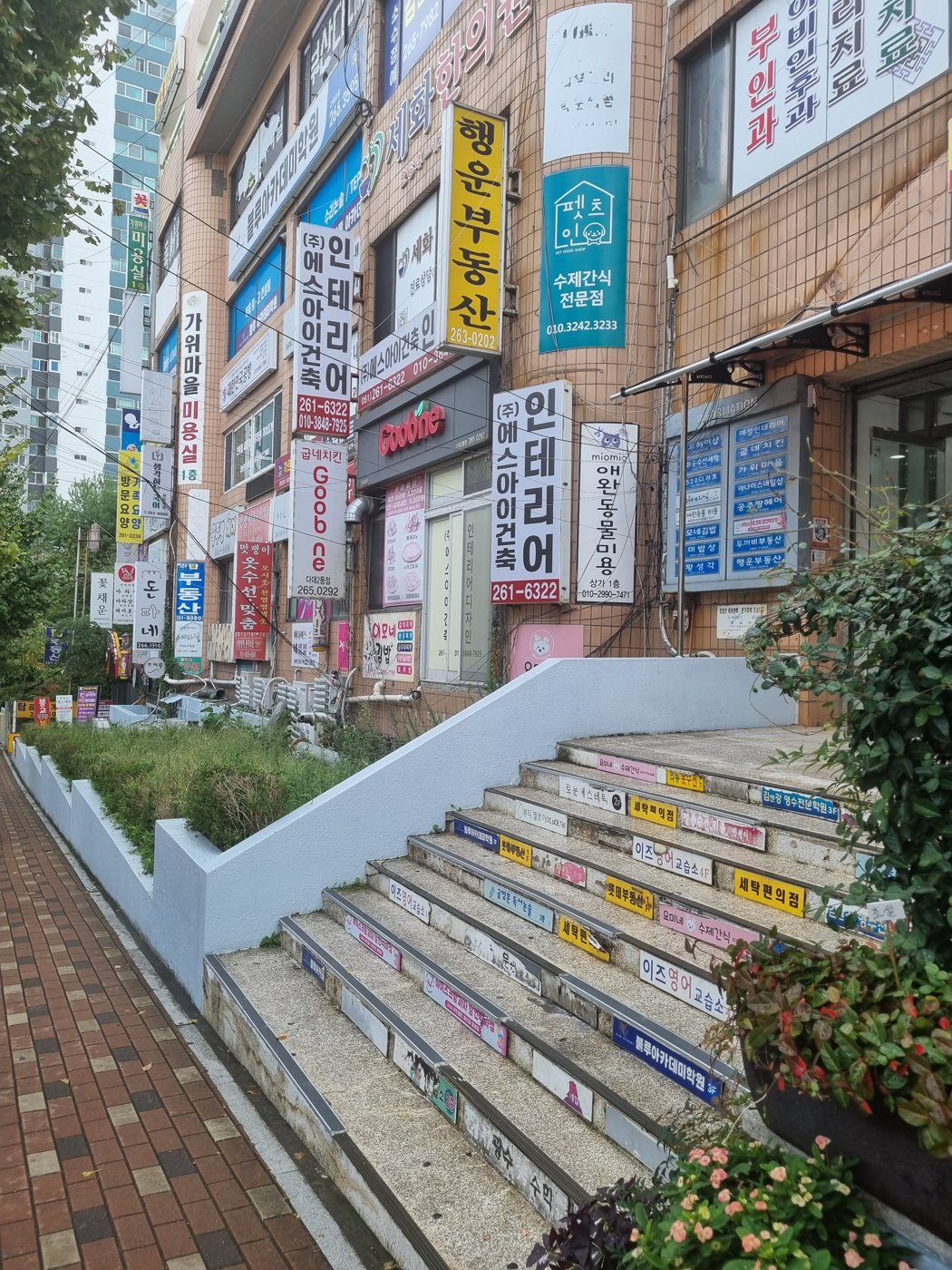
The first and second floors are almost always restaurants. Snack bars, fried chicken, gimbap, pork cutlet. Nothing out front tells you that in a language you can read.
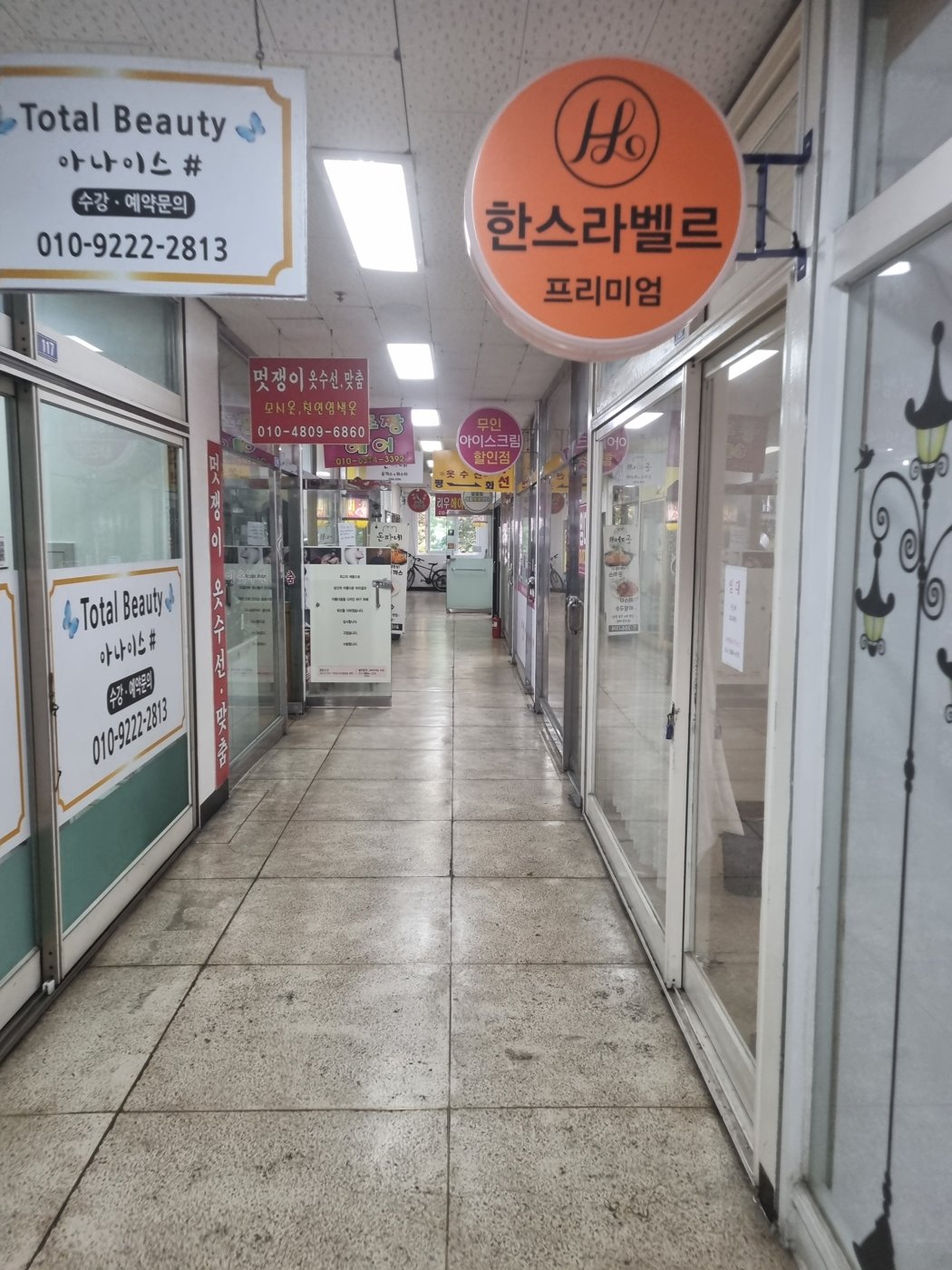
I came for the donkkaseu shop at the end of this corridor.
What makes something a soul food here
In Korea, soul food does not mean traditional food. Age is not what qualifies a dish. What qualifies it is that you ate it often, that a particular era is stuck to it, and that you start thinking about it when you have not had it for a while.
Donkkaseu fits exactly.
It was not Korean to begin with. It is a Western cutlet that arrived through Japan. But in Korea it settled into a format called gyeongyangsik (경양식) — “light Western food”. Rice, salad and the cutlet together on one white plate, a fork and knife instead of chopsticks, and soup served first.
That was my childhood. A gyeongyangsik restaurant was where families went for a meal out and where couples went on dates, and for a great many Koreans it was the first place they ever used a knife at the table.
It is not common now. A few places survive, but it is no longer a normal restaurant format, and it is not something to go looking for.
The trace of it is still there, though. When a Korean cutlet shop brings you soup before the food, that is where it comes from. It also explains why some Japanese-style cutlet shops do not: they descend from the Japanese line, not the gyeongyangsik one.
Jjajangmyeon, gukbap, donkkaseu. All three sit in the same place for Koreans — and the cycle is short. A week without one and it starts coming to mind.
Today was one of those days.
Sitting down
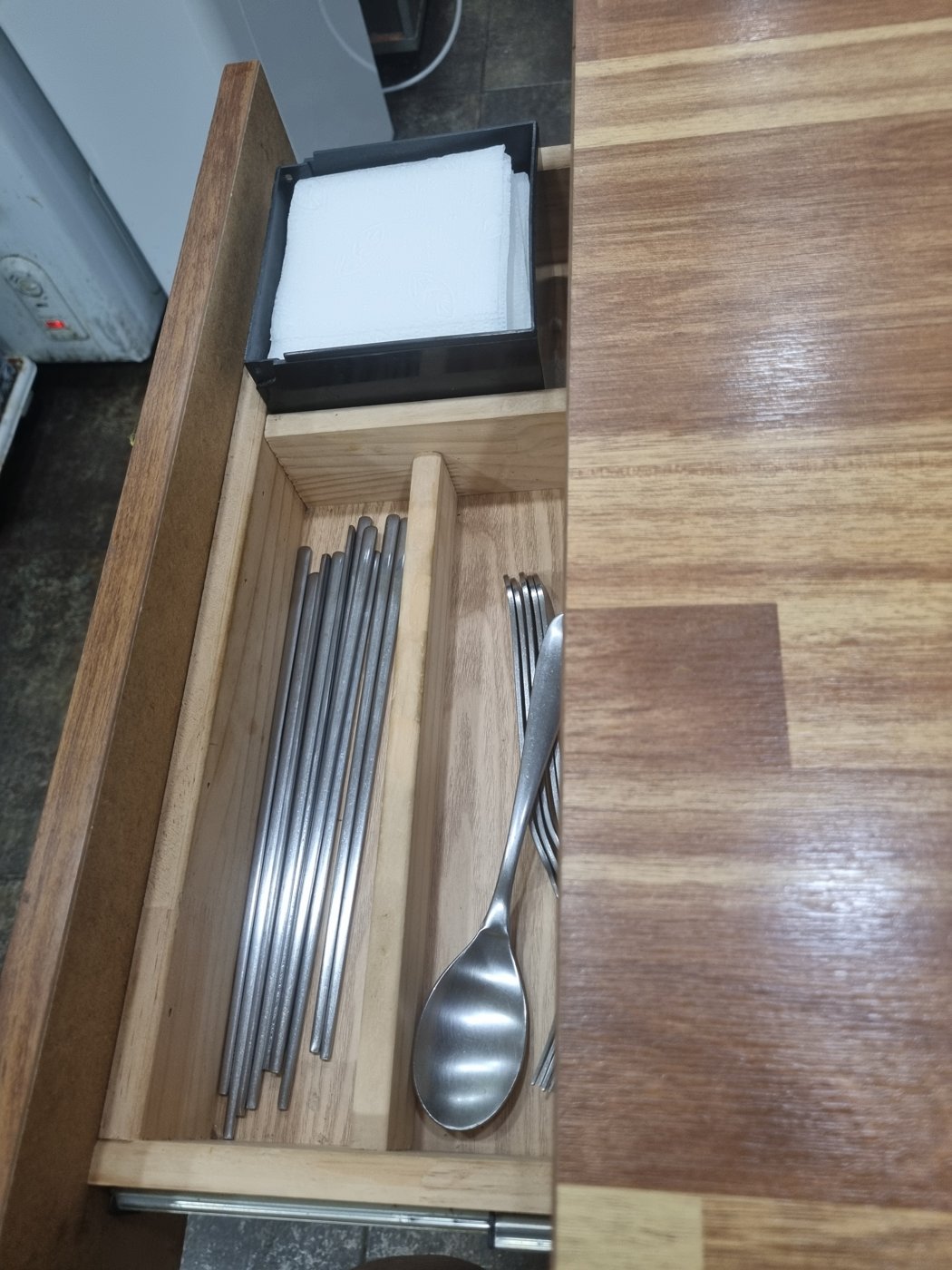
Most Korean restaurants keep the cutlery in the table. Pull the side panel and a shallow drawer slides out, chopsticks and spoons in separate compartments, usually napkins too. One per seat. Nobody brings it to you. You take yours out and set your own place.
If you are waiting for a server to bring cutlery, you will wait a long time.
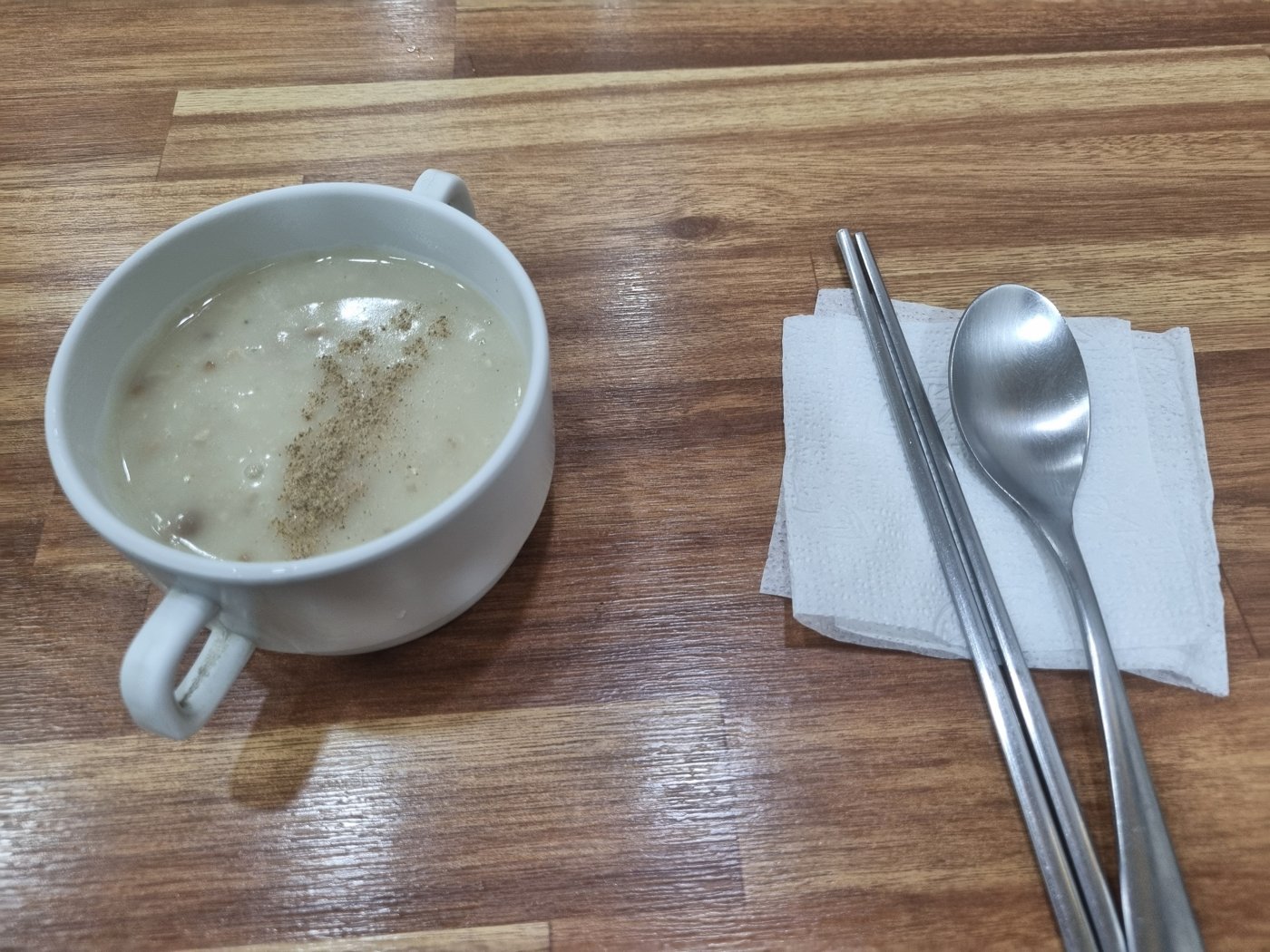
Then the soup. Not always — it varies, and so do the type and the quality. This one was cream of mushroom and honestly tasted like the instant stuff. That is not really the point. The point is the order. The soup arriving first is what makes it feel like you came out for donkkaseu.
Reading the menu
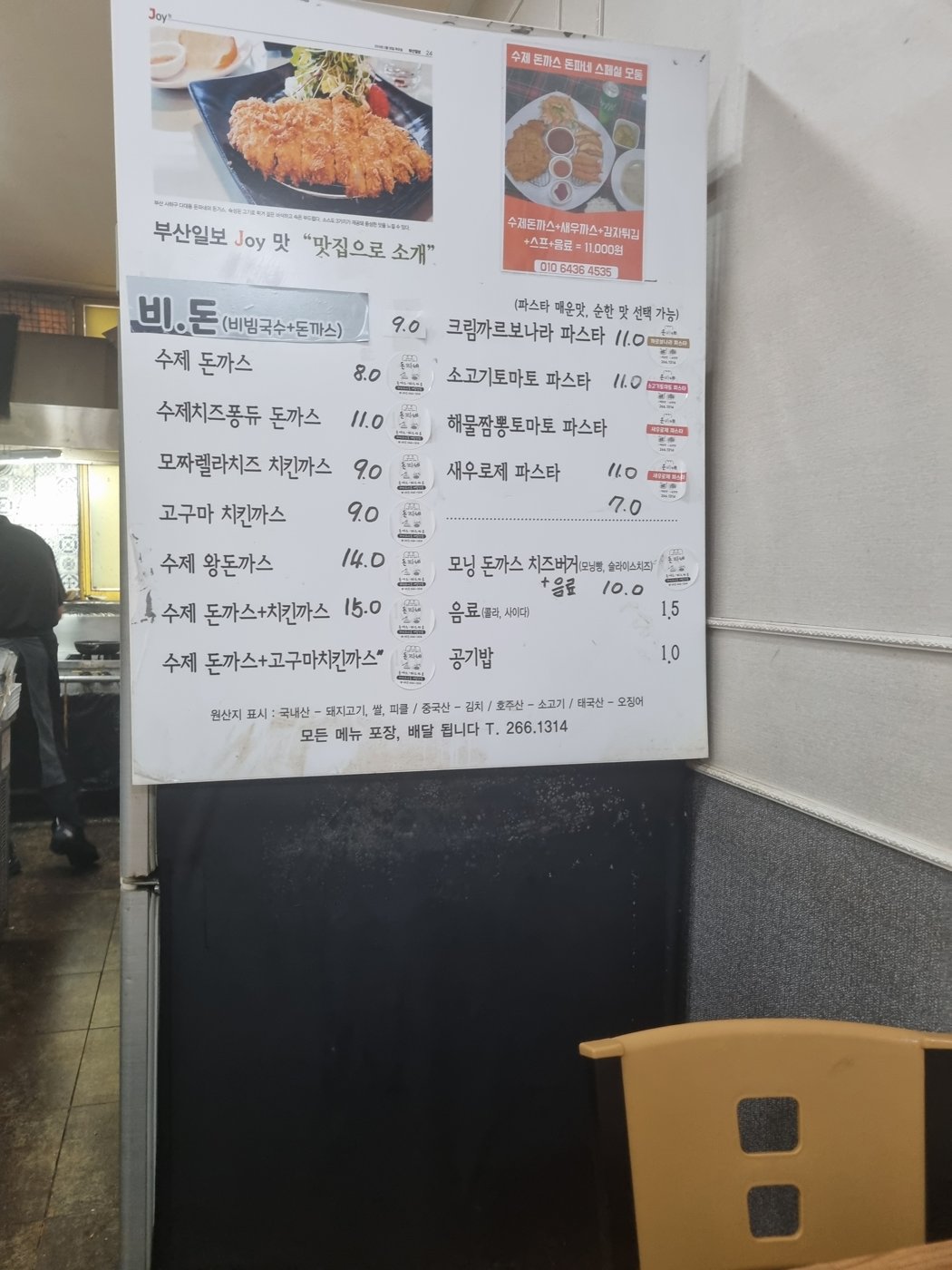
Korean pork cutlet splits into two main things.
- Wang donkkaseu (왕돈까스) — the meat pounded flat and wide. It covers the plate. This is the gyeongyangsik one.
- Saeng donkkaseu (생돈까스), Japanese style — loin, cut thick, fried as a block. Closer to tonkatsu.
I came for the second.
But the board holds more than two. Mozzarella inside. Sweet potato mousse inside. Cheese fondue. Chicken cutlet. That is where most of the price difference comes from — what has been stuffed into it, and which cut it is made from.
Prices run roughly ₩8,000 to ₩12,000 in my experience, and Busan — smaller neighbourhoods especially — tends to come in lower than big-city centres. Read the board rather than trusting a figure.
The food
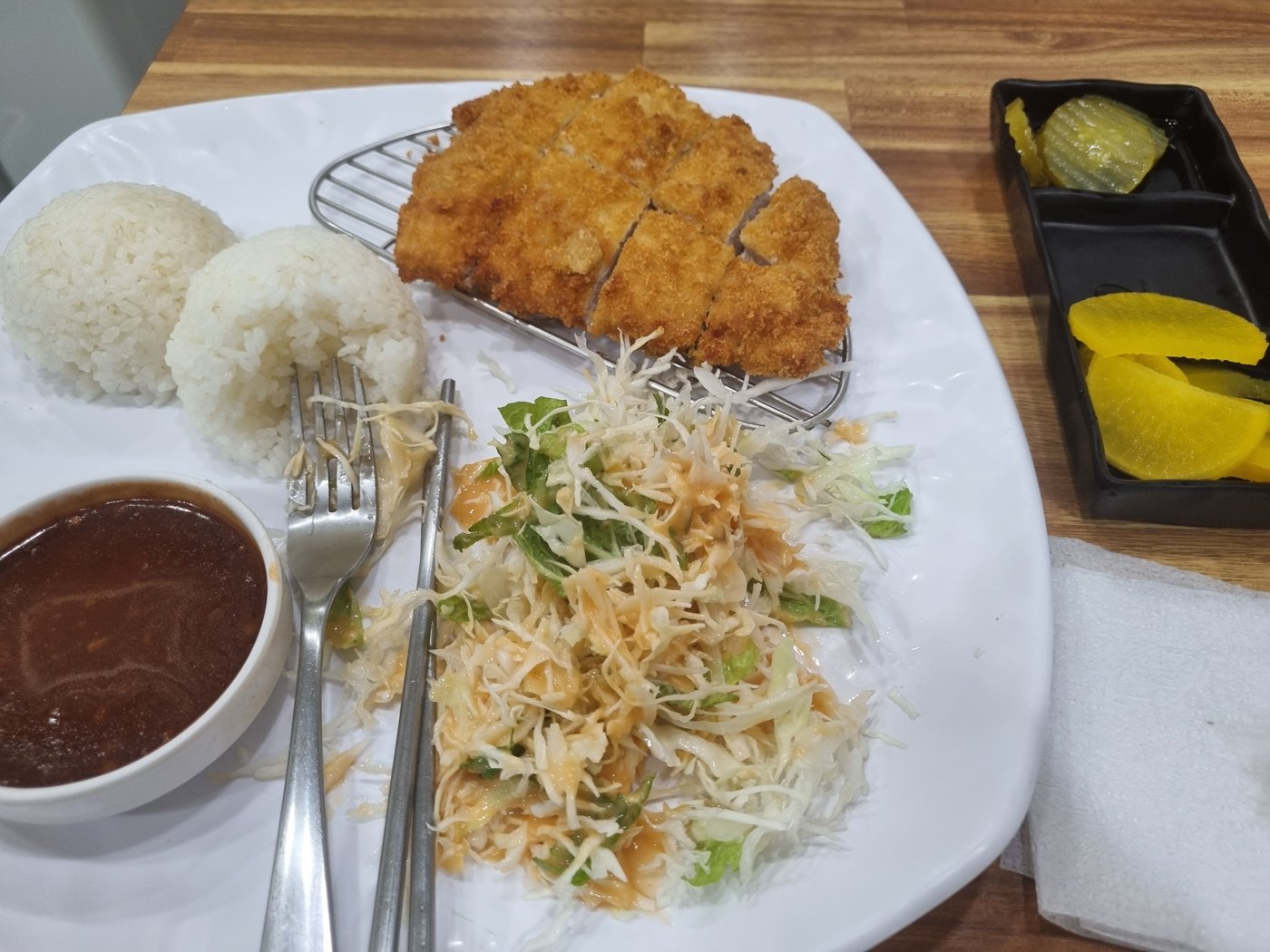
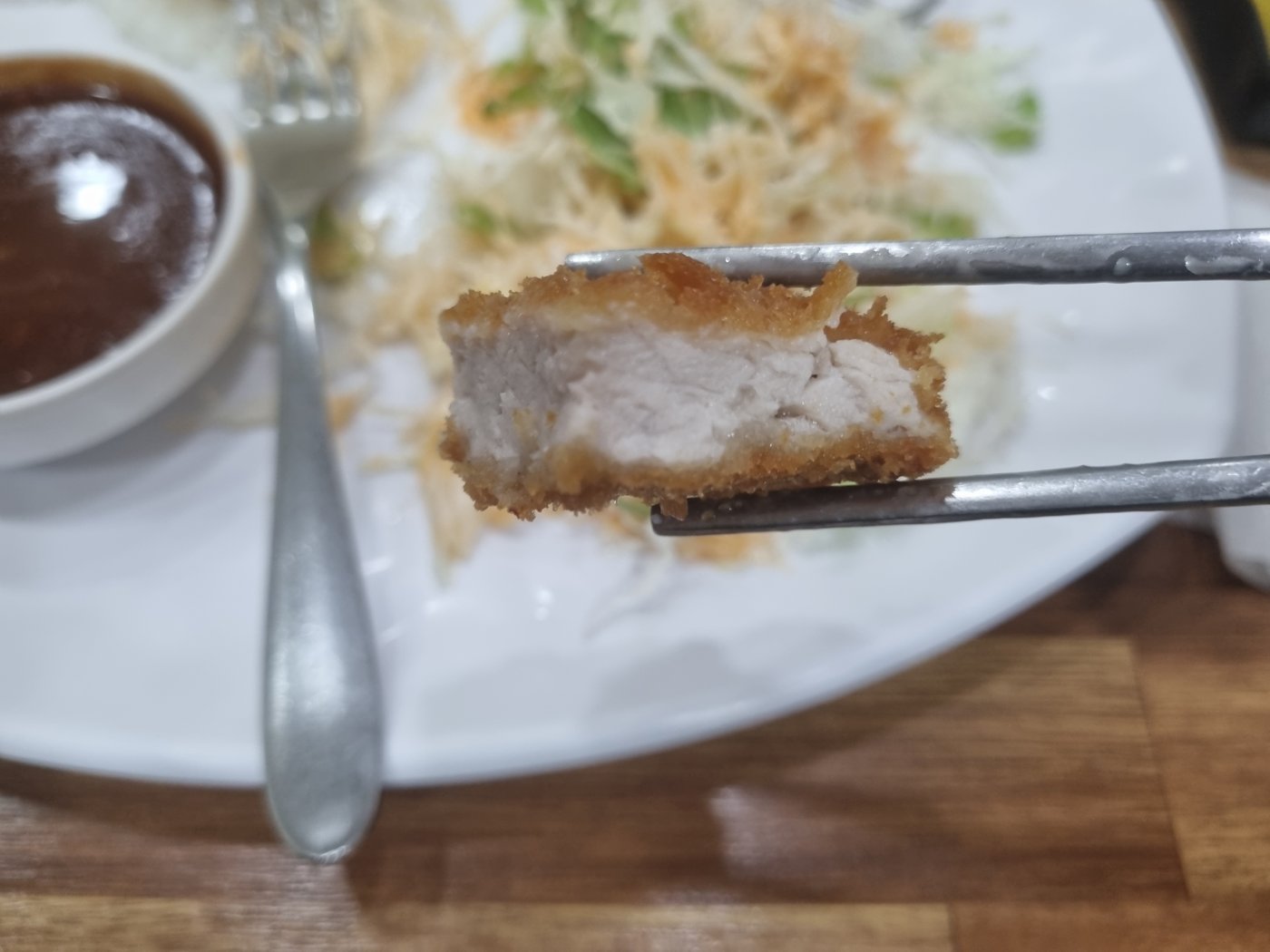
Thick, and tender. And — this is the part that matters — not a trace of the pork smell. Once a cutlet shop lets that through it is finished. This one had none of it.
The sauce was about 90% standard Korean cutlet sauce and 10% demi-glace — familiar rather than clever, and good. The pickles were sharp and sweet and well made.
I did not eat the kimchi. The origin notice lists it as Chinese. I tried it once here, found an off smell and a texture I did not like, and since then I ask them to leave it off.
This is a normal thing to notice in Korea, and the notice on the wall is what lets you notice it. Restaurants are required to post the country of origin for cabbage kimchi. How to read that notice →
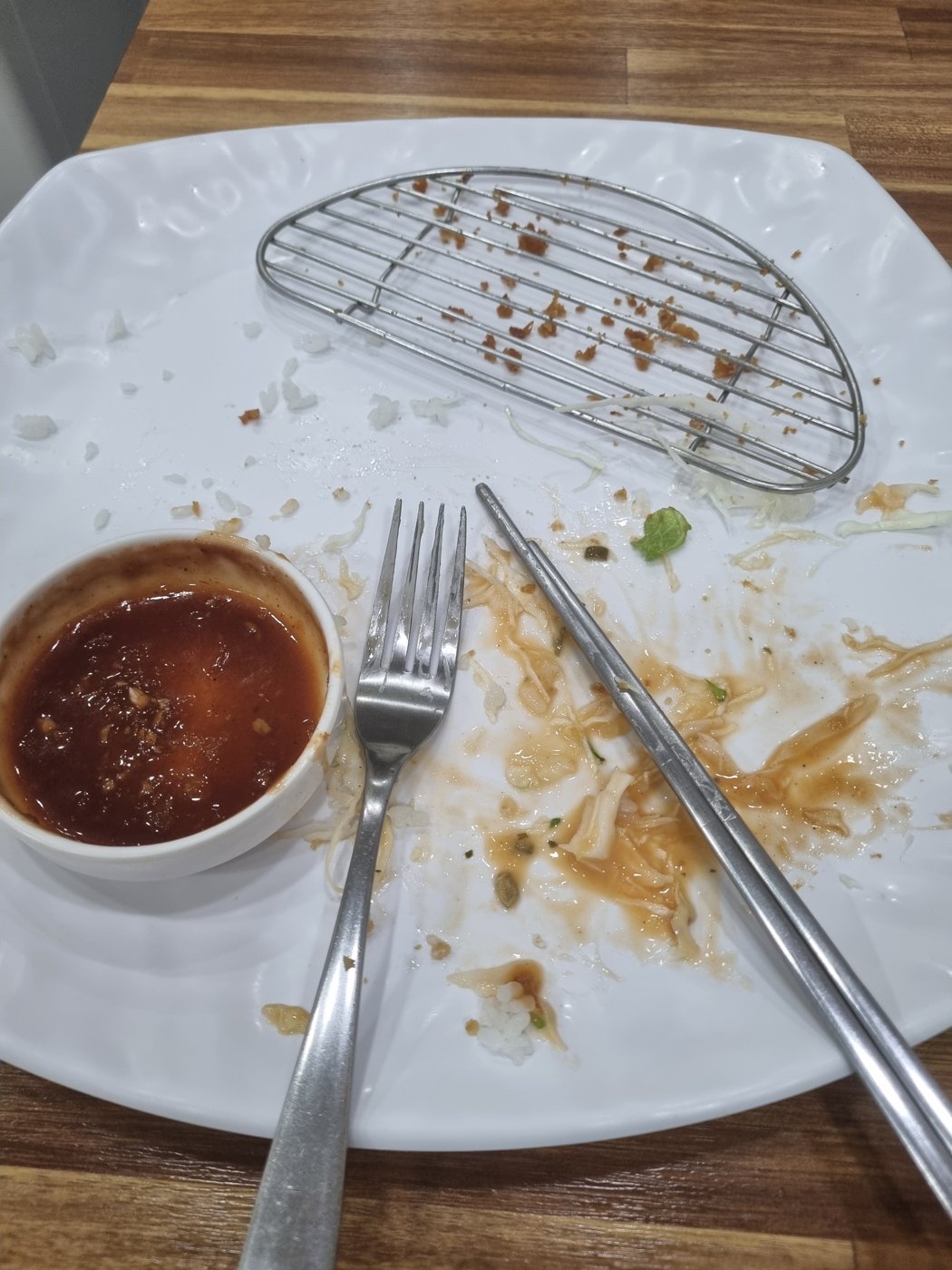
Walking back
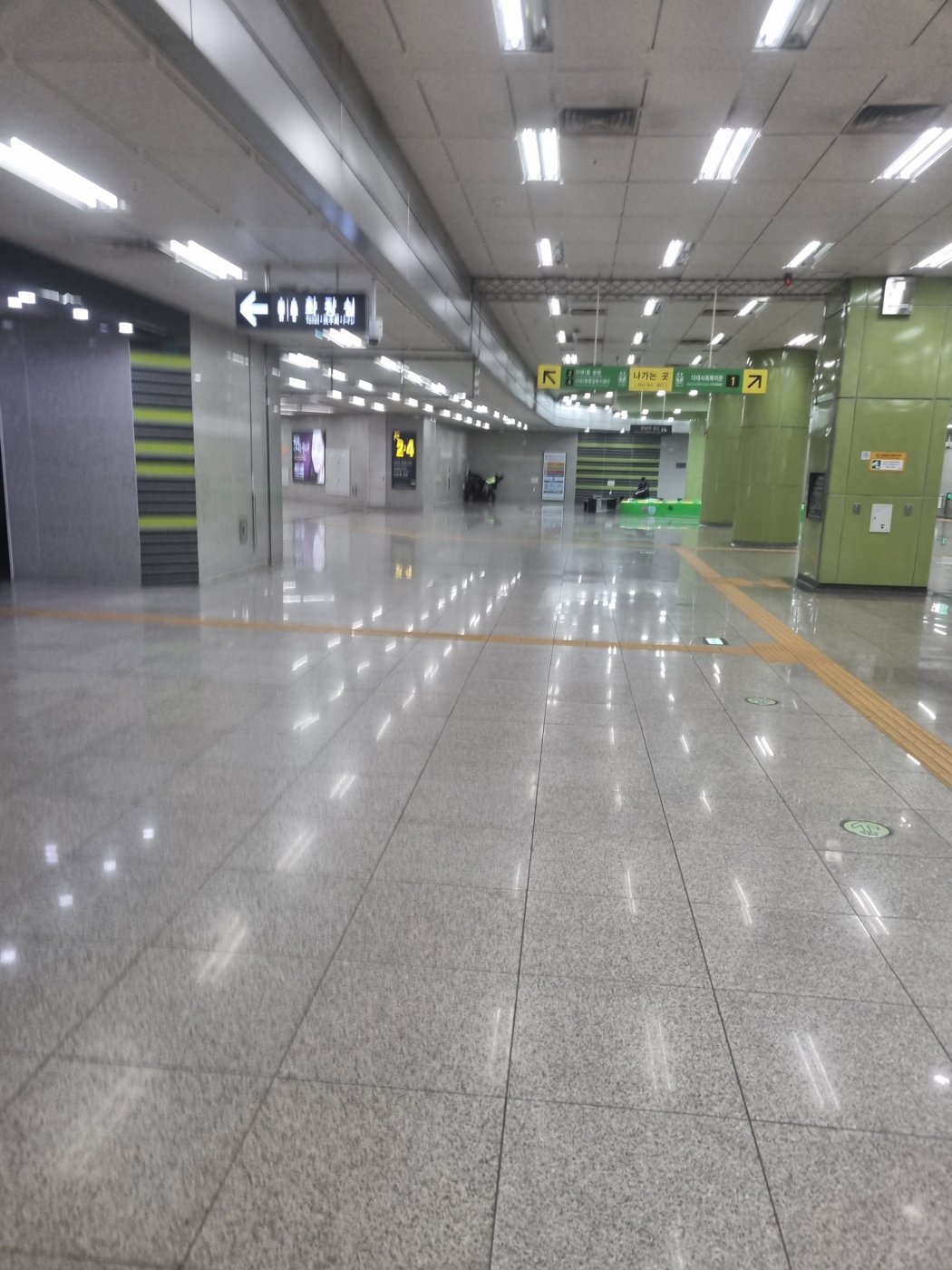
Out through the same corridor, past the same signs. It will come to mind again. Probably in about a week.
If you want to try this yourself
- Look up. Those sign-covered buildings have restaurants on the first two floors. The good cheap ones are often inside rather than on the street.
- Pull the side of the table for chopsticks and spoons.
- If soup arrives, drink it. And if you have a Korean friend with you, ask why it comes first — most of them have an answer involving their parents.
- Thick-cut or pounded flat? Saeng donkkaseu for thick, wang donkkaseu for the wide flat one.
- It is not spicy. Pork cutlet is one of the safest orders in Korea if you cannot take chilli heat.
| What you want | Show this | Say it |
|---|---|---|
| Pork cutlet | 돈까스 | don-kka-seu |
| Thick-cut, Japanese style | 생돈까스 | saeng-don-kka-seu |
| The wide flat one | 왕돈까스 | wang-don-kka-seu |
| No kimchi, please | 김치는 빼주세요 | kim-chi-neun PPAE-joo-se-yo |
| A bowl of rice | 공깃밥 주세요 | GONG-gi-bap joo-se-yo |
Read next
- Jjajangmyeon — the other foreign dish that became Korean
- Korean Pork, All 17 Ways — where donkkaseu sits among the rest
- What is free at a Korean restaurant
Is there a dish you start missing after a week? Tell us in the comments.