Searching for Korean restaurants in English finds you the same ten places every other visitor went to. Searching in Korean finds you where people who live there eat.
You do not need to read Korean to do it. You need three words to paste in, and a translation app. It takes about thirty seconds.
The method
Paste a Korean search string into Naver. Open the blog posts. The address, the hours, the photos and the honest opinion are all inside them.
Korean restaurant discovery runs through blogs, not map ratings. People write up meals at length — where it is, what they ordered, what it cost, whether they would go back. Naver puts those posts at the top of its results, which is why Koreans search there.
So the whole job is getting the right words into the search box. After that you are reading a blog, and everything you need is already in it.
The search string
Three parts, in this order:
| Part | What it is | Example |
|---|---|---|
| 1. Place | Neighbourhood or subway station, in Korean | 해운대 · 서면 · 홍대 |
| 2. Dish | The Korean dish name | 밀면 · 돼지국밥 · 돈까스 |
| 3. The magic word | 맛집 — “good food place” | 맛집 |
Put them together with spaces:
해운대 밀면 맛집 · 서면 돼지국밥 맛집 · 다대포 돈까스 맛집
The more specific the place, the better the result. A city name returns tourist lists. A neighbourhood or station name returns the places locals go.
Where each piece comes from
- The dish name — from our guides. Every dish we cover is printed with its Hangul so you can copy it straight out. Start with the Food Matcher if you have not chosen yet.
- The place name — the easiest source is the subway. Station signs and transit apps show the Hangul, and station names work well as search terms because that is how Koreans describe where a restaurant is.
- 맛집 — the same three characters every time. Copy it from this page.
Reading the blog in translation
Korean food blogs follow a predictable shape, which makes them easy to skim even if you cannot read a word.
- Photos of the food and the shopfront — no translation needed, and they tell you most of what you want to know.
- The address, usually near the bottom, often with a small map. This is the part you were looking for. Copy it into whatever map app you use.
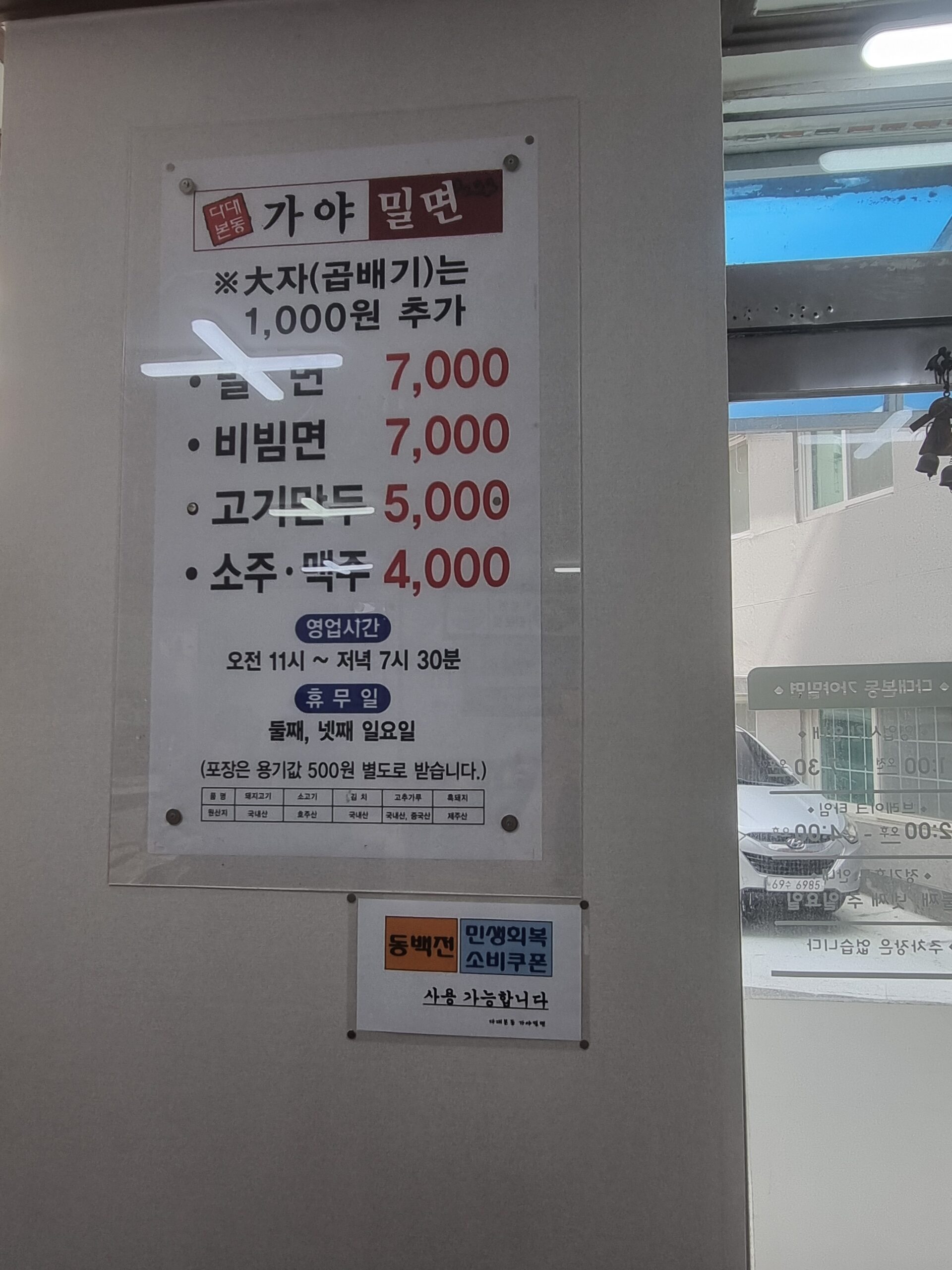
- Hours and closed days — frequently inside an image rather than as text.
- What they ordered, what it cost, whether they would return — the part worth translating properly.
Use a camera translation app pointed at the screen rather than copying text. Korean blog posts put a lot of their information inside images, and text translation will miss it entirely.
One caveat: sponsored posts
A lot of Korean food blog posts are paid or comped. Korean advertising guidelines require this to be disclosed in the title or at the start of the post, so it is usually visible if you know what to look for.
| Korean | Means |
|---|---|
| 협찬 | Sponsored |
| 광고 | Advertisement |
| 원고료 | Paid a writing fee |
| 내돈내산 | “My money, my purchase” — not sponsored |
내돈내산 is the one to look for — bloggers put it in titles specifically to say the meal was not comped. It is a claim rather than a certification, but it is a useful signal.
A sponsored post is still useful. The address, the hours and the photographs are accurate. It is the enthusiasm you discount.
Three worked examples
In Haeundae, Busan, after reading our cold noodle guide.
Search 해운대 밀면 맛집 — you get local write-ups of Busan’s own wheat cold noodles with addresses, instead of a list of beach cafés.
Near Seomyeon, wanting the Busan pork soup.
Search 서면 돼지국밥 맛집 — Seomyeon has a dense cluster of them, so you can choose on atmosphere rather than price.
Wanting a pork cutlet, not in a tourist district.
Search [station name] 돈까스 맛집 — this is where the method earns its keep. Ordinary neighbourhood restaurants have no English-language footprint at all.
Things that make it work better
- Add 현지인 (locals) if results look too polished: 서면 돼지국밥 현지인 맛집.
- Search the specific dish, not the category. 삼겹살 맛집 beats 고기 맛집 by a wide margin.
- Check the post date. Korean restaurants change hands quickly. A two-year-old post is a lead, not a fact.
- Hours are what goes stale first. Treat them as approximate.
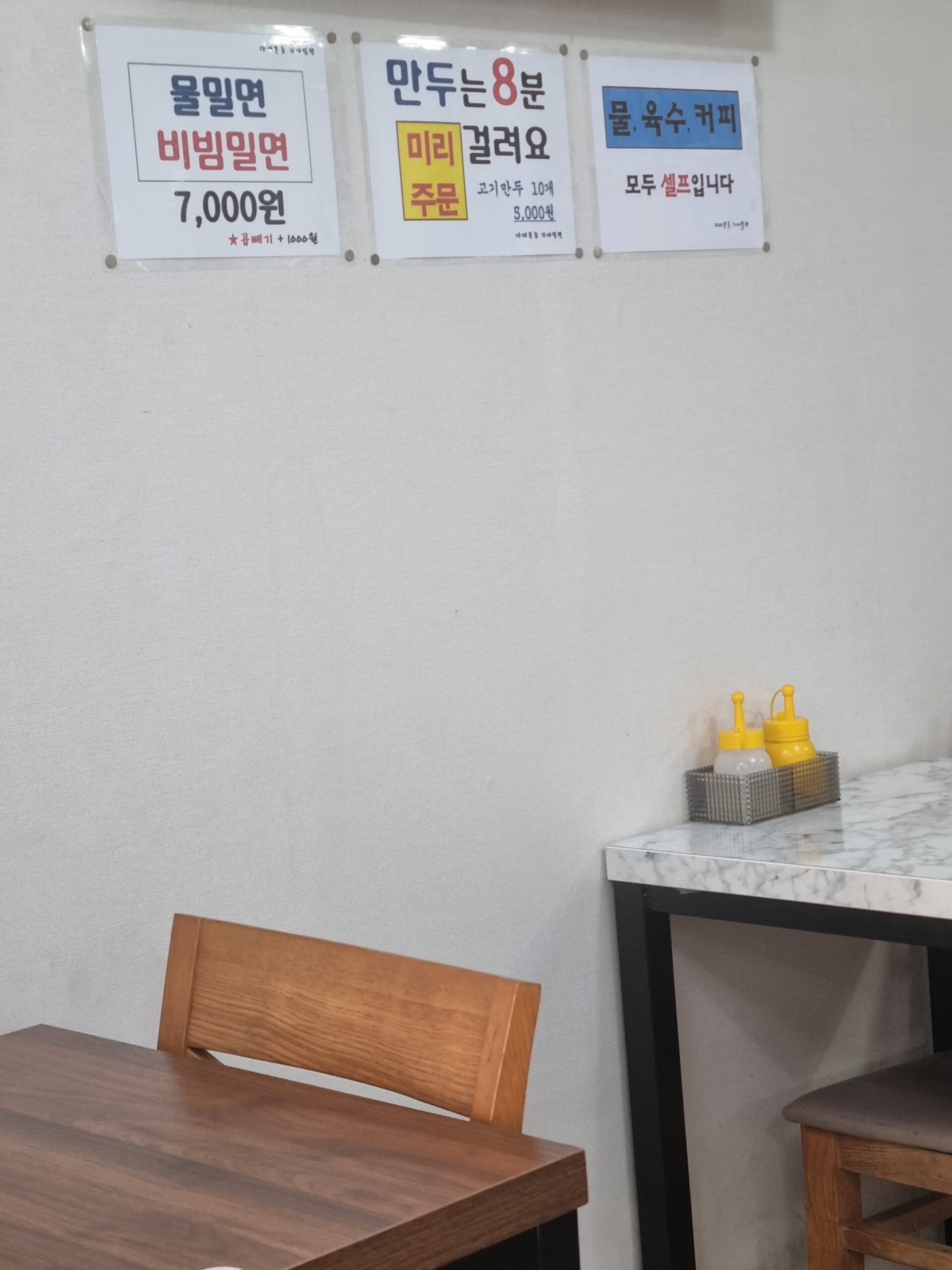
- 브레이크타임 (break time) is real — many restaurants close between lunch and dinner, often somewhere around 15:00 to 17:00.
Copy-paste Korean
| What you want | Paste this | Say it |
|---|---|---|
| Good food place | 맛집 | mat-jip |
| Locals’ place | 현지인 맛집 | hyeon-ji-in mat-jip |
| Not sponsored | 내돈내산 | nae-don-nae-san |
| Sponsored | 협찬 | hyeop-chan |
| Break time | 브레이크타임 | beu-re-i-keu-ta-im |
| Closed day | 휴무일 | hyu-mu-il |
Get your dish names here
Every guide below prints the Korean for each dish. Pick a dish, copy the Hangul, add your neighbourhood and 맛집.
- Korean Food Matcher — 13 questions, 84 dishes, all with Hangul
- Korean Pork, All 17 Ways
- Korean Chicken Is Seven Dishes
- Korean Cold Noodles
- Korean Raw Fish by Season
Found somewhere good this way? Tell us what you searched — the strings that work are worth collecting.
3 thoughts on “How to Find Good Restaurants in Korea When You Do Not Read Korean”