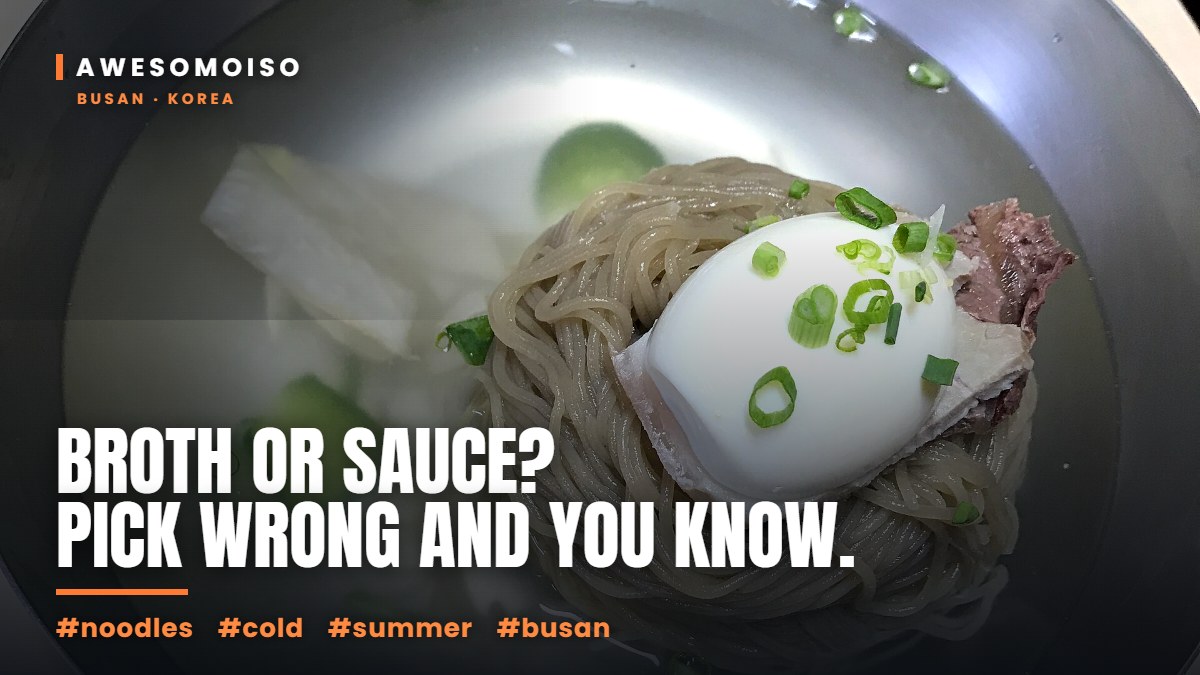
Every Korean summer runs on one question, asked at the table, usually with the menu already closed: mul or bibim?
Broth or sauce. Cold soup or cold mixing. It sounds trivial and it is not — people have preferences they will defend, and ordering wrong means watching someone else eat the right one for twenty minutes.
And if you are in Busan there is a third option that confuses the question entirely.
Milmyeon is not naengmyeon with a different name
The difference is the grain, and the grain is the whole story.
| Naengmyeon 냉면 | Milmyeon 밀면 | |
|---|---|---|
| Noodle | Buckwheat (메밀) | Wheat (밀) |
| Texture | Breaks cleanly, slightly grainy | Chewier, springier |
| Broth | Beef or radish-water based, austere | Faintly sweet, herbal undertone |
| From | North Korea — Pyongyang, Hamhung | Busan |
| Age | Centuries | 1950s |
Milmyeon exists because of a shortage. Refugees who came south during the Korean War brought naengmyeon with them and could not get buckwheat in Busan. Wheat flour was what the city had, so wheat flour is what they used.
Milmyeon is what happens when people who know exactly what a dish should taste like are forced to make it out of something else — and the replacement turns into its own thing.
It is sweeter and chewier than naengmyeon, and less severe. Busan people will tell you it is the better dish. People from elsewhere often find naengmyeon cleaner. Neither group is going to convince the other. Full milmyeon guide →
Mul or bibim: the actual decision
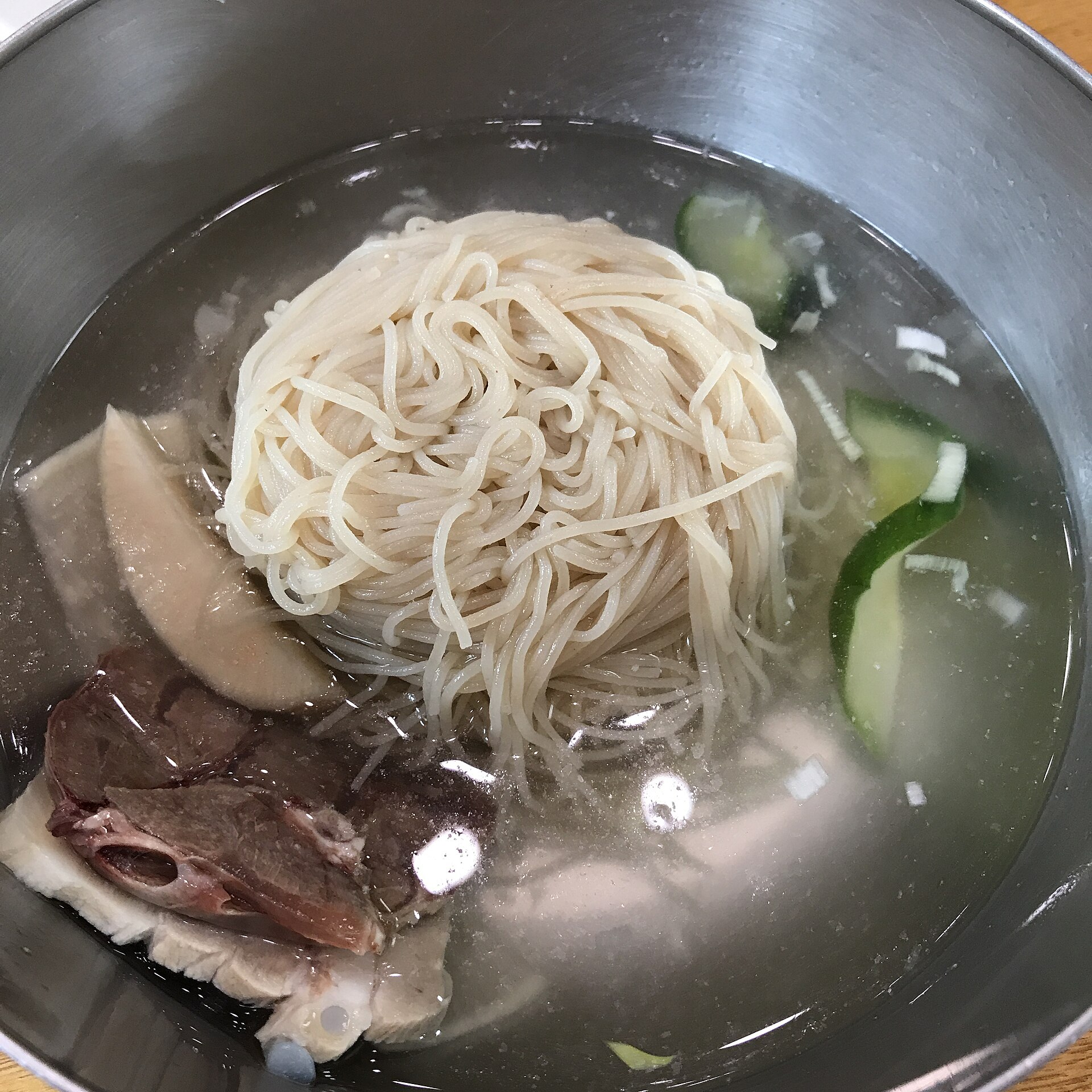
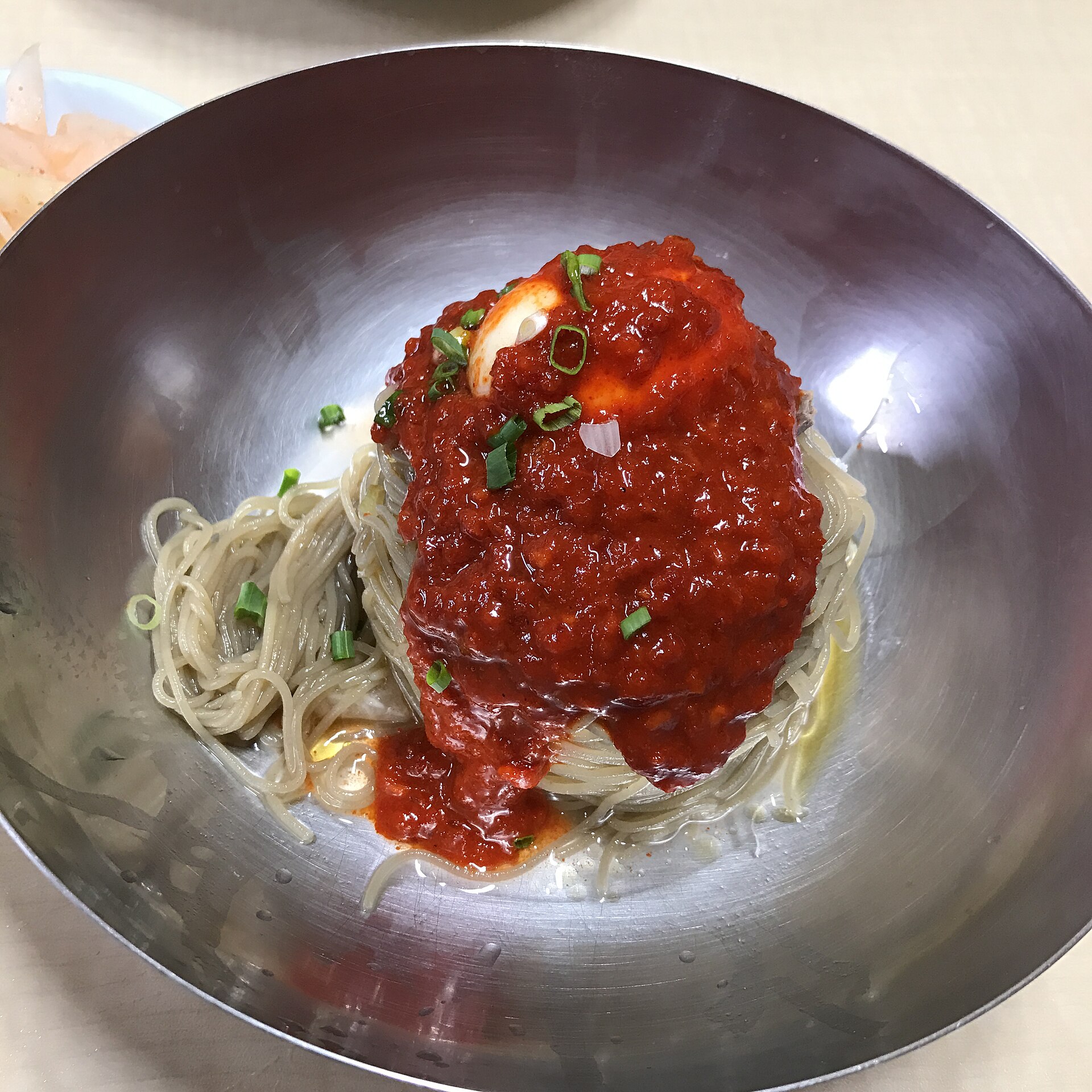
Mul (물) means water: noodles sitting in chilled broth, often with ice in it. Bibim (비빔) means mixed: no broth, a red chilli-paste dressing you work through the noodles yourself.
- Mul is restrained. It tastes of broth, vinegar and mustard, and most of what you taste is what you added. Cooling in a way bibim is not.
- Bibim is loud. Sweet, sour, properly hot. It wakes you up rather than cooling you down.
- Mul is the one that improves as you eat it. Bibim is the one that is best in the first four bites.
The real reason the question is hard: they are not two versions of one dish, they are two different experiences and you only get one bowl. Hence the twenty minutes of regret.
If a table is split, some shops will serve a half-and-half. Many will not. Ask before you assume.
But the real split is not mul and bibim
Here is the part that catches people out. The deeper division in naengmyeon is not broth versus sauce — it is Pyongyang versus Hamhung, two northern cities with two different noodles.
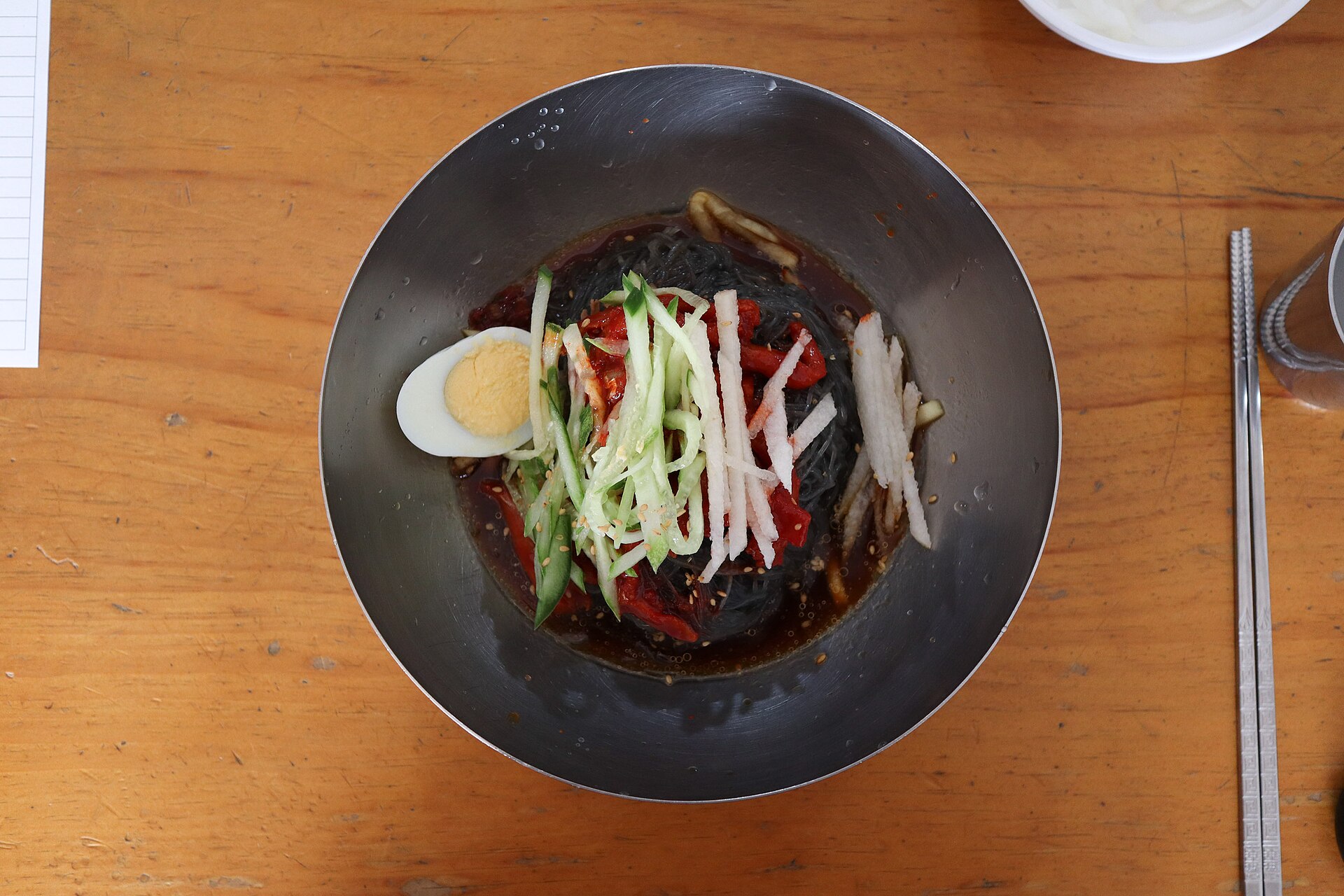
- Pyongyang (평양냉면) — heavy on buckwheat. The noodle is soft and breaks cleanly when you bite it. Served in broth. This is the austere one.
- Hamhung (함흥냉면) — made with sweet potato starch. The noodle is translucent and so chewy it genuinely resists being bitten through. Usually dressed with chilli paste. This is the one most people meet first.
So Hamhung-style tends to be the bibim you have eaten, and Pyongyang-style tends to be the mul. It is not an absolute rule, but it is why the two questions get tangled together. And if you have ever wondered why the scissors arrive — Hamhung noodles are the reason.
Pyongyang naengmyeon, honestly
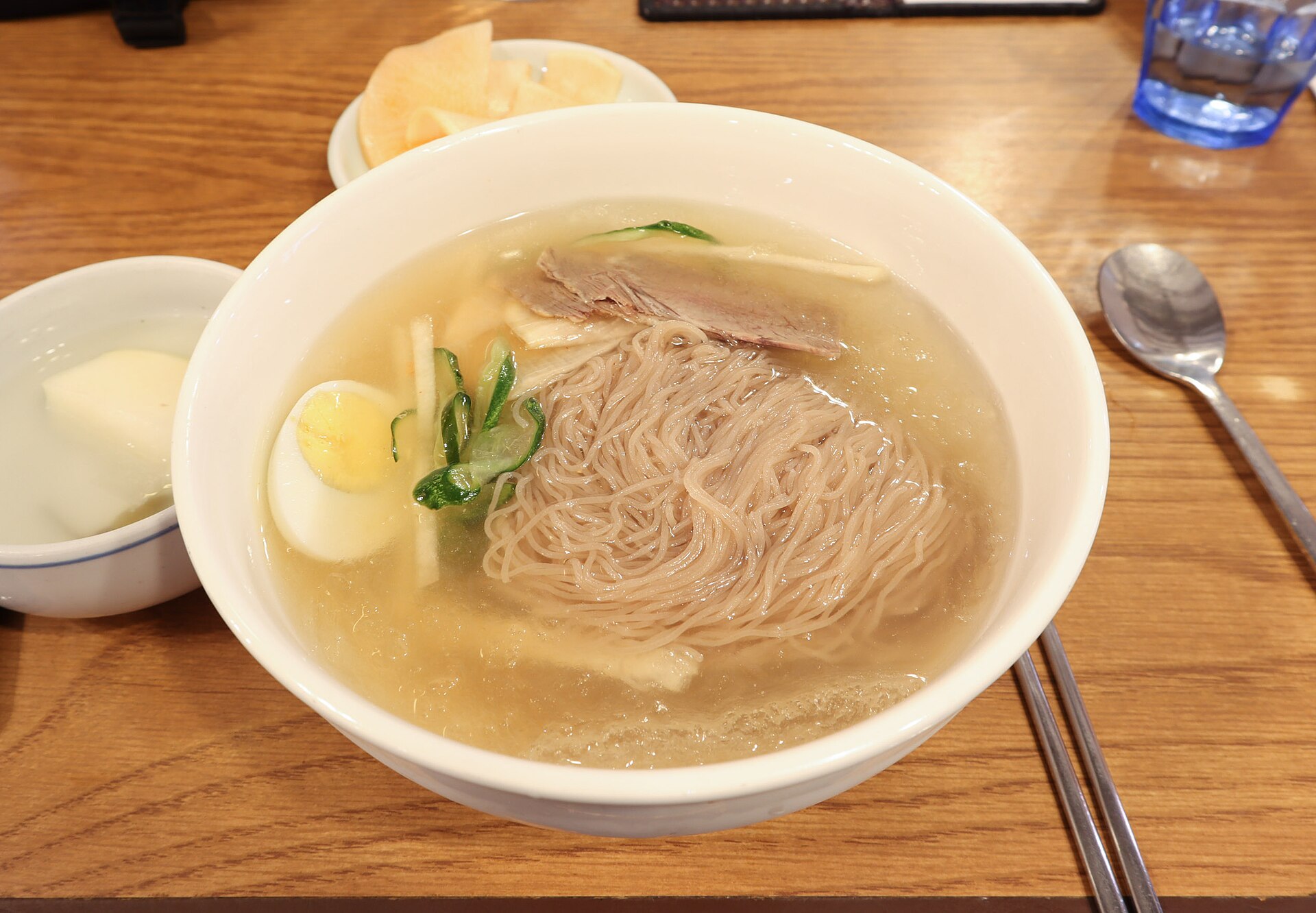
This one deserves its own section, because it is the single most divisive dish in Korean food and the divide does not run between Koreans and foreigners. It runs between Koreans.
A serious Pyongyang naengmyeon arrives pale, quiet and barely seasoned. The Korean word for it is seumseum (슴슴) — mild in a way that edges toward bland, and used approvingly. Detractors have described the broth as dishwater. Both camps are describing the same bowl accurately.
The first reaction of many first-timers is some version of: is this it?
I will be straight with you: I am still one of them. I have eaten it, I understand what is supposed to be happening, and I do not yet feel it. That is an honest position and it is a common one.
And yet. There is a sizeable population of Koreans who are devoted to this dish in a way they are not devoted to any other — who rank shops, argue about broth, and find themselves thinking about a bowl the next day and going back for it. The pattern they describe is consistent: nothing happens on the first visit, and then at some point it opens up.
Reviewers who get there describe the flavour as unfolding gradually across a bowl rather than arriving at the first spoonful. The traditional broth is a blend of meat stock and dongchimi — the liquid from radish water kimchi — and the dongchimi is deliberately under-fermented so it stays light.
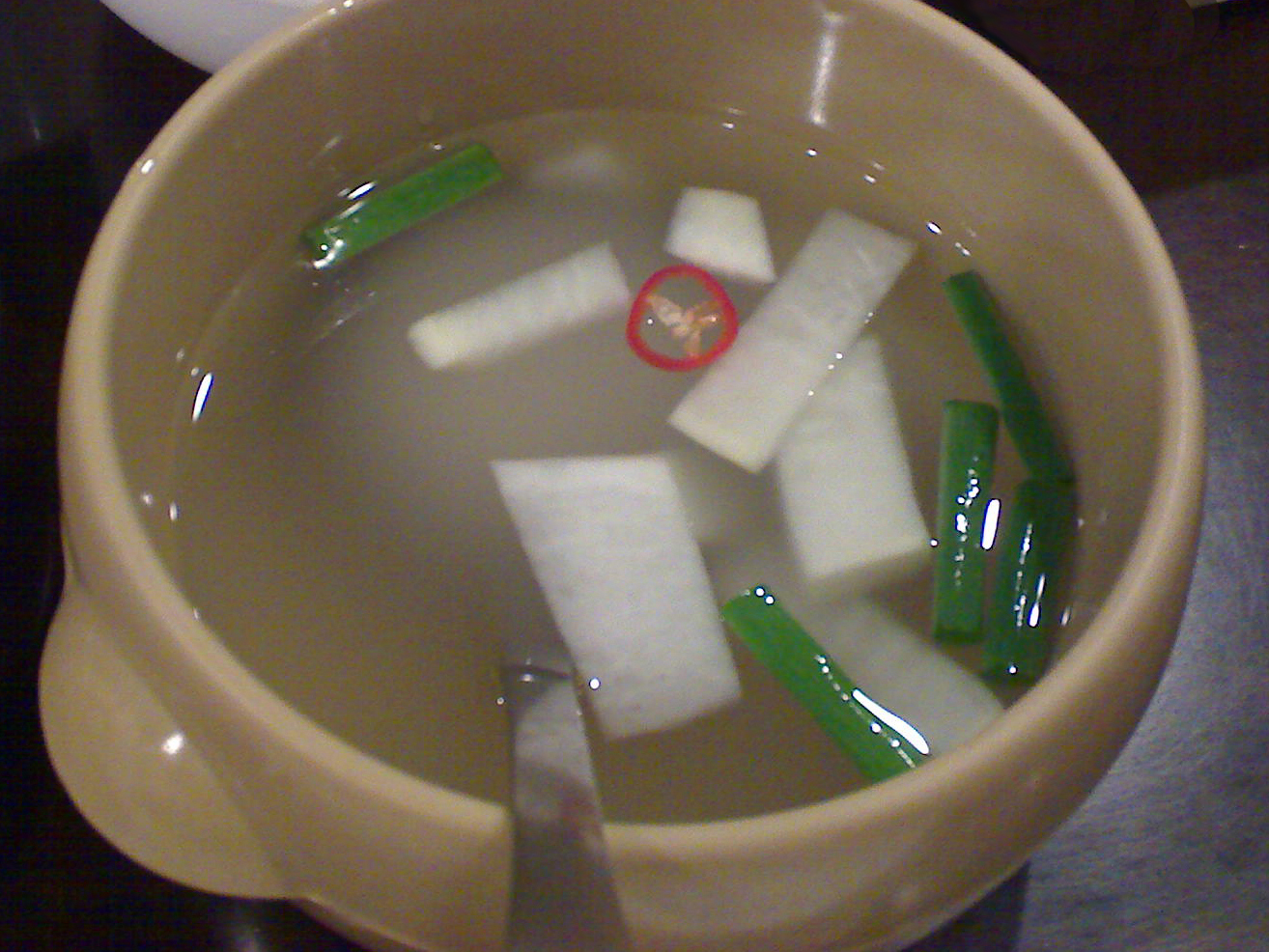
It is also expensive, which makes the whole thing harder. A bowl of noodles that tastes of restraint, costs more than most lunches, and may well do nothing for you on the first attempt is a difficult first order. Prices vary widely by shop and we are not quoting a figure, but expect it to sit well above an ordinary noodle lunch.
So should you order it?
- Not on your first trip, if you only get one cold-noodle meal. Have milmyeon or a Hamhung-style bowl and enjoy it.
- Yes if you are curious about why Koreans argue about food — this is the dish the arguments are actually about.
- If you do order it: taste the broth before adding anything. Then add vinegar, then mustard, and taste again at each step. Shops that take it seriously put both on the table and expect you to use them.
- Some shops are gentler than others. The beef comes through more clearly at some, which makes a reasonable entry point. Ask for a recommendation rather than going straight to the most famous name.
And if it does nothing for you, that is a legitimate outcome. Plenty of Koreans feel the same and say so out loud.
Choosing, in one block
- In Busan, first time? Milmyeon. It is the local one and it is friendlier.
- Want cooling and clean? Mul.
- Want flavour and heat? Bibim.
- Want chew? Hamhung style.
- Cannot eat chilli? Mul, any style. No chilli at all.
- Want to understand the obsession? Pyongyang naengmyeon — and give it more than one visit.
Copy-paste Korean
| What you want | Show this | Say it |
|---|---|---|
| In broth | 물냉면 | mul-NAENG-myeon |
| Mixed with chilli sauce | 비빔냉면 | bi-bim-NAENG-myeon |
| Busan wheat noodles | 밀면 | mil-myeon |
| Pyongyang style | 평양냉면 | pyeong-yang-NAENG-myeon |
| Hamhung style | 함흥냉면 | ham-heung-NAENG-myeon |
| Half and half, if they do it | 반반 되나요? | ban-ban DWEH-na-yo? |
| Scissors, please | 가위 주세요 | ga-wi joo-se-yo |
Where to go next
- Korean Cold Noodles — all five, including the vegan one
- Milmyeon, in full
- Three Busan Dishes the Port Created
Mul or bibim? And if you have cracked Pyongyang naengmyeon, tell us how long it took.
2 thoughts on “Mul or Bibim? The Korean Summer Question – and the Bowl Even Koreans Argue About”