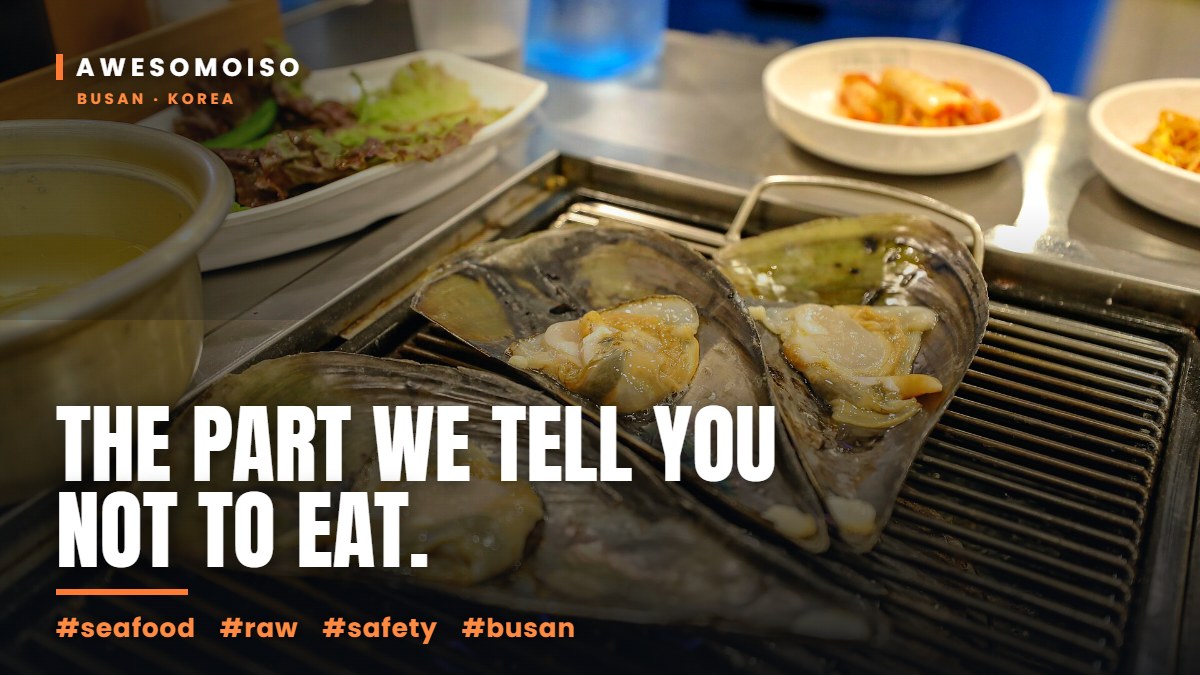
Busan is a port city, so seafood here is not a special occasion. It is lunch, it is street food, and it is what people drink with.
This guide splits the category the way it actually matters to a visitor: cooked first, raw second. Not because raw is worse — some of it is the best food in the country — but because the decision is different, and there is a real safety question worth taking seriously.
Part six of a nine-part map of Korean food by ingredient.
Cooked: where to start
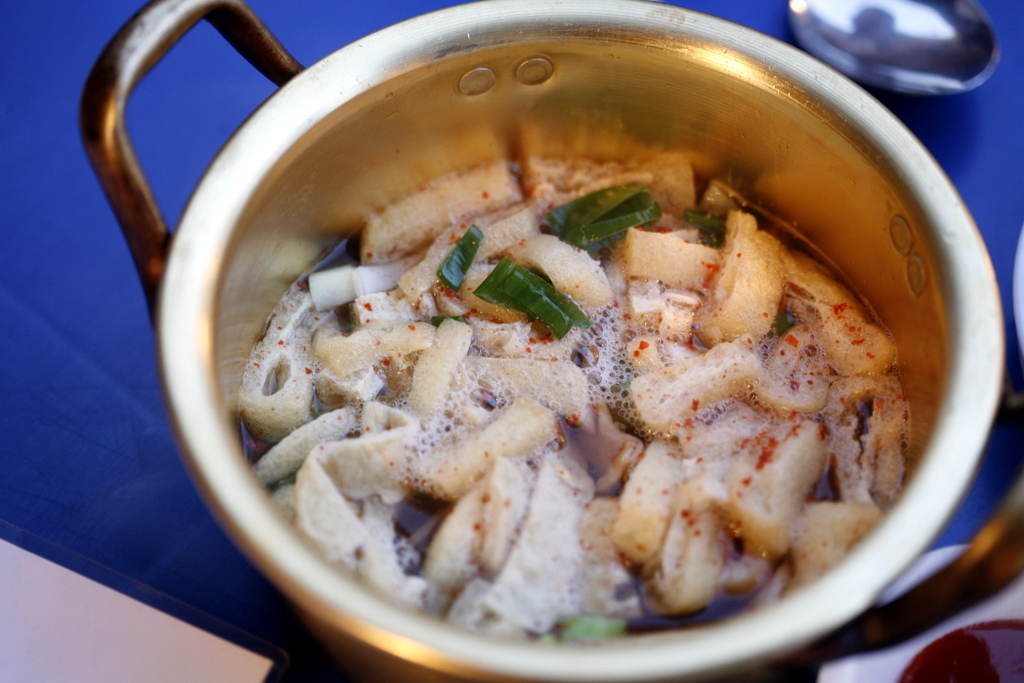
Eomuk · 어묵 · eo-muk · not spicy
Fish cake — on a skewer from a pot of broth at a street stall, or fried in dozens of shapes. Mild, savoury, slightly bouncy. Busan is the city most associated with it.
The broth is the real draw in winter, and it is free. Take a paper cup, help yourself, refill it. That is expected, not cheeky. Eat standing at the stall, pay for the skewers you used. Full eomuk guide →
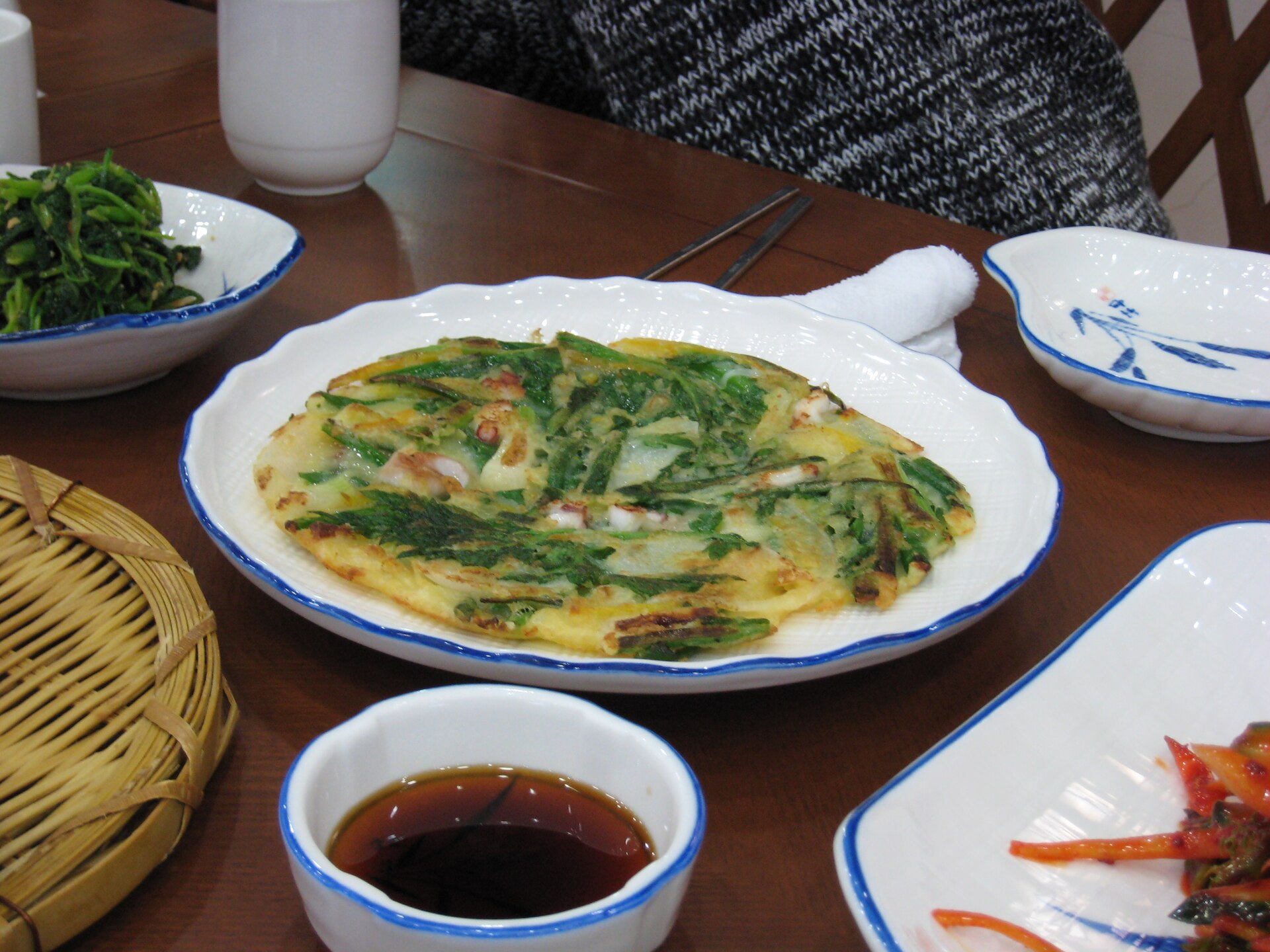
Haemul Pajeon · 해물파전 · hae-mul-pa-jeon · not spicy
A thick scallion pancake studded with squid and shellfish, fried in a generous amount of oil. Closer to a dense seafood fritter than to a crepe.
This is rain food, and that is not a tourist story. The sound of rain is said to resemble batter hitting hot oil, and pancake shops genuinely fill up on wet days. Drunk with makgeolli, shared, never ordered alone.
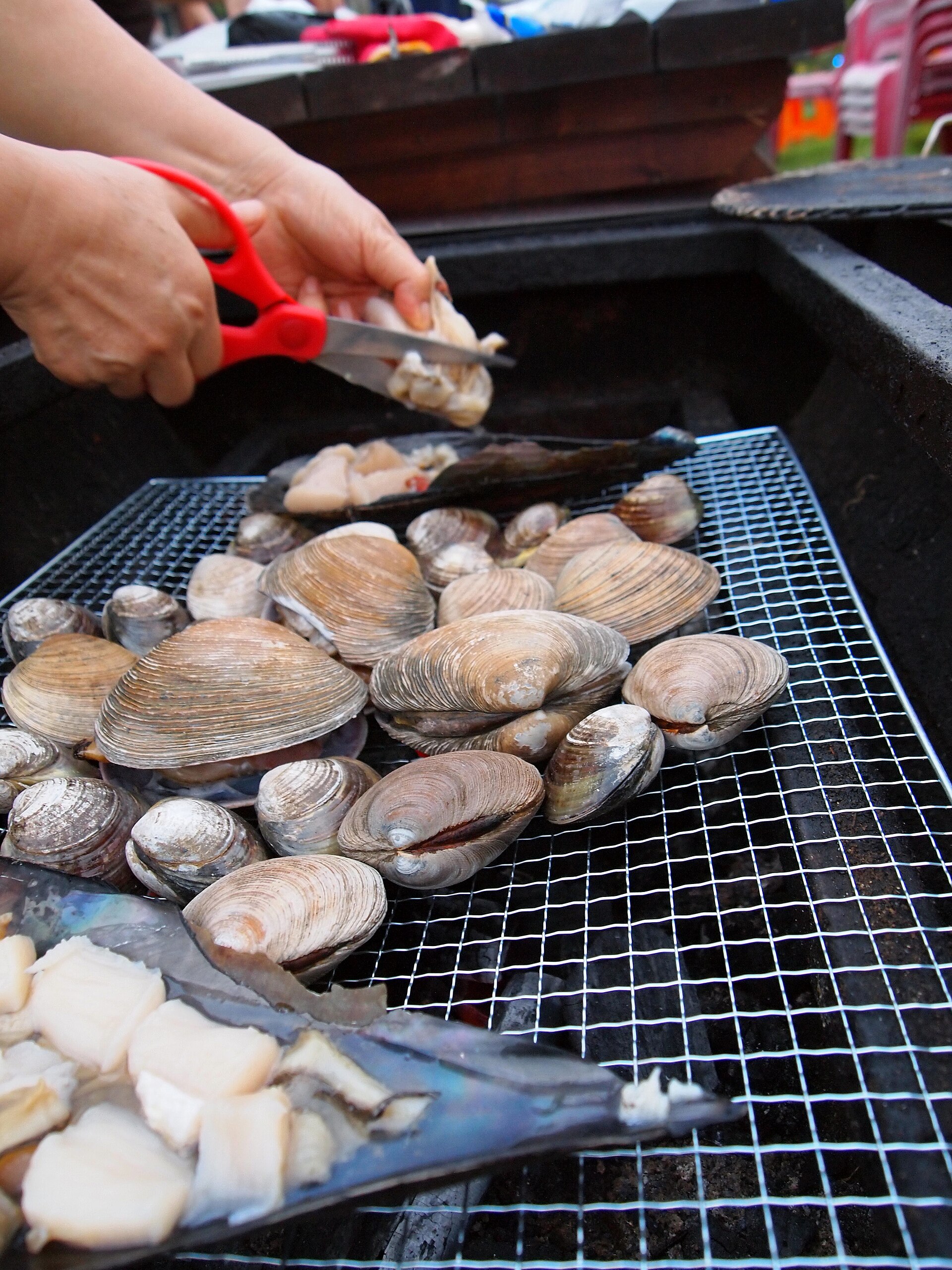
Jogae-gui · 조개구이 · jo-gae-gui · not spicy
An assortment of shellfish grilled over coals at your table and eaten straight from the shell. Sweet and briny, with charcoal smoke over it. Most of it needs no sauce at all.
Staff bring the coals and keep swapping shells as they open. Eat each one as it pops rather than waiting for a full plate. Many places finish by boiling noodles in the shellfish juices left in the pan — say yes to that.
And because it is cooked at high heat in front of you, it sidesteps the raw-shellfish question entirely.
Twigim · 튀김 · twi-gim · mild
Assorted deep-fried pieces — squid, sweet potato, seaweed rolls, stuffed peppers — sold by the piece at stalls. A heavier, chewier batter than tempura, built to be dipped rather than eaten plain.
The standard move is to buy it alongside tteokbokki and dip it straight into the red sauce. That is the intended use, not a shortcut. Ordering twigim with nothing to dip it in is missing the point.
The seafood soups — the most underrated group here
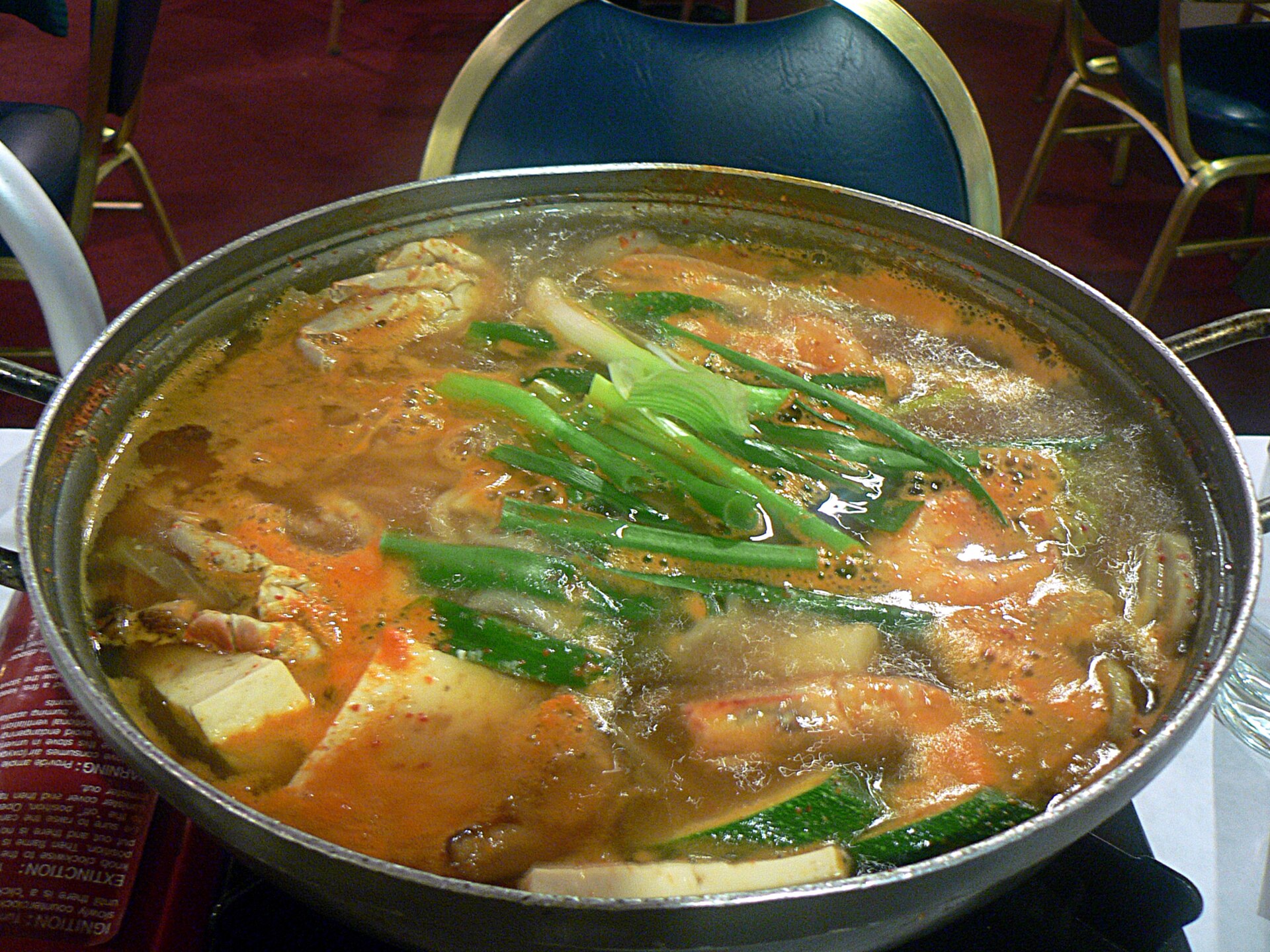
If you want Korean seafood without any of the raw-food calculation, this is the answer, and most English-language guides skip it entirely in favour of sashimi and street food.
- Haemultang (해물탕) — a big shared pot of crab, prawn, squid, clams and vegetables in a red broth. Spicy. Finish it with noodles or rice cooked in what is left.
- Gul-gukbap (굴국밥) — oyster soup with rice, mild and clean, salted at the table like other gukbap. This is how most Koreans eat oysters, and it is the version worth seeking out.
- Miyeokguk (미역국) — seaweed soup, often with beef or shellfish. Plain, slightly slippery, deeply ordinary. Koreans eat it on their birthdays, because mothers eat it after giving birth.
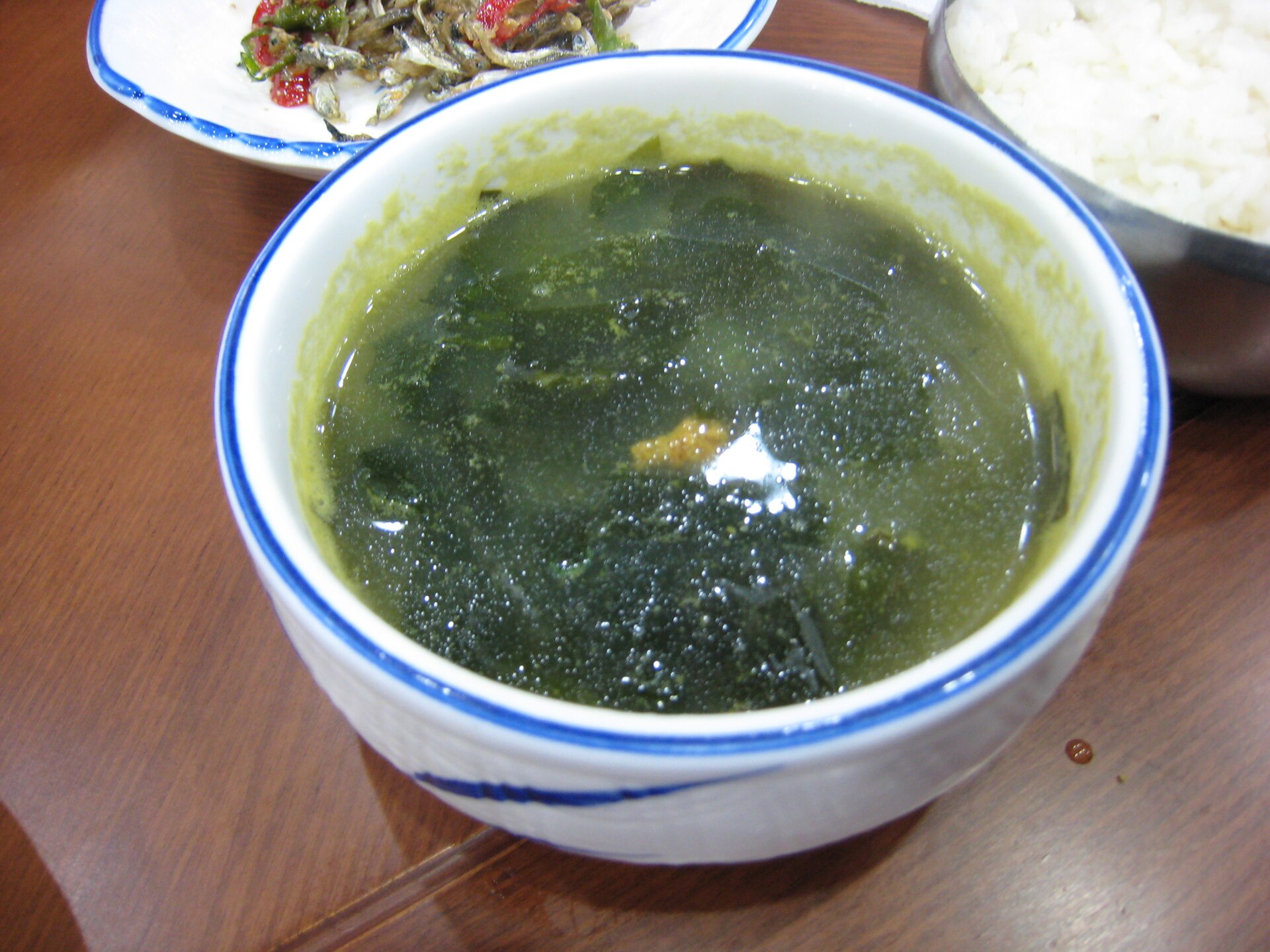
Miyeokguk on a birthday is one of the few Korean food customs that is genuinely universal, and saying “did you eat miyeokguk?” on someone’s birthday is a normal thing to ask. The gukbap family, explained →
Grilled, and specific to Busan
Gomjangeo · 꼼장어 · gom-jang-eo · spicy
Hagfish grilled over charcoal, usually under a sweet-hot chilli glaze. Firm and springy — closer to squid than to eel.
Strictly drinking food. Almost nobody orders it as a lunch. Eaten wrapped in lettuce or perilla leaf with raw garlic, at the table, with soju. Jagalchi in Busan is where it concentrates, to the point that it reads as a local speciality. More on gomjangeo →
Raw: worth it, with your eyes open
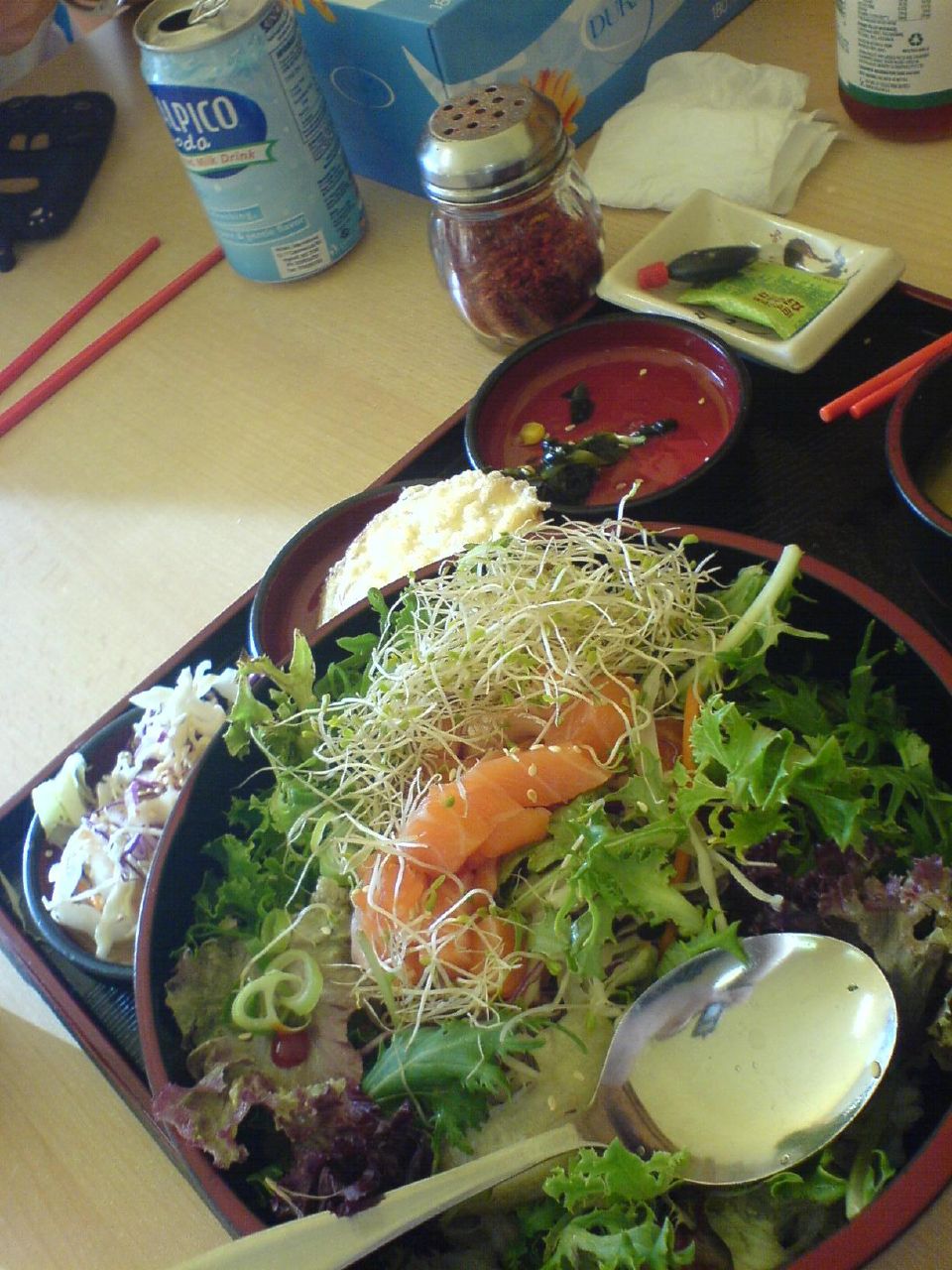
Hoe · 회 · hoe · mild
Raw fish, sliced thicker than Japanese sashimi because Korean cuts prize texture over fattiness. Eaten with chilli-vinegar paste, wrapped in lettuce. The meal has two halves — the fish, then a soup made from its bones. Seasonal guide and how to buy it at a market →
Hoe-deopbap · 회덮밥 · hoe-deop-bap · mild
Raw fish and vegetables over rice, mixed hard with chilli vinegar paste. Bibimbap with sashimi instead of beef — cold and tart against warm rice. A normal solo lunch near fish markets, and far cheaper than ordering sashimi as a course.
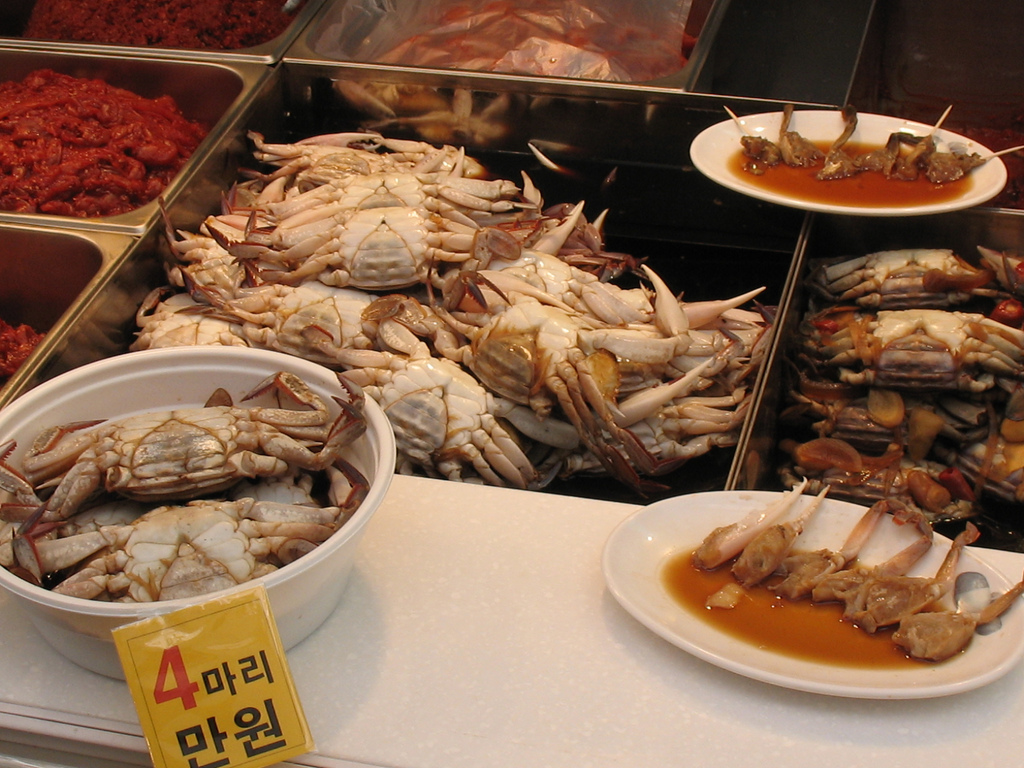
Ganjang Gejang · 간장게장 · gan-jang-ge-jang · not spicy
Raw crab cured in soy sauce. Silky, briny, deep — there is genuinely nothing comparable in Western food. Its nickname is the rice thief, and the last step makes the nickname literal: when the meat is gone, rice goes into the empty top shell, mixed with the roe and the brine, and eaten from it.
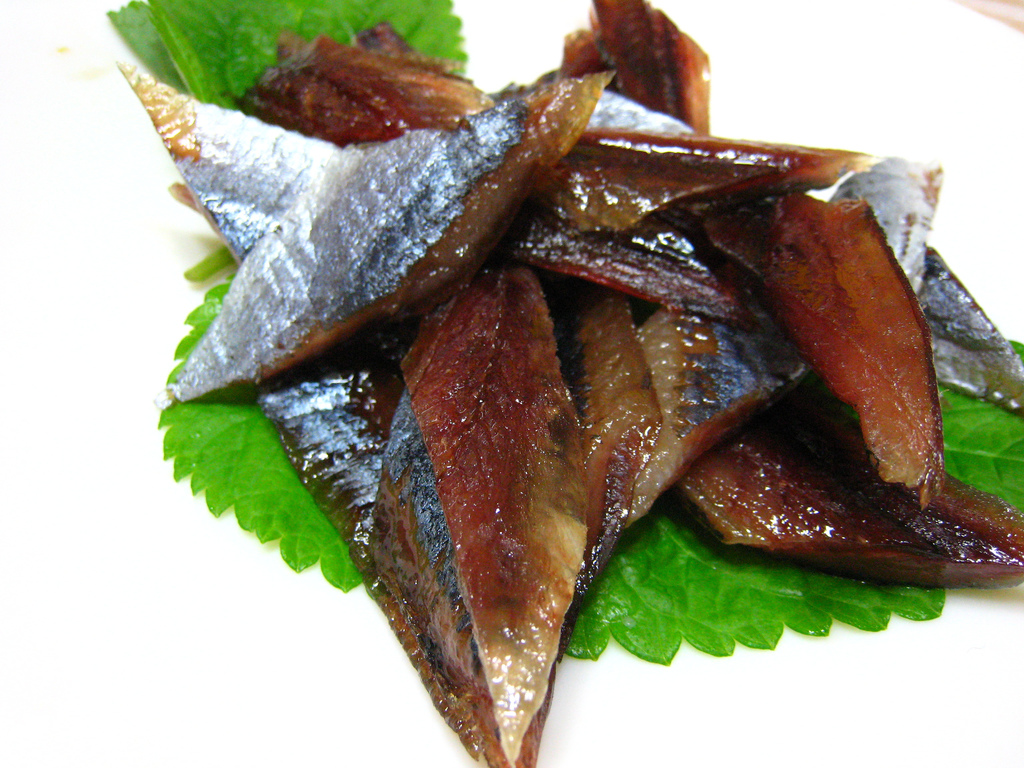
Gwamegi · 과메기 · gwa-me-gi · mild
Saury or herring half-dried in winter wind, eaten raw. Oily, dense and strong — the nearest reference is a soft, unsmoked version of smoked fish. A winter speciality of Pohang.
Never eaten alone on the plate. One piece goes into a sheet of laver with lettuce, raw seaweed, garlic and a dab of paste, and the whole parcel goes in at once. Eating a bare piece is the mistake visitors make, and it is a much harder first impression than it needs to be.
The safety part, said plainly
Raw shellfish carries a real risk in Korea, and it is seasonal. Norovirus survives cold well, and Korean food-safety authorities issue winter warnings every year about raw oysters specifically. In one reported stretch, raw-oyster-linked reports between November and January ran at roughly two and a half times the three-year average for the same months.
- Oysters sold in Korea are labelled either for raw eating or 가열조리용 (for cooking). The cooking-grade ones are not a cheaper version of the same thing — they must be heated through. The official guidance is a core temperature of 85°C for at least one minute.
- Authorities advise older people, young children and anyone with a weakened immune system to skip raw oysters entirely and eat them cooked — gul-gukbap, oyster pancake, steamed oysters.
- Raw fish (hoe) is a different risk profile from raw shellfish, and the tank-side checks in our hoe guide are the practical ones there.
We are not going to tell you raw oysters are a must-try in Korea. Cooked, they are excellent and carry none of this — and that is how most Koreans eat them anyway.
Guidance changes and these were the figures reported in recent winters. Check current advice from Korea’s Ministry of Food and Drug Safety if you are travelling in winter.
Which one to order
- First time, want it easy? Eomuk from a street stall. Costs little, no commitment.
- Raining? Haemul pajeon and makgeolli. Everyone else will be doing the same.
- Want seafood without the raw question? Haemultang, gul-gukbap, or jogae-gui.
- Eating alone? Hoe-deopbap or eomuk. The grills and shared pots are not solo food.
- Cannot eat chilli? Eomuk, pajeon, jogae-gui, ganjang gejang, miyeokguk.
- Drinking? Gomjangeo in Busan, or jogae-gui anywhere coastal.
- Want the thing you cannot get at home? Ganjang gejang.
Copy-paste Korean
| What you want | Show this | Say it |
|---|---|---|
| Fish cake | 어묵 | eo-muk |
| Seafood pancake | 해물파전 | hae-mul-pa-jeon |
| Grilled shellfish | 조개구이 | jo-gae-gui |
| Spicy seafood pot | 해물탕 | hae-mul-tang |
| Oyster soup with rice | 굴국밥 | gul-guk-bap |
| Seaweed soup | 미역국 | mi-yeok-guk |
| Raw fish over rice | 회덮밥 | hoe-deop-bap |
| Soy-cured raw crab | 간장게장 | gan-jang-ge-jang |
| For cooking, not raw (on oyster packs) | 가열조리용 | ga-yeol-jo-ri-yong |
Where to go next
- Spicy Seafood Jjim — agu-jjim, haemul-jjim and the crab question
- Bangeo — the winter fish Korea only recently decided was good
- Korean Raw Fish by Season — and how to buy it at a market
- Three Busan Dishes the Port Created
- Gukbap: why Koreans put rice in the soup
- Korean Pork, All 17 Ways
Part six of nine.
3 thoughts on “Korean Seafood: What to Eat Cooked, What to Eat Raw, and What to Skip”