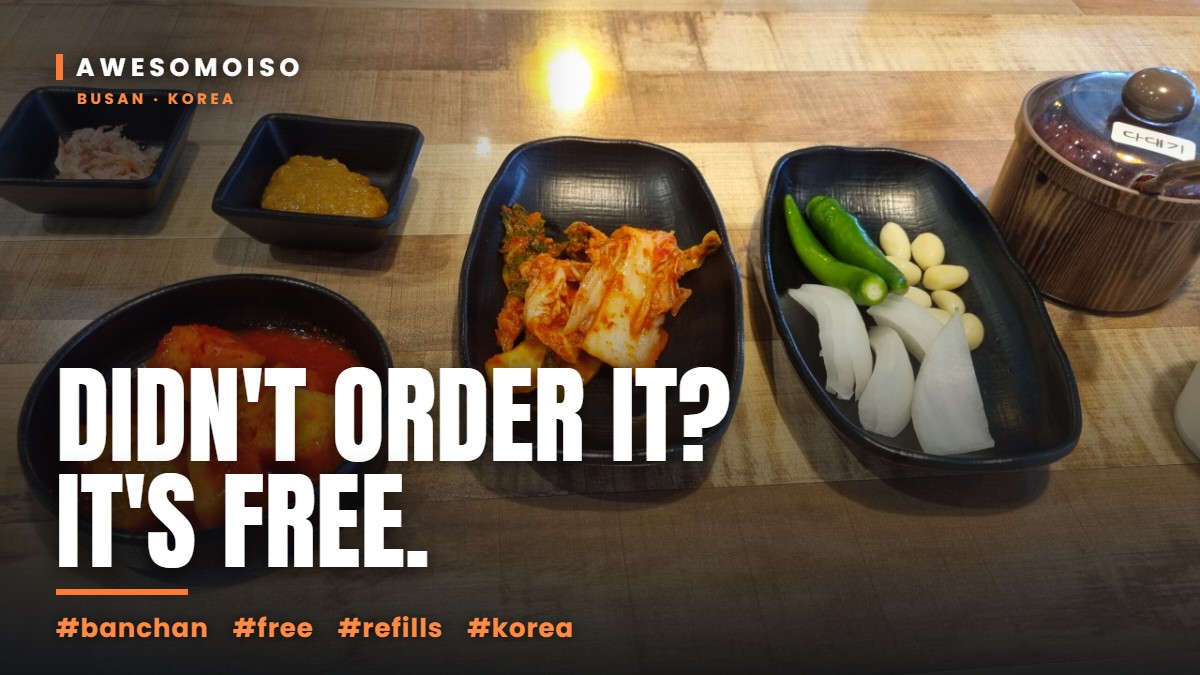
You sit down, order one thing, and nine plates arrive. Nobody explains them, there is no menu listing them, and the waiter has already walked away.
There is a rule, and it is simpler than most guides make it sound.
If it arrived without you asking, it is free. If you ask for something new, expect to pay for it.
That one sentence covers nearly every Korean restaurant you will walk into. The rest of this page is what sits around the edges of it.
Rule one: what arrives unasked is free
Are banchan free in Korean restaurants? Yes. At an ordinary Korean restaurant, the side dishes brought out with your meal are part of the price of the dish you ordered. You are not billed for the kimchi, the bean sprouts, or anything else that lands on the table alongside it. Extra orders and a few restaurant-specific charges are a separate matter — but the plates that arrive with the meal are included. This is the normal practice, not a lucky break.
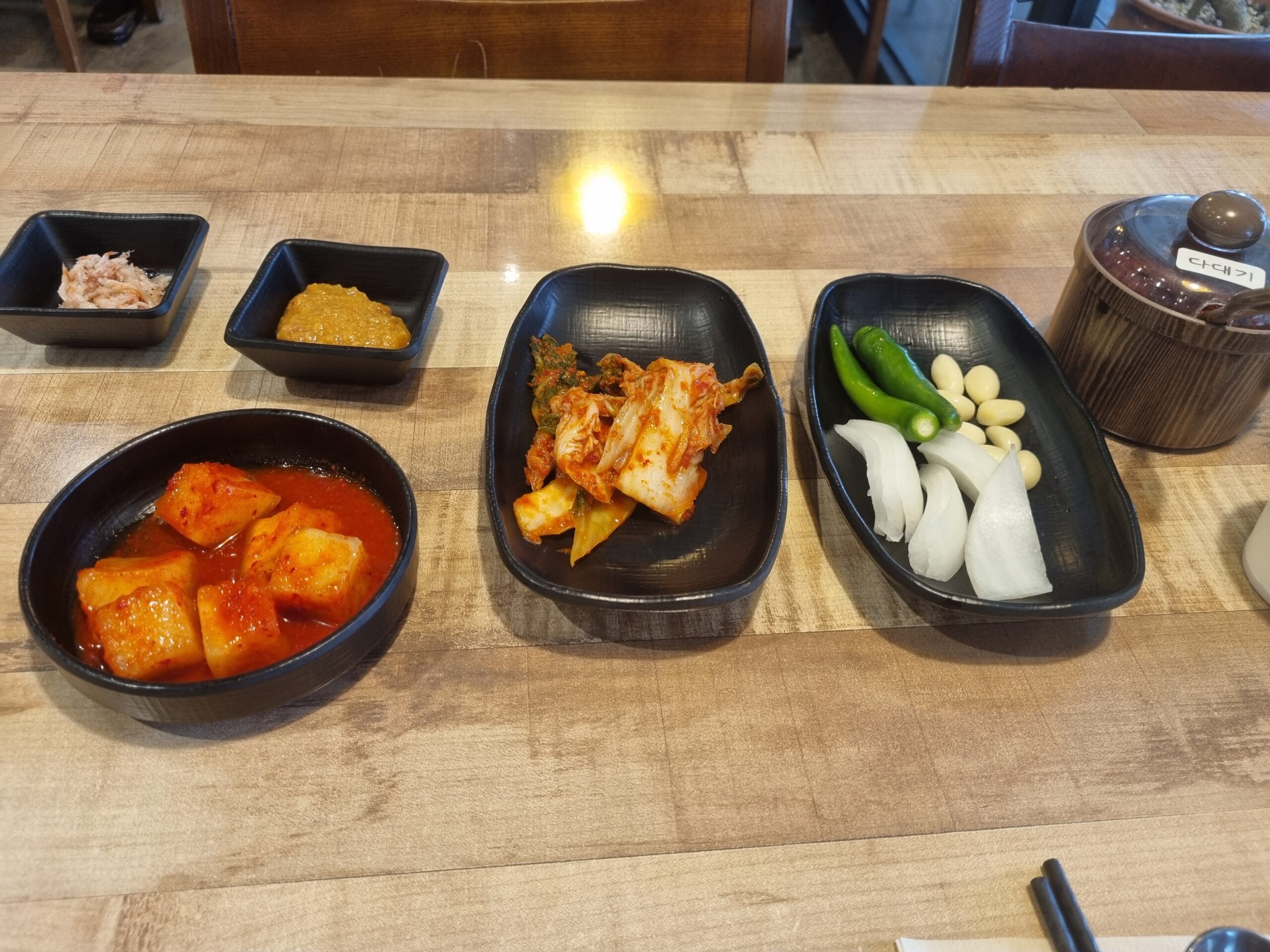
Banchan (반찬) are the small plates that come with the meal. Almost every Korean restaurant sends them out, and you can treat anything that arrives without being ordered as free. Not a trial offer, not a charge hidden at the bottom of the bill.
- You do not order them, and you cannot choose them. The shop decides what comes out.
- Kimchi is nearly always among them. Everything else varies completely from shop to shop.
- They are not an appetiser. You eat them alongside the main dish, moving between rice, banchan and the main throughout the meal.
Rule two: most of it refills, free
Ask for more of what already came, and you will generally get it at no charge. Refills are built into how these restaurants work, not a favour you are extracting.
The exception is worth knowing: a small tasting portion of meat or seafood is not a refillable side dish. If something arrived as a few pieces of grilled meat, a little raw fish, or a couple of shellfish, that is a gesture from the kitchen, and asking for another round of it is a different request.
You often do not need to say anything at all. Nudging an empty dish toward the aisle is usually enough, and many restaurants have a self-serve counter where you simply go and take more.
Take only what you will eat. Refilled banchan that goes back uneaten is thrown away rather than passed on. Two small refills beat one large pile.
Rule three: ask for something new, and it goes on the bill
This is the half people get wrong, and it almost always shows up at the same moment: the bowl of rice at a grill house.
You are eating pork belly. The side dishes keep coming, free. You ask for rice — gonggibap (공깃밥) — and that one is a separate line on the bill. It sat around ₩1,000 for years; some restaurants now charge ₩2,000, more often in Seoul and at the pricier end. Read the menu rather than trusting a number you saw online.
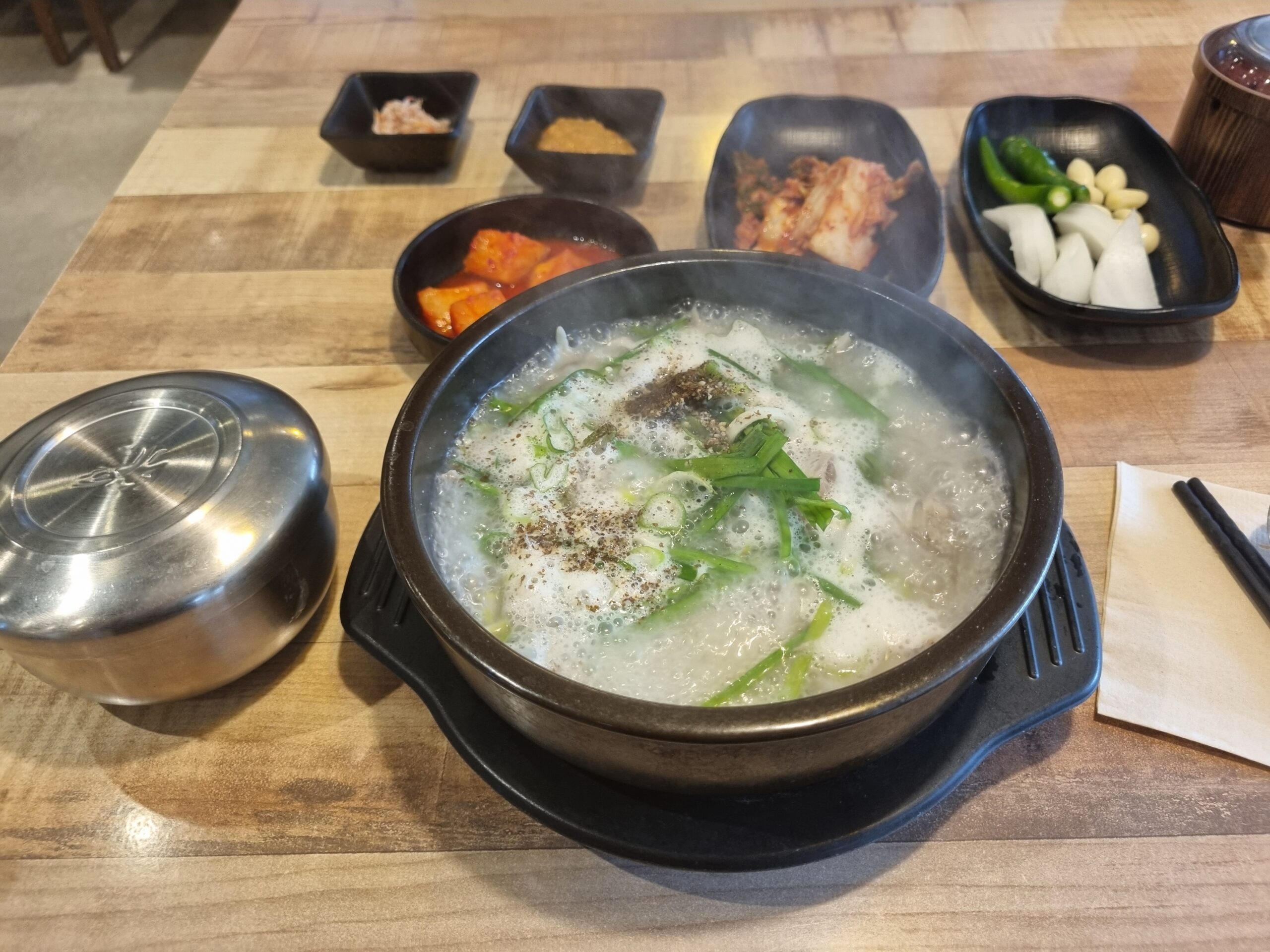
- Gukbap and most soup-rice dishes: rice is included in the dish.
- Grill houses: rice is a separate order, nearly always.
- Stew restaurants: some include rice, some do not.
What arrives alongside the rice varies too — some shops bring the bowl alone, some bring extra side dishes suited to eating rice. That one is shop by shop.
The side dishes are free but the rice is not? Yes. One came unasked; the other you requested. That is the whole logic of the bill.
Want the real thing? Check where the kimchi comes from
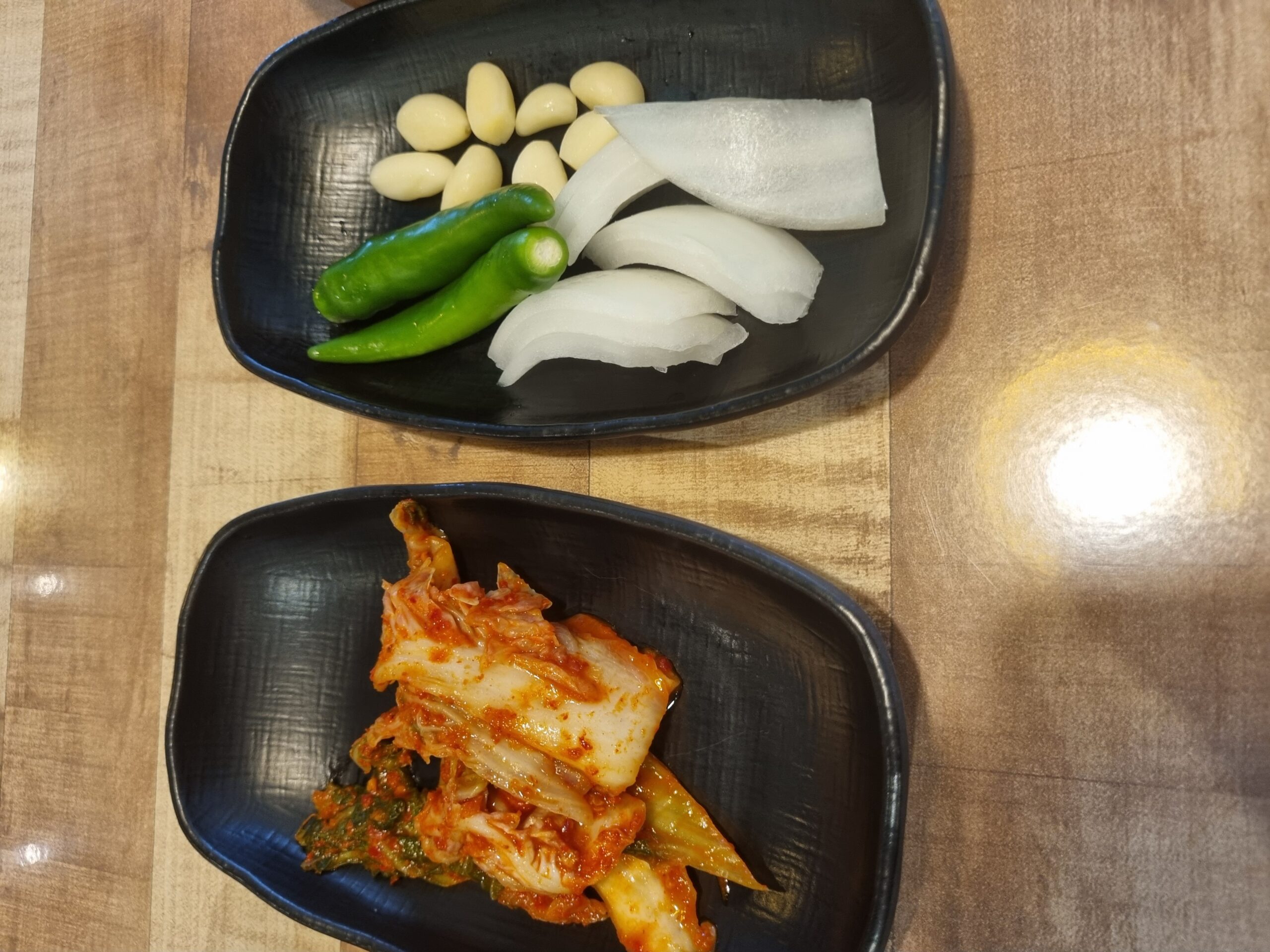
Kimchi is free, and that is exactly why it is worth a second look.
Not all kimchi served in Korea is made in Korea. A significant share of restaurant kimchi is imported, most of it from China. Restaurants are not hiding anything by using it — imported kimchi costs considerably less, and for a shop giving it away by the bowl, that difference adds up fast. The economics are easy to understand.
But if you came to Korea partly to eat Korean food at its source, this is one of the few places where the free dish is the one you should be choosy about.
Price and taste are two different claims
Worth separating, because they are not the same kind of statement:
- The price gap is observable. Domestic and imported kimchi sell at visibly different prices in Korea. That is a market fact anyone can check.
- The taste gap is a judgement — a widely shared one here. Korean diners commonly find domestically made kimchi firmer and fuller-flavoured, and describe the cheaper imported product as softer and flatter. We have not tested this systematically, and it is not true that every imported kimchi tastes the same.
A higher price does not prove better flavour. What it does tell you is that the two are not interchangeable products, and that a restaurant choosing one over the other has made a decision about the food it serves.
Why this matters for a first visit
Kimchi is the dish Korea is best known for. If your first encounter with it is a soft, flat version sitting in a free side dish, you may well decide you do not like kimchi — and you will have formed that opinion about something other than what you came to try.
That is the real cost here. Not money. A wasted first impression of the country’s signature food.
How to check — you do not have to ask anyone
Korean law requires restaurants to display the country of origin for cabbage kimchi, broken out by cabbage and chilli powder separately, printed on the menu or a notice board in letters at least as large as the dish names. Misdeclaring it is a criminal offence rather than a minor infraction, so the notice is generally reliable.
| Korean | Say it | Means |
|---|---|---|
| 배추김치 | BEH-choo-kim-chi | Cabbage kimchi — the line to look at |
| 국내산 or 국산 | GOONG-neh-san / GOOK-san | Domestic (Korean) |
| 중국산 | joong-GOOK-san | Chinese |
A notice reading 배추김치: 배추(국내산) means the cabbage is Korean. One quirk if you plan to say it rather than point: 국내산 is spelled guk-nae-san but pronounced GOONG-neh-san — Korean turns that k into an ng sound before the n.
You do not need to avoid restaurants that use imported kimchi. Plenty of excellent places do, for perfectly ordinary reasons. But if tasting Korean kimchi properly is on your list for this trip, make that particular meal happen somewhere the notice says 국내산 — and judge it there.
Why the refills keep coming at a grill house
A distinction almost nobody explains to visitors.
At a rice-and-stew restaurant, banchan exists so you can eat the rice. At a grill house, banchan exists so you can eat the meat — lettuce, garlic, ssamjang, spring-onion salad, kimchi for the grill. Every one of those goes into the wrap or onto the fire.
Which is why they keep arriving while you are still grilling, on the same table where the rice is a paid item. The refills are not generosity toward your rice bowl. They are part of how the meat gets eaten.
Do not miss the finish
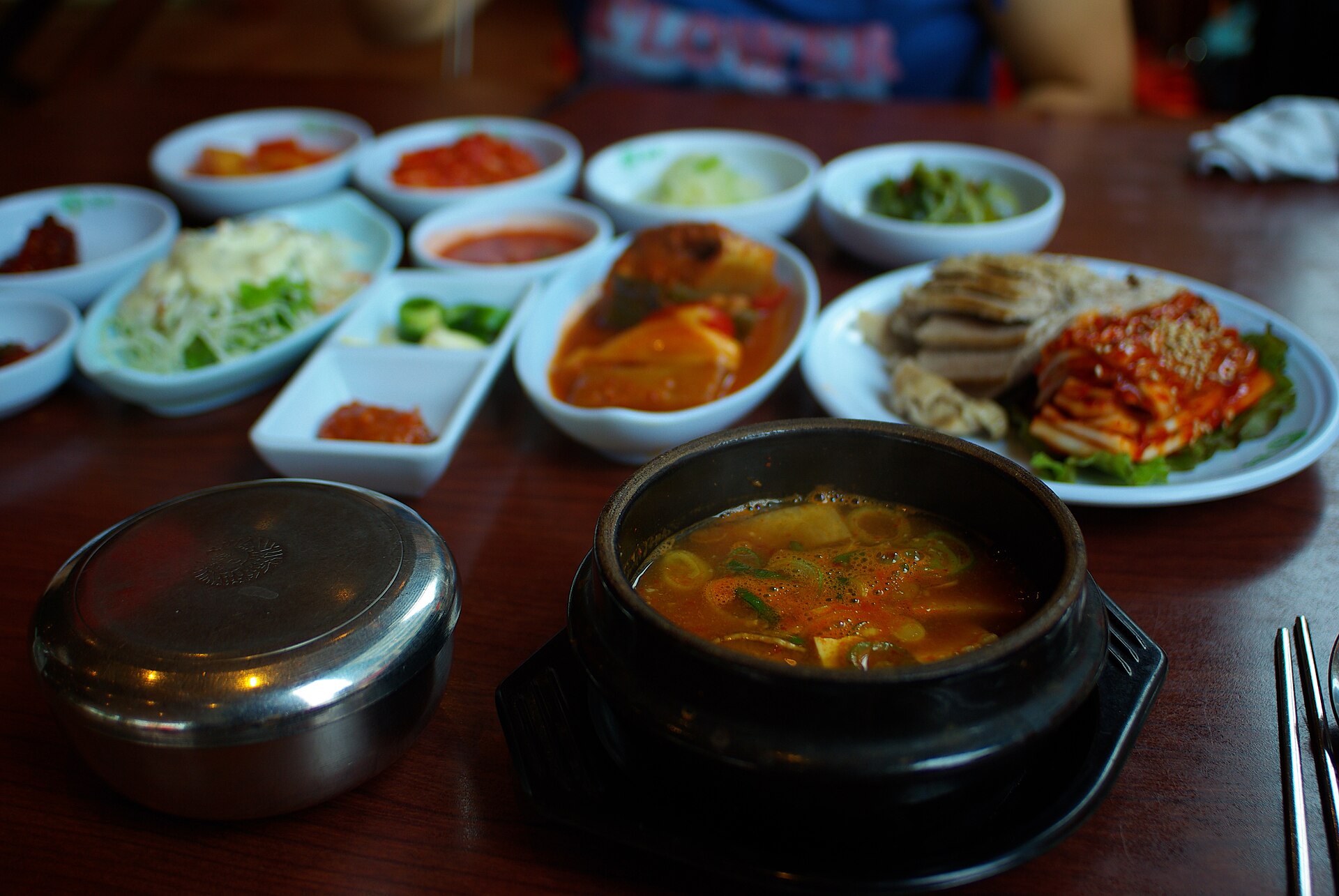
The meal is not over when the meat is gone.
Once people are mostly full, the table orders one more thing. That is the ending, and it is close to universal.
- Doenjang jjigae with a bowl of rice — the most common finish. Rice goes into the stew, or alongside it.
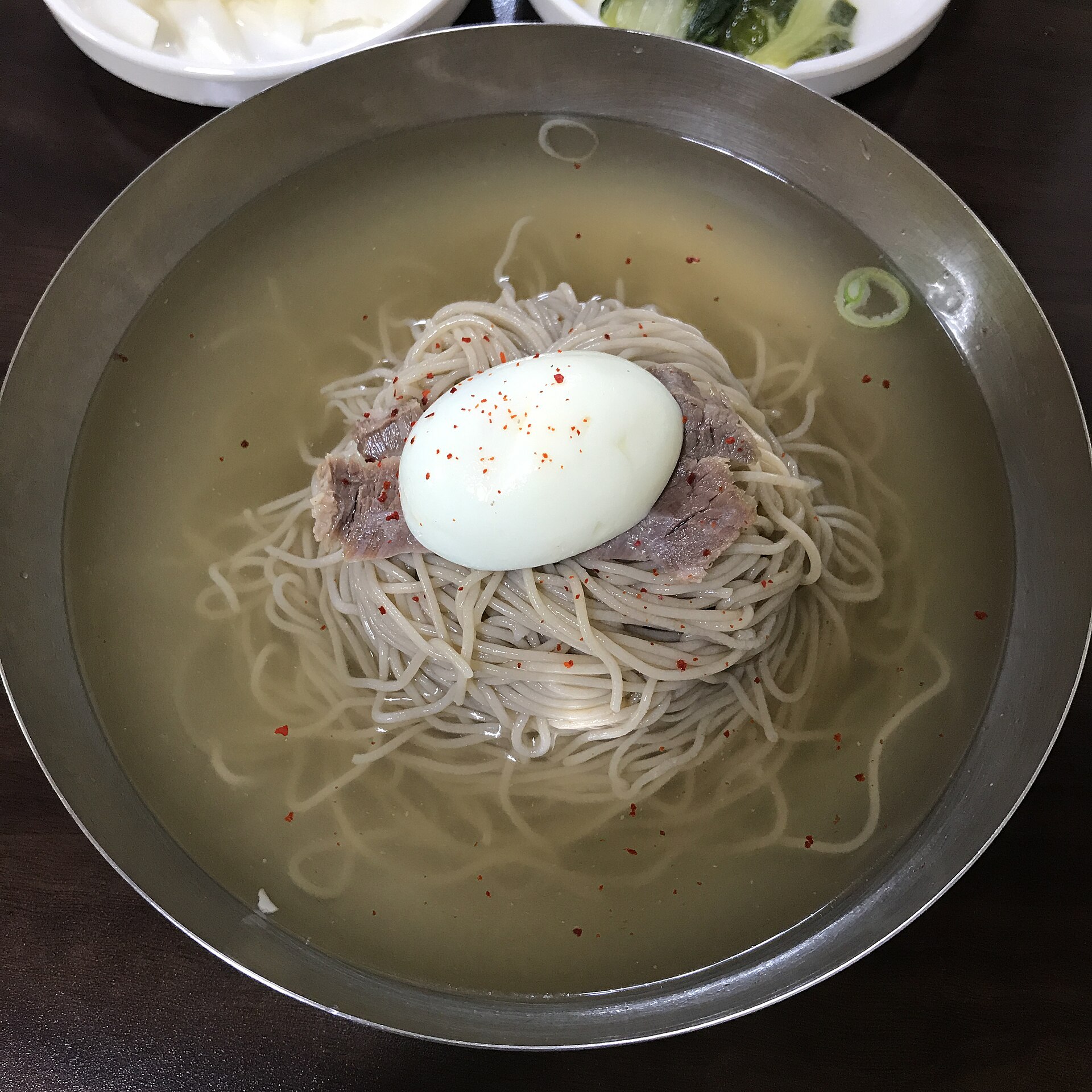
- Naengmyeon — cold buckwheat noodles, for finishing cold after a hot grill.
- Kimchi jjigae, fried rice, or a noodle dish, depending on the shop.
Ordering more meat instead is a perfectly normal choice. But visitors tend to do neither — the meat runs out, they assume the meal is finished, and they leave. Koreans order the finish. Skip it and you left halfway through.
The edges, where shops differ
The rule holds, but shops vary a great deal in what they send out unasked. Gyeran-jjim (steamed egg) is the clearest case: at a bar it is a dish you order and pay for; at one grill house it arrives free; at another on the same street it is printed on the menu with a price.
There is no way to tell in advance, and anyone offering you a rule for it is guessing. But you do not need one — if it is printed with a price, you are paying for it; if it lands on your table unasked, you are not.
The same applies to the per-person table charge at raw-fish and shellfish restaurants, extra lettuce, and the closing stew or noodles. So read the whole menu, not just the dish you came for. The line items at the bottom are where the bill actually gets built.
A note for vegetarians and vegans
Banchan looks overwhelmingly plant-based, and this misleads people. Most Korean kimchi is made with fish sauce, salted shrimp, or both. Many seasoned vegetable dishes use anchovy stock. Some shops make versions without; most do not advertise either way.
Assume the seafood is in there unless someone tells you otherwise. If it matters to you, ask about the specific dish rather than the meal as a whole — the kitchen can answer that.
Why are they free in the first place?
The explanation most often given is economic rather than sentimental. Rice was expensive, so refilling it was a real cost to the restaurant. Vegetables were cheaper and easier to grow. Filling people up on side dishes rather than on more rice was simply the sensible arrangement.
If that is right, the modern bill makes a certain sense: the expensive thing still costs money, and the cheap thing is still free. A pricing structure from another century, still sitting on the table.
We have not verified this history against primary sources — it is the explanation that circulates, not a documented one.
Copy-paste Korean
Korean restaurant staff will understand these written on a phone screen.
Show the Korean, or try saying it. The third column is written for an English speaker to read aloud as it looks — capitals mark the syllable to lean on. It will not be perfect, and that is fine: saying it badly gets a better response than silence, and staff are used to working out what visitors mean.
| What you want | Show this | Say it |
|---|---|---|
| Are side-dish refills available? | 반찬 리필되나요? | ban-chan ree-peel DWEH-na-yo? |
| Are kimchi refills available? | 김치 리필되나요? | kim-chi ree-peel DWEH-na-yo? |
| A bowl of rice, please | 공깃밥 주세요 | GONG-gi-bap joo-se-yo |
| One soybean-paste stew | 된장찌개 하나요 | dwen-jang-JJI-gae ha-na-yo |
| One kimchi stew | 김치찌개 하나요 | kim-chi-JJI-gae ha-na-yo |
Note the phrasing on the refills. Not “give me more” but “are refills available?” — polite, and it leaves room for the occasional shop that says no.
The short version
- Arrived unasked? Free.
- Want more of the same? Usually free — except a tasting portion of meat or seafood.
- Asking for something new? Expect it on the bill. Rice at a grill house is the usual one.
- Printed on the menu with a price? You are paying for it.
- Want to taste real Korean kimchi? Check the origin notice for 국내산 before you judge it.
Where to go next
- Korean BBQ Explained: Samgyeopsal vs Dwaeji Galbi
- Not sure what suits you? Try the Korean Food Matcher
Been caught out by a Korean restaurant bill — or handed something free you did not expect? Tell us in the comments.
The shop where this matters least is a gimbap counter, where the side plate is small and the roll is the whole order. How to read a gimbap menu.
5 thoughts on “If You Didn’t Order It, It’s Free — How Korean Restaurant Bills Actually Work”