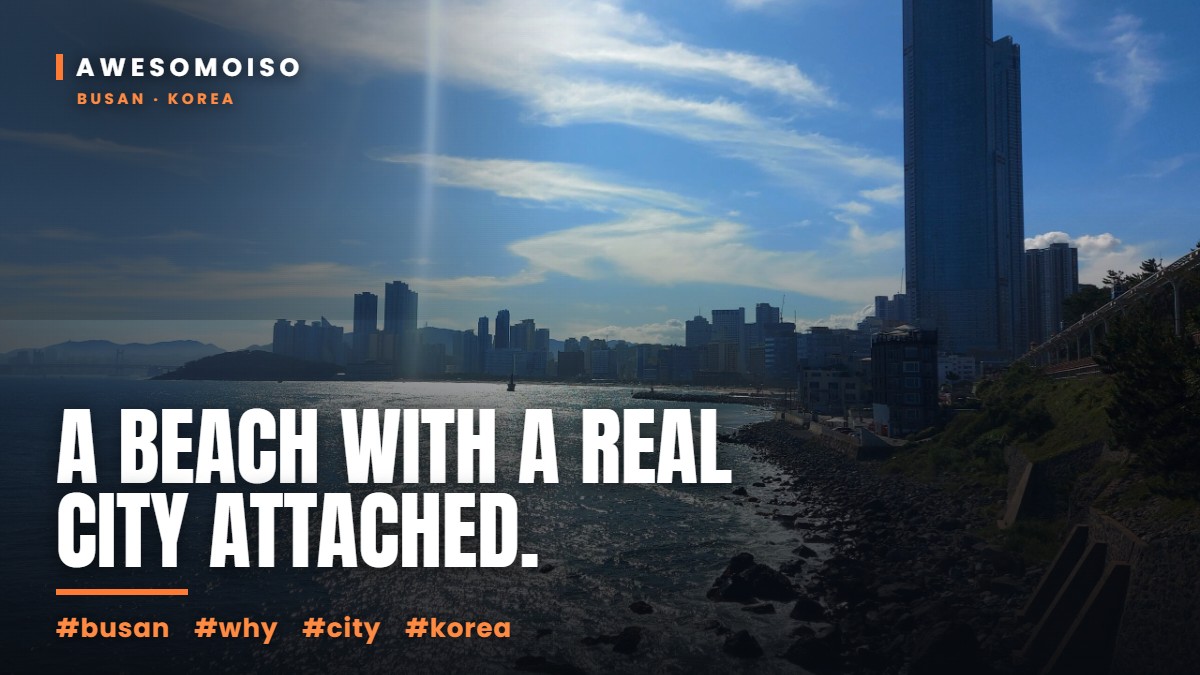
Most people outside Korea know Busan from a film title, and not much else. Train to Busan never explains why everyone is running to that particular city. Fair enough — it is a zombie film, not a tourist board.
So here is the short version of what is actually down there.
A beach with a real city attached
This is the part that gets undersold.
Plenty of places have good beaches. What is rare is a beach with a full-size modern city built right up to the sand — subway lines, high-rises, department stores, hospitals, a convention centre, and a fish market where you pick the fish while it is still swimming, all within a few stops of each other.
Haeundae and Gwangalli are not resort towns you drive out to. They are districts of a city of over three million. You can swim in the morning and be in a department store food hall twenty minutes later without leaving town.
That combination is why Seoulites themselves come down — not for a beach, which they could fly to, but for a beach that comes with a city. Seoul, for the record, has no coastline at all.
The food is different here, and there is a reason
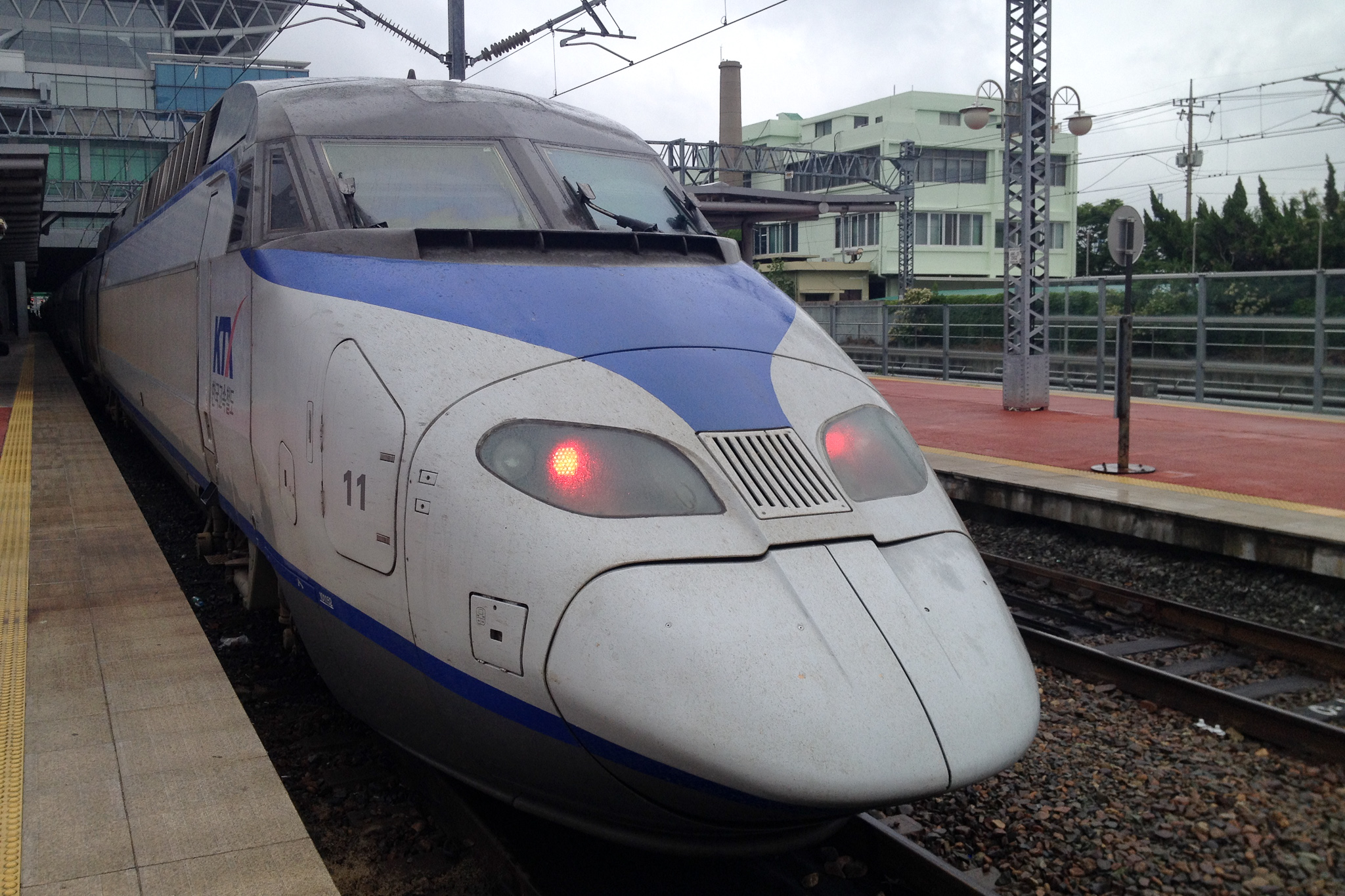
Busan is Korea’s biggest port and its second city, in the far southeast corner, about 2.5 hours from Seoul by train.
It also spent the Korean War as the country’s temporary capital, which meant a port town of a few hundred thousand absorbed refugees from the whole peninsula. They brought their home cooking, ran out of the right ingredients, and improvised.
That is where the local dishes come from, and you can still taste it:
- Milmyeon — refugees from the north wanted cold buckwheat noodles. Buckwheat grows in cold places; Busan is not one. There was American aid flour instead, so they made the noodle out of wheat. A homesick dish rebuilt from the wrong ingredients.
- Dwaeji gukbap — pork bones, long simmering, rice, and almost no seasoning until you add it yourself. Its origin is genuinely disputed, but the shape of it is not: food built to feed a lot of people cheaply.
- Eomuk — a port with more fish than money turns fish into something that stretches.
Almost nothing Busan is famous for was invented on purpose.
The other reasons to bother
You have already seen it. In the Netflix drama The King: Eternal Monarch, the parallel-world kingdom’s capital is Busan — Gwangan Bridge, the night water, Dongbaek Island standing in for the royal palace. The production chose it because it looks like that in real life.
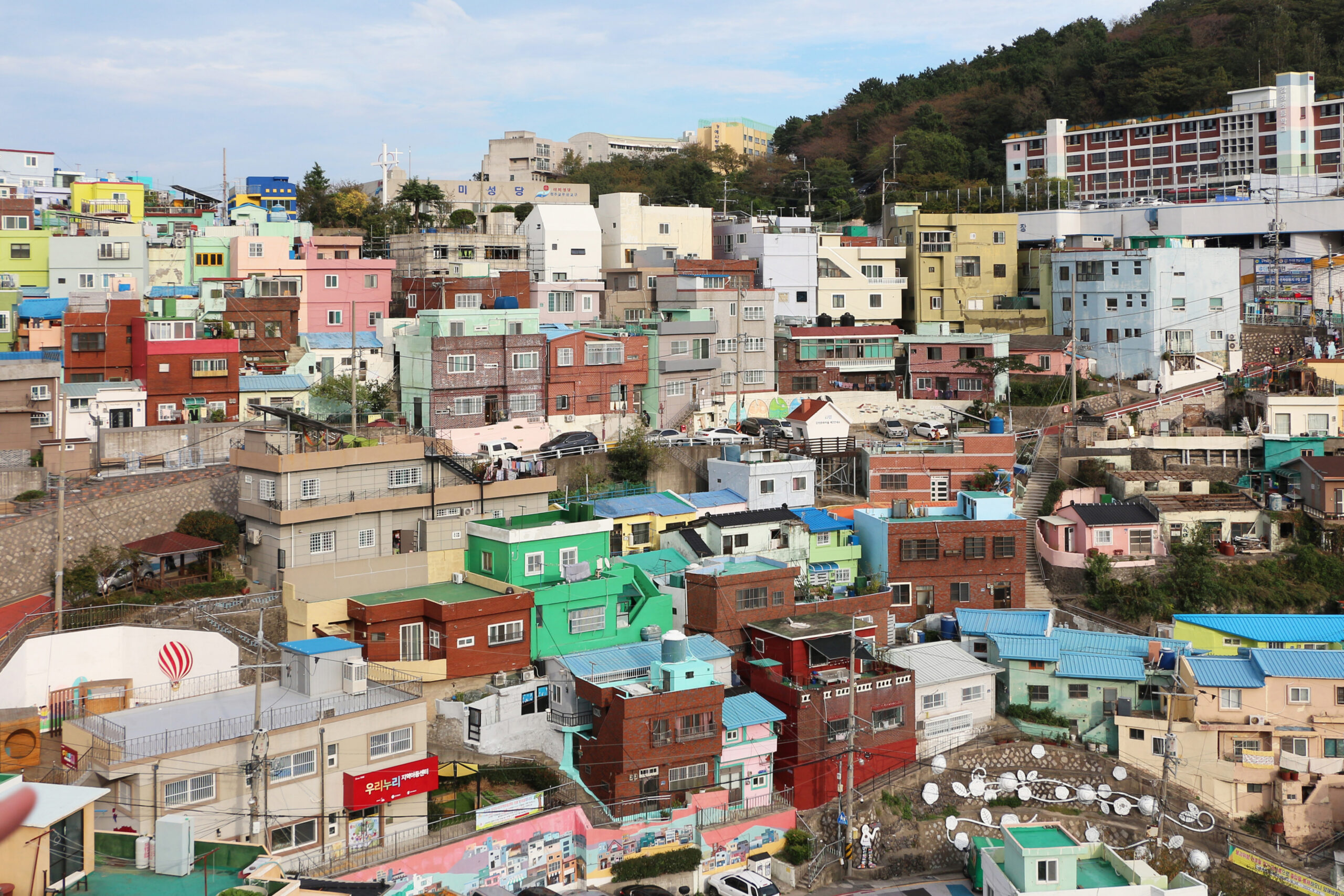
Busan is also Korea’s film city. The Busan International Film Festival is the biggest in Asia, and the alleys, port and hillside neighbourhoods turn up in Korean cinema constantly.
BTS. Jimin and Jungkook are from here. Their old schools and neighbourhoods have quietly become fan stops.
The market. Jagalchi is the country’s biggest seafood market, and the thing to know is that you can buy the fish downstairs and have it served to you upstairs.
What that means for eating
| Refugee city | dishes rebuilt from substitutes (milmyeon) |
|---|---|
| Port city | fish in everything, cheap (eomuk, hoe, gomjangeo) |
| Poor city | offal and bones used properly (dwaeji gukbap, gopchang) |
| Beach + city | raw fish at the shore, subway station ten minutes later |
Where to start
What to Eat in Busan — and What to Skip
Three Busan Dishes the Port Created
Milmyeon — the cold noodle born from a war
Dwaeji Gukbap — the bowl Busan actually eats
Gukbap — why Koreans put rice in the soup