What Is It? · Busan · Part 2
Pork soup, rice, and a tray of things you are supposed to put in it yourself.
Part 2 of a series on what to actually eat in Busan. Overview: What to Eat in Busan — and What to Skip. Previous: Part 1 — Eomuk.
If you ask someone from Busan what their city’s food is, they will not say fish. They will say dwaeji gukbap — pork soup with rice — and they will say it without hesitating.
It is a heavy white or clear broth made from pork bones and pork, with sliced boiled pork in it and a bowl of rice either in the soup or beside it. It costs about ten dollars. It is sold on every commercial street in the city, at eleven in the morning and at three in the morning.
And most visitors who try it come away thinking it was bland.
That is not the soup’s fault. It’s because nobody told them the most important thing about it, which is this:
It is not finished when it reaches your table. You finish it. This is the single fact that decides whether you like this dish
All dollar figures use ₩1,340 = US$1, the rate in September 2026.
⚠️ Read this before your first spoonful
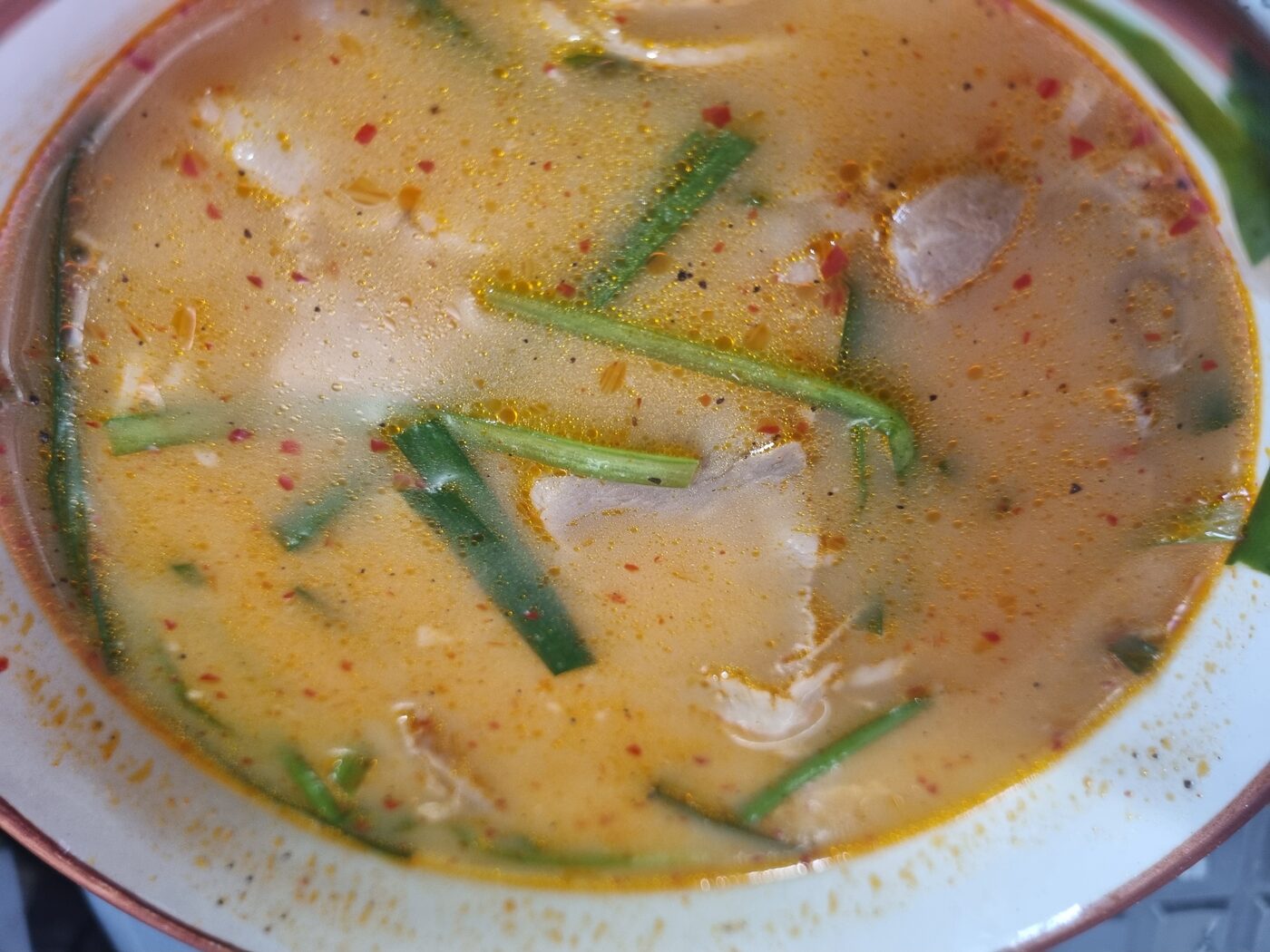
The bowl arrives deliberately under-salted. Around it, on small dishes, will be some combination of three things. Those are not side dishes. They are the seasoning, and they are your job.
| What’s on the tray | What it is | What to do |
|---|---|---|
| 새우젓 saeu-jeot | Tiny salted fermented shrimp, pale pink, in their own brine | ⭐ This is the salt. Start with half a teaspoon, stir, taste, repeat |
| 정구지 jeonggu-ji | Garlic chives, dressed in a light seasoning. In Busan dialect they’re jeonggu-ji, not buchu | Tip a generous pile straight into the soup and stir it under |
| 다대기 dadaegi | A dark red paste of chili powder, garlic, onion and soy or fish sauce | ⚠️ This is the only heat in the dish. Add it by the small spoonful, or leave it out entirely |
Some shops stir the dadaegi in for you in the kitchen; others leave a pot of it on the table. If your soup arrives with a red swirl on top, that decision has been made for you — scoop some of it out before you stir if you want it milder. That’s normal and nobody will mind.
The chives are the part people skip, and they’re the part that makes it Busan’s. Pork and garlic chives is the oldest flavour pairing in this bowl. Put them in.
Where it comes from — the same story as everything else here
If you read the overview, you know the through-line: almost every dish Busan is famous for was invented by people who had just lost everything.
During the Korean War, Busan was the country’s refuge and its wartime capital for 1,023 days. Refugees arrived from the north, where pork was an everyday meat in a way it was not in the south. There was no beef to be had and no money to buy it with.
What there was: pork bones, pig heads and offcuts, much of it flowing out of military supply.
So people did the obvious thing. Seolleongtang — the milky ox-bone soup that is Seoul’s classic — is made by boiling beef bones for hours until the broth turns white. Boil pork bones the same way and you get the same white broth for a fraction of the cost.
Seoul’s food came down from palace kitchens. Busan’s food came up from people with nothing. This bowl is the clearest example of it
Seventy years later it is not poverty food any more. It is the city’s civic dish, and there are shops that have been making it continuously since the 1950s.
⚠️ One honest correction to how this is usually sold to visitors: it is not Busan’s alone. Dwaeji gukbap is the everyday soup of the whole southeast — Busan, Miryang, Gimhae, Ulsan, Daegu. Miryang dates its own version to a market stall in 1938, earlier than the war, and Miryang-style is a recognised style in its own right; over a hundred shops in Busan itself trade under the Miryang name. It has spread to Seoul as well, though it remains a minor dish there. What Busan has is the density — hundreds of shops, and the highest chance that the nearest one is good.
White broth or clear broth — and why yours might be either
You’ll see both, and neither is wrong.
| 뽀얀 국물 — milky white | Bones boiled long and hard. Rounder, heavier, more obviously rich |
| 맑은 국물 — clear | More meat, fewer bones. Cleaner, lighter, more savoury than creamy |
The line between them is genuinely blurry. Shops change the bone-to-meat ratio every few years as tastes shift, and some make the broth heavier at night for the drinking crowd and lighter at lunch. The same restaurant can serve you two different-looking bowls in one day.
Most shops use leg bones. Some add neck and back bones for a cleaner finish, or trotters for body. A separate category uses pig’s head, which gives a darker, deeper, almost pre-salted broth — that one you should order on purpose, not by accident.
⭐ Why your soup might not be scalding hot
This confuses visitors more than anything else on the menu, so it’s worth explaining.
There are two ways the bowl gets hot, and Busan mostly uses the older one.
| 토렴 toryeom | Rice and sliced pork go into the bowl cold, then hot broth is ladled over and poured back off — ten, twenty times. The bowl reaches about 80°C and stops there. |
| 직화 jikhwa | The whole earthenware pot is boiled on a flame and arrives bubbling. |
Of the thirty shops on Busan Ilbo‘s official dwaeji gukbap trail, twenty use toryeom.
⚠️ A toryeom bowl is not a bowl that has gone cold, and it is not yesterday’s rice. That misunderstanding is common even among Koreans from other regions. It is a technique, it takes real labour — the cook tilts a heavy pot fifteen times per serving — and the old shops insist it tastes better. The rice keeps its texture instead of collapsing, you can eat immediately without waiting, and food that isn’t scalding lets you actually taste the salt, so it tends to be seasoned less aggressively.
If you want the bubbling kind, look for the pot arriving still boiling. If you want toryeom, you’ll know because you can eat the first spoonful right away.
How to order — the menu decoded
Nearly every shop sells variations on one broth. What changes is what’s floating in it.
| On the menu | What’s in it | For you? |
|---|---|---|
| 돼지국밥 dwaeji gukbap | Sliced boiled pork. Lean shoulder or neck | ⭐ Order this one first |
| 따로국밥 ttaro gukbap | Identical, but the rice comes in a separate bowl | ⭐ Best first-timer choice. Usually ₩1,000 more |
| 순대국밥 sundae gukbap | Blood sausage instead of, or alongside, the pork | Adventurous |
| 내장국밥 naejang gukbap | Offal | ⚠️ Only if you know you like it |
| 섞어국밥 seokkeo gukbap | “Mixed” — meat and offal | ⚠️ Not a first bowl |
| 모둠국밥 modum gukbap | Everything: meat, sausage, offal | ⚠️ Not a first bowl |
| 수육백반 suyuk baekban | The boiled pork on a plate with dipping sauce, plain broth and rice on the side | ⭐ Good for sharing, and the easiest sell to a nervous eater |
If it’s your first bowl, order ttaro gukbap. Rice on the side means you control how soupy it gets, you can taste the broth clean before you commit, and it’s the version most shops now sell by default anyway.
💡 “Gukbap” just means “soup-rice.” It’s not exclusive to pork — you’ll see it attached to a dozen things across Korea. Here it means this.
⭐ The small bowl of noodles nobody explains
At some shops a dish of plain thin wheat noodles turns up with the side dishes, with no sauce and no obvious purpose. You tip them into the soup.
They are there for a specific historical reason, and it’s a good one.
Korea spent the 1960s and 70s short of rice and flush with imported American wheat, and the government ran a national campaign to push people off rice and onto flour. In 1969 it went further than a campaign: restaurants were ordered to mix at least 25% barley or wheat flour into what they served, and inspectors shut down the ones that didn’t.
Gukbap shops complied by putting a bowl of wheat noodles on the table. The law is long gone. The noodles stayed. About a third of the old shops still do it.
It also solved a problem nobody legislated for: a bowl of noodles is how a person with little money left a gukbap shop full. Which is, again, the whole story of this city’s food
Vegan, Vegetarian, Halal
| Diet | Suitable? | Why |
|---|---|---|
| Vegan | ❌ No | Pork, and the broth is boiled pork bone |
| Vegetarian | ❌ No | The broth itself is meat-based — ordering it without meat does not help |
| Halal | ❌ No | Pork is the entire dish |
⚠️ There is no vegetarian version of this dish. If you avoid pork, this is the one Busan speciality to skip entirely.
⚠️ Allergens and restrictions
| Pork | ⚠️ Yes — completely. Bones, broth and meat. There is no version of this without pork |
| Halal | ❌ No. Not adaptable |
| Vegetarian | ❌ No |
| Shellfish | ⚠️ The saeu-jeot on the tray is fermented shrimp. Skip it and salt with plain salt instead |
| Fish | ⚠️ The dadaegi paste often contains fish sauce |
| Gluten | ⚠️ The broth is naturally gluten-free, but soy sauce in the dadaegi and the side noodles are not |
| Spice | None at all until you add dadaegi. Safe for children as served |
What it is not
Two things get confused with this constantly.
It is not sundae gukbap. Sundae gukbap is built on blood sausage and head meat; dwaeji gukbap is built on plain sliced pork. They’re often sold in the same shop and they are not the same bowl.
It is not samgyetang, galbitang, or anything served to tourists as “Korean soup.” This is a working city’s lunch, eaten fast, usually alone, at a laminated table. That is the correct setting and you should not try to improve on it.
What it costs, and where
| Standard bowl | ₩10,000 (US$7.45) is now the baseline |
| Cheaper end | ₩9,000 is still common, especially away from the tourist districts |
| Rice on the side | Usually +₩1,000 |
| Suyuk baekban | Roughly double a bowl, but it feeds two |
Prices checked on the ground in Busan, September 2026. They have moved up noticeably in the last two years — a lot of English-language guides still say ₩7,000, and that number is gone.
You do not need a recommended restaurant for this. That’s the point of it. There are hundreds of shops, the standard is high, and the one nearest you is almost certainly fine. Look for a place with a queue of people who are not photographing their food.
If you want a landmark anyway: the old shops cluster around Seomyeon, Beomil-dong and Choryang near Busan Station, and several have been running for more than sixty years.
Verdict
It is the dish the city chose for itself. It is ten dollars. It is not spicy unless you make it spicy, it is available at any hour, and it will tell you more about how Busan thinks than any museum here.
Just remember the tray. The bowl is a starting point, not a finished dish.
| ← Part 1 | Eomuk — Busan’s Fish Cake |
| ↑ Overview | What to Eat in Busan — and What to Skip |
| Next → | Part 3 — Milmyeon |
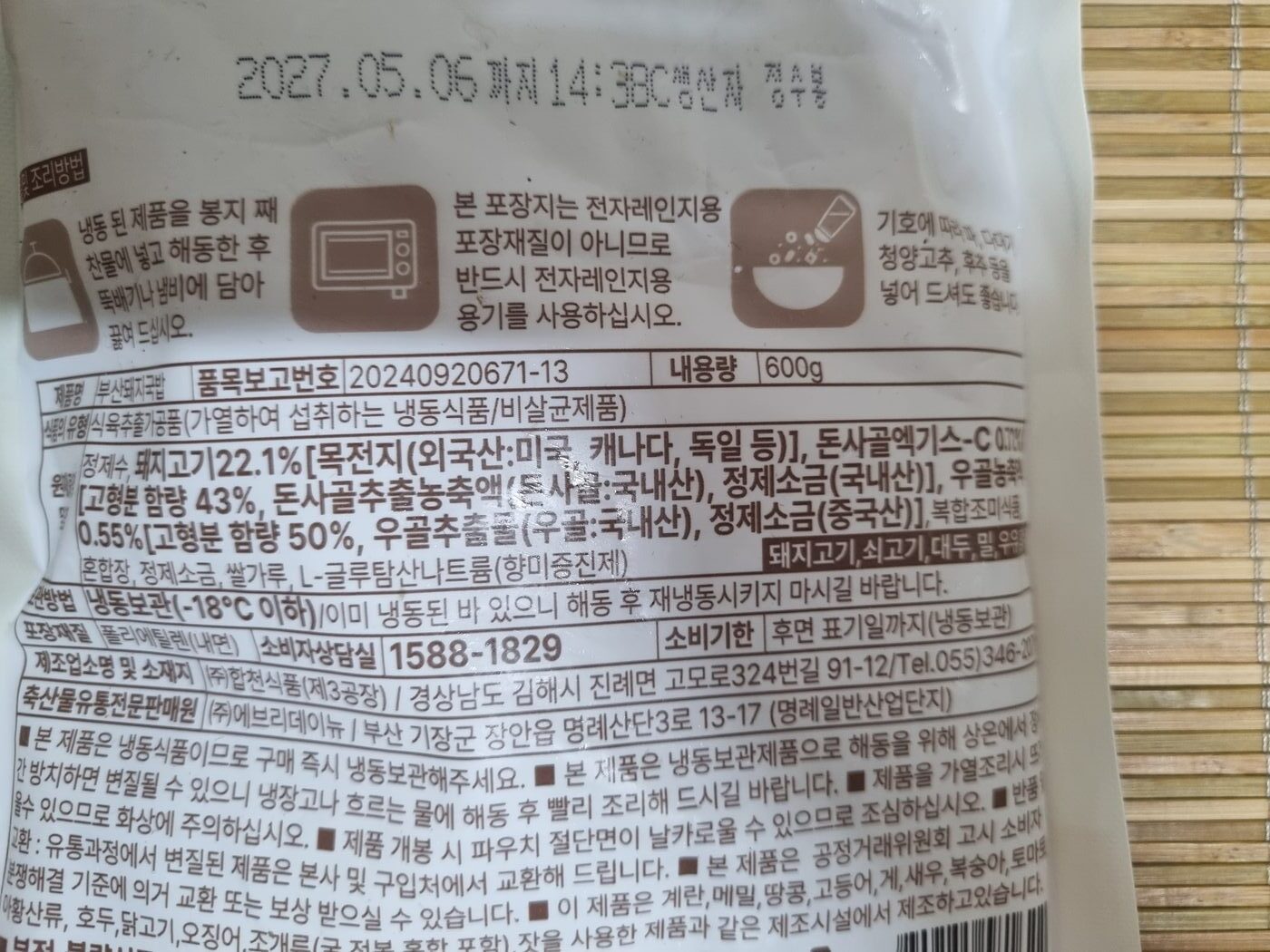
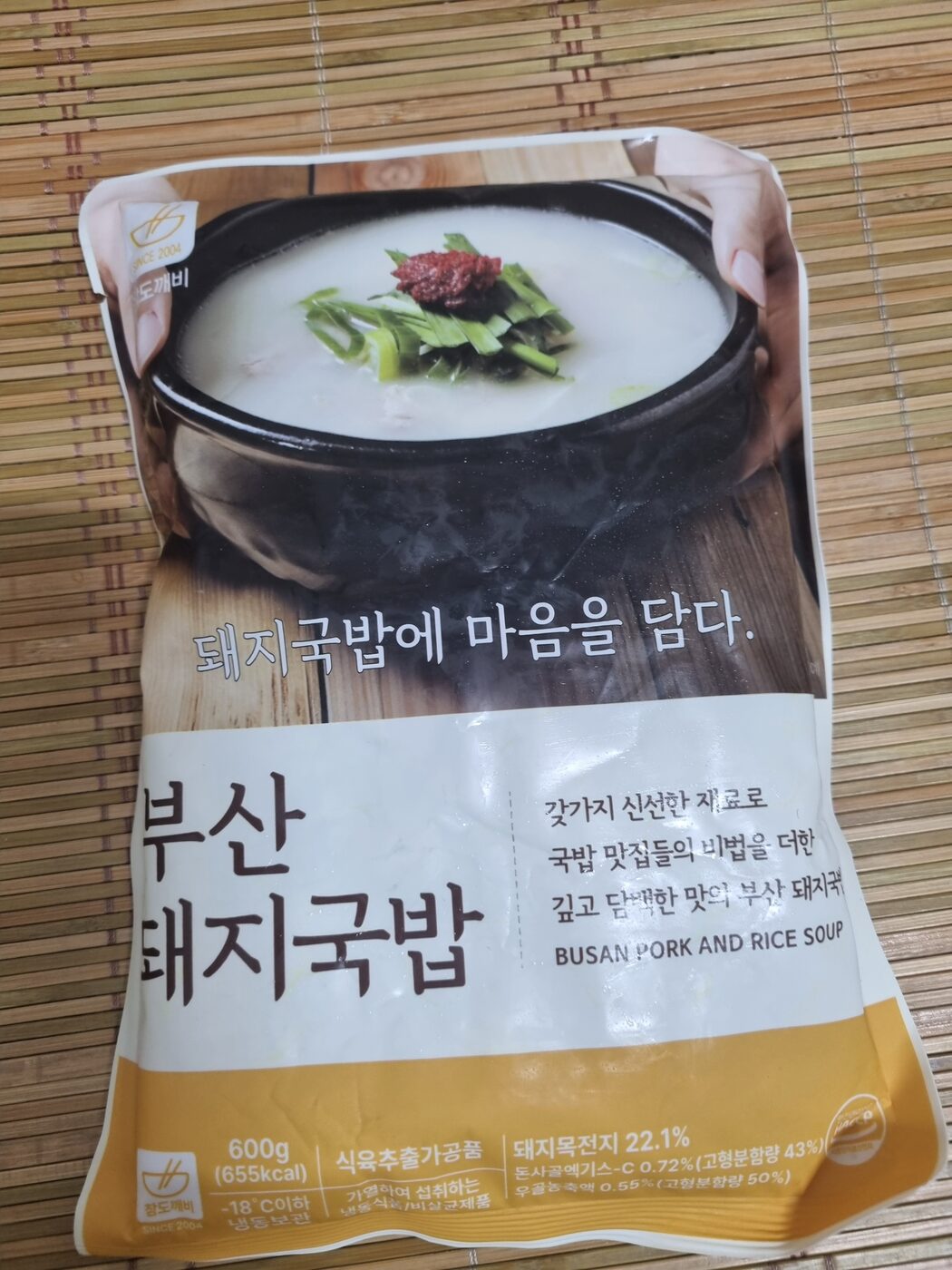
Living here rather than visiting? There is a frozen version that gets close for about ₩4,654 a bowl — with one caveat about what the label leaves out. How to make dwaeji gukbap at home.
Not sure what to order?
Tell us what you can and cannot eat. We will match you to Korean dishes that actually fit.
Vegan, no pork, shellfish allergy, eating alone, hate chilli — 75 dishes, filtered honestly. We tell you when the answer is “almost nothing”.
Find my dish →