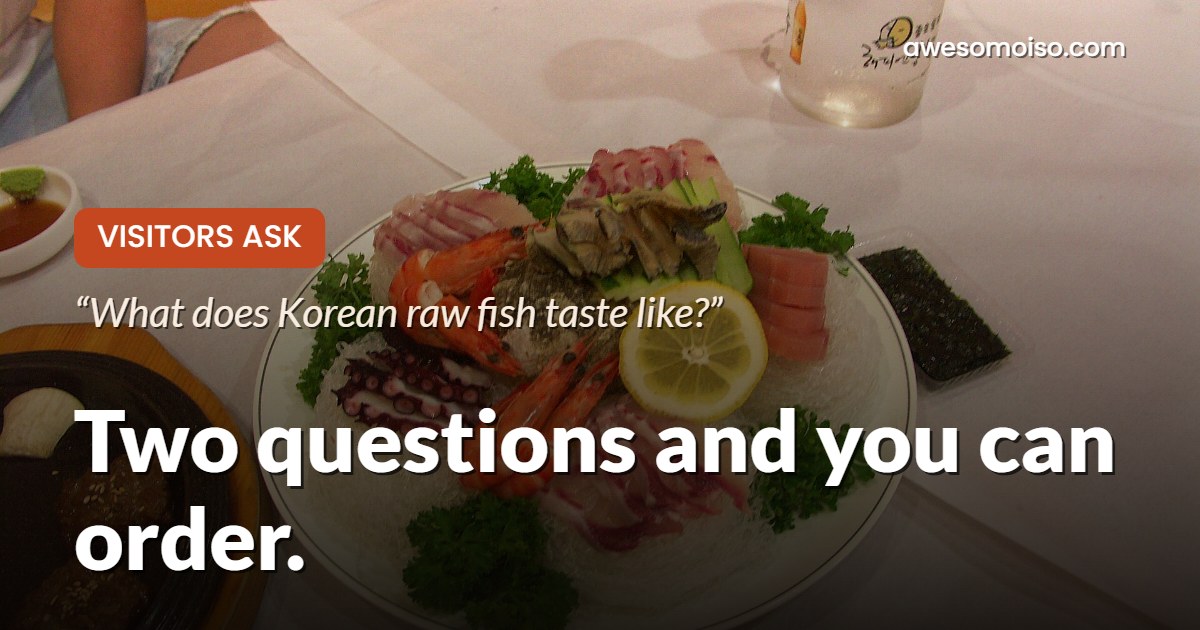
A Korean raw fish menu is a list of fish names, usually in Korean, with no description of any kind. If you did not grow up eating raw fish, that is not a menu — it is a quiz.
You do not need to learn twenty fish. You need two questions. Korean raw fish (hoe) varies along two axes, and almost every description you will hear from a Korean is some combination of them.
Question 1: rich, or clean?
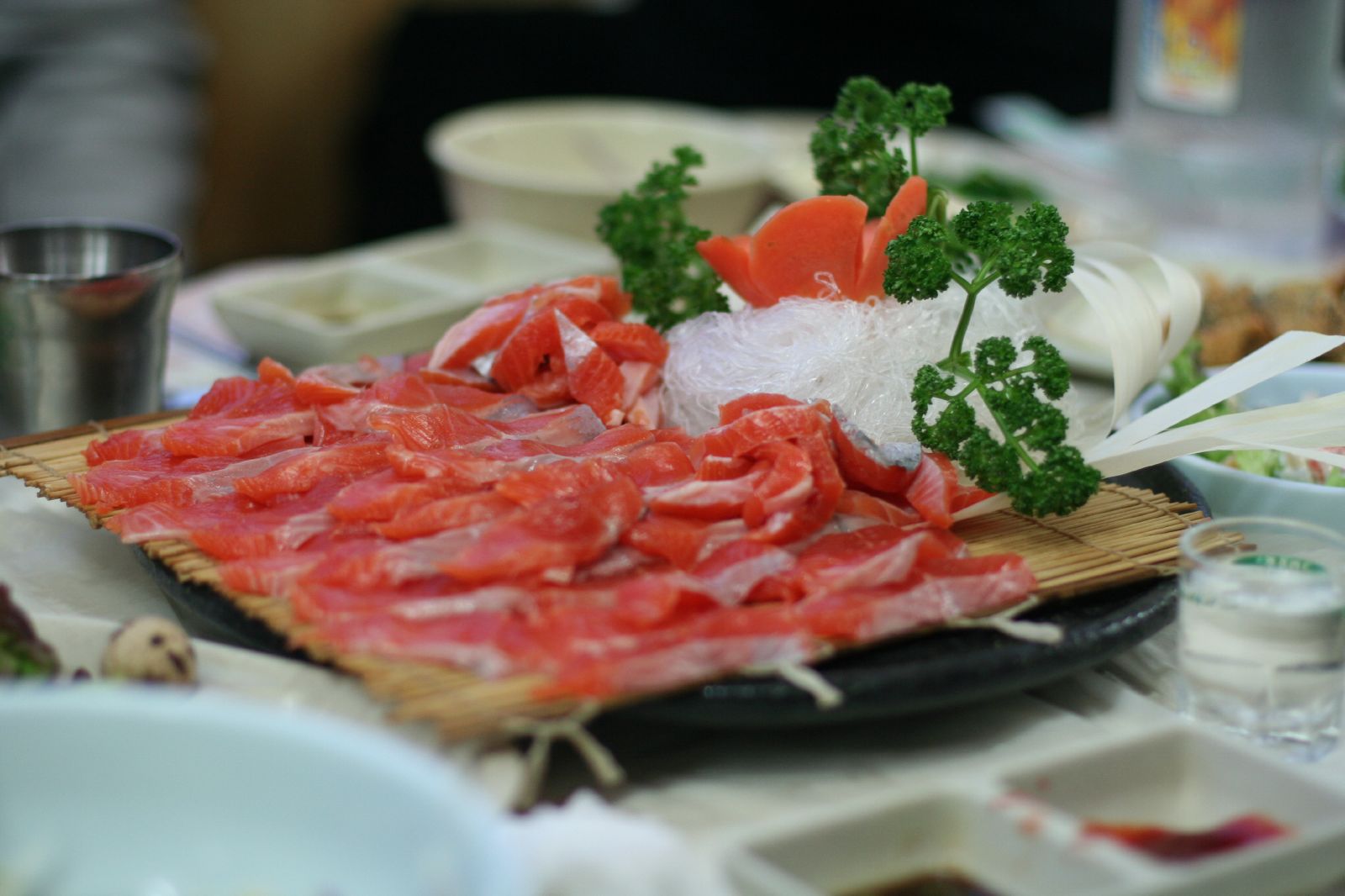
This is the big one. Some fish are fatty — the flavour is nutty and lingers, and the texture is soft, sometimes close to melting. Others are lean — mild, faintly sweet, and the taste leaves cleanly.
There is a shortcut you can use at the counter: look at the colour of the flesh. Pale white means lean. Pink or red means fat. It is rough, but it will put you in the right half of the menu.
Question 2: chewy, or soft?
Koreans care about this more than visitors expect. Much of what makes a fish prized here is texture rather than flavour — the word you will hear is jjolgit-jjolgit, a springy resistance when you bite. Other fish are valued for the opposite: soft, yielding, almost dissolving.
Neither is better. They are different pleasures, and knowing which one you want narrows twenty fish to about five.
The four groups
| Chewy, springy | Soft, yielding | |
|---|---|---|
| Rich & fatty | Samchi (Spanish mackerel) — soft fat, nutty, gentle sweetness | Bangeo (yellowtail) — the richest of them, deep and heavy, belly cut softest · Byeongeo (pomfret) — buttery and mild |
| Lean & clean | Gwangeo (flatfish) · Ureok (rockfish) · Doldom (striped beakfish) · Chamdom (red sea bream) · Gamseongdom (black sea bream) | Mineo (croaker) — tender with a deep savoury note · Nongeo (sea bass) · Dodari (flounder) |
If you only remember one square, remember the bottom left. Lean and chewy is the centre of Korean raw fish — it is the group with the most options, the most reliable prices, and the mildest flavours.

Squid is its own thing
Hanchi (small squid) and gabojingeo (cuttlefish) do not belong on that grid. The flavour is a clear, obvious sweetness — far more sweetness than any of the fish — and the texture is dense and bouncy rather than springy.
They are a good first order for a different reason: the texture is the only thing anyone needs to get used to, and the flavour is easy to like straight away.
One group to leave for later
Some of the most loved raw fish in Korea is also the hardest to meet cold. Godeungeo (mackerel), jeongaengi (horse mackerel), jeoneo (gizzard shad) and Gijang-style myeolchi-hoe (raw anchovy) all share an oily, assertive, lingering flavour.
Koreans order these on purpose. That taste is the reason. But if raw fish is new to you, it is also the taste you would describe as “fishy” — so it is a poor first encounter and a very good third one.
Two notes if you do try them. Mackerel is the one most often eaten raw at specialist places and it is a genuinely different fish from the grilled mackerel you know. And raw anchovy from Gijang, east of Busan, is usually not served as plain slices at all — it comes dressed in a sweet-and-sour sauce as muchim, closer to a salad than to sashimi. Order it expecting slices and you will be surprised.
Does the season matter?
Less than you would think, and not in the way most guides suggest.
Fish are at their best when the water is cold and fat has built up, which for most of the popular species means late autumn through winter. Flatfish, yellowtail and the sea breams are all at their best in those months. Gizzard shad belongs to autumn, raw anchovy to spring, squid to summer. Our seasonal guide has the month-by-month detail.
But the fish you are most likely to be handed is farmed flatfish, and farmed fish holds an even quality all year. Around 90% of the flatfish eaten raw in Korea is farmed. In practice: order what is in season if you have a preference, and do not worry if you do not.
So what should you actually order?
| If you… | Order | It will taste like |
|---|---|---|
| have never eaten raw fish | Gwangeo (flatfish) | Firm, clean, barely sweet. Nothing to brace for |
| like salmon and fatty fish | Bangeo (yellowtail), in winter | Rich and heavy, closer to a fatty tuna cut |
| want texture over flavour | Doldom or ureok | Dense and springy, mild |
| dislike chewy food | Mineo or nongeo | Tender and soft, savoury rather than sweet |
| want something sweet | Hanchi (squid) | Clean sweetness, bouncy |
| already love mackerel | Godeungeo | Oily and strong. You know what you are doing |
The short version
- Two questions sort almost the whole menu: rich or clean, and chewy or soft
- Pale flesh is lean, pink flesh is fatty — a rough but useful read at the counter
- Lean and chewy is the heart of Korean raw fish, and flatfish is the way in
- Squid is the sweet one, and an easy first order
- Mackerel, horse mackerel, gizzard shad and raw anchovy are wonderful and strong — save them for later
- Season matters less than the menu suggests, because most flatfish is farmed and steady year-round
And when you have decided what you want, there is more than one place to eat it. You can also buy it at a market in Busan and eat it in your hotel room.
The Korean Restaurant Card has the phrases for ordering, and the Korean words for every declared allergen.