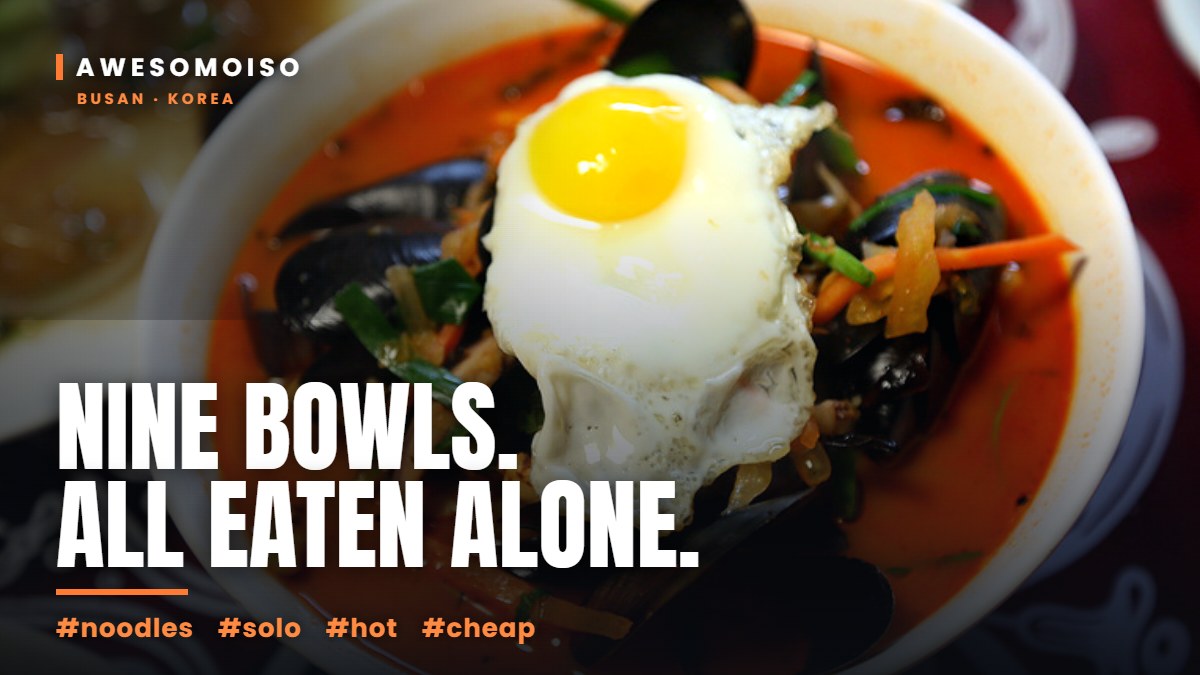
The cold noodles get the attention. The hot and sauced ones are what Koreans eat the rest of the year — and most of them cost very little, arrive fast, and are completely normal to eat alone.
Nine dishes here, in three groups: soups, sauced, and the chewy ones. This is part seven of a nine-part map of Korean food by ingredient, and the second of two on noodles. The cold ones are here →
Hot soup noodles
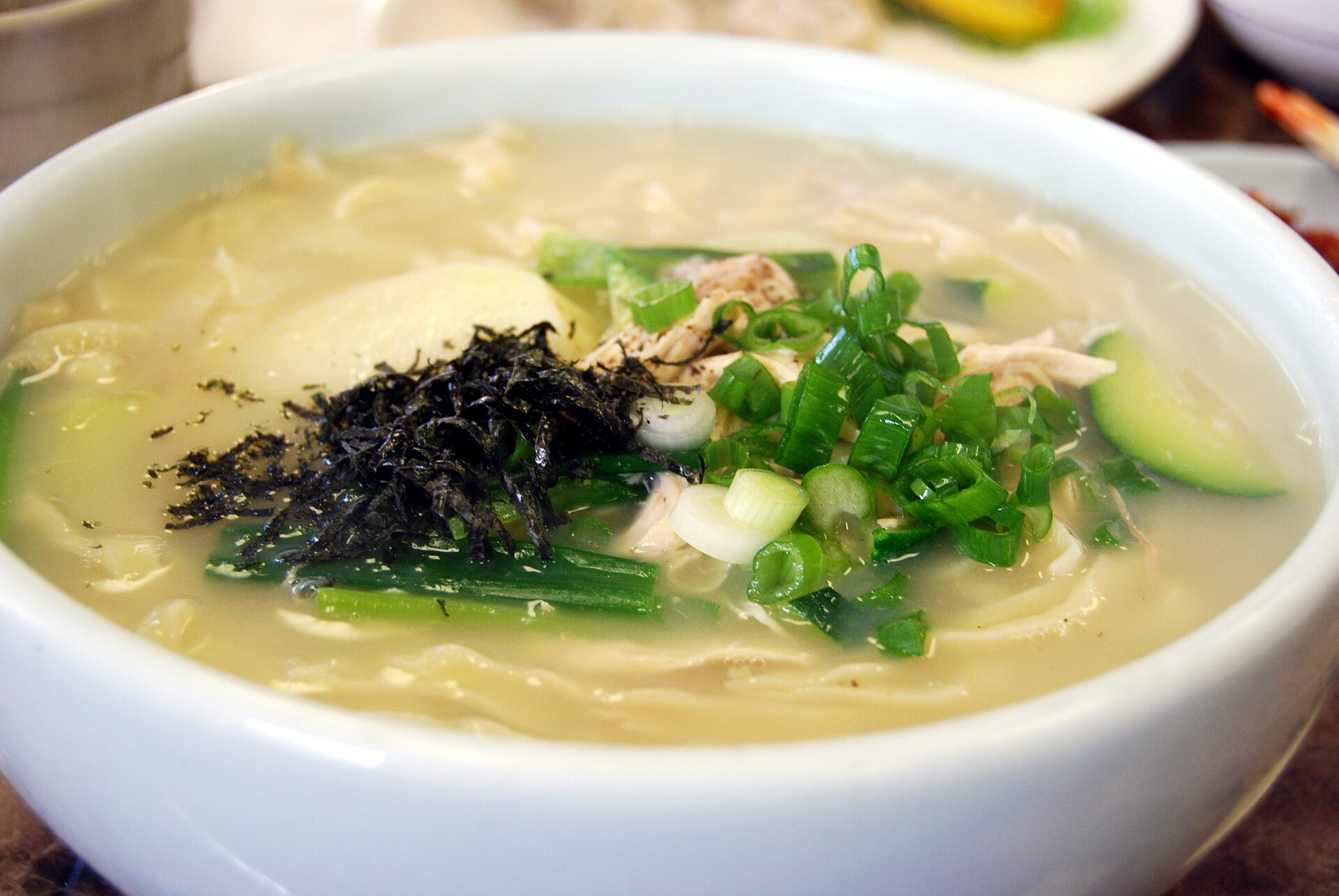
Kalguksu · 칼국수 · kal-guk-su · not spicy
Hand-cut wheat noodles in hot broth — anchovy, chicken or clam depending on the shop. Soft, starchy comfort food with no edge to it at all.
The broth thickens as you eat, and that is intended. The noodles release starch into it, so the last third of the bowl is a different dish from the first. Many shops hand you a small bowl of rice to finish with — tip it in once the noodles are gone.
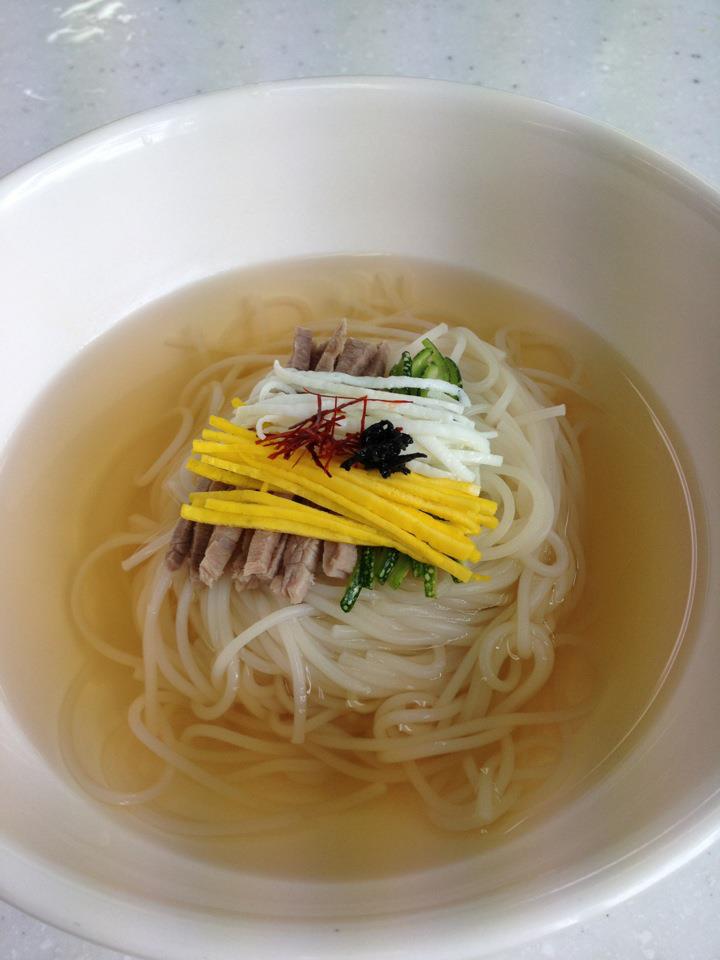
Janchi Guksu · 잔치국수 · jan-chi-guk-su · not spicy
Thin wheat noodles in a light anchovy broth. The lightest noodle soup in Korean food — like a very clean somen. Cheap, fast, and sold everywhere.
The name means “banquet noodles”, because it was what got served at weddings — cheap enough to feed a crowd. That history survives in a phrase: asking someone “when will I eat your noodles?” means “when are you getting married?” It is still in use, usually from relatives, usually unwelcome.
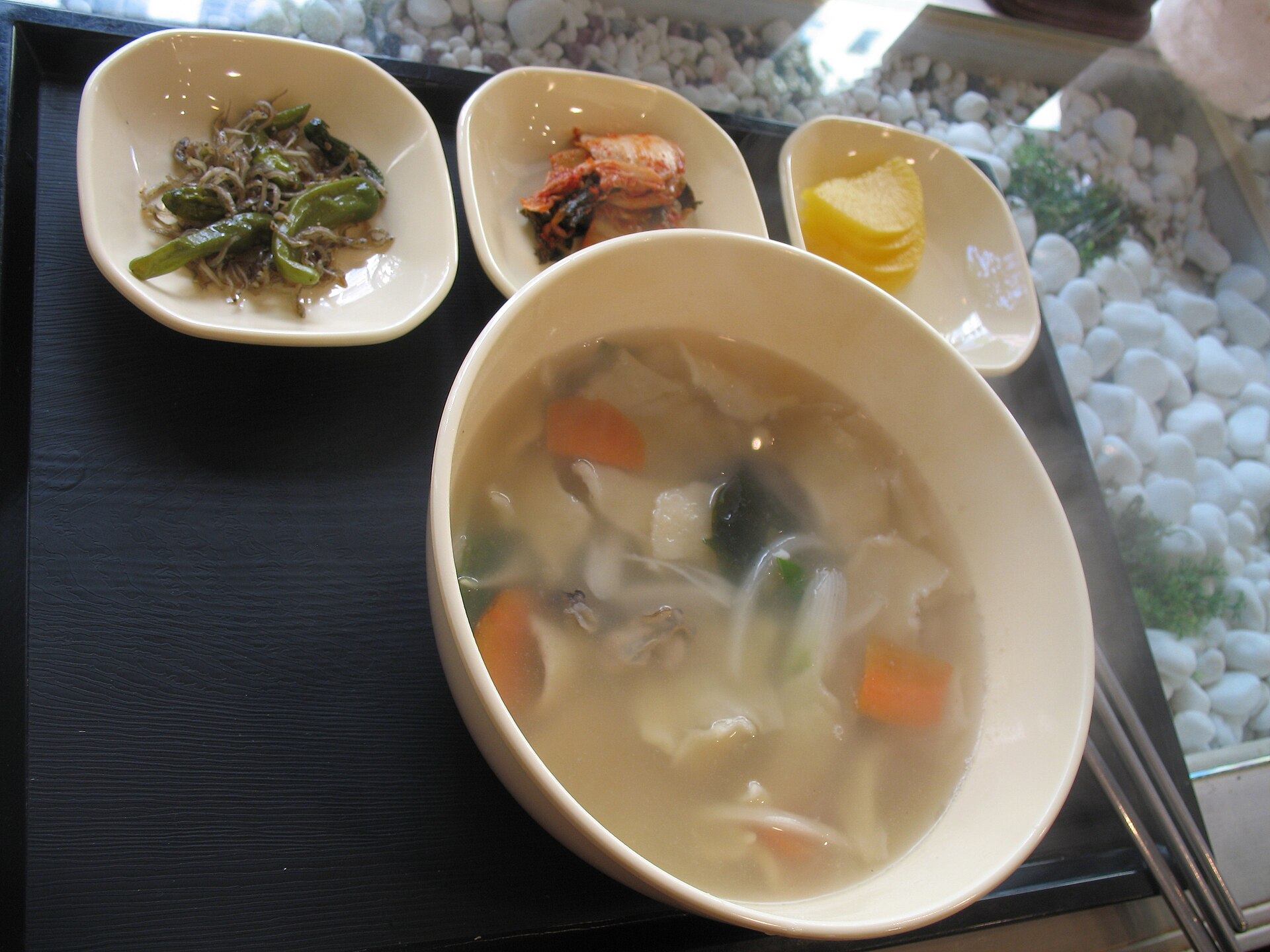
Sujebi · 수제비 · su-je-bi · barely spicy
Hand-torn sheets of dough dropped into anchovy broth with potato and zucchini. Not really a noodle — irregular, soft, uneven pieces. Plain comfort food, eaten with fresh kimchi.
Rainy-day food, same as pajeon. Shops genuinely fill up when it pours. Like kalguksu, the broth thickens toward the end as the dough gives up its starch.
Wandang · 완당 · wan-dang · not spicy
Paper-thin wontons in a clear broth. A Busan dish rather than a Chinese one, despite the name. The wrapper is so thin it nearly dissolves — closer to a consommé with silk in it than to dumpling soup.
Light enough that it is usually ordered as a set with udon or a rice dish. Often eaten alone, often by older customers, often at lunch. Almost no English-language guide mentions it.
The spicy one
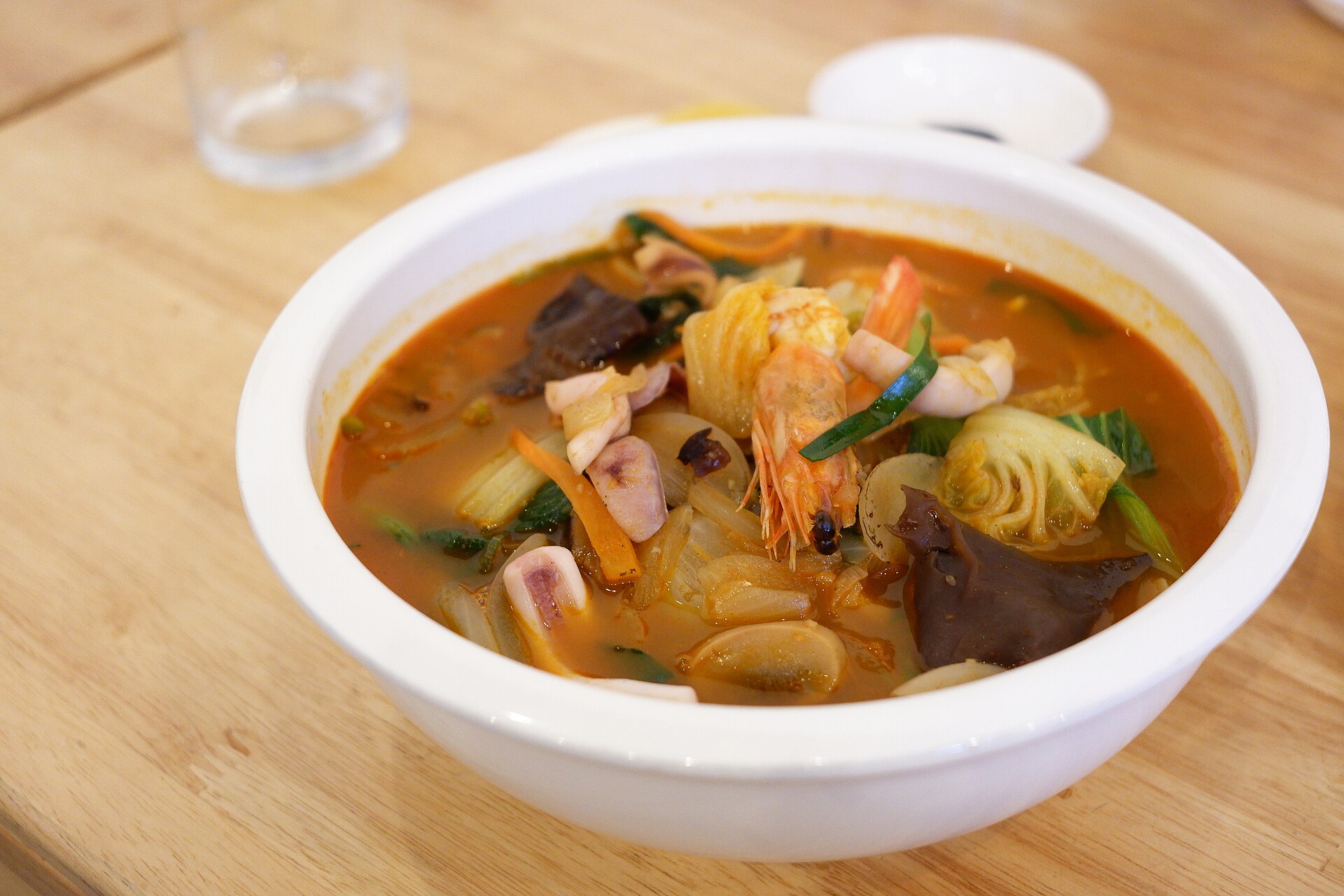
Jjamppong · 짬뽕 · jjam-ppong · very spicy
Spicy seafood noodle soup from the Korean-Chinese menu. A fiery red broth with squid, mussels and vegetables — think spicy cioppino poured over noodles. This is one of the hottest dishes in this entire series.
It is the other half of every Korean-Chinese order. One person gets jjajangmyeon, the other gets this, and they swap halfway through. A standard hangover choice, for the same reason spicy soup is a hangover choice everywhere.
Jjajangmyeon, and why China does not have it →
Sauced and mixed
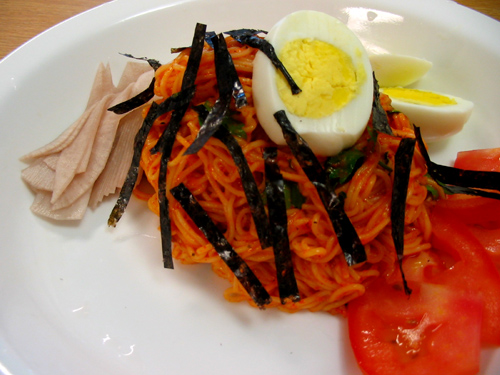
Bibim-guksu · 비빔국수 · bi-bim-guk-su · spicy
Thin wheat noodles tossed cold in a sweet, sour, hot chilli sauce. The vinegar hits before the chilli does, with sugar behind both. Sharp and tangy rather than heavy.
Often served with a small bowl of cold broth alongside to sip between bites — that is there to reset your mouth, not to pour in. Frequently ordered as the cheap counterpart to a grilled meat meal.
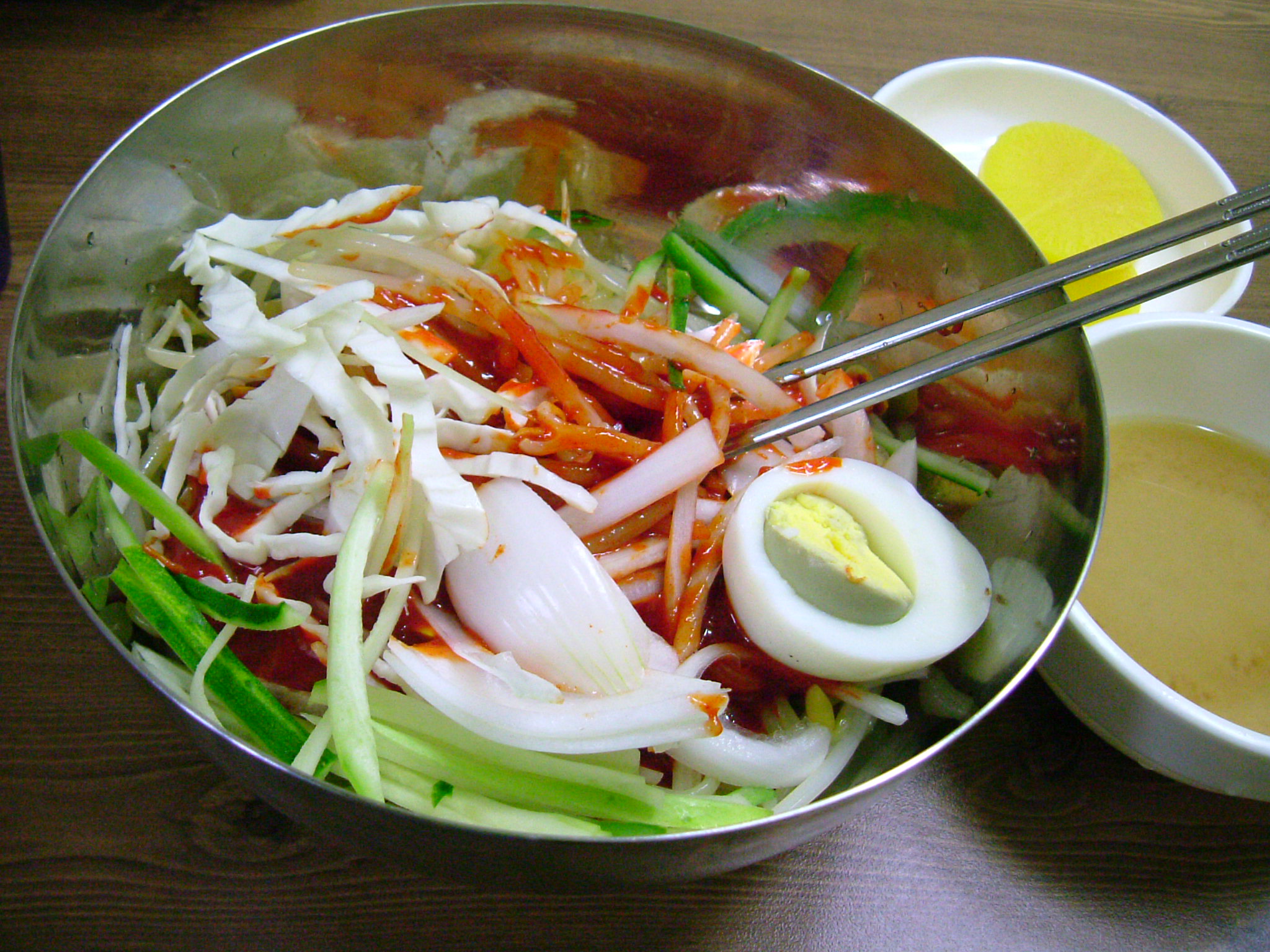
Jjolmyeon · 쫄면 · jjol-myeon · spicy
Extremely chewy cold noodles in a sweet-hot sauce, over raw cabbage and bean sprouts. The noodles are the point — dense and rubbery in a way nothing in Western cooking prepares you for.
Mix it hard before the first bite, and eat the raw vegetables underneath with the noodles rather than around them. A bunsik-shop order, usually alongside tteokbokki or gimbap.
Bibim Dangmyeon · 비빔당면 · bi-bim-dang-myeon · barely spicy
Cold glass noodles tossed with vegetables in a mild sweet-savoury sauce, sold from Busan market stalls. Slippery and mild — closer to a cold noodle salad than to anything fiery.
Eaten standing, from a small dish, in two or three minutes. Cheap enough that people order it alongside tteokbokki and fried snacks rather than instead of them.
And the one that is not really a noodle dish
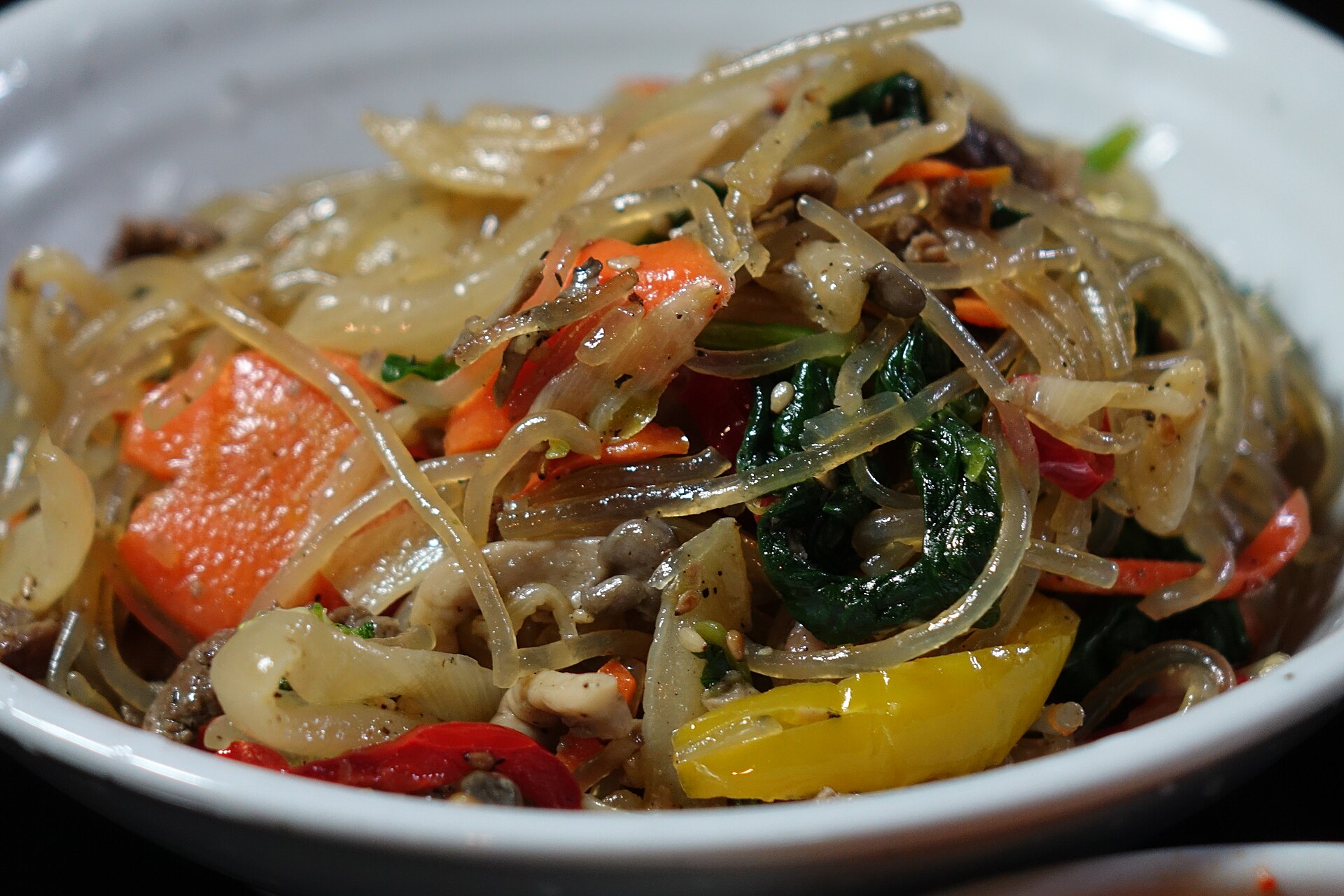
Japchae · 잡채 · jap-chae · not spicy
Sweet potato glass noodles stir-fried with vegetables and beef in sesame oil and soy. Slippery, sweet-savoury, no chilli at all.
It is a celebration dish first and a side dish second. It appears at every Lunar New Year and Chuseok table, and the rest of the year it turns up as one plate among many rather than as a meal. Served warm or at room temperature — both are correct.
If someone at your table cannot eat chilli, this and janchi guksu are the two safest noodle orders in Korea.
Which one to order
- Cannot eat chilli? Kalguksu, janchi guksu, wandang or japchae. None have any.
- Want heat? Jjamppong is the hottest here by a distance. Bibim-guksu and jjolmyeon are sharp rather than fierce.
- Eating alone? All nine are normal solo meals. This is the most solo-friendly group in the series.
- Raining? Sujebi or kalguksu. You will not be alone.
- Hungover? Jjamppong.
- In Busan? Wandang, or bibim dangmyeon from a market stall.
- Want the texture nothing at home has? Jjolmyeon.
Nine dishes, and almost all of them cost less than a coffee in most Western cities. Korean noodles are the cheapest serious eating in the country.
Copy-paste Korean
| What you want | Show this | Say it |
|---|---|---|
| Hand-cut noodle soup | 칼국수 | kal-guk-su |
| Light anchovy noodle soup | 잔치국수 | jan-chi-guk-su |
| Hand-torn dough soup | 수제비 | su-je-bi |
| Thin wonton soup (Busan) | 완당 | wan-dang |
| Spicy seafood noodles | 짬뽕 | jjam-ppong |
| Cold spicy mixed noodles | 비빔국수 | bi-bim-guk-su |
| Very chewy cold noodles | 쫄면 | jjol-myeon |
| Glass noodle stir-fry | 잡채 | jap-chae |
| Not spicy, please | 안 맵게 해주세요 | an MAEP-ge heh-joo-se-yo |
Where to go next
- Korean Cold Noodles — the other half of the noodle map
- Jjajangmyeon — jjamppong’s other half
- Mul or Bibim?
- Korean Seafood
Part seven of nine.