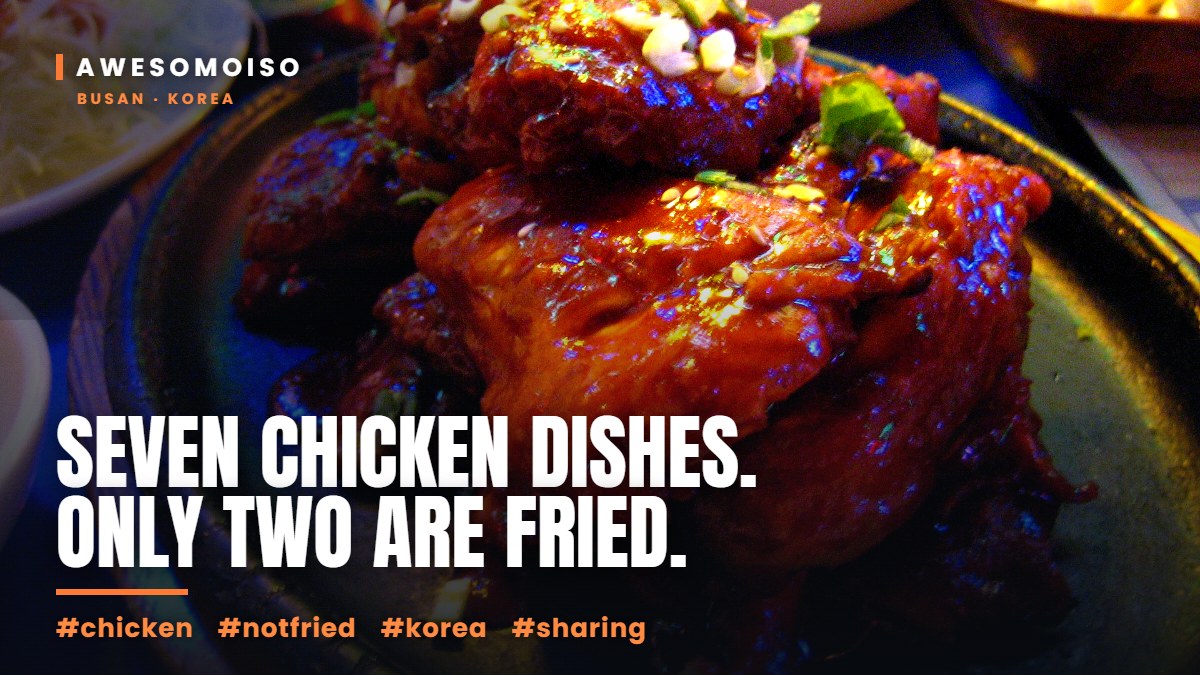
Korean fried chicken is the one Korean dish that travelled on its own. It is in London, Sydney, Jakarta and Los Angeles, and most people meet it before they ever come here.
But chicken in Korea is not one dish with a sauce option. It is seven, and only two of them are fried. The rest are soups, braises and a stir-fry you cook at your own table.
This is the second part of a nine-part map of Korean food by ingredient. Here is all of it, grouped by what the kitchen does to the bird.
🍗 Fried — the one you already know
Two versions, and Koreans order them as two different things rather than one with and one without sauce.
Fried Chicken · 후라이드치킨 · hu-ra-i-deu CHI-kin · not spicy
Unglazed Korean fried chicken. Much lighter than the American version — the crust is thin and glassy rather than craggy, and it shatters instead of crunching. This is the baseline against which Koreans judge every other fried chicken.
Yangnyeom Chicken · 양념치킨 · yang-nyeom CHI-kin · mildly spicy
The same chicken under a sweet-hot red glaze. Sticky, sweet, with heat that arrives late and stays mild. This is the export product — the thing most people outside Korea mean when they say Korean fried chicken. Invented in the 1980s in Daegu, reportedly to cut through the richness of plain fried chicken for Korean palates.
Koreans also have strong views about which brand does which style best, and those views split by sauce type rather than by brand overall. We mapped those rankings here →
Fast-food chains sell their own fried chicken too, and it is a different product from the chicken-shop version. We have reviewed several of them.
Both are delivery food, eaten with beer, and both are perfectly normal to order for one.
🍲 Soup — the opposite end
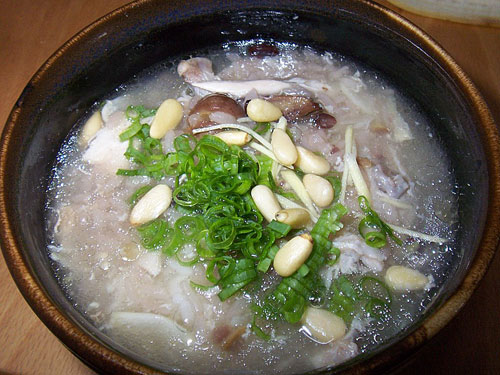
Samgyetang · 삼계탕 · sam-gye-tang · not spicy
A whole young chicken stuffed with rice, ginseng and jujube, boiled into a mild soup. Closest to a very gentle chicken-and-rice porridge, with a faint medicinal bitterness from the ginseng. Almost nothing is seasoned — you salt it yourself at the table.
It is eaten in the hottest weeks of summer, which confuses visitors. The logic is that you restore what the heat takes out of you rather than cooling yourself down. July and August are peak season, and some shops queue.
If you cannot eat chilli at all, this is the safest chicken dish in Korea — and one of the few meals here designed for one person.
🥘 Braised — where most of the chicken actually goes
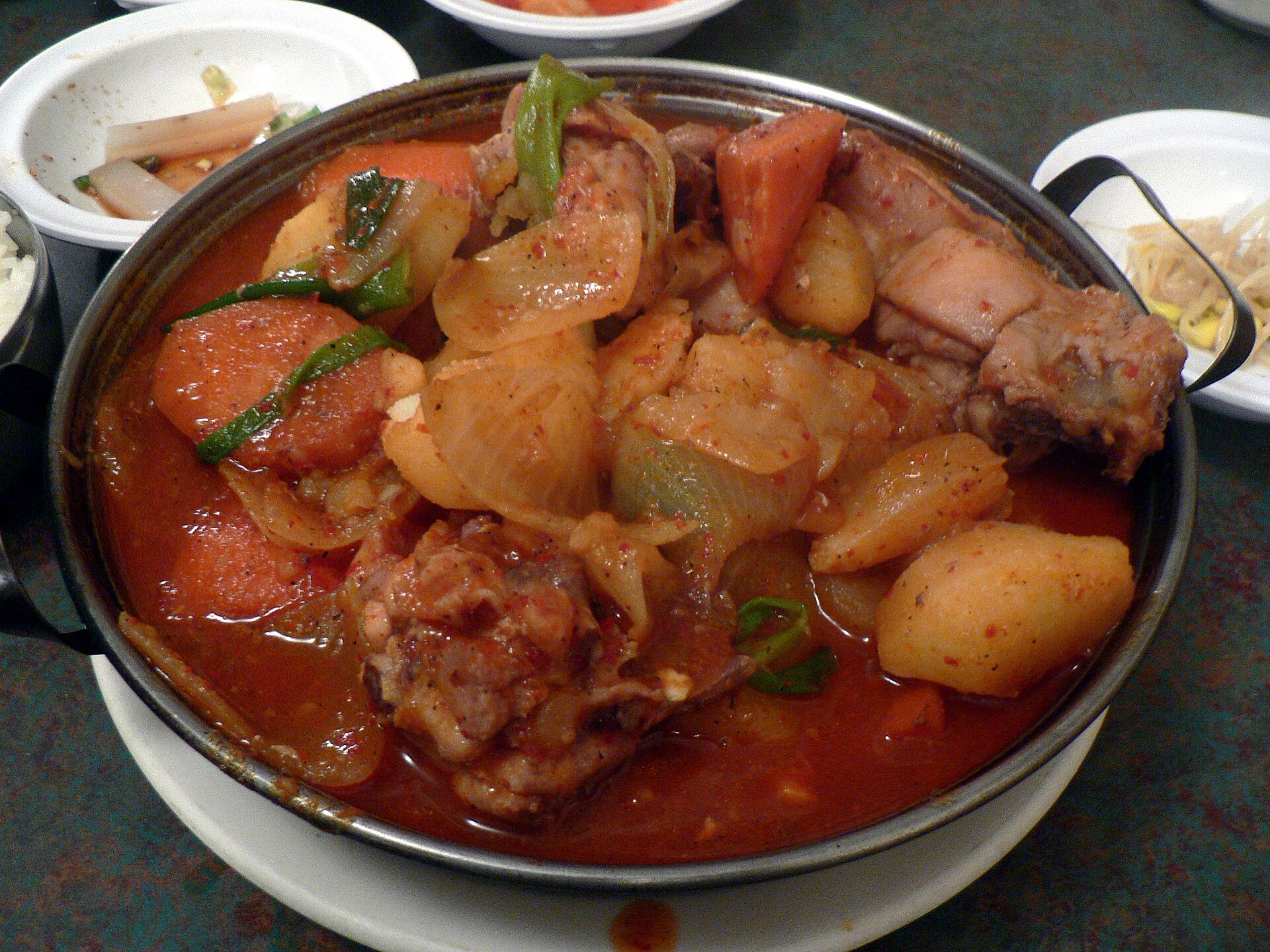
Dakdoritang · 닭볶음탕 · dak-bok-eum-tang · spicy
Chicken braised with potato and carrot in a thick red chilli sauce. Similar territory to a spicy chicken curry, without the curry spice. Sweet, hot, and built to be eaten over rice. A shared pot, not a solo dish.
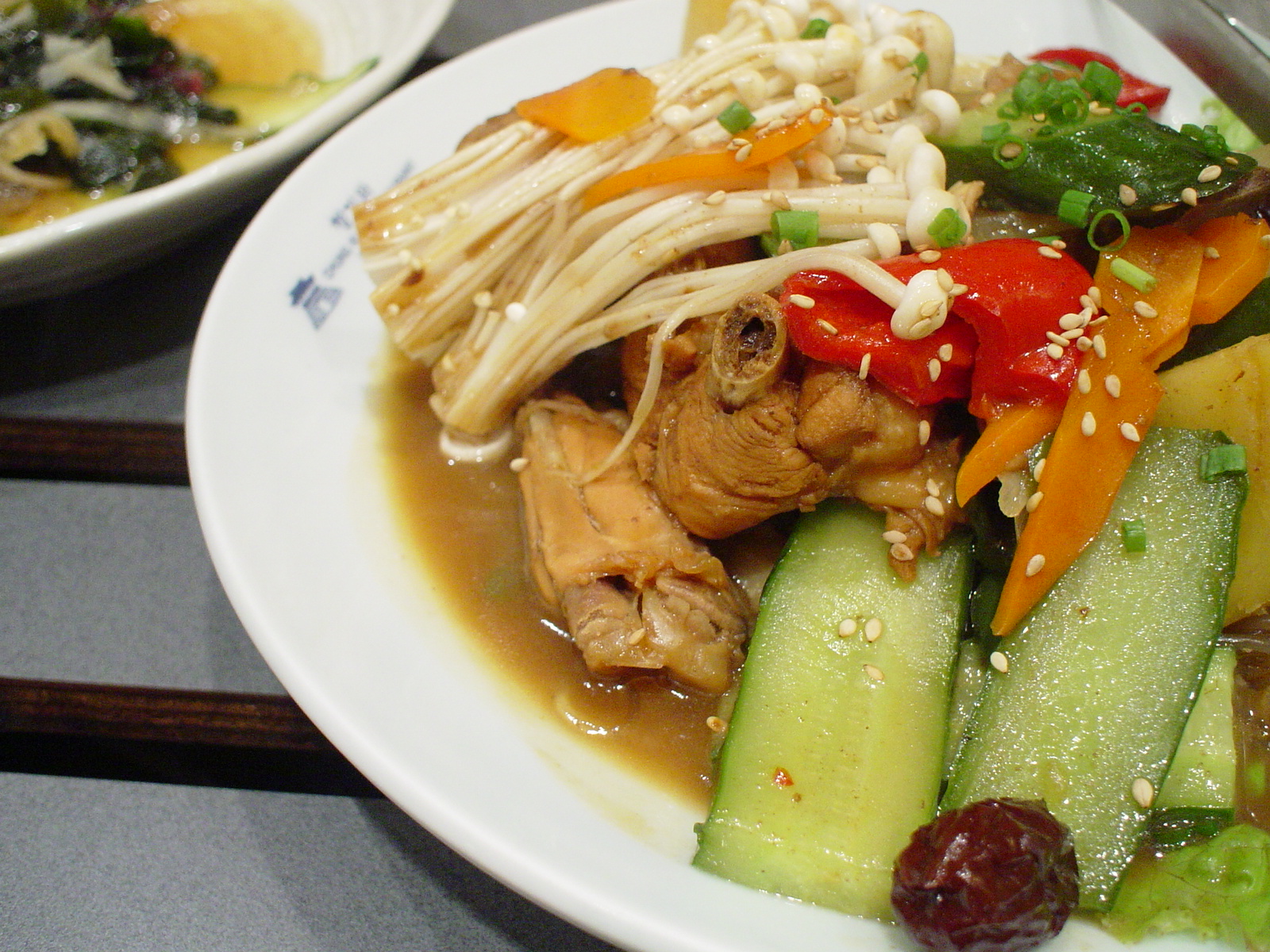
Andong Jjimdak · 안동찜닭 · an-dong JJIM-dak · barely spicy
Chicken braised in dark soy with glass noodles. Sweet soy-braised chicken with slippery noodles — closer to a Chinese red-braise than to spicy Korean food. Named for the city of Andong. Heat level is usually adjustable, and the default is mild.
These two are the useful pair to know. Same bird, same braising pot, opposite ends of the chilli scale. If one person at the table cannot eat spicy food, jjimdak is the version everybody can share.
🔥 Stir-fried at your table
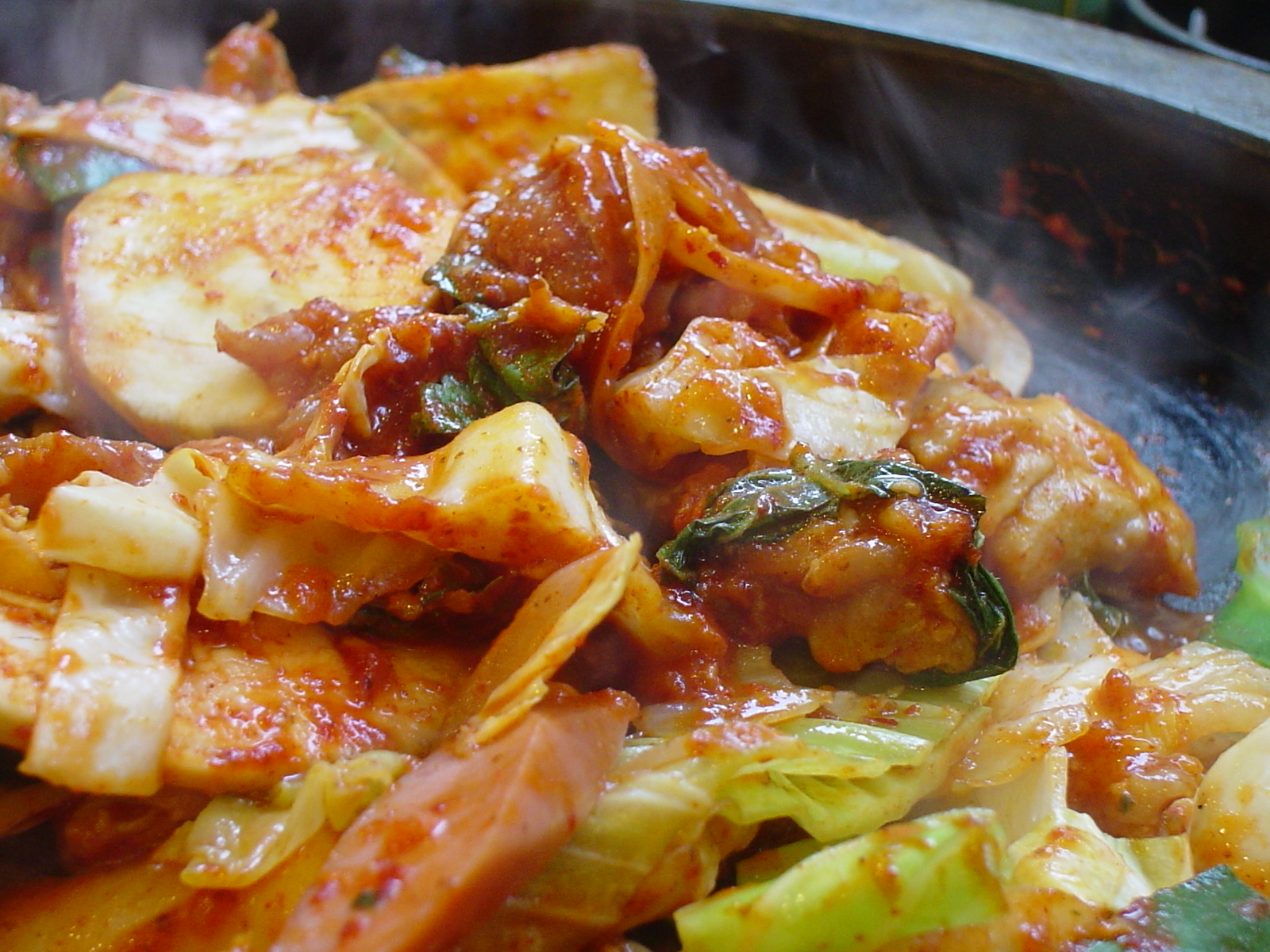
Dakgalbi · 닭갈비 · dak-gal-bi · spicy
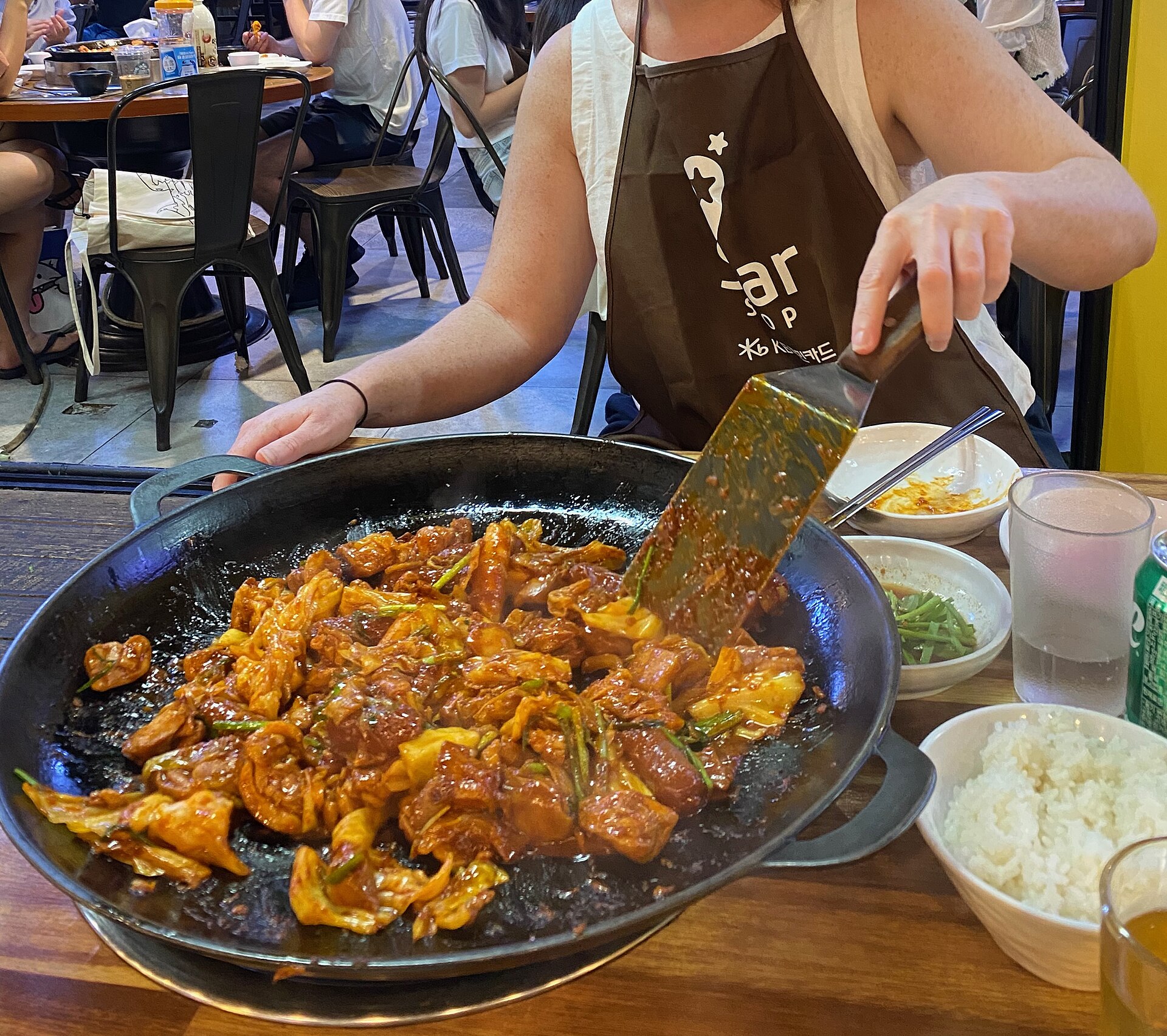
Chicken stir-fried on a hot plate set into your table, with cabbage, sweet potato and rice cake in chilli sauce. Sweet and hot, with chewy rice cakes running through it. Staff usually start it and you keep it moving.
Do not leave without the ending. When most of the chicken is gone, you ask them to fry rice in the leftover sauce — bokkeumbap (볶음밥). The scraped, slightly scorched bits at the bottom are the point. Skipping this is the single most common visitor mistake with dakgalbi.
🌶 And one that is genuinely difficult
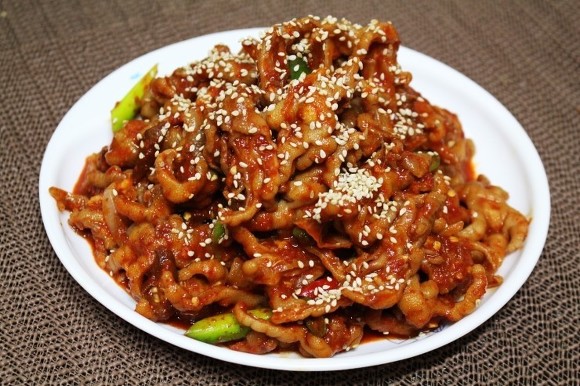
Dakbal · 닭발 · dak-bal · very spicy
Chicken feet braised or grilled in a fierce chilli sauce, eaten with the fingers alongside drinks. Mostly skin, cartilage and collagen — there is barely any meat. The appeal is the texture and the burn, in that order.
This is the hottest thing in this guide by a distance, and the heat is the kind that builds rather than fades. Shops serve a steamed egg custard alongside it for a reason. Plenty of Koreans never order it either — it is not a test you have to pass.
Where to start
- Cannot eat spicy at all? Samgyetang, plain fried chicken, or Andong jjimdak.
- Eating alone? Samgyetang is built for one. Fried chicken is normal to order for one by delivery. The braises and dakgalbi are not.
- Want the thing Korea is known for? Yangnyeom chicken, with beer.
- Want the local experience rather than the famous one? Dakgalbi, and stay for the fried rice.
- Summer? Samgyetang, like everyone else.
Seven dishes, one bird, and only two of them are the one you have already had.
Tags in this series
Part two of nine. Part one covered pork. Beef, seafood, noodles and the rest are on the way.
4 thoughts on “Korean Chicken Is Seven Dishes — Only Two of Them Are Fried”