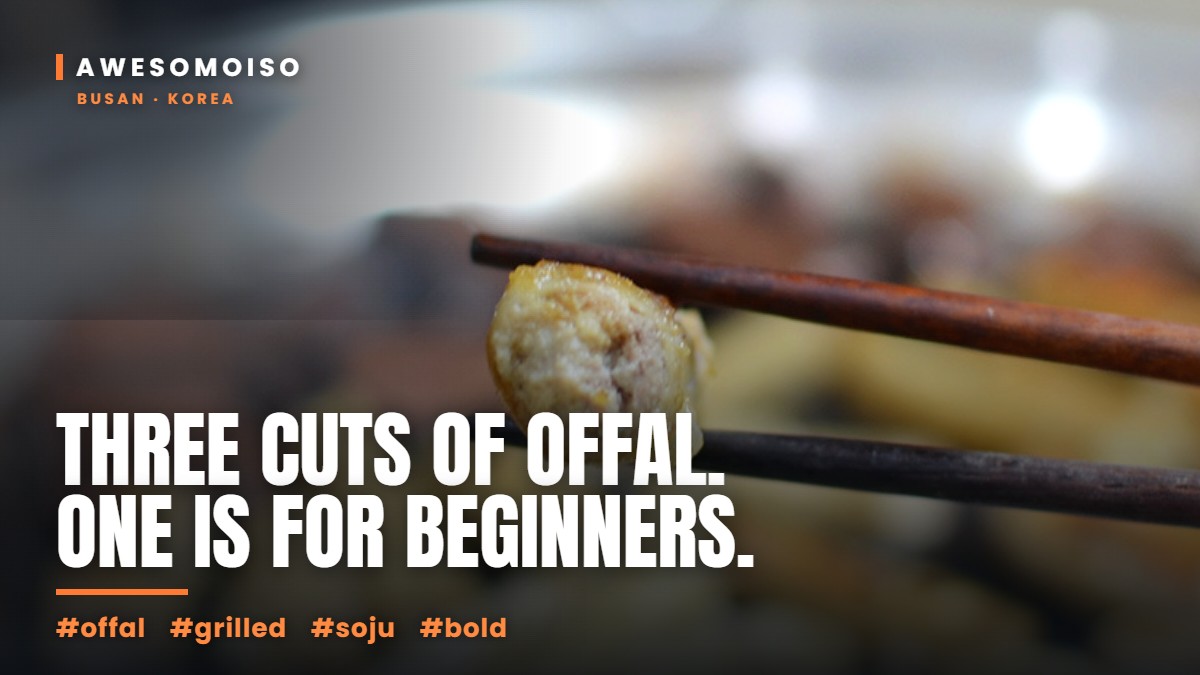
Three menu words that come out as “intestine” in English. Two are grilled, one is boiled, and they are not interchangeable.
The thing nobody tells you first: the difference between a good night and a bad one here is not which of the three you order. It is whether the shop cleaned it properly.
1. Yang-gopchang (양곱창) — Grilled Beef Tripe and Intestine

What it is. Two cuts on one plate. Yang (양) is the first stomach — firm, lean, chewy. Gopchang (곱창) is the small intestine, with a soft white filling inside that bursts when you bite it.
The filling bursts creamy, closer to bone marrow in a tube than to meat.
The yang is the mild one. If offal is new to you, start there.
| Core | Beef tripe and small intestine, onion, garlic chives |
|---|---|
| With it | Sesame-salt dip, ssamjang, raw garlic, perilla leaves |
| At the end | Fried rice in the same pan |
| Vegan | Vegetarian | Pescatarian | Halal |
|---|---|---|---|
| No | No | No | No — beef, alcohol, shared grill |
How it varies — and it is a preference, not a region
- Charcoal, grilled for you. Staff grill and cut at the table. Smokier.
- Iron plate with garlic seasoning, you grill it. Garlicky, oilier.
- Red sauce, pre-coated. Sweet-hot, and the offal flavour is covered.
Do not read these as regional. Plenty of shops sell more than one of them side by side, and which you prefer is taste, not local custom.
If your first plate tasted overwhelmingly of garlic or sweet chilli, you did not get a bad shop — you got that style. The red-sauce version is the easiest entry point and the least “offal-tasting” of the three.
Price. ₩20,000–30,000 per portion, around $15–22.
2. Makchang (막창) — Grilled Pork Rectum, Usually

What it is. The confusing one. Makchang on a menu is usually pork — the end of the pig’s intestine, smooth-surfaced and lean. A beef version exists (the fourth stomach) but it is the less common reading.
Only about 300g comes off one pig, which is part of why it is priced the way it is.
Firm and springy, with a clean nutty finish. Less fatty than it looks.
Where it comes from
Daegu is the city for this. Not a slogan — a supply story. Daegu was one of the biggest trading cities in the southeast, so cattle and pigs arrived from across the region and offal was easy to come by.
The Anjirang alley in Daegu’s Namgu district has around 60 shops in one street. The style traces back to a shop that opened there in 1979 and grilled seasoned intestine over charcoal briquettes.
⚠️ Busan has no equivalent named street. Shops are spread across the city — Seomyeon, Nampo-dong and elsewhere — so here you pick the shop, not the alley.
How it is eaten. With a doenjang (soybean paste) dipping sauce, garlic and chives. That sauce is the Daegu signature; elsewhere you may get salt or ssamjang instead.
| Vegan | Vegetarian | Pescatarian | Halal |
|---|---|---|---|
| No | No | No | No — pork |
Price. ₩18,000–28,000, around $13–20.
3. Gopchang Jeongol (곱창전골) — The Boiled One

What it is. The same intestine, simmered at the table in a red broth with vegetables and glass noodles. Not an appetiser — it is the whole meal, shared from one pot.
Rich and peppery. Closer to a spicy beef hotpot than to the grilled version.
The divisive one
Koreans themselves split over this dish — but not over the broth. A shop that knows what it is doing sends out a pot with no animal smell at all; that is skill, same as on the grill.
What people are divided about is intestine itself. Some like the chew and some never will, and no amount of good cooking changes that. So this is not the dish to find out on.
| Vegan | Vegetarian | Pescatarian | Halal |
|---|---|---|---|
| No | No | No | No — beef, alcohol |
Price. ₩30,000–45,000 per pot, sized for two or more — $22–33.
The one thing that actually matters
Not which of the three you order. Whether the shop cleaned it.
Offal is almost all preparation. Badly cleaned intestine tastes of the animal; properly cleaned intestine does not. This is the single biggest difference between two shops, and it is the same test for all three dishes above.
What to look for
- No barnyard smell when you walk in — broth, garlic and charcoal are fine
- Gopchang that is plump, not shrivelled — the filling should be there
- Tender, not rubbery
- A shop that does offal and little else
What to walk past
- A sour or animal smell at the door
- Offal as one line on a long general-grill menu
- Anything pre-cooked and reheated in sauce
⚠️ Some shops part-grill the offal in the kitchen before it reaches your table. That is not a shortcut — it is normal, and it means less work for you. Reheated-in-sauce is the problem, not pre-grilled.
The three, side by side
| Yang-gopchang | Makchang | Gopchang jeongol | |
|---|---|---|---|
| Animal | Beef | Usually pork | Beef |
| Cooking | Grilled | Grilled | Boiled at the table |
| Texture | Chewy + creamy filling | Firm, springy | Soft, in broth |
| Spicy | Only the red-sauce version | No | Medium |
| Dip | Sesame salt / ssamjang | Doenjang (Daegu) | — |
| Price | ₩20–30k | ₩18–28k | ₩30–45k / pot |
| First time? | Start with the yang | Mild, lean | Only if you know you like offal |
From someone who eats this
Written by the person who runs this site — Korean, living in Busan.
In Busan, go for yang-gopchang. Not makchang
Makchang is a Daegu thing. Busan has decent makchang places, but they are hard to find, there are far fewer of them, and — for me — they land slightly below what I was hoping for. If makchang is the whole reason for the trip, that reason points at Daegu.
Yang-daechang and gopchang shops are the opposite. In Seomyeon and around Jagalchi they sit close enough together to read as a strip. That density is the signal — enough demand to keep a lot of specialists in business, side by side, which is not true of makchang here.
The decision that actually changes your night
It is not which cut. It is who does the grilling. Two formats exist, and the difference is larger than the menu difference:
- Table grill — a burner and a steel plate, like ordinary Korean BBQ. You cook it.
- Indoor pojangmacha style — you sit in a row at a counter and the owner grills it for you, piece by piece, and hands it over when it is ready.
I recommend the second one, and for a first-timer I would say it is the only one worth looking for. Offal is the one thing where undercooking is a real mistake and overcooking ruins the texture, and at a counter shop that judgement is not yours to make. Both formats exist in Seomyeon and near Jagalchi.
Some shops do a sauced version rather than plain. There are a lot of these places and they each have their own character, so treat shop-by-shop detail as something you discover rather than plan — what is worth knowing in advance is the district and the format.
How it ends
Most shops finish you with something cooked in the leftover fat. Usually fried rice, sometimes kimchi-mari jumeokbap — rice balls rolled with kimchi. It is an extra charge, commonly somewhere around ₩3,000–5,000, and the amount is set by the shop. Ask when you order rather than at the end.
If you only try one
Yang-gopchang, and ask for the yang first — it is the lean, mild half of the plate and the gentlest way into offal.
Makchang if you want it leaner still.
Gopchang jeongol last — order it once you know intestine suits you. A good pot has no animal smell, but it is still a whole meal of the thing.
More on Busan food: Three Busan Dishes the Port Created · What to Eat in Busan
1 thought on “Gopchang, Makchang, Jeongol — Korea’s Offal, Grilled and Boiled”