Jagalchi is the biggest fish market in Busan, and most visitors arrive expecting a sashimi pilgrimage. That is not what the neighbourhood is for.
Ask someone who lives here when they last went to Jagalchi and the answer is usually a drinking night. Pork belly on a grill, a few beers, a long table. The area is packed with meat restaurants and bars because that is the demand. Locals do eat raw fish there — when a relative visits from out of town, or when something is properly in season — but for an ordinary evening most people would rather order a set platter at a regular raw-fish restaurant or an izakaya, because it costs less and takes no negotiation.
None of that means skip it. It means the map in your head is probably wrong, and the map is the useful part.
One line that does most of the work
Stand at Jagalchi Station and find the main road.
Below the road, towards the water, is seafood. Above the road, inland, is meat and drinking.
That is the whole thing. Everything below is detail hanging off that sentence.
Towards the water: raw fish
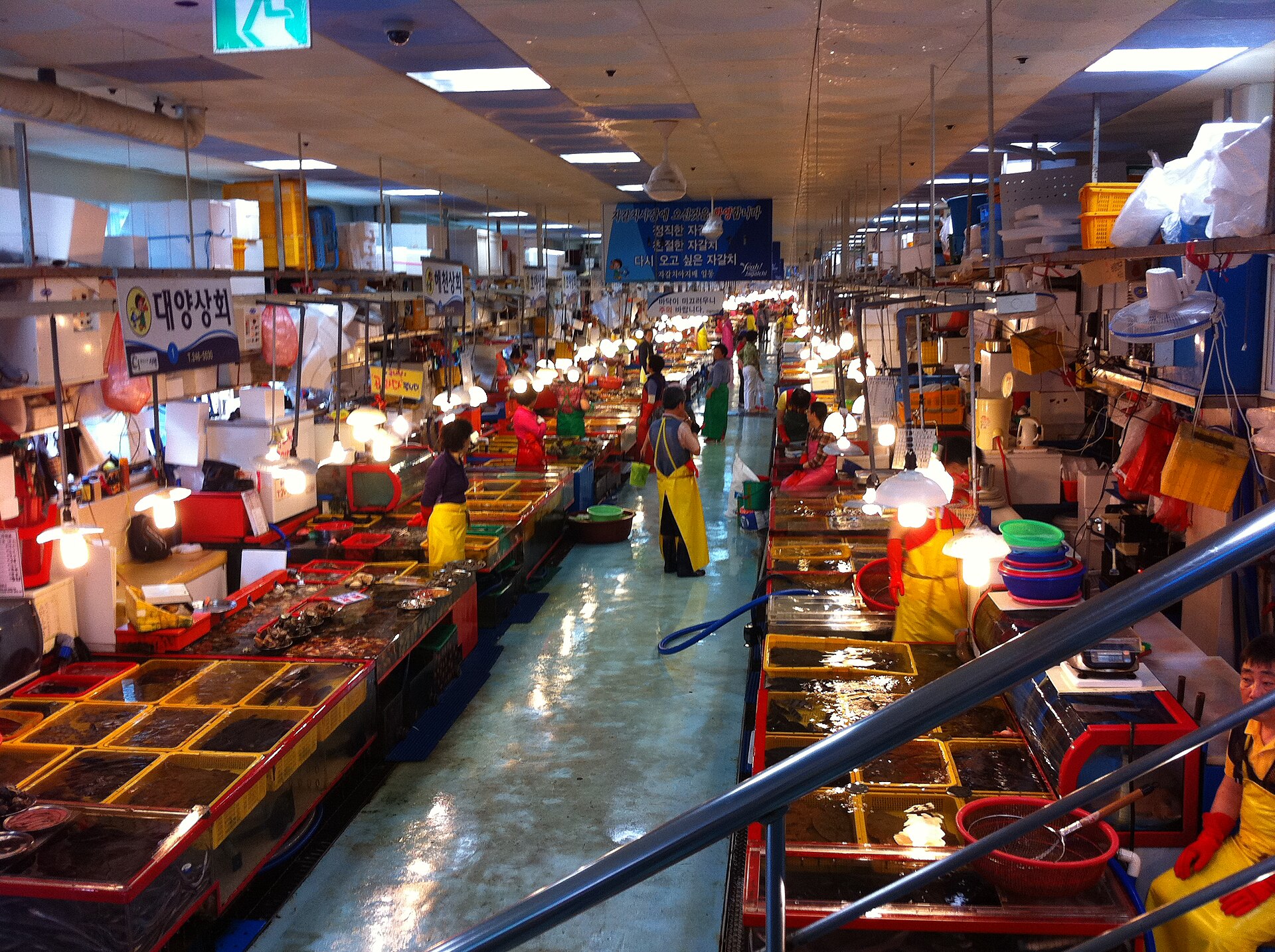
This is the side people come for, and it is where the choices get complicated — so it is worth slowing down here.
First, “Jagalchi” is not one building. The main Jagalchi market building runs on a buy-downstairs, eat-upstairs system: you choose your fish on the ground floor and carry it up to a restaurant that prepares it for you. Sindong-a Seafood Market is a separate building nearby, opened in 1987, with live fish on the ground floor and a cluster of raw-fish restaurants upstairs. Published floor plans do not agree with each other in detail, so treat the layout as something that varies by building and check when you arrive. Walking through the wrong door is the most common way a visit goes sideways — not a scam, just a different experience than the one you planned.
There are three realistic ways to eat raw fish here, and they are genuinely different experiences rather than tiers of quality.
A. Choose your own fish at a fish centre
You pick a live fish from the tanks, pay by weight, and it is prepared and carried to a table. This is the version that makes a trip memorable, and it is the version that demands the most from you: you are negotiating in Korean about species, weight, and the separate preparation charge before anything is cut.
If you can bring a Korean-speaking friend, bring one. If you cannot, learn the handful of phrases first and accept that it will be slower.
B. A set-table raw fish restaurant near the fish centres
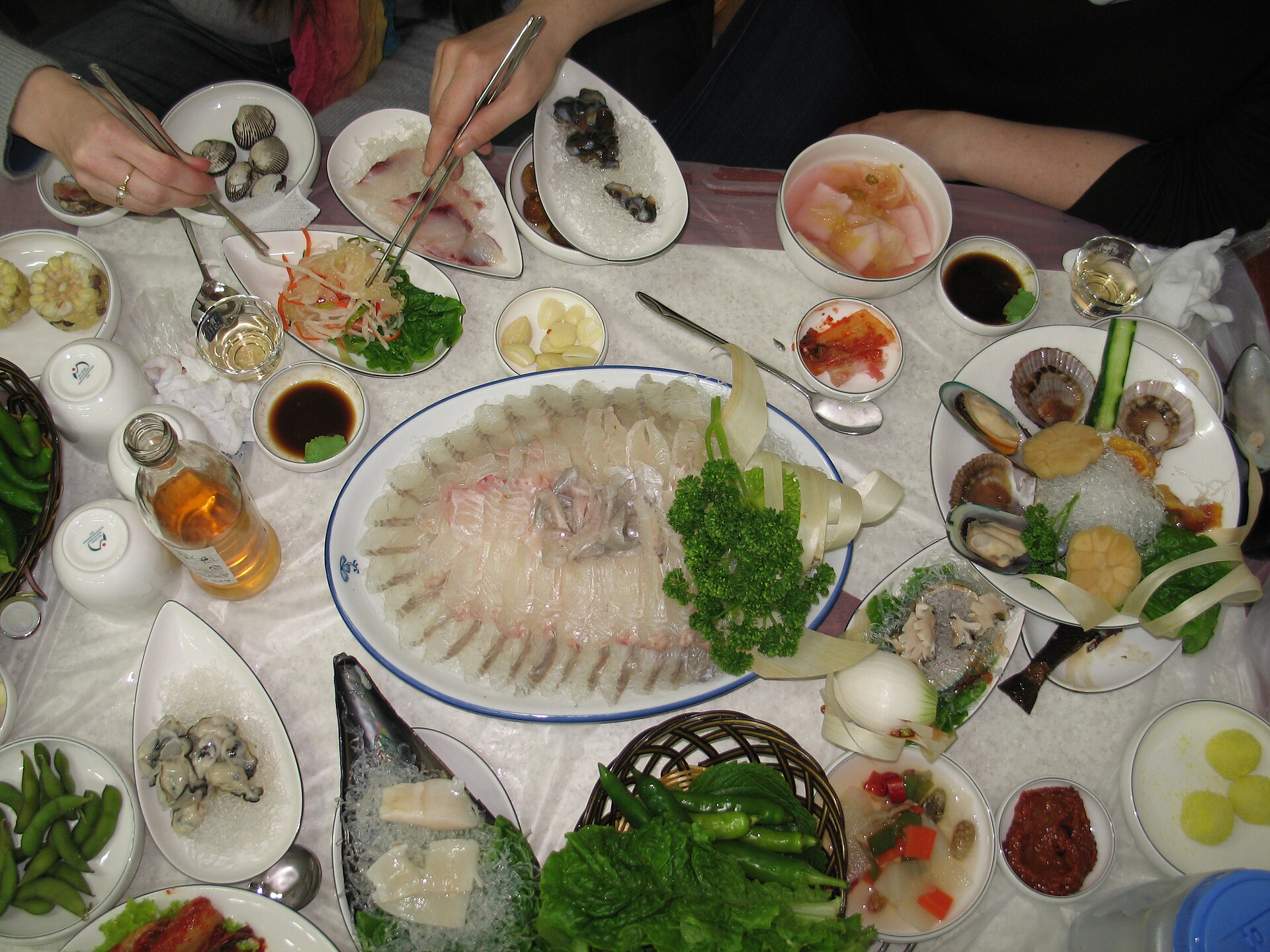
These restaurants serve a fixed spread for a group rather than selling you a fish. You sit down, you agree on a size, and everything arrives. No tanks, no weighing, no negotiation.
Prices sit in the low hundreds of thousands of won for four to five people, and the spread between restaurants is wide — published figures for four-person platters range from roughly ₩90,000 to ₩160,000 (about $65 to $115) depending on the restaurant and what is included. Treat any number you read online as a starting point and ask when you book. The same applies to the per-person table charge that many places add: it exists, the amount is set by the restaurant, and the time to ask is before you order, not after.
What you get in exchange for the lost choosing-your-own experience is the other thing these places are known for: a long parade of side dishes before the fish arrives.
C. A set platter at a regular raw-fish restaurant or izakaya
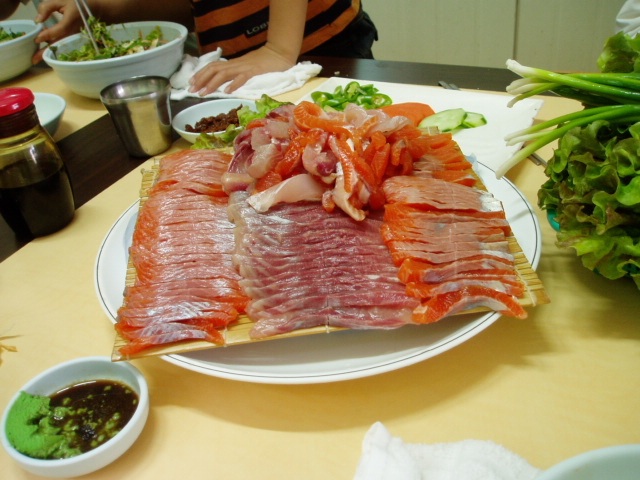
This is what Busan residents do most often. An assorted platter — modeum-hoe — at a normal restaurant costs less than the market route, needs no Korean beyond pointing at a menu, and is perfectly good fish. It is the least photogenic answer and the one most travel guides leave out.
About the word you will hear: 스키다시
Staff and menus use seukidashi, from the Japanese tsukidashi (突き出し). The borrowed word has grown on the way over. In Japan it means the one small dish that lands on your table when you sit down. At a Korean raw-fish restaurant it means the whole sequence that arrives before the fish — often a dozen small plates, sometimes steamed egg, sometimes grilled items. If you have eaten in Japan you are more likely to be caught out by this, not less. Do not fill up on it. The fish is still coming, and after the fish a spicy soup made from the frame usually closes the meal.
Not sure which fish to point at? Our guide to choosing raw fish by texture and richness splits the common species into four groups, and winter yellowtail is the one worth asking about in the cold months.
One more thing you will see on this side: grilled hagfish, kkomjangeo. There is a lane of it near the market. The standard Korean name is meokjangeo, and it comes two ways — seasoned in chilli paste, or salt-grilled. It looks like eel and is not one. Worth a plate; not the reason to come.
Inland: meat, then drinking
Cross the main road and the neighbourhood changes job.
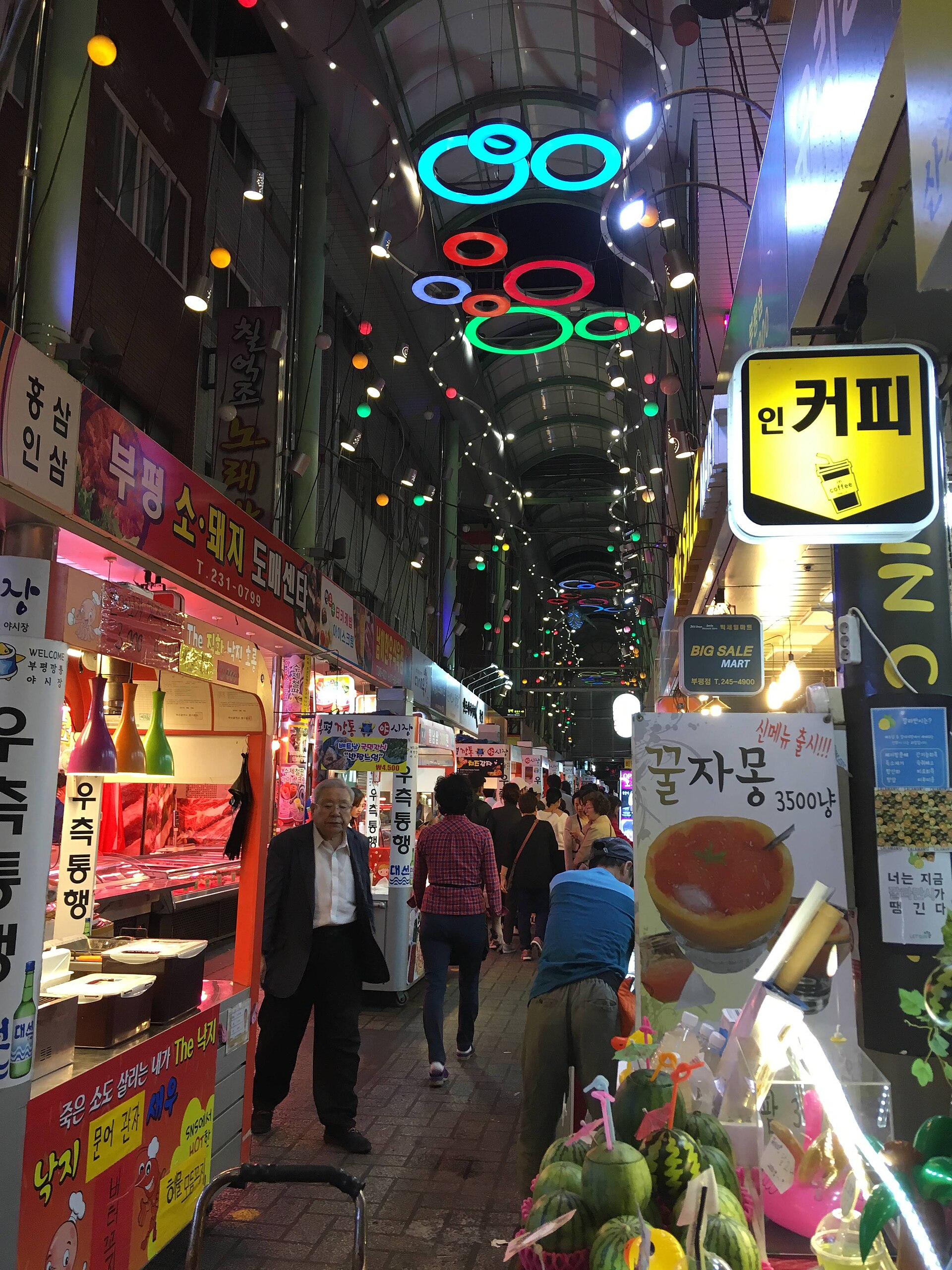
Bupyeong-dong, around the pork trotter alley. This is the meat-and-alcohol zone — grill-your-own pork belly and similar. The trotter alley itself is described by the city as the largest of its kind in the country, and the dish it is known for is naengchae-jokbal, trotter served cold with a mustard-vinegar dressing and vegetables. Mostly a local crowd.
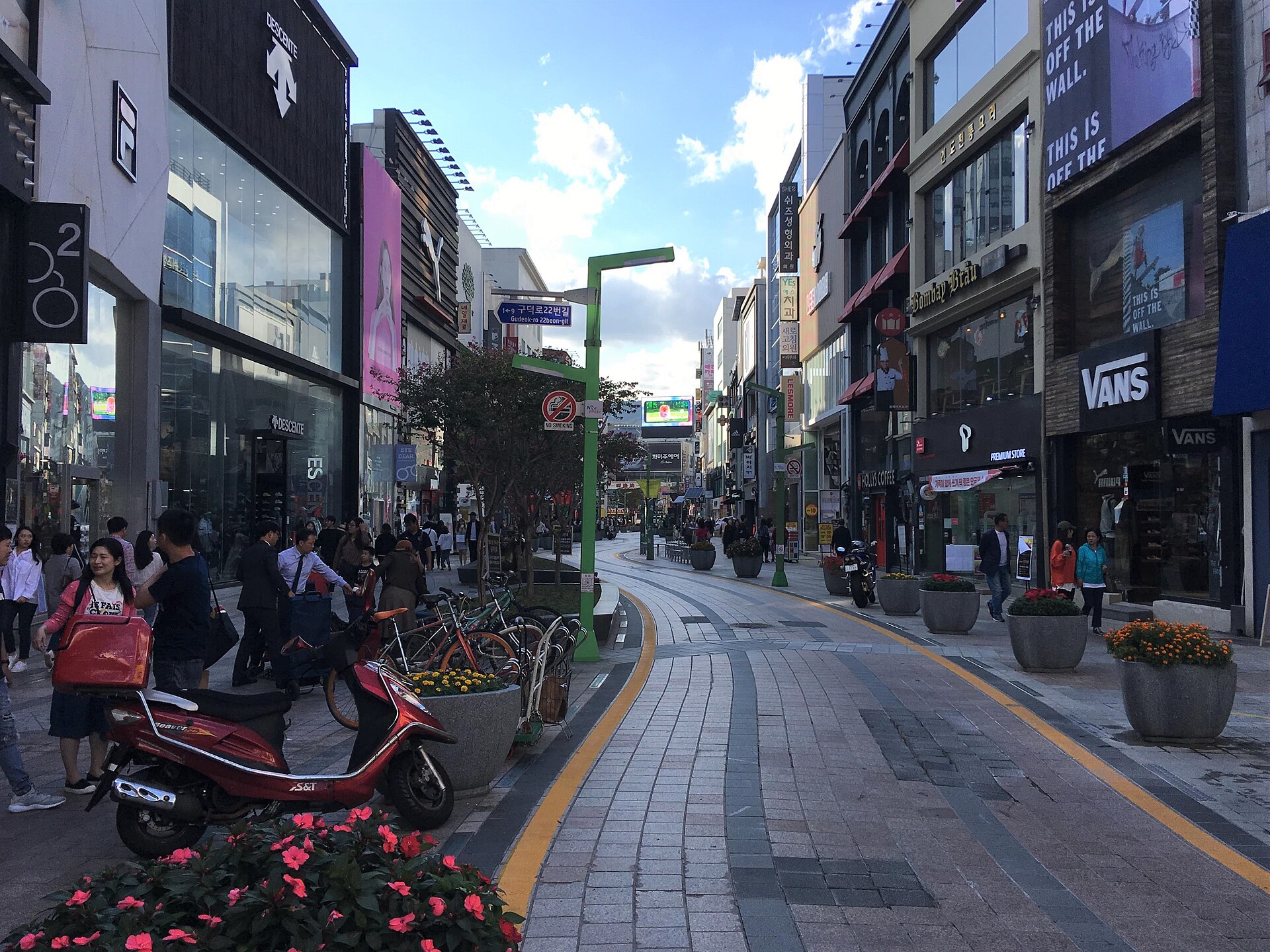
Towards Gwangbok-dong. Keep going and the balance tips from food to drinking. The restaurants here are built around anju — the dishes that exist to be eaten alongside alcohol — and the variety is the point: skewers, fish cake soup, grilled shellfish, braises.
Gwangbok-dong through to Jung-ang-dong. If what you actually want is the Korean evening-drinking experience rather than a specific dish, this is the stretch to walk. Start inland, keep going, stop when something looks busy.
If you are eating alone, note that the grill restaurants in this zone are the hardest places to do that — many have two-portion minimums. Our restaurant phrase card covers how to ask.
Which zone works for you
| You don’t eat | Water side (raw fish) | Inland (meat and bars) |
|---|---|---|
| Meat (pescatarian) | Works | Hard — the zone is built on pork and beef |
| Pork | Works | Hard — pork belly and trotter are the anchors |
| Fish and shellfish | No | Works |
| Animal products (vegan) | No | No — side dishes here commonly use anchovy or shrimp |
| Non-halal food | The fish itself is fine, but we have not verified halal certification for any restaurant in this area | No |
Cross-contact is separate from ingredients. Shared grills, shared knives and shared broth pots are normal in both zones, so a kitchen that can leave an ingredient out cannot necessarily keep it off your plate.
How it varies
- Floor layout. Which floor sells live fish and which floor cooks it differs between the market buildings. Look before you commit to a staircase.
- Table charge. Many places add a per-person charge; many do not. The amount is the restaurant’s call. Ask before ordering.
- Side dishes. How many plates arrive before the fish is one of the main differences between restaurants, and it is a fair thing to ask about when you are comparing two doors.
- Season. What is worth ordering changes month to month. A restaurant pushing one particular fish in winter is usually telling you something true.
The short version
Jagalchi is a fish market that a Busan evening tends to use as a meeting point rather than a destination. If you want raw fish, decide first whether you want the choosing-your-own experience or the easy version, because they happen in different buildings. If you want the drinking night, cross the road and keep walking inland.
Planning the rest of the trip? Start with what to eat in Busan.