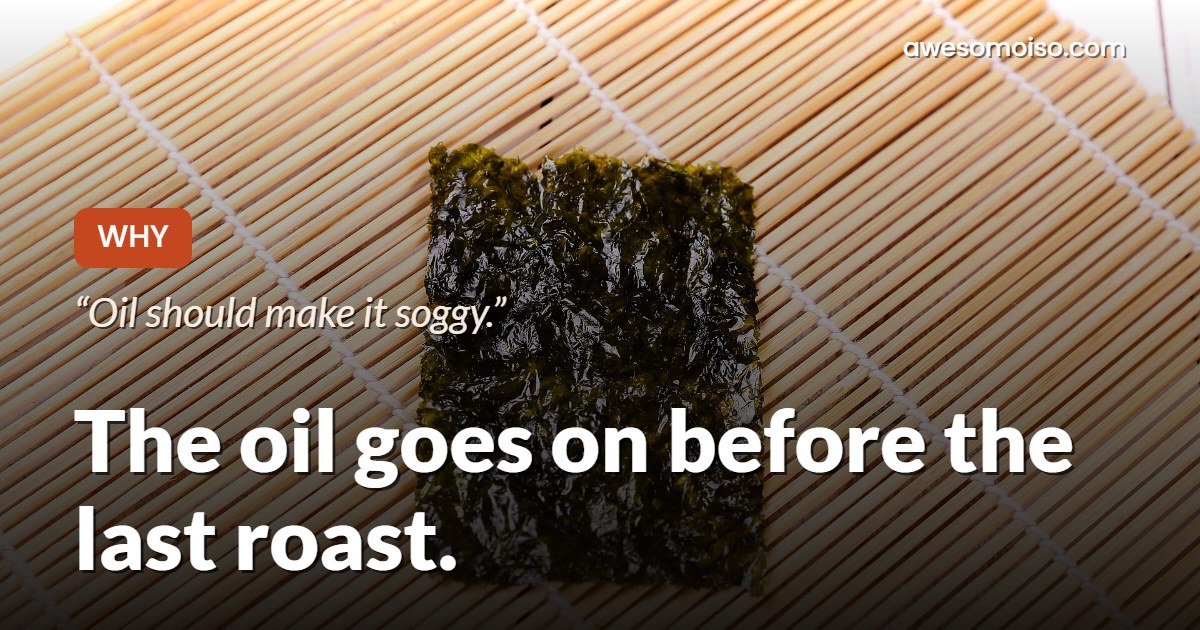
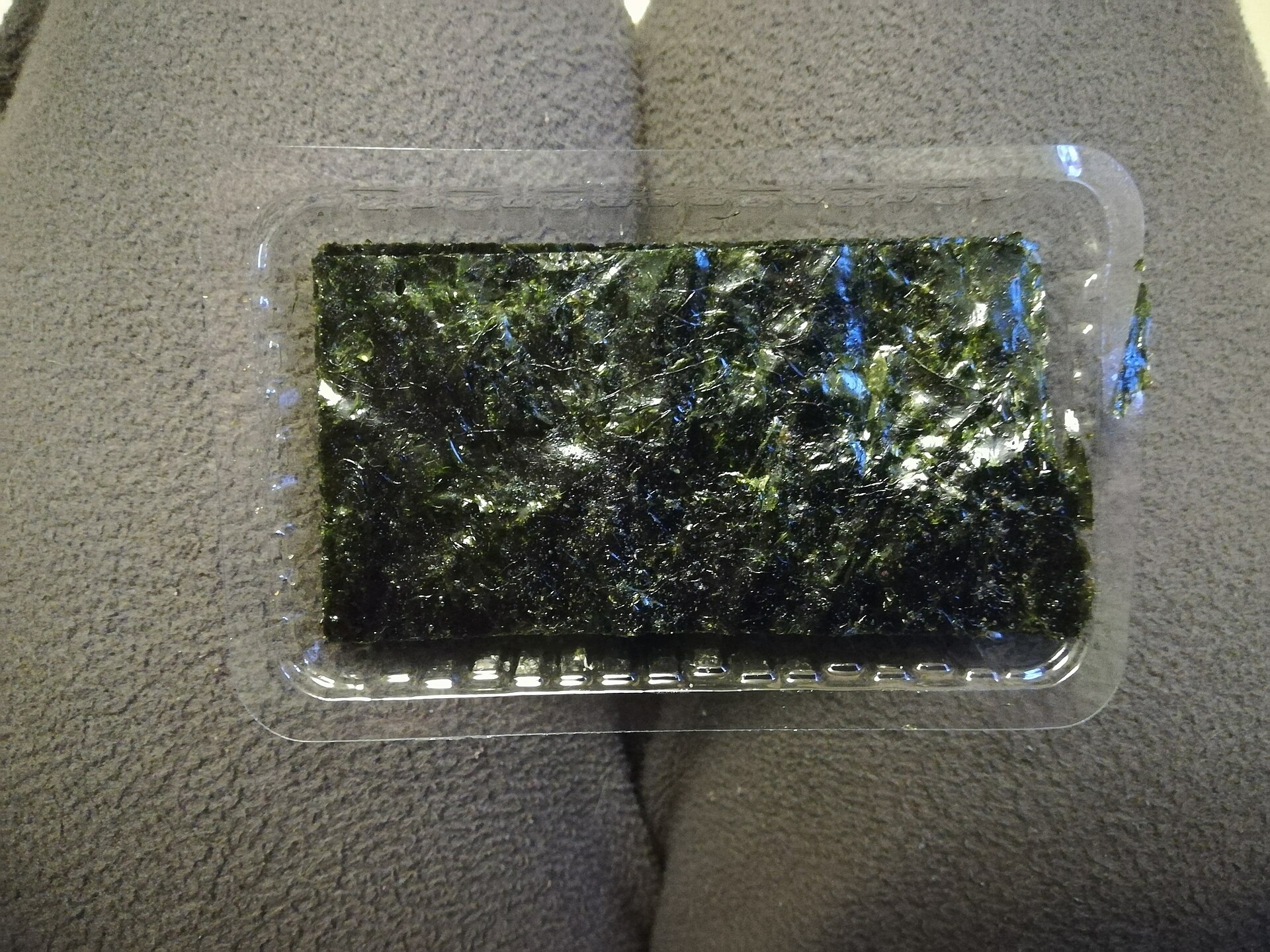
Open a packet of Korean seasoned laver — gim — and the sheet shines. You can see the oil on it. Touch it and your fingers come away slightly slick. And yet it shatters when you bite it.
That combination feels wrong. Oil a piece of paper and it goes limp and translucent. Oil a sheet of seaweed and it stays brittle enough to crack. Why?
Crispness is about water, not oil
This is the part that trips people up. Food goes soggy because of water, not because of fat. Crispness is a property of a dry, rigid structure; it disappears when enough moisture gets into that structure and softens it.
Food science measures this as water activity — roughly, how much free water is available in the food. In one study of dried banana chips, crispness fell away sharply once water activity rose above about 0.3. The chips had not gained fat. They had gained water.
Oil is not wet. A film of oil adds slickness and weight, but it does not add the thing that actually destroys crunch.
And the oil goes on before the last roast
Here is the part most people never hear. Seasoned gim is not dried seaweed with oil brushed on at the end. It is roasted, seasoned, and then roasted again.
Published Korean process descriptions look like this:
| Step | Example figures |
|---|---|
| First roast | 220°C for a few seconds |
| Second roast | 290°C for about 3 seconds |
| Oil and salt applied | sesame oil, or corn oil, brushed or sprayed on |
| Final roast | a further pass, in one documented line at around 344°C for 8 seconds |
Exact numbers differ by factory and by product — some lines season between the first and second roast, others spray oil on at the very end to keep the aroma. But the shape is consistent: heat, oil, heat.
That last pass is what makes the difference. The sheet goes through a hot oven after it has been oiled, and whatever moisture is in the sheet and in the seasoning is driven off. The oil stays. The water does not.
The oil then works in your favour
Once the sheet is dry, the fat film on it is not a liability. Fat layers are used deliberately in food manufacturing as moisture barriers — thin continuous films applied to biscuits and baked goods to slow water moving in or out. In one patent test, uncoated crackers absorbed a substantial amount of water and went soft, while coated ones held up.
So the oil on gim is doing two jobs at once: it carries the flavour, and it slows the sheet down from drinking in humidity.
Why it is so thin, and why that matters
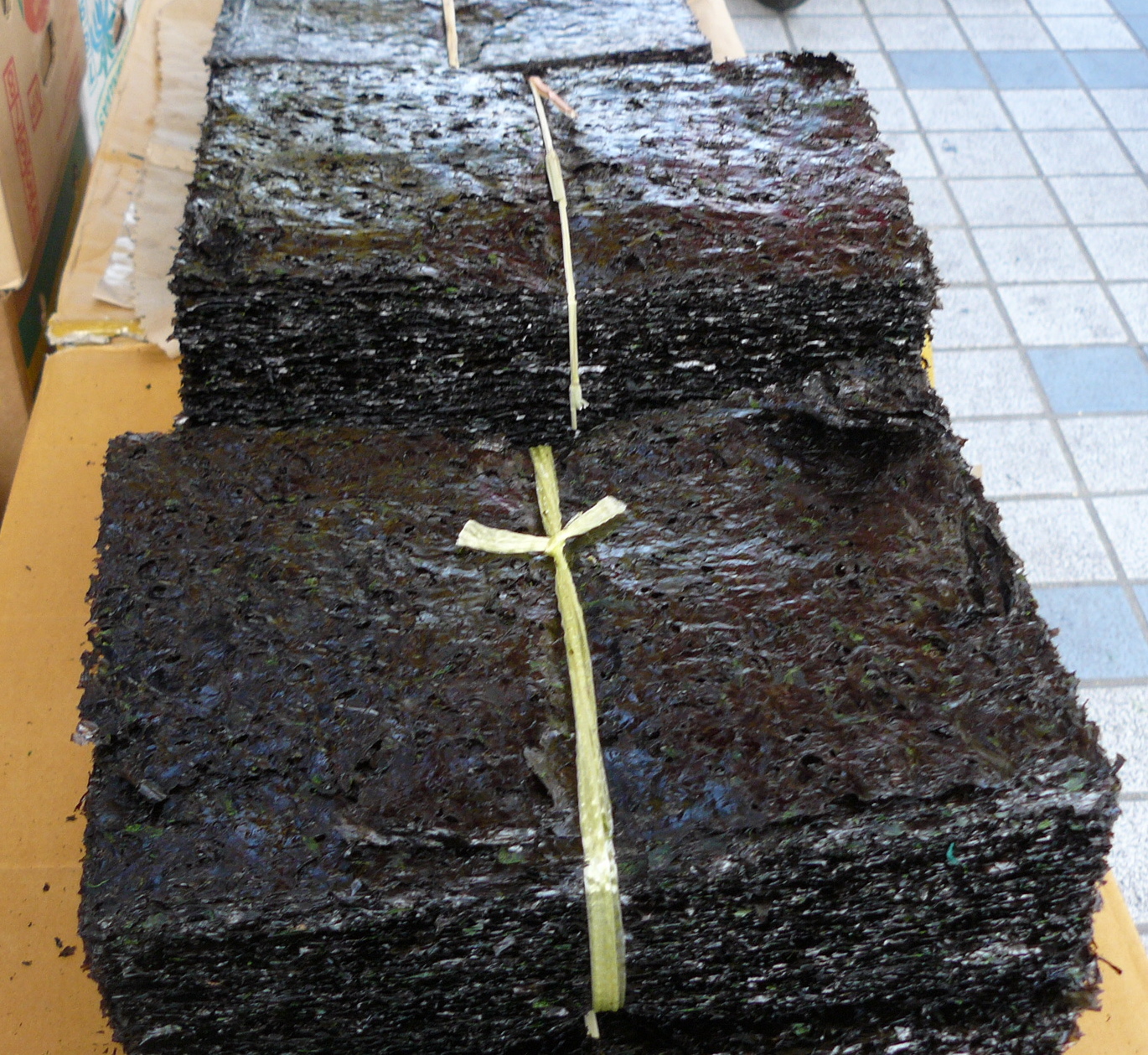
A sheet of gim is about as thick as paper, and that is not just for rolling. A thin sheet has very little to dry out. Seconds in a hot oven are enough to take it to a very low moisture content — the industry talks about finished seasoned laver sitting under 1% water.
A thicker piece of anything would need far longer in the oven, and the oil would be damaged before the middle was dry. Korean roasting lines run hot and extremely fast for exactly this reason. Research on the process found acid and peroxide values climbing as roasting temperature rose, with roughly 300°C for five seconds identified as a safe setting. Push it hotter or longer and you are not making it crisper, you are making the oil rancid.
Then why does it go soft after you open it?
Because the thing that was being kept out finally gets in.

Two things work against the sheet once the packet is open. Air in Korea is often humid, especially in summer. And salt attracts water — the same seasoning that makes gim taste good also pulls moisture out of the air onto the sheet.
That is why packets are small, sealed, and usually contain a little sachet of desiccant. It is not over-packaging. It is the only thing standing between the sheet and the weather.
- Reseal or clip the packet the moment you are done. Minutes matter more than hours
- Keep the desiccant in there until the packet is finished
- Do not refrigerate it. Cold air plus condensation when you take it out is the fastest way to ruin a packet
- If it has gone limp, a few seconds in a dry pan brings it back — you are removing water, which is all that was ever wrong with it
The short answer: the oil was never the problem. Gim is roasted after it is oiled, it is thin enough to dry in seconds, and the fat film then helps keep humidity out. What finally softens it is the air in your kitchen.
One more thing worth knowing
Plain unseasoned sheets (gim sold for rolling) and seasoned snack sheets are different products. The unseasoned kind is what goes around gimbap, and it is deliberately left dry and matte so the rice does not make it slide. The glossy seasoned kind is a side dish and a snack — it is what you tear over rice, and what we suggested keeping on hand when eating raw fish in a hotel room.
If you are reading Korean labels on these packets, the oil used is worth a look: sesame, perilla, corn and olive all appear, and they taste noticeably different from each other. The allergen words are on our card.