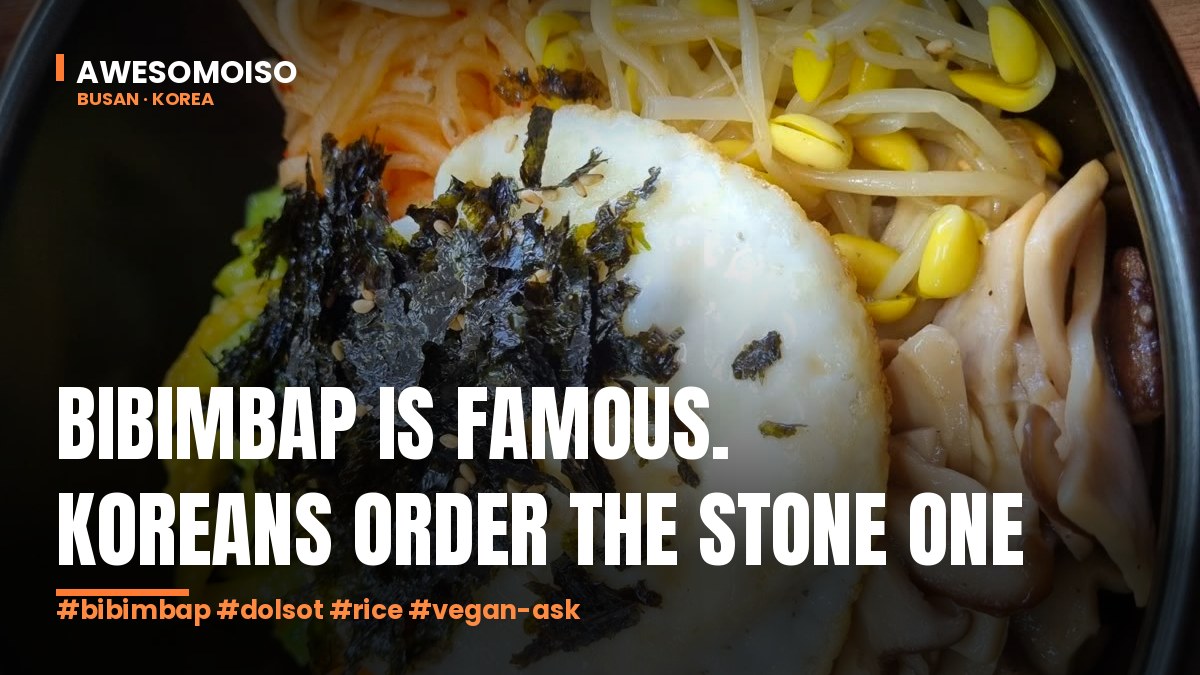
Bibimbap is the Korean dish foreigners know before they arrive. It is on every list, in every guidebook, and it is usually the safe order. But walk into a Korean restaurant and watch what Koreans actually point at on the board, and it is often not plain bibimbap — it is dolsot bibimbap, the one served in a stone bowl.
Koreans treat the stone bowl version as the upgrade, and it usually costs a little more for that reason. If you are in Korea and you are going to eat bibimbap once, this is the one to order.
What the stone bowl actually does
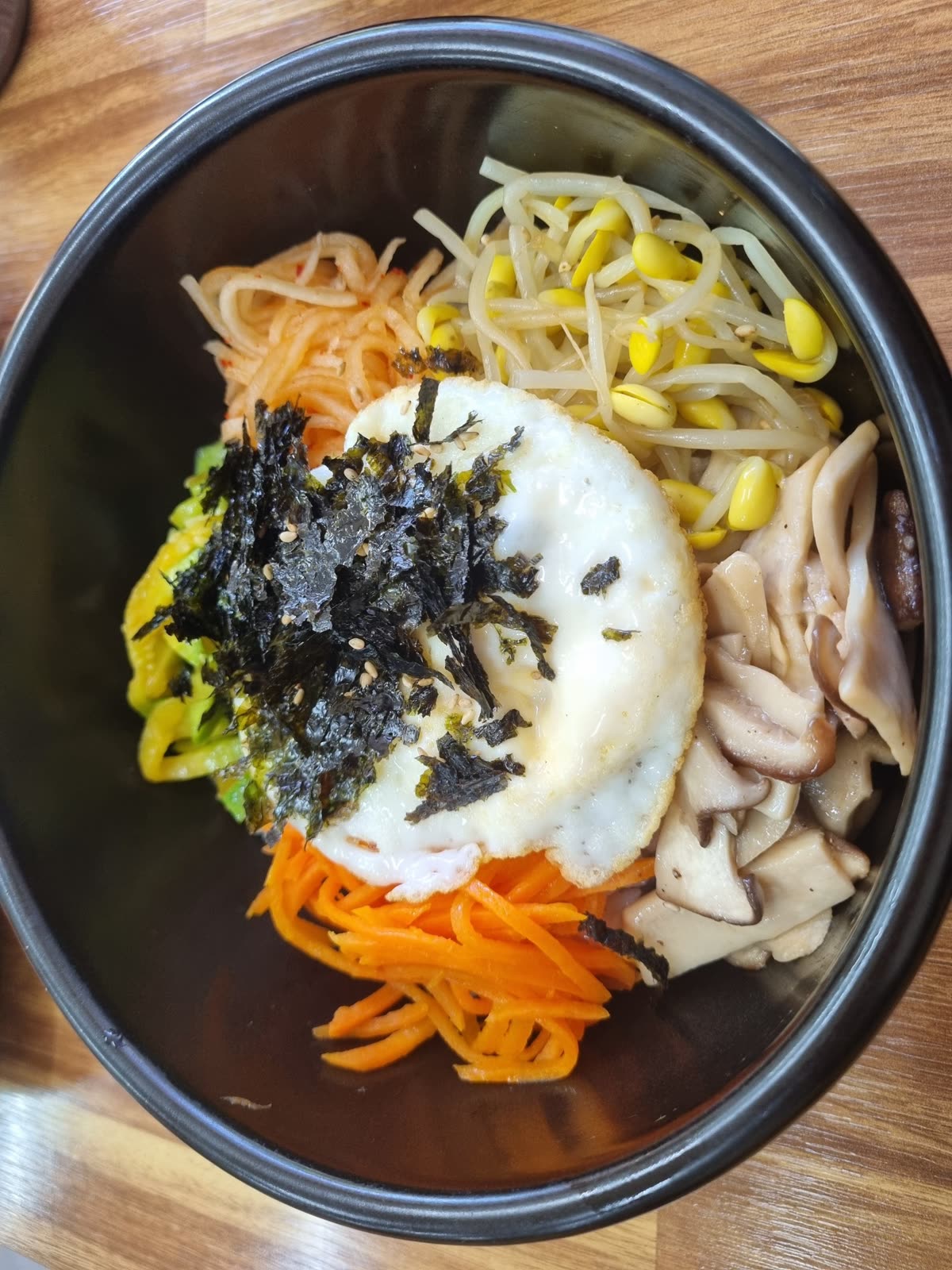
The bowl arrives so hot it is still hissing. That is not theatre — it is the cooking method. The rice touching the stone keeps frying while you eat, and by the time you have mixed everything the bottom layer has turned into a crust.
So a plain bibimbap gives you one texture: soft rice with vegetables through it. A dolsot gives you two, and they change as you go.
⚠️ First: do not touch the bowl
The stone bowl is dangerously hot when it arrives, and it stays hot. It comes straight off the heat and it is not like a hot plate in a Western restaurant — touching the side of it will burn you. Do not test it with a finger.
It arrives sitting on a base — a wooden or plastic holder underneath. That base is there for a reason: it is the part you are meant to hold. Grip the base, not the bowl, and mix carefully from above. If you need to steady it, steady the base.
Children should not be handed the bowl at all. And do not slide it toward you by the rim — move the base.
Mix it thoroughly — but not hard
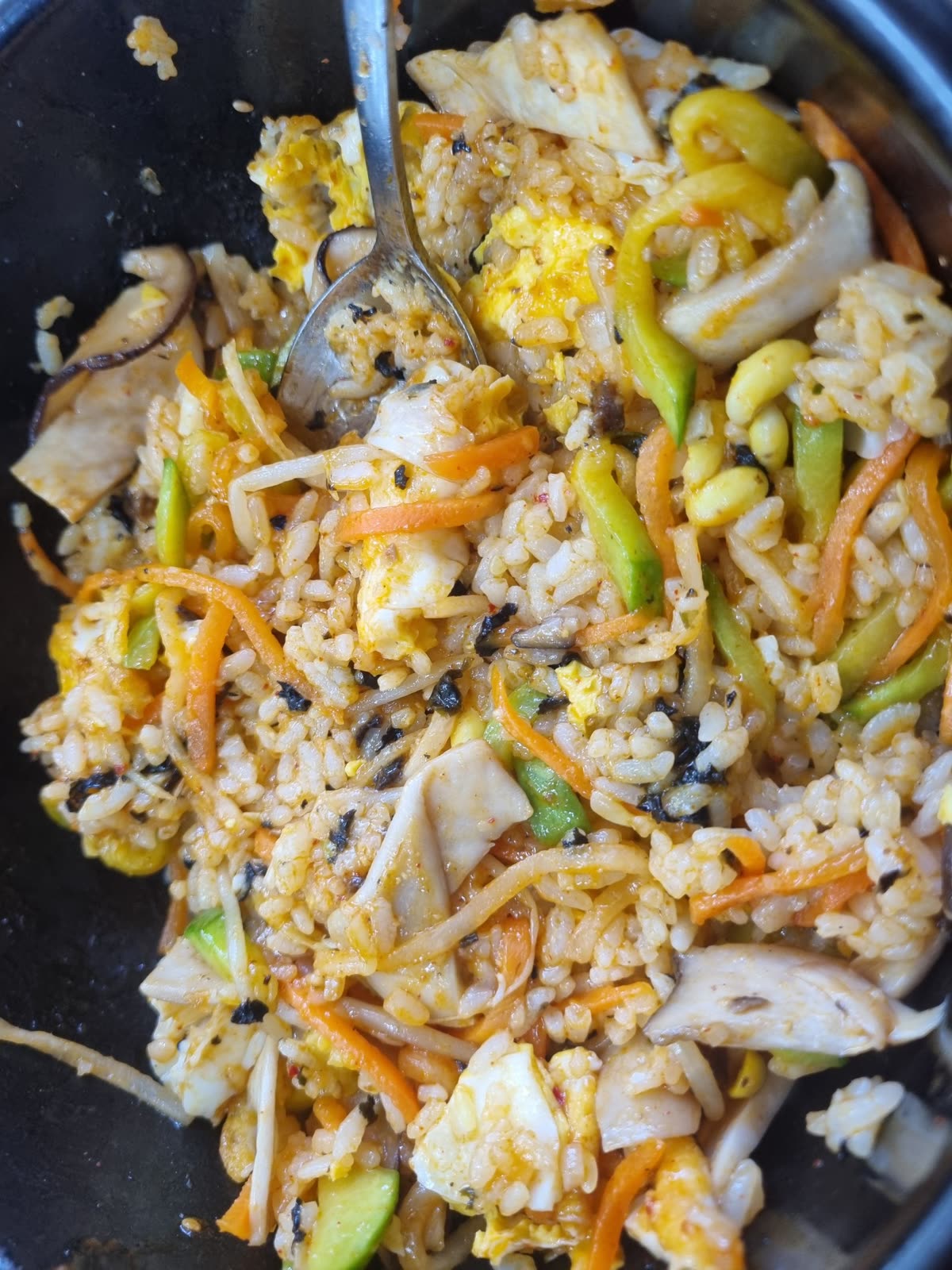
Add gochujang, then mix all the way down — spoon to the bottom, turn it over, repeat. The point is reach, not force. If you only stir the surface, the bottom burns instead of crisping and the seasoning never gets to the rice underneath.
Do not stir hard. The bowl is heavy enough to sit still, but a fast, forceful stir can knock your hand into the side of it — and the side is the part that burns. Hold the base, work steadily, and let the spoon do it. Do it while the bowl is at its hottest; the window is at the start, not later.
The crust at the bottom is the point
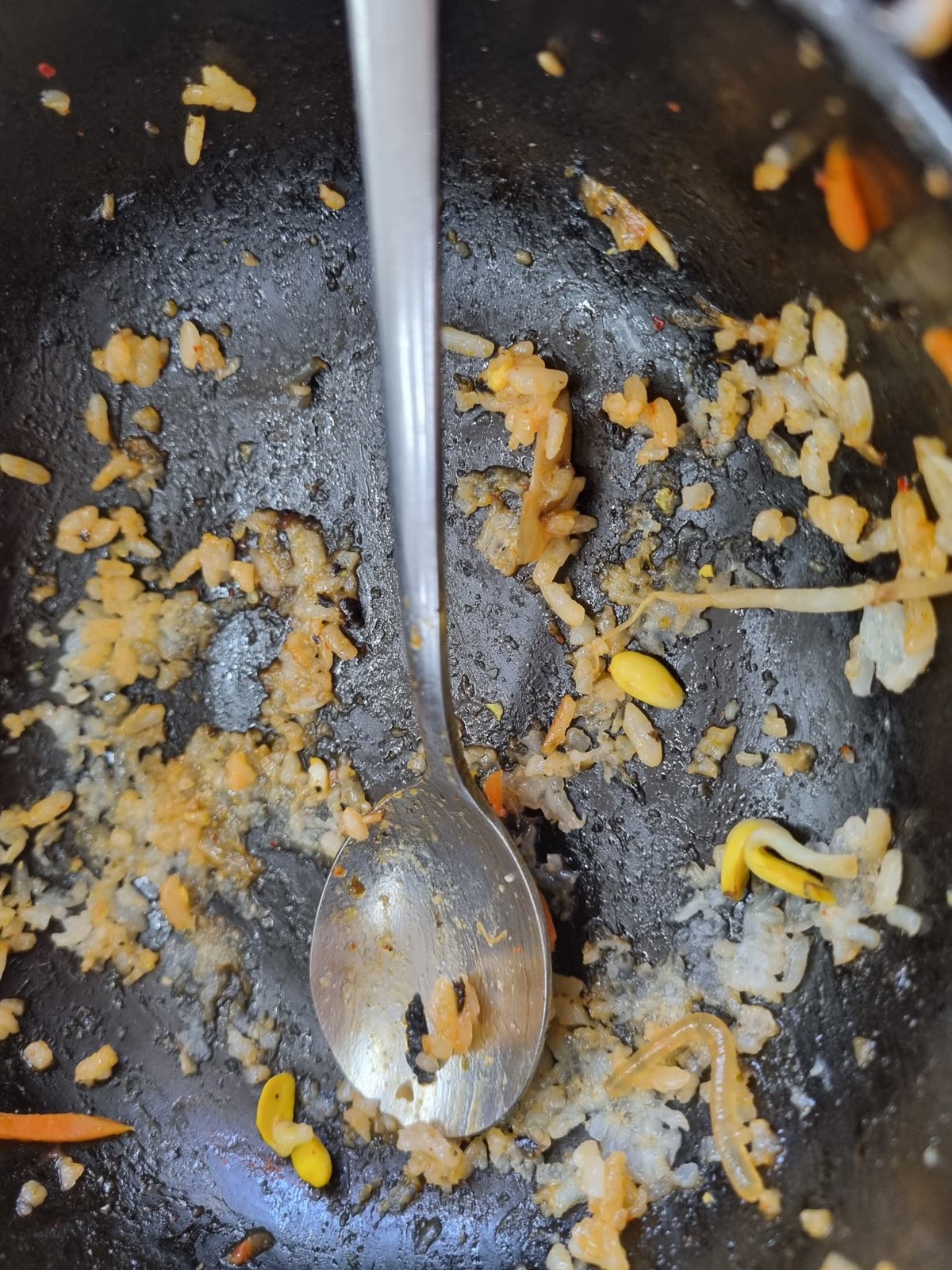
When the bowl is nearly empty, scrape the bottom. What comes up is nurungji — toasted rice crust, chewy and nutty, somewhere between a rice cracker and the crisp bottom of a paella.
This is the part people who grew up with it look forward to, and it is the reason the stone bowl exists. A plain bibimbap has no equivalent. Do not leave it in the bowl.
⚠️ If you are vegetarian or vegan, ask about the gochujang
The red paste served with bibimbap is often not plain gochujang. Many restaurants use yakgochujang — chilli paste that has been cooked down with minced beef. It looks exactly like the plain kind. If you do not eat meat, you have to ask; it will not be on the menu and nobody will mention it.
Say “gochujang-e gogi isseoyo?” — is there meat in the gochujang? If the answer is yes, ask for it on the side and skip it. The bowl itself is usually vegetables, rice and egg.
Three other things to check in the same breath:
- The egg. Fried on top, or raw yolk. Not vegan either way.
- Minced beef in the bowl. Many versions include a small amount mixed in with the vegetables.
- The soup that comes with it. Usually a beef or anchovy broth, even when the bowl is meat-free.
What arrives with it
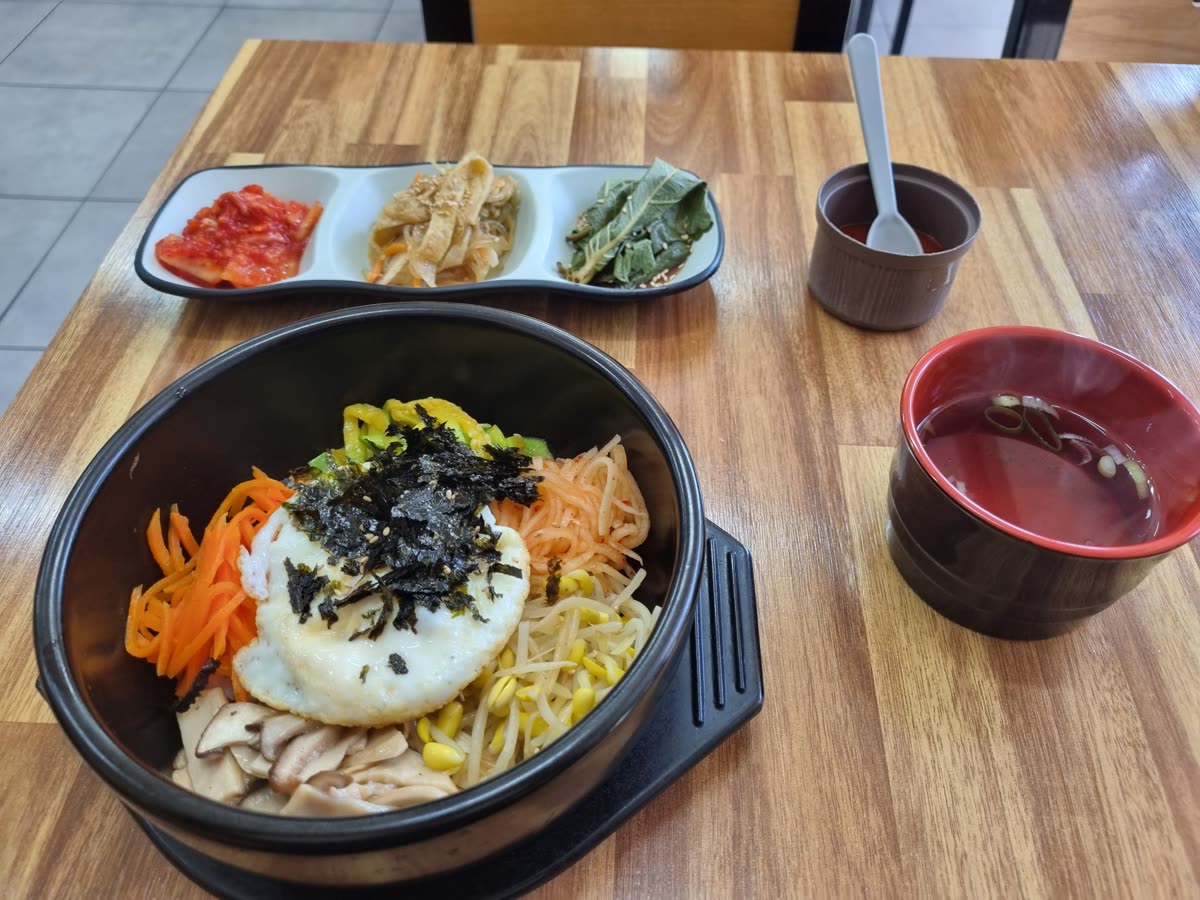
A bowl, a few side dishes, and a bowl of soup. The side dishes are free and refillable in Korea — that is standard, not a favour.
The word to learn: ttukbaegi
Koreans call these heavy bowls ttukbaegi (뚝배기) — the ones that come to the table still bubbling and stay hot long after. You will meet them again all week: doenjang-jjigae, kimchi-jjigae and sundubu often arrive in one.
It changes how the dish reads. The same stew in a steel bowl is just lunch; in a ttukbaegi it feels like the older, more traditional version of itself. Nothing about the recipe has to change.
Strictly speaking a ttukbaegi is glazed earthenware and the bibimbap bowl is dolsot, carved stone — but the word is used loosely, and “stone ttukbaegi” is something you can go and buy. If you call the hot bowl in front of you a ttukbaegi, nobody will correct you.
One piece of slang, since you will hear it. Koreans joke that someone who has banged their head has had their ttukbaegi cracked. It is the same word, and the same bowl — roughly the way English speakers say someone cracked their skull. Now you know what they are picturing.
Before you order
| Vegan | Ask. Egg on top; gochujang may contain beef |
| Vegetarian | Ask. Egg is fine for ovo-vegetarians; the paste is the question |
| Pescatarian | Usually yes — but the soup is often anchovy or beef broth |
| Halal | Ask about the gochujang and any minced meat |
| Gluten | Ask. Gochujang is commonly made with wheat |
Cross-contact is a separate question from ingredients. A bowl with no meat in it can still arrive with a beef-based soup beside it and a beef-cooked paste on top. Neither is in the rice.
Dolsot usually costs a little more than plain bibimbap at the same shop. Prices vary by shop and district — read the board or ask.
So which one do you order?
If you want to say you have eaten bibimbap, either works. If you want the version Koreans consider the better one — two textures instead of one, and a crust at the bottom you scrape out at the end — order the dolsot.