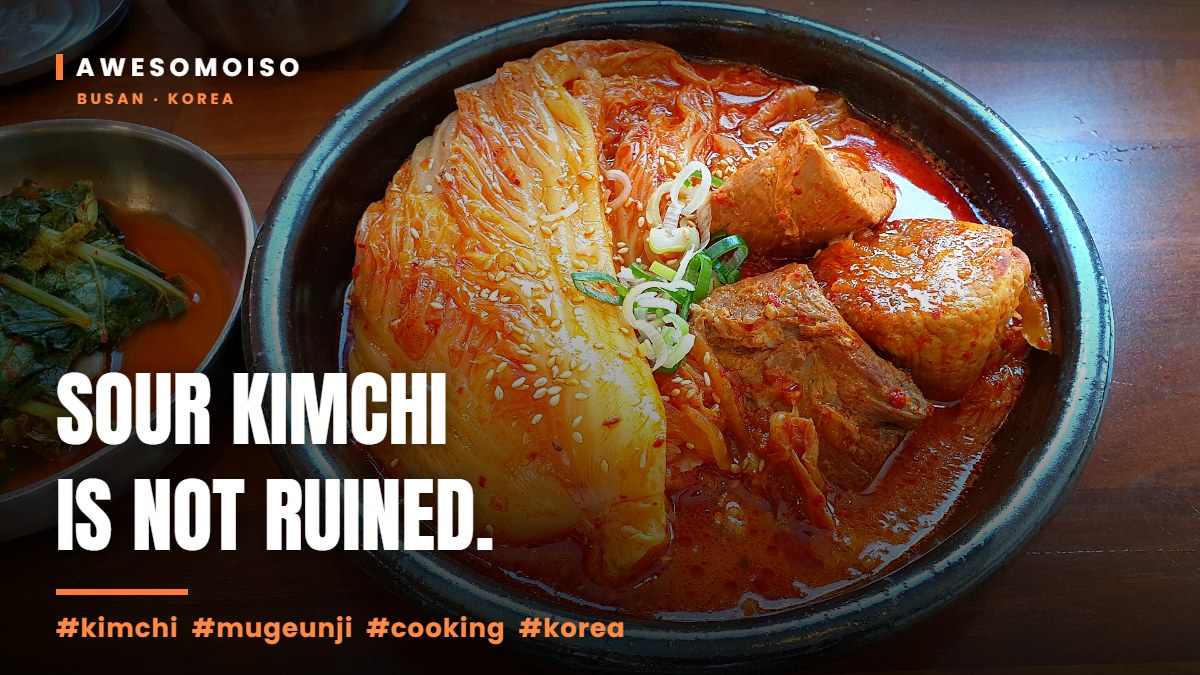
Open a jar of kimchi that has been in the fridge too long and it hits you: sharp, sour, almost vinegary. The leaves have gone soft. It smells like something fermenting, because it is.
Most people outside Korea throw this away. In Korea it is the opposite — a whole category of dishes exists specifically because kimchi gets sour, and several of them cannot be made properly with fresh kimchi. Sour kimchi is not spoiled kimchi. It is a different ingredient.
What “sour” actually means here
Kimchi is a live ferment. Lactic acid bacteria keep working in the jar, slowly, even cold, and what they produce is organic acids — mainly lactic acid, with some acetic acid. That is the sourness. It is not a sign of decay; it is the process doing what it does.
Two words you will see on menus and packaging:
- 신김치 (sin-kimchi) — “sour kimchi.” Kimchi that has simply gone past the fresh stage. Sharp, still crunchy-ish, maybe a few weeks to a few months old.
- 묵은지 (mugeunji) — “aged kimchi.” Long-fermented, often cited at six months or more and kept cold the whole time. Deep, funky, less aggressively sharp than the awkward middle stage. Korean shops sell it on purpose, at a price. Definitions vary by source, so treat the six-month line as a rough marker rather than a rule.
The practical point: sourness is a dial, and different dishes want different settings. There is a table at the bottom of this post matching the two.
⚠️ When it actually is bad
Sour is fine. These are not:
- Mould. Fuzzy growth — white, green, black — on the surface or the lid. Scooping it off is not a fix for a soft, wet food like this. Discard it.
- Slimy or stringy liquid, or a smell that has turned from sour to rotten or solvent-like.
- A badly swollen, leaking container together with any of the above.
A thin white film, a puffed-up lid, carbonation and liquid that has gone cloudy are all normal fermentation. Fuzz is not. If you are unsure, that is a reason to throw it out, not a reason to taste it.
Step zero: rinse it
The simplest fix, and the one almost no English recipe mentions: rinse the kimchi in cold water.
Running water pulls out a good part of the surface acid and the salt. What is left still tastes of kimchi — the fermented depth stays in the leaf — but the edge comes off. Then squeeze it dry, firmly. Wet kimchi waters down everything you put it in.
That alone turns an unpleasant jar back into something you can eat straight, as a side dish, with rice.
Rinsed kimchi muchim — the two-minute version
Rinsed and squeezed kimchi is a blank slate, and the standard Korean move is to re-dress it:
- Rinse, squeeze hard, cut into bite lengths
- Sesame oil — the main one. It puts back the richness the rinsing took out
- Gochugaru (고춧가루, chilli flakes) — puts back colour and a clean heat in place of the sour
- Optional: a pinch of sugar, crushed garlic, sesame seeds, spring onion
- Toss with your hands
No cooking. The result is a fresh-tasting side dish made from the thing you were about to bin, and it is the fastest proof that sour kimchi is an ingredient rather than a problem.
⭐ The rule that changes everything: fat and heat
This is the part worth carrying out of this post. The owner of this site, who is from Busan, puts it plainly:
“Fry it in oil. Frying takes the funk out of kimchi.”
Old kimchi has a smell Koreans call gunnae (군내) — a stale, slightly musty note on top of the sourness, the thing that makes people decide the jar is finished. Cooking it in fat, hot, knocks that back. What you are left with reads as savoury and deep rather than old.
We have not been able to verify the exact mechanism against a food-science source, so treat the explanation as plausible rather than established: heat drives off volatile aroma compounds, and oil carries and transforms others. What is not in doubt is the result, which any Korean kitchen will confirm — oil plus heat is the standard treatment for kimchi that has gone too far.
Practically, it means: do not put old kimchi straight into a pot of water. Fry it first, in a decent amount of oil, for a few minutes, before the liquid goes in. Nearly every dish below starts this way.
One trade-off to be honest about: cooking also kills the live cultures. If you want kimchi for the bacteria, eat it raw. If you want it to taste good, cook it.
Bokkeum-kimchi — stir-fried kimchi
The simplest cooked version, and the one that demonstrates the rule.
- Cut sour kimchi into bite lengths. Keep some of the juice
- Heat a generous amount of oil — more than feels right. Sesame oil, perilla oil or plain cooking oil; perilla oil (들기름) is the characteristic choice
- Fry the kimchi hard for several minutes until the edges darken and the smell changes from sour to roasted
- A pinch of sugar at this point takes the remaining edge off the acid
- Optional: pork belly scraps, onion, or a splash of the kimchi juice
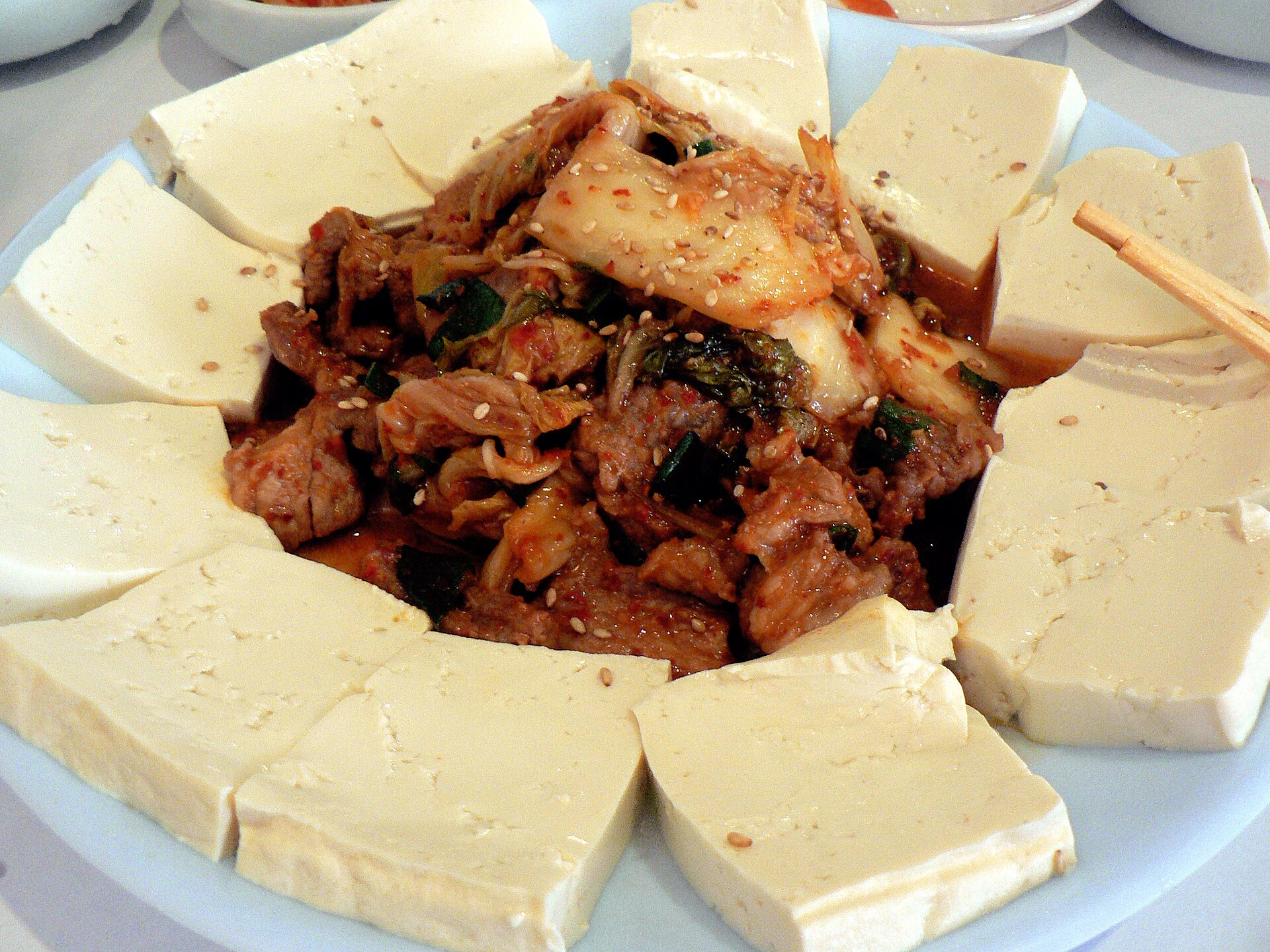
Eat it with rice, or beside boiled tofu as 두부김치 (dubu-kimchi), which is one of the standard things Koreans order with alcohol.
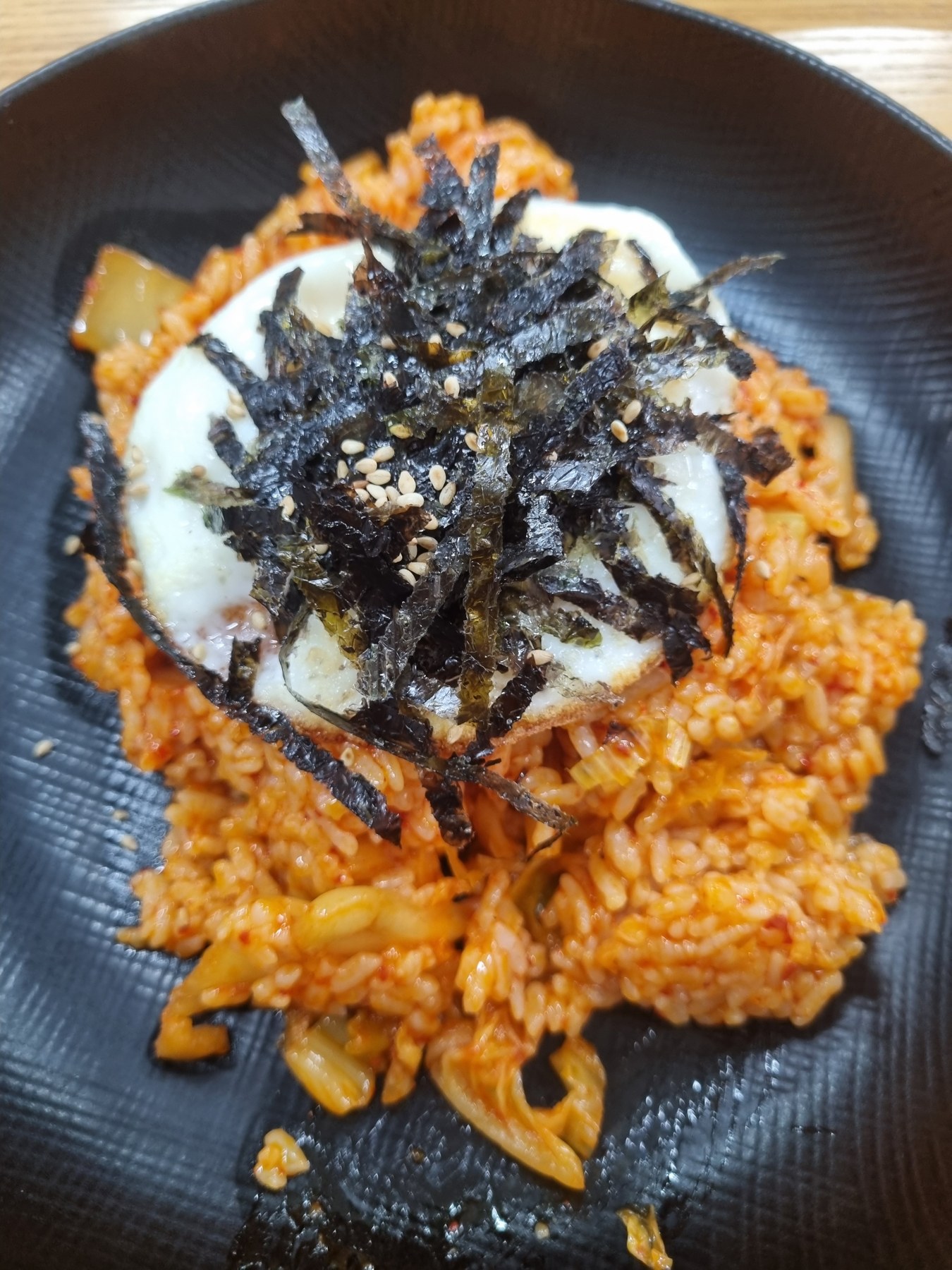
Kimchi-bokkeumbap — fried rice
A dish in its own right, not stir-fried kimchi with rice added — the kimchi here is chopped small and cooked down until it disappears into the grains. It does follow the same rule as everything else on this page: the kimchi is fried first, on its own, before the rice ever touches the pan.
It is the quickest of these dishes, and the one most often made on a weeknight rather than planned.
- Chop sour kimchi small. Fry it hard in plenty of oil until it darkens and smells roasted rather than sharp
- Only then add cold, day-old rice — fresh hot rice turns to paste
- Break the rice up and fry until some grains catch on the base of the pan. The slightly scorched ones are the good ones
- A splash of kimchi juice for colour, a pinch of sugar if it is still too sharp
- Optional and common: diced Spam or pork, butter at the end, a sheet of melted cheese on top
- Finish with a fried egg, shredded gim (김가루) and sesame seeds
⚠️ Do not confuse it with 볶음밥 (bokkeumbap), the fried rice staff make at the end of a meal at a grill or stew table. That one is built from the sauce left in the pan, with rice, shredded gim and sesame oil, and often little or no kimchi at all. Same technique, different dish — and it is ordered by saying “볶음밥 주세요” once the main food is gone.
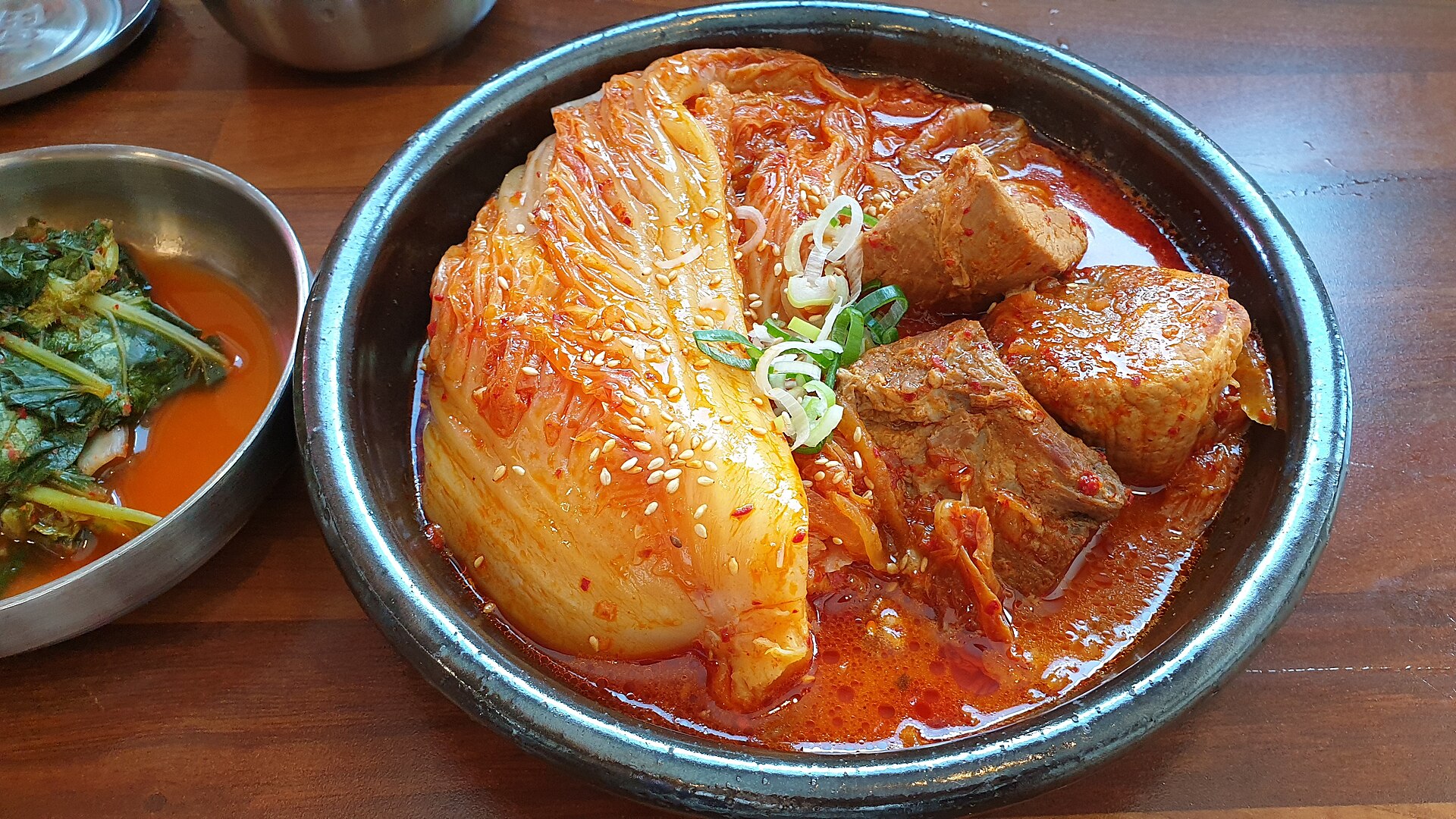
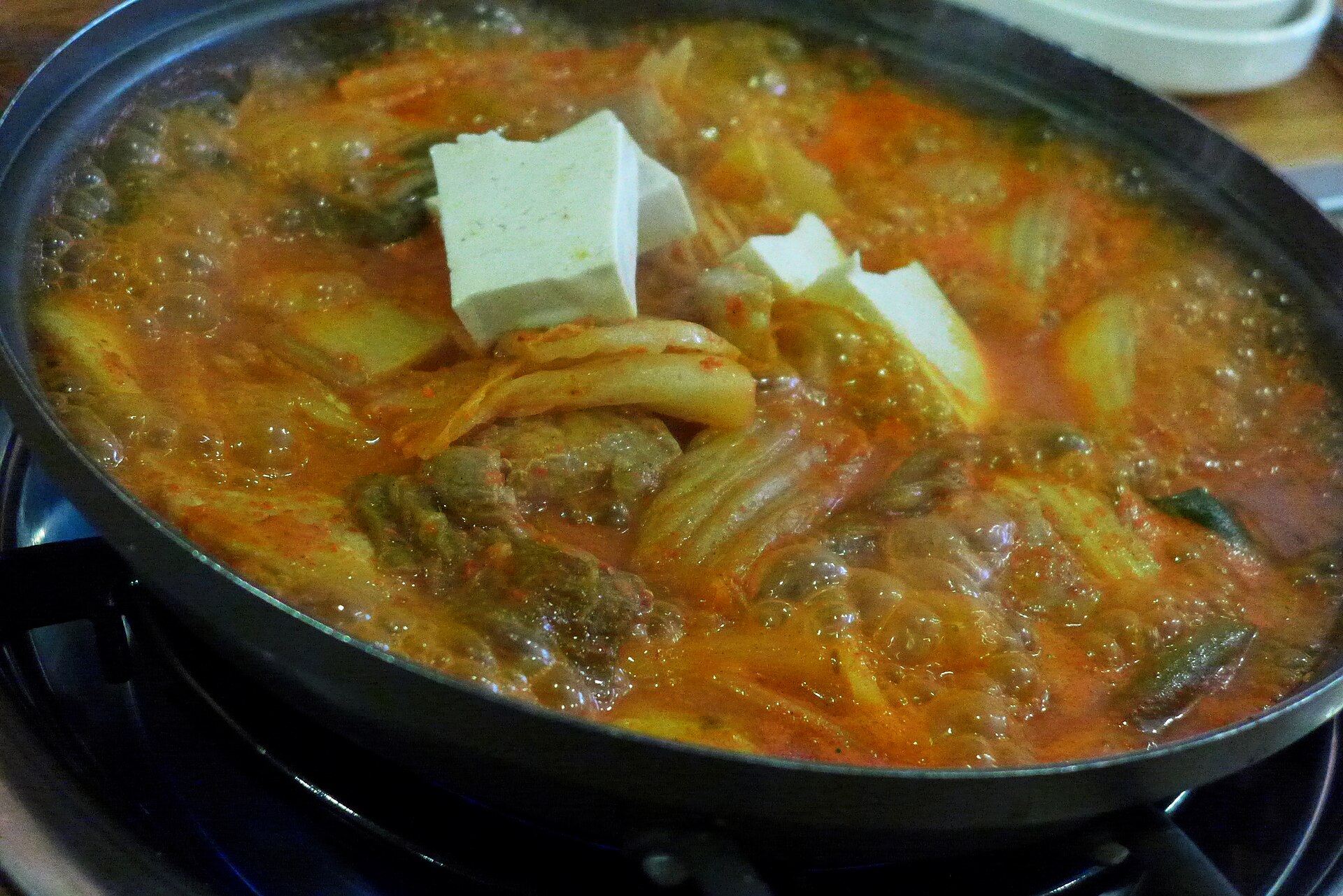
Kimchi-jjigae — the stew that prefers old kimchi
The most common destination for a sour jar in a Korean home, and the dish where fresh kimchi genuinely produces a worse result — it stays sweet and thin and never develops the depth.
- Fry the kimchi in oil first, with pork belly or canned tuna, until it softens
- Add water or rice-rinse water, plus the kimchi juice
- Simmer. Add tofu, spring onion, and a spoon of gochugaru if you want colour
- Season at the end — the kimchi is already salty, so taste before adding anything
Pork and sour kimchi work on each other in both directions: the acid cuts the fat, and the fermented depth covers the heaviness of the meat. It is not a coincidence that this is the single most-cooked stew in Korea.
Kimchi-jjim — braised, and the home of mugeunji
Where jjigae is a soup, jjim is a braise: much less liquid, much more time. This is what the deeply aged stuff is for.
- Lay whole aged kimchi — not cut — in a shallow pot, with a slab of pork belly or shoulder
- Barely cover with liquid. Add garlic, onion, a little gochugaru, sometimes a spoonful of doenjang
- Cook low for a long time — 40 minutes to over an hour
- Cut and serve at the table, wrapping pork in a leaf of the kimchi
The length is the point. The leaves go silky, the sharpness turns round, and the pork takes on the ferment. Fresh kimchi collapses into mush long before it gets there.
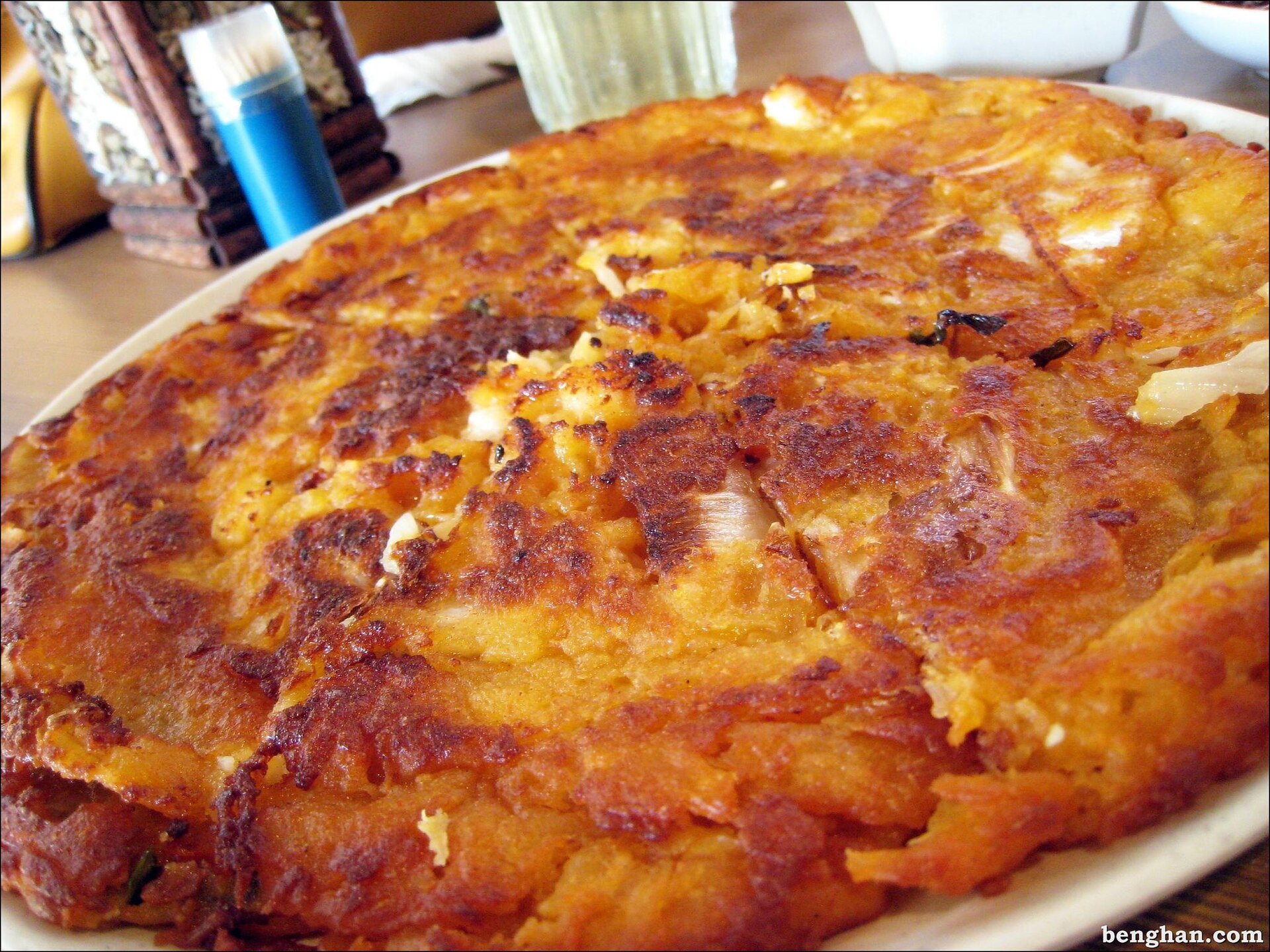
Kimchi-jeon — the sourest kimchi wins
A pan-fried savoury pancake, and the one dish where you should deliberately use the worst jar in the fridge.
- Chop sour kimchi small. Add the juice — it colours the batter
- Mix with flour (or Korean frying mix) and cold water into a loose batter. No egg needed
- Fry thin, in a lot of oil, on high heat, until the edges are properly crisp
Thin and crisp beats thick and soft here. The acid is what keeps a fried flour pancake from being dull, which is exactly why fresh kimchi makes a flat version of this.
⭐ How sour is it? Pick the dish from the table
This is the chart to keep. Match the jar in front of you to the row.
| State of the jar | Best use | Why |
|---|---|---|
| Fresh, still sweet, crunchy | Eat it raw, as a side | Cooking wastes it. The crunch is the asset |
| Slightly sour, still crisp | Raw with rice · stir-fried kimchi · fried rice | Enough acid to be interesting, enough texture to survive a pan |
| Clearly sour, going soft | Kimchi-jjigae · dubu-kimchi · rinse and re-dress | The awkward stage. Heat and fat fix it; raw does not |
| Very sour, soft, strong smell | Kimchi-jeon · kimchi-jjigae | Texture no longer matters — it gets chopped or simmered anyway |
| Long-aged (mugeunji), deep and funky | Kimchi-jjim · long braises with pork | Needs time and meat to open up. Wasted in a quick dish |
| Fuzzy mould, slimy, rotten smell | ⚠️ Throw it out | Different problem. Not fermentation |
Vegan, Vegetarian, Pescatarian, Halal
Two separate questions: the kimchi itself, and what you cook it with.
| Typical Korean kimchi | The dishes above | |
|---|---|---|
| Vegan | Usually no — most contains salted shrimp (새우젓) and/or fish sauce (액젓) | Only if the kimchi is vegan and you skip the pork |
| Vegetarian | Usually no — same reason | Same |
| Pescatarian | Yes | Yes, if you leave out pork — tuna jjigae is standard |
| Halal | Check the label; the ferment is plant and seafood based | ⚠️ No, as normally cooked. Jjigae and jjim are built on pork |
Vegan kimchi does exist and is sold in Korean supermarkets, usually labelled 비건 or marketed as temple-style. It is not the default, so read the ingredients rather than assuming. Rinsing does not remove the fish sauce — it is fermented into the leaf, not sitting on it.
Copy-paste Korean
| English | Korean |
|---|---|
| Do you have aged kimchi? | 묵은지 있어요? |
| Sour kimchi | 신김치 |
| Is there fish sauce or salted shrimp in this? | 이거 액젓이나 새우젓 들어갔어요? |
| Vegan kimchi | 비건 김치 |
| Without pork, please | 돼지고기 빼주세요 |
| Perilla oil / sesame oil | 들기름 / 참기름 |
| Chilli flakes | 고춧가루 |