About
A Korean who reads the label so you don’t have to.
Why “Awesomoiso”?
어서 오이소 (eoseo-oiso) means “come on in” in the dialect of Busan, the port city on Korea’s southeast coast where I live.
Say it out loud and it sounds a lot like “awesome.”
That’s not a pun I planned. It’s just what happens when the way people actually talk in my city collides with English. I decided to keep it.
Pronounce it: awe-som-oh-ee-so.
What this site is
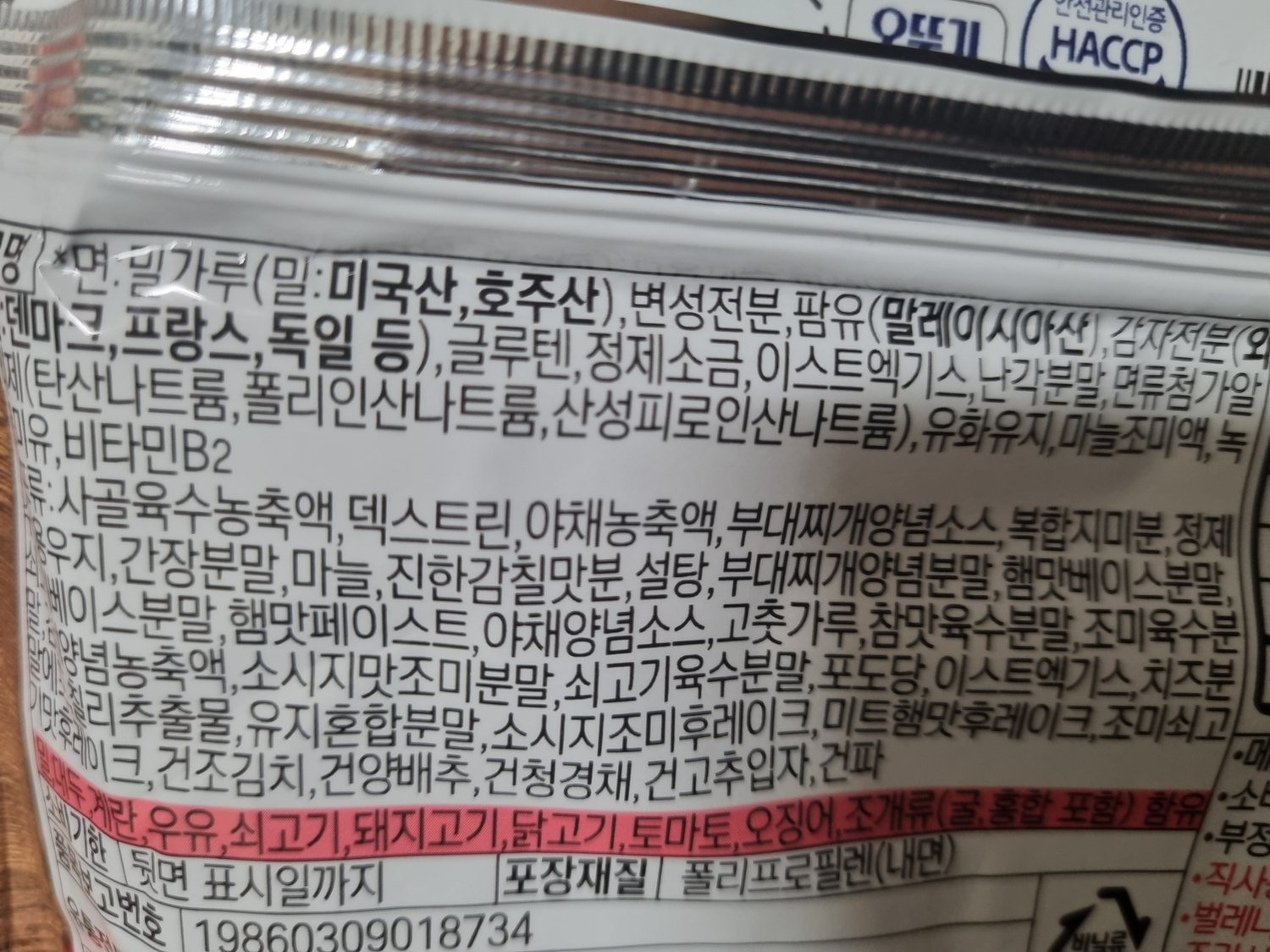
I’m Korean. I buy Korean food with my own money, eat it, and then read the back of the package so you don’t have to.
That last part is the whole point.
Korean packaged food carries a lot of information — ingredient percentages, allergen declarations, country of origin, sodium as a percentage of a daily value. It is all printed in Korean. If you can’t read it, you’re buying on faith.
So here’s what I do with every product:
| ● | Translate the ingredient list in full, in order |
| ● | Work out what’s actually in it — the real percentages |
| ● | Flag pork, alcohol, dairy, wheat, nuts, aspartame |
| ● | Give the price in won and dollars |
| ● | Tell you where to buy it |
| ● | Say plainly whether I’d buy it again |
Things I’ve found doing this
A “black truffle jamón” cracker turned out to be 0.049% truffle and 0.025% jamón — and the label declares synthetic flavouring right after each of them. The real ingredients are there for the label. The flavouring does the work.
A chicken ramyeon contained four different parts of a chicken — meat, bone, feet, and skin — all of it Korean-sourced. None of it visible. It all went into the broth.
A Korean “galbi” patty — galbi means ribs — was 51.5% pork. Nothing on the front of the box said so.
None of this is on the front of the package. All of it is on the back. Which is where I go first
What I don’t do
| ❌ | I don’t pretend to be a foreigner or a tourist |
| ❌ | I don’t accept free products in exchange for reviews |
| ❌ | I don’t use AI images of food, ever — every photo in a review is one I took myself |
| ❌ | I don’t give a product a good score because it was sent to me (nothing is sent to me) |
About the photographs
Review photos are mine. If a post says I ate something, the picture is the plate I ate from. I do not generate food images and I do not buy stock for reviews.
The Korean Food Matcher is different, and I want to be straight about it. That tool describes 84 dishes, most of which I have not photographed yet. The reference pictures there come from Wikimedia Commons under open licences — mostly CC0 and public domain — and each one credits its photographer where the licence asks for it. They show the dish in general. They are not photographs of a meal I had.
As I review more of those dishes, the borrowed pictures get replaced by my own.
If something is mediocre, I say so and explain why. On this site, four stars means I’d buy it again. Three means it was well made and I probably wouldn’t. That distinction matters.
⚠️ About the allergen information
I translate what the label says. I am not a doctor, a dietitian, or a certification body.
Two things I’m careful to keep separate, because they are not the same:
| “Contains X” | X is an ingredient |
| “Made in a facility that also handles X” | cross-contact risk, not an ingredient |
⚠️ “No pork in the ingredients” is not the same as “halal certified.” I will always tell you which one I mean. If you have a serious allergy or a strict dietary requirement, please verify with the manufacturer. I’m giving you a translation, not a guarantee.
Oiso, Boiso, Saiso
At Jagalchi Market in Busan — Korea’s largest fish market — the sellers have a chant:
오이소! 보이소! 사이소! Come! Look! Buy!
That’s roughly the order things happen here too. Come in, look at what’s actually in the package, then decide for yourself whether to buy.
어서 오이소.
What that looks like in practice
It is easier to show than to describe. Here are three things that came out of reading the back of a packet rather than the front.
The pink “ham” in instant army stew is partly fish. It tasted like fish cake, which seemed odd, so I read the component list: frozen surimi. Korean food standards allow a sausage category to contain under 20% fish meat. The whole trail is here.
Korean allergen labels name mackerel, not fish. So a product can contain surimi and never show “fish” in the allergen summary. If you avoid fish, that summary line is not enough.
| Korean label term | What it means |
|---|---|
| 함유 (contains) | It is an ingredient |
| 혼입가능 (may contain) | Shared equipment — cross-contact, not an ingredient |
There is eggshell powder in some instant noodles. That is why egg appears in the allergen line of a product you would never think contained egg, and why the calcium figure looks odd.

What I will not do
I do not write that a dish is the best, the only, or impossible to find anywhere else. Milmyeon is sold in dozens of places in Seoul. Dwaeji gukbap is nationwide. Those sentences make for better headlines and worse information.
I do not invent the part where shops differ. When I write that something changes from shop to shop, it is because someone has actually seen it change. If I have not checked it, I leave it out rather than guess.
I do not fix prices to a single number. Prices move by shop, by district and by season. You will see ranges, and a suggestion to ask.
When I get it wrong
I do, and then I go back and change the post. Three that have been corrected since publishing:
I wrote that kkotge-jjim came in two distinct forms, built from a recipe site and a photo filename. Wrong on both counts — it is one dish on a sliding scale with haemul-jjim. I wrote that pa-jeorim always comes with grilled meat; it usually does, but when vegetable prices spike some shops substitute it. I wrote that sweetness cannot be taken out of a dish, then found that a few chains sell a reduced-sugar version as its own menu item, and said so.
A site that never corrects anything is not more accurate. It is just not looking.
Why this is written from Busan
Most English writing about Korean food comes from Seoul, or from a kitchen outside Korea. Busan eats differently — milmyeon rather than naengmyeon, dwaeji gukbap as an ordinary weekday meal, raw fish as a weeknight thing rather than an occasion. More on that here.
I am not a restaurant critic and this is not a list of places you must visit. It is a record of what Korean food actually is, written by someone who buys it with his own money and reads the small print.