Quick Verdict
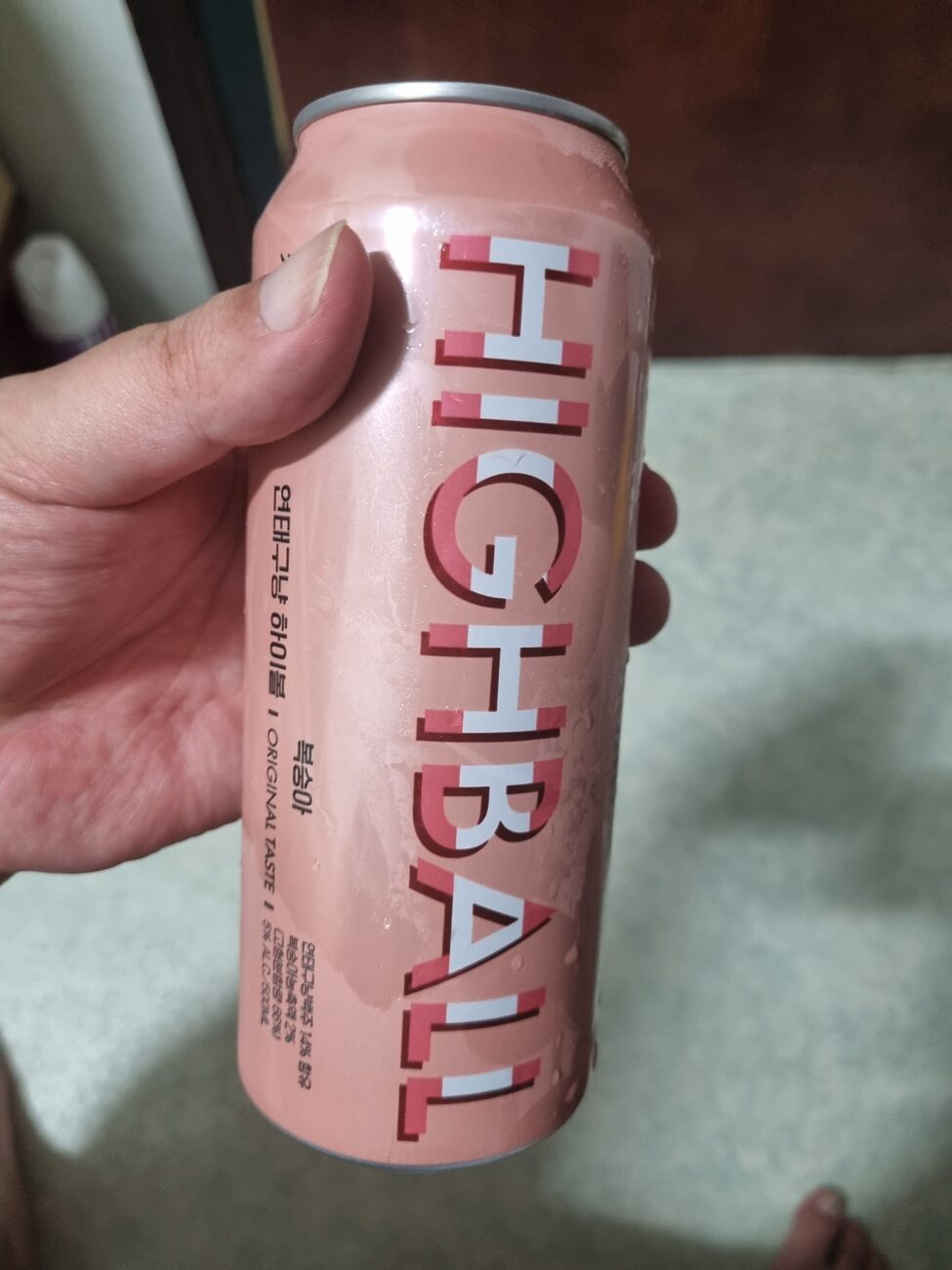
A canned “peach highball” at a Korean discount store for ₩2,480 (about $1.80) — 500 ml, 5% ABV. That’s half the price of a convenience store highball for a bigger can.
It’s not really a highball. It’s Chinese baijiu with peach flavoring on top.
If you like baijiu, that’s excellent news and a genuine bargain. If you don’t, this is not the drink for you — and the can won’t warn you.
I’m the second kind of person, so read on with that in mind.
What Is This?
연태구냥 하이볼 복숭아 — *Yantai Gunang Highball, Peach* Chinese name on the can: 烟台古酿
Sold at No Brand, Emart’s discount chain. Not a convenience store item.
| Type | Liqueur |
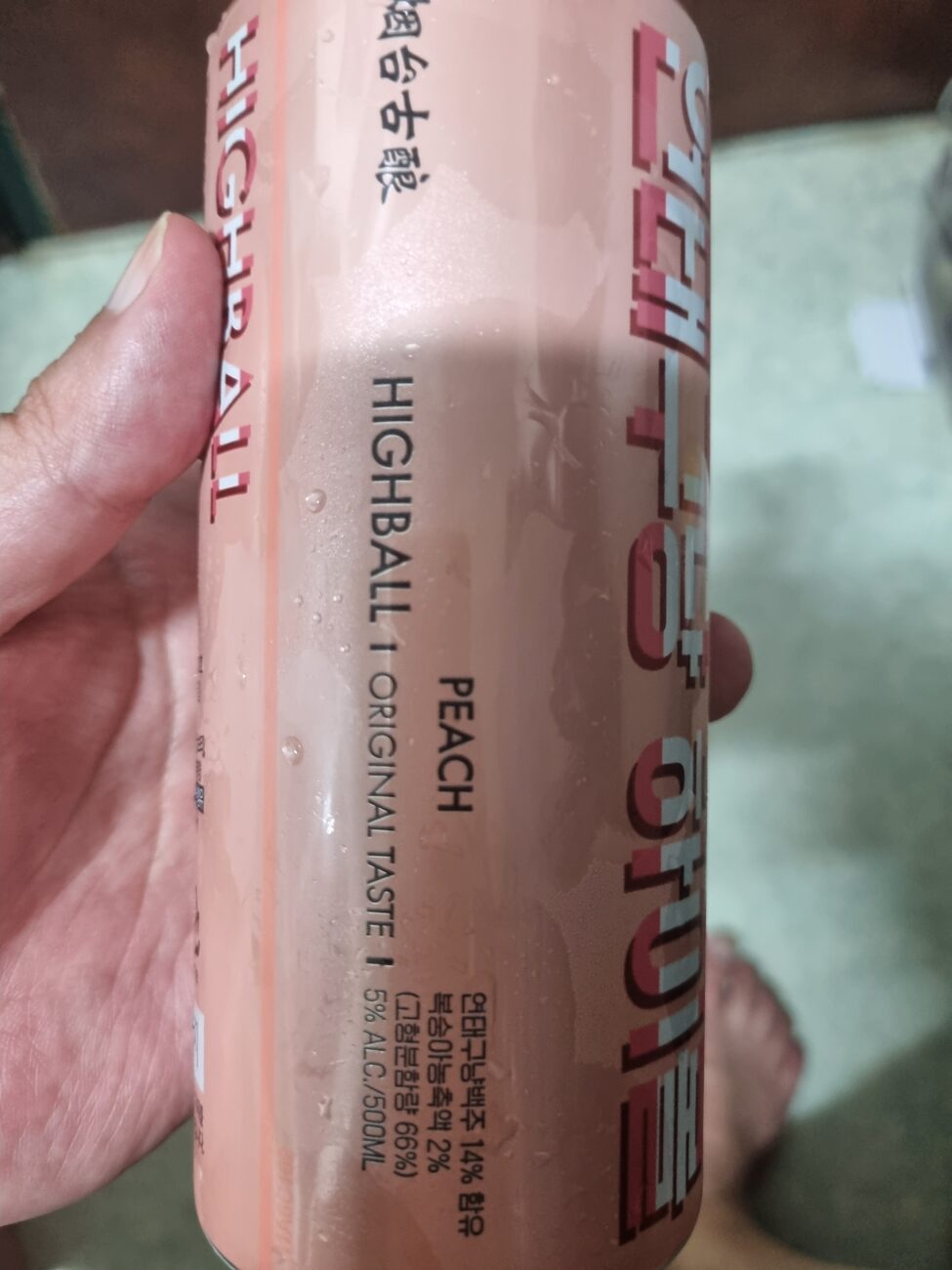
| Volume / ABV | 500 ml / 5% |
| Origin | China (Shandong Yantai) |
| Importer | Inchang Trading, Daejeon |
| Regular price | ₩2,980 |
| Sale price | ₩2,480 (~$1.80) |
Before You Read My Opinion
I don’t particularly like baijiu.
That matters, because half of what I’m about to criticize is just “this tastes like baijiu” — which is a feature if you’re into it.
My preferences, so you can calibrate:
· I dislike a sharp alcoholic bite in the finish   ← the big one
· I want aroma, but not synthetic aroma
· I don't need sweetness
If you’re a baijiu drinker, flip most of my negatives into positives.
Price in Won & Dollars
₩2,480  ≈  $1.80 / €1.60 / ¥265   for 500 ml
₩496 per 100 ml
For comparison, convenience store canned highballs run ₩4,000–5,000 for 350 ml. This is a bigger can at roughly half the price. The value is real — the question is what you’re actually getting.
⭐ What’s Actually Inside
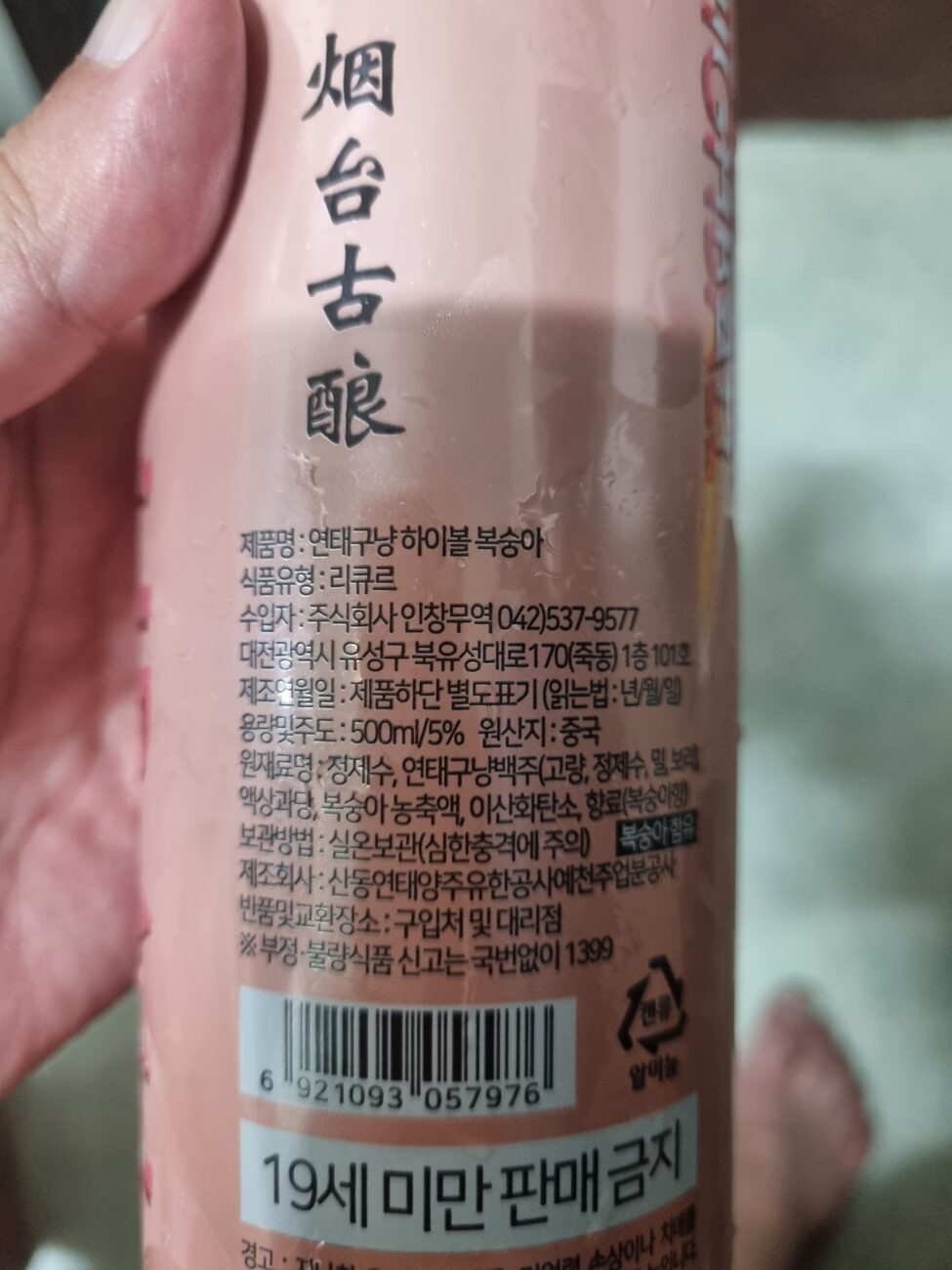
1. Purified water
2. Yantai Gunang baijiu  ← 14%
   (sorghum, water, wheat, barley)
3. High-fructose corn syrup
4. Peach concentrate      ← 2%
5. Carbon dioxide
6. Flavoring (peach)
The side of the can states it plainly:
Yantai Gunang baijiu 14% · Peach concentrate 2% (66% solids)
Allergens
Peach
Dietary check
| Halal? | ❌ No — it’s an alcoholic beverage |
| Vegetarian / Vegan? | ✅ Yes |
| Gluten? | ⚠️ The baijiu is made from wheat and barley alongside sorghum |
The two numbers that explain everything
Baijiu             14%
Peach concentrate   2%      ← seven times less
There is seven times more Chinese liquor than peach in this can.
That’s the entire product in one comparison.
How It Tastes
1. The first aroma — genuinely good
Pour it and you get a wave of pineapple-like tropical fruit. Not peach. Pineapple.
I liked this part a lot.
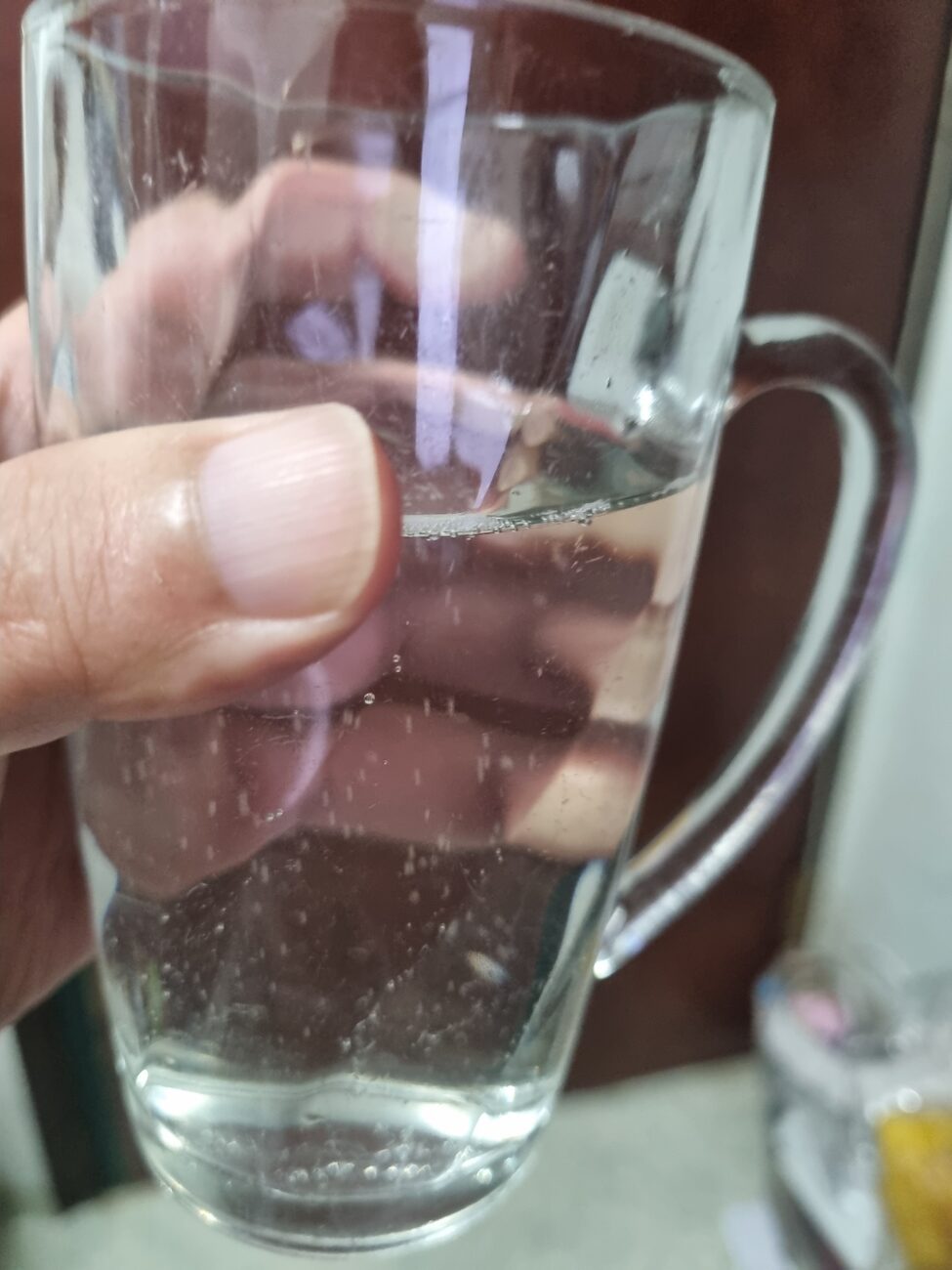
2. Carbonation — weak
There are bubbles, but they’re soft. For something calling itself a highball, that’s a miss.
3. The taste — unmistakably baijiu
One sip and the base liquor is right there. The highball framing doesn’t hide it.
The peach reads as synthetic. Not sweet exactly — more like the light, thin sweetness of a zero-sugar soda. (It isn’t zero sugar. That’s just the impression.)
4. The finish — where it lost me
A sharp alcoholic bite, plus a faint funk. Baijiu drinkers know this note and many of them like it.
⚠️ This is entirely personal. See the section above.
Overall: it’s baijiu made easier to drink. The intent is clear. But the flavoring pushes it into territory that felt more artificial than a bottled iced tea.
Two Things Worth Knowing
1. That pineapple note isn’t in your head — it’s a category
Chinese baijiu is classified by aroma type — 香型 (xiāngxíng).
| Aroma type | Examples | Character |
|---|---|---|
| Nong xiang (濃香) — “strong aroma” | Wuliangye, Yantai sorghum liquor | Ripe fruit, distinctly pineapple |
| Qing xiang (淸香) — “light aroma” | Fenjiu | Clean, apple and pear |
| Jiang xiang (醬香) — “sauce aroma” | Moutai | Heavy, soy-sauce-like, umami |
Yantai baijiu is nong xiang.
The compound responsible is ethyl caproate (ethyl hexanoate) — an ester that smells like pineapple and tropical fruit.
So “it smells like pineapple” isn’t a quirky personal impression. It’s the textbook description of the category.
If you’ve never had baijiu, this is a low-commitment way to find out whether the aroma type works for you.
2. All the alcohol here came from the baijiu
This is the detail I found most interesting.
Yantai sorghum liquor is typically bottled around 34% ABV.
34% × 14% = 4.76%
The can says 5%. That lines up almost exactly.
Meaning: no neutral spirit was added. There’s no “ethanol” or “neutral alcohol” line on the ingredient list — only the baijiu itself.
Compare that to a Korean convenience store highball I tried previously, which listed neutral spirit plus lemon juice. Completely different construction:
Korean canned highball  →  neutral spirit + fruit
This one                →  baijiu, diluted
This is actually baijiu. Tasting like baijiu isn’t a defect — it’s the product working as designed.
Which cuts both ways: avoid it if baijiu isn’t your thing, seek it out if it is.
3. A highball is supposed to be whisky
The original highball is whisky + soda water. The carbonation isn’t decoration — it’s structural. It lifts the aroma and cuts the alcohol.
This can has carbon dioxide on the list, but the fizz is soft. If you’re going to put “highball” on the front, the carbonation should carry more weight.
If You Bought It and It’s Not Working
Rather than write it off:
✅ Top it up with soda water — restores the fizz and dilutes the flavoring
✅ Squeeze in lemon or lime — acidity cuts the funk in the finish
✅ Plenty of ice — cold suppresses the synthetic aroma
It does improve. Whether it should require the effort is another question.
Should You Buy It?
| First aroma | ★★★★☆ The pineapple note is genuinely nice |
| Flavor | ★★☆☆☆ Synthetic peach dominates |
| Carbonation | ★★☆☆☆ Weak for a highball |
| Finish | ★★☆☆☆ Sharp — personal preference |
| Value | ★★★☆☆ Cheap, but is it what you want? |
| Overall | ★★☆☆☆ 2.0 / 5 |
This product isn’t badly made. It just isn’t for me — which is why I put my preferences up front.
For a baijiu drinker the verdict flips. 500 ml of real baijiu at ₩2,480 is a good deal, full stop.
But if you’re a visitor who sees “highball” and assumes it’s like a Japanese whisky highball, this is not that. It’s baijiu wearing a highball label.
Good for
✅ You already like baijiu / Chinese sorghum liquor
✅ You're curious what baijiu tastes like, cheaply
✅ You want volume for the money
Skip if
❌ You want a Japanese-style whisky highball
❌ Sharp alcoholic finishes bother you
❌ You want strong carbonation
❌ Artificial fruit flavoring puts you off
What I’d Try Next
The lemon version. Baijiu’s fruit-forward aroma probably pairs better with acidity than with peach. Peach adds sweetness on top of sweetness; citrus would cut through.
Not sure what to order?
Tell us what you can and cannot eat. We will match you to Korean dishes that actually fit.
Vegan, no pork, shellfish allergy, eating alone, hate chilli — 75 dishes, filtered honestly. We tell you when the answer is “almost nothing”.
Find my dish →