Quick Verdict
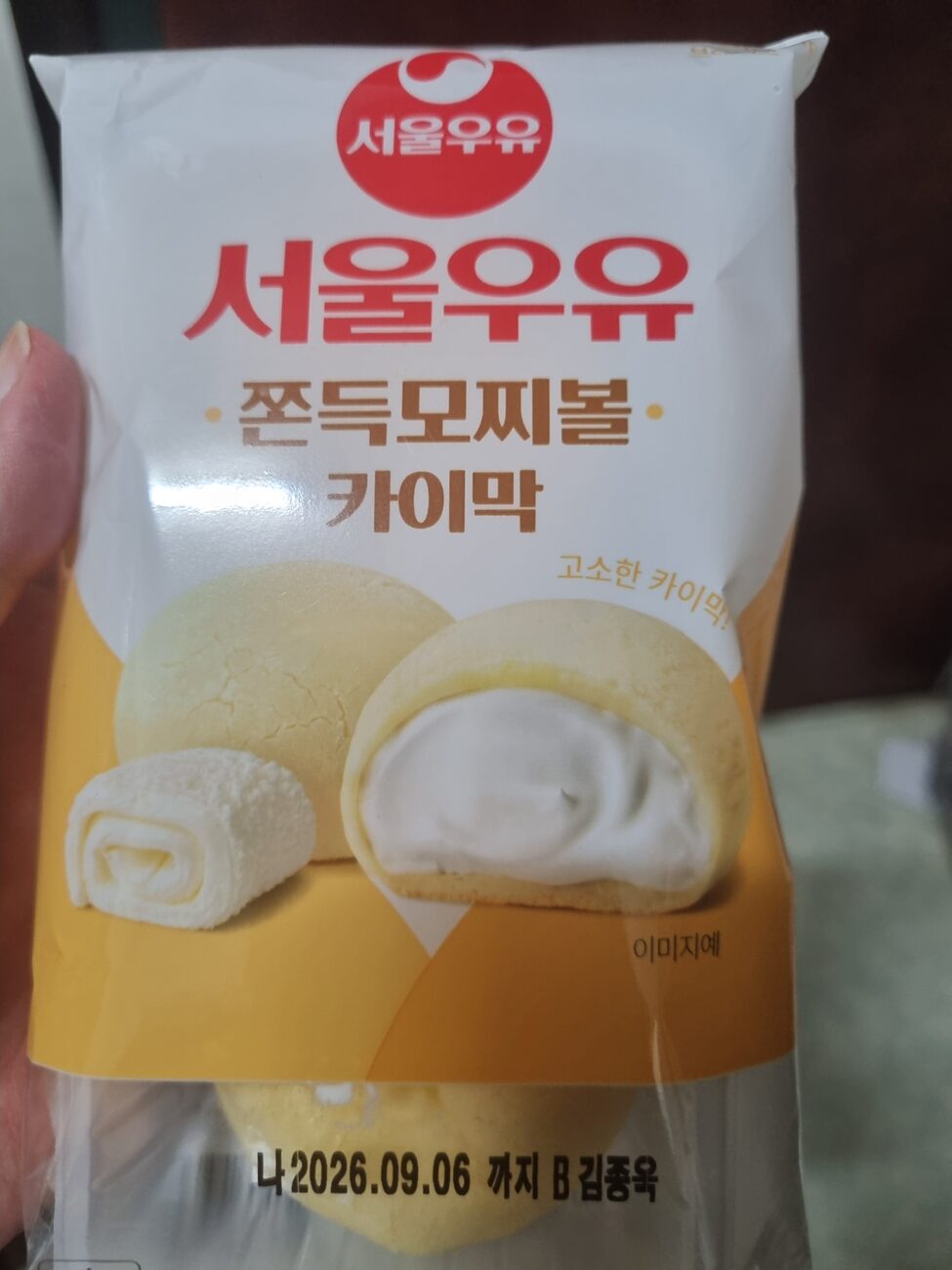
A Korean convenience store selling kaymak — the Turkish clotted cream you’d normally eat with honey at an Istanbul breakfast table — for about 90 cents. That was too strange to walk past.
It’s a good snack. It is not kaymak.
And the ingredient label explains exactly why, in a way that’s genuinely interesting once you know what to look for.
What Is This?
서울우유 쫀득모찌볼 카이막 — *Seoul Milk Chewy Mochi Ball Kaymak*
Say “jjon-deuk mo-chi bol kai-mak” or just show the package on your phone.
- 쫀득 (jjondeuk) = chewy, in the mochi sense — springy and dense, not bready
- 모찌볼 (mochi ball) = the round chewy bun
- 카이막 (kaymak) = the Turkish cream it’s named after
Two pieces per pack, sold at GS25.
One thing that confuses people: the package says Seoul Milk, Korea’s biggest dairy brand. But the manufacturer is SPC Samlip, a bakery giant. Seoul Milk supplies the dairy and licenses the name; Samlip bakes it.
Price in Won & Dollars
₩2,500 for 2 (buy-one-get-one)  →  ₩1,250 each
≈ $0.90 / €0.82 / ¥135 per piece
198 kcal per piece
Korean convenience stores run constant 1+1 (buy one get one) promos. The shelf tag will say 1+1. If it doesn’t, wait — it’ll come back around.
⭐ What’s Actually Inside
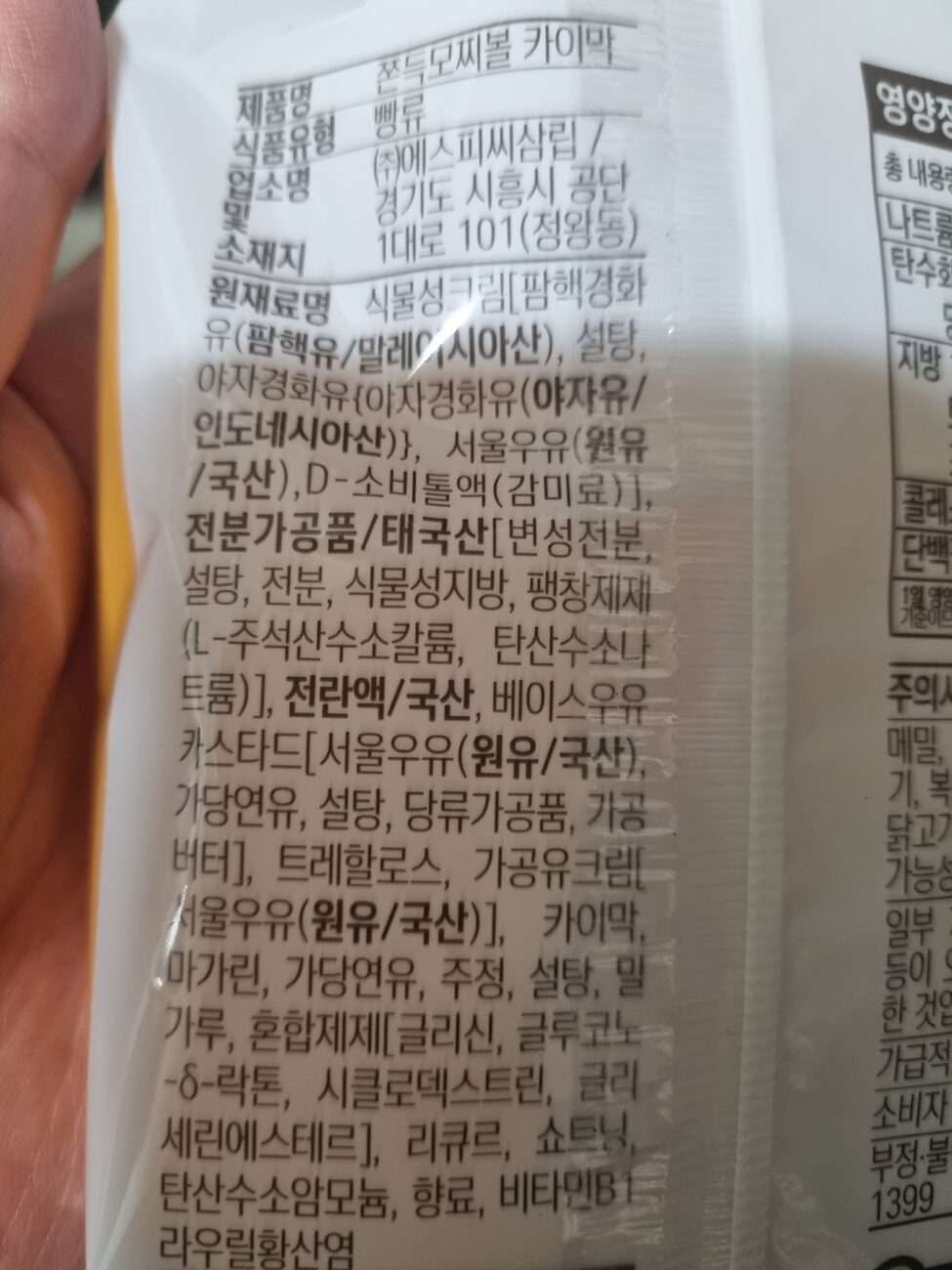
Korean labels list ingredients in descending order of quantity. This is the whole story of this product:
1.  Vegetable cream  — palm kernel hydrogenated oil (Malaysia),
                       sugar, coconut hydrogenated oil (Indonesia),
                       Seoul Milk, D-sorbitol
2.  Modified starch blend (Thailand)
3.  Whole egg liquid (Korea)
4.  Milk custard base
5.  Trehalose
6.  Processed milk cream
7.  ⬅ KAYMAK
8.  Margarine, condensed milk, ethanol, sugar, wheat flour,
    liqueur, shortening, flavoring, vitamin B1
Kaymak is in there. It’s just seventh.
Allergens
Wheat, milk, egg, soy. Manufactured in a facility that also handles buckwheat, peanut, pine nut, crab, shrimp, pork, peach, tomato, walnut, squid, chicken.
Dietary check
| Halal? | ❌ No. Contains ethanol and liqueur (small amounts, for preservation and aroma) |
| Vegetarian? | ✅ Yes — no meat. Contains egg and dairy |
| Vegan? | ❌ No |
| Pork? | Not an ingredient, but shares a facility with pork products |
⚠️ The alcohol matters for some readers. It’s a tiny amount used in baking, but it’s on the label.
The number that stands out
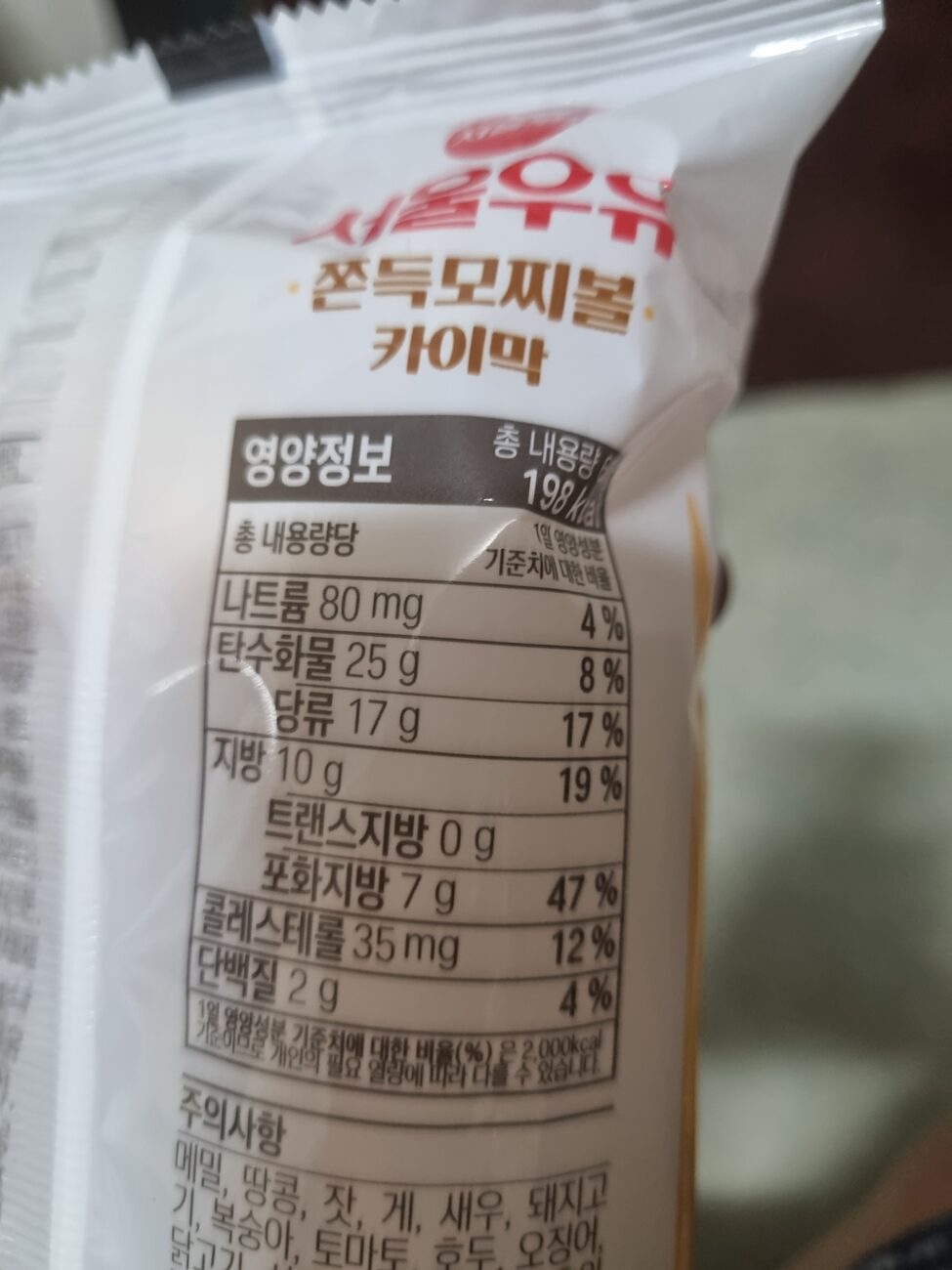
| Per piece | % Daily Value | |
|---|---|---|
| Calories | 198 kcal | — |
| Saturated fat | 7 g | 47% |
| Trans fat | 0 g | — |
| Sugars | 17 g | 17% |
| Fat | 10 g | 19% |
| Carbohydrates | 25 g | 8% |
| Sodium | 80 mg | 4% |
| Cholesterol | 35 mg | 12% |
| Protein | 2 g | 4% |
Saturated fat: 47% of a day’s intake in one small bun.
That comes straight from the palm kernel and coconut oils at the top of the list. Both are saturated-fat-dense.
But trans fat is 0 g, and that’s not a contradiction. Partially hydrogenated oils create trans fat. Fully hydrogenated oils don’t — they go hard on saturated fat instead. This product took the second route.
“Hydrogenated” on a label does not automatically mean trans fat.
⚠️ It’s sold 1+1. Eating both back to back puts you over the daily saturated fat line.
How It Tastes
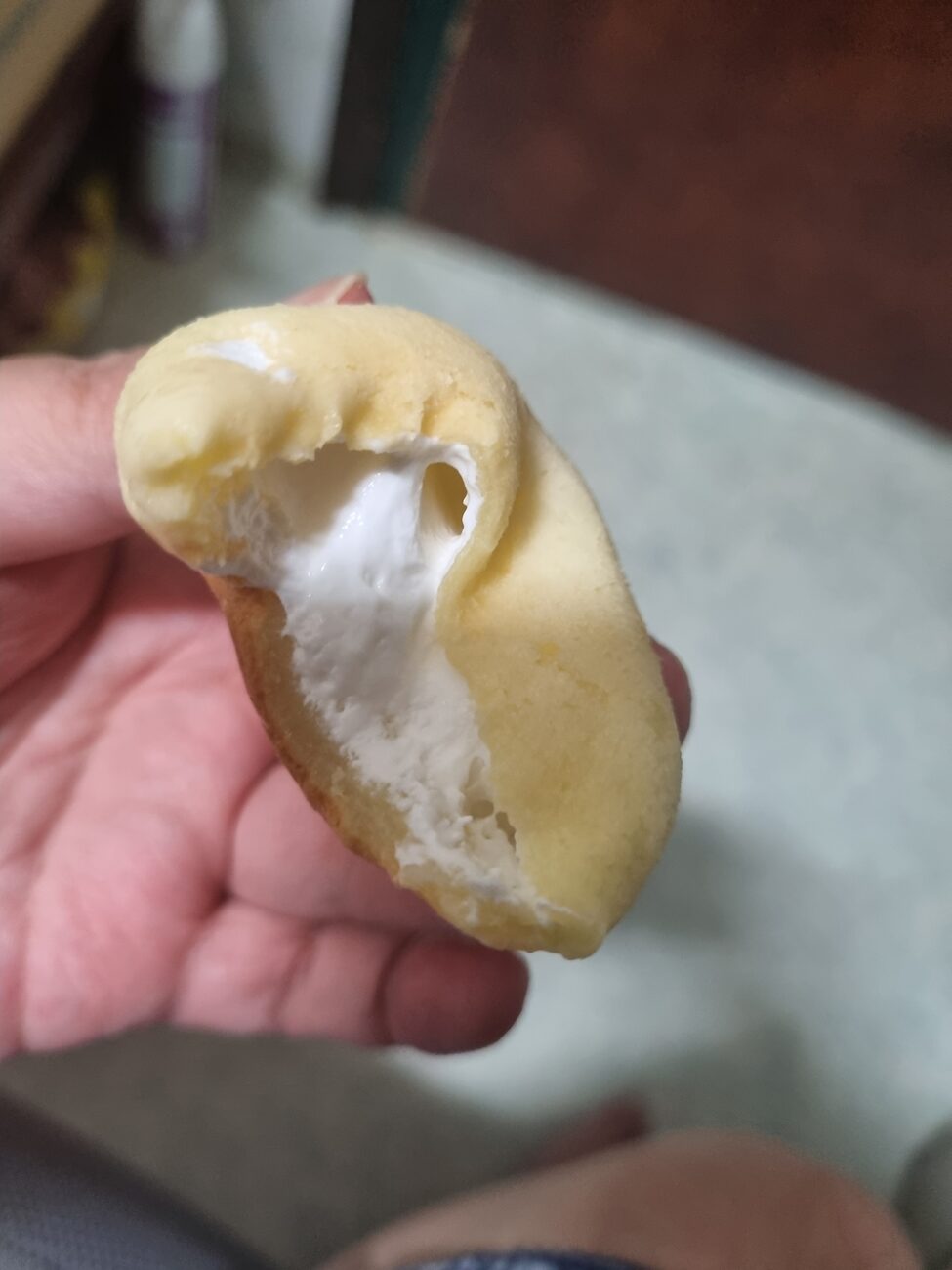
The bun delivers on its name. Properly chewy — but it doesn’t taste like bread. It’s closer to a dense, chewy pancake. That’s a compliment; it pairs well with the cream.
The cream is generous. They didn’t skimp. Look at the cross-section.
But it tastes like whipped cream, not kaymak. The dairy richness you’d expect is thin. What’s there instead is a light buttery note — buttery, but nowhere near as heavy as real butter.
And the first thing you notice is sweetness, not creaminess.
Why It Doesn’t Taste Like Kaymak
What kaymak actually is
Kaymak is a Turkish dairy product, traditionally from water buffalo milk. The method is simple and slow:
Simmer milk over very low heat for about two hours. A thick fat layer rises to the surface. Skim that off. That’s kaymak.
The number that matters is milk fat: around 60%.
Heavy cream is about 35%. Kaymak is nearly double that. It’s closer to butter than to cream. In Turkey it’s eaten with honey and bread — *bal kaymak* — as breakfast.
What’s in this product instead
The number one ingredient is vegetable cream: palm kernel oil and coconut oil. Not milk fat. Plant fat.
Real kaymak       →  ~60% milk fat
This product      →  plant-based fats, first on the list
                     kaymak itself, seventh
These are structurally different things. The name is accurate — kaymak is in there — but it’s a supporting ingredient, not the base.
⚠️ One fair caveat: Korean labeling law lets ingredients under 2% by weight be listed out of order. So “seventh” isn’t necessarily an exact rank. But being in that zone means it’s under 2% either way. The conclusion holds.
And that explains the “buttery but light” thing
Palm oil is deliberately bland. That’s why food manufacturers like it — it carries texture without imposing flavor.
So you get the mouth-coating richness of fat without the deep dairy aroma that milk fat would bring. Which lands as *”buttery, but light.”*
Why the bun is chewy, not bready
Look at position two: modified starch blend (Thailand). Wheat flour is way down the list.
This isn’t flour-leavened bread. It’s a starch-based dough — which is exactly why it binds into that dense chew instead of forming a crumb.
Then there’s trehalose, a sugar that holds onto moisture. It keeps the bun soft on the shelf instead of going stale and hard.
The “mochi ball” part of the name is completely honest.
Should You Buy It?
| Taste | ★★★★☆ It’s good, no argument |
| Texture | ★★★★☆ The chew is real |
| Cream volume | ★★★★☆ Generous |
| Kaymak accuracy | ★★☆☆☆ This is the problem |
| Value at ₩1,250 | ★★★★★ Easy yes on the 1+1 |
| Overall | ★★★★☆ 4.0 / 5 |
Here’s the honest framing.
This isn’t a kaymak dessert. It’s a good cream bun with a little kaymak in it.
Judged as the second thing, it’s a solid 90-cent snack. Judged as the first, you’ll be disappointed — and you’d be right to be.
If you’re visiting Korea and want to try one convenience store dessert, this is a reasonable pick. Just don’t come to it expecting Istanbul.
Good for
✅ Anyone curious about Korean convenience store desserts
✅ You like chewy textures (mochi, tteok, boba)
✅ Vegetarians (contains egg and dairy, no meat)
Skip if
❌ You actually know kaymak and want the real thing
❌ You avoid alcohol entirely (ethanol and liqueur are on the label)
❌ You're watching saturated fat
❌ You want something less sweet
Not sure what to order?
Tell us what you can and cannot eat. We will match you to Korean dishes that actually fit.
Vegan, no pork, shellfish allergy, eating alone, hate chilli — 75 dishes, filtered honestly. We tell you when the answer is “almost nothing”.
Find my dish →