Quick Verdict
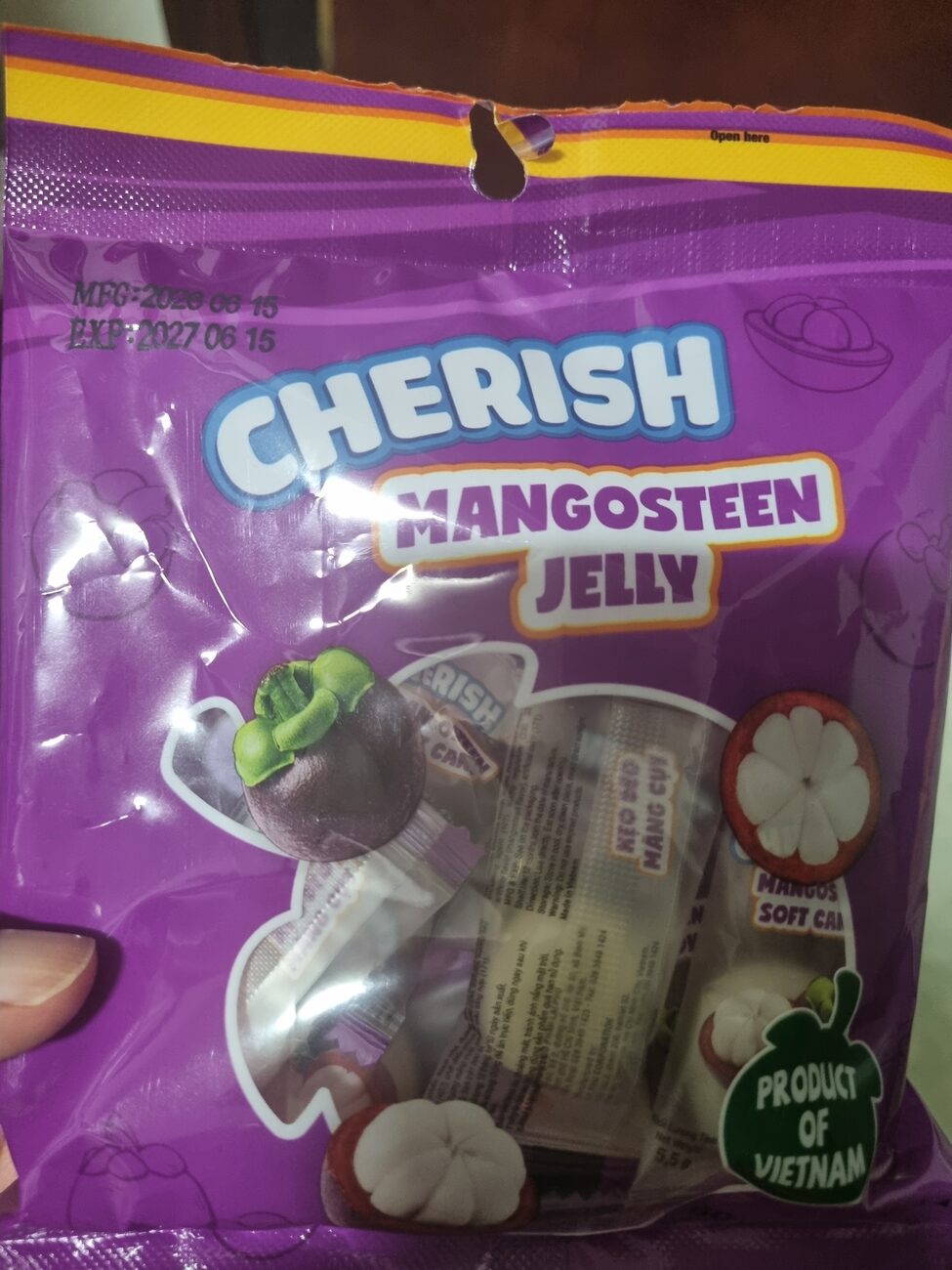
A mangosteen jelly at a Korean convenience store for ₩2,000 (about $1.45).
It doesn’t taste like mangosteen at all. It tastes like caramel.
That’s not a complaint about quality — it’s a puzzle with an answer on the back of the package. And there’s a stranger fact underneath it: almost nobody in Korea can actually judge whether it’s accurate. I’ll get to that.
What Is This?
체리쉬 망고스틴 젤리 — *Cherish Mangosteen Jelly*
Say “che-ri-swi mang-go-seu-tin jel-li” or just show the purple package.
Made in Vietnam by LAI PHU CORPORATION, imported by Top Global, a company based in Busan. Sold at CU, one of Korea’s three big convenience store chains.
Price in Won & Dollars
₩2,000 per bag      ≈  $1.45 / €1.30 / ¥215
60.5 g, 11 pieces   →  ₩182 (~$0.13) per piece
206 kcal per bag
About the piece count: a Korean community comment complained it had “only ten.” The label settles it:
60.5 g total ÷ 5.5 g per piece = 11 pieces
Eleven. I counted, and the math agrees.
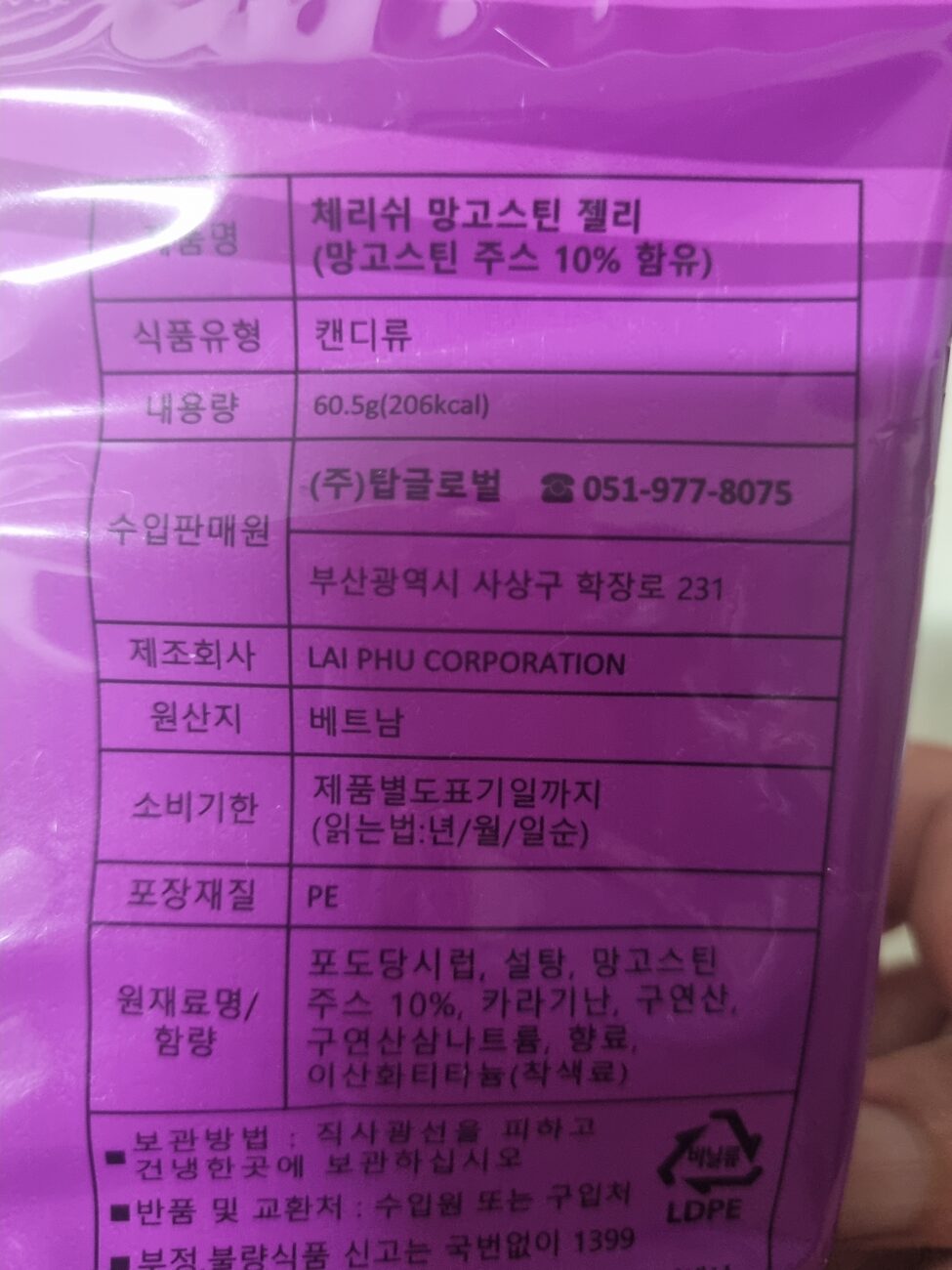
⭐ What’s Actually Inside
Korean labels run in descending order of quantity:
1. Glucose syrup
2. Sugar
3. Mangosteen juice 10%
4. Carrageenan
5. Citric acid
6. Trisodium citrate
7. Flavoring
8. Titanium dioxide (colorant)
Allergens
None declared.
Dietary check
| Halal? | ⚠️ No certification, but no gelatin and no animal ingredients. Check for a halal mark if you need certainty |
| Vegetarian? | ✅ Yes |
| Vegan? | ✅ Yes — this is the notable part |
| Gelatin? | ❌ None. It’s set with carrageenan |
This is genuinely uncommon for convenience store jelly, and it’s the product’s strongest point. More below.
The numbers
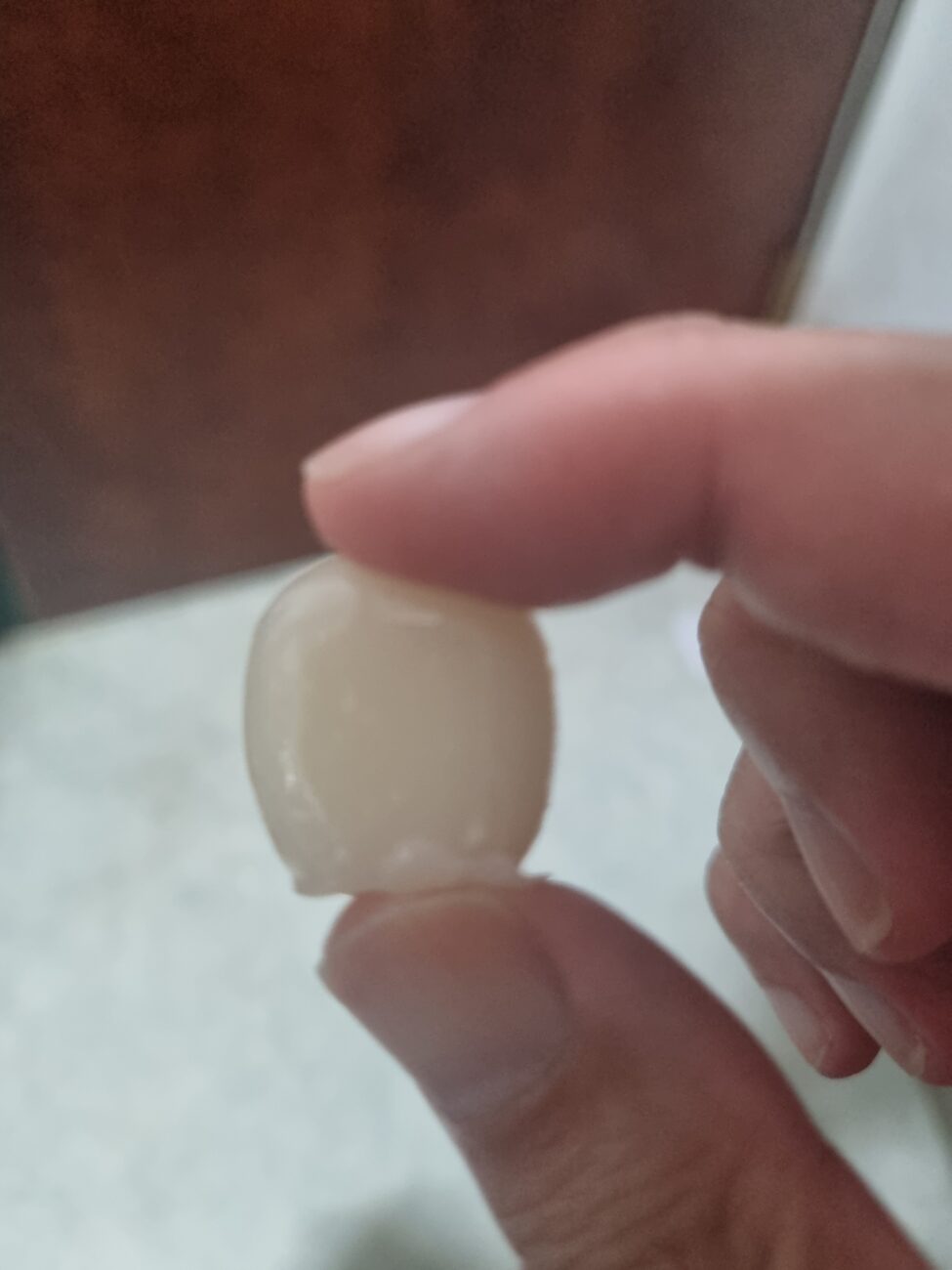
| Per bag (60.5 g) | % Daily Value | |
|---|---|---|
| Calories | 206 kcal | — |
| Sugars | 26.6 g | 27% |
| Carbohydrates | 51.4 g | 16% |
| Sodium | 127.1 mg | 6% |
| Fat | 0 g | 0% |
| Saturated fat | 0 g | 0% |
| Cholesterol | 0 mg | 0% |
| Protein | 0 g | 0% |
Zero fat, zero protein, zero cholesterol. There is nothing here but sugar.
A whole bag is 27% of a day’s added sugar. Per piece that’s 2.4 g, so a few is fine — finishing the bag in one sitting is a different conversation.
How It Tastes
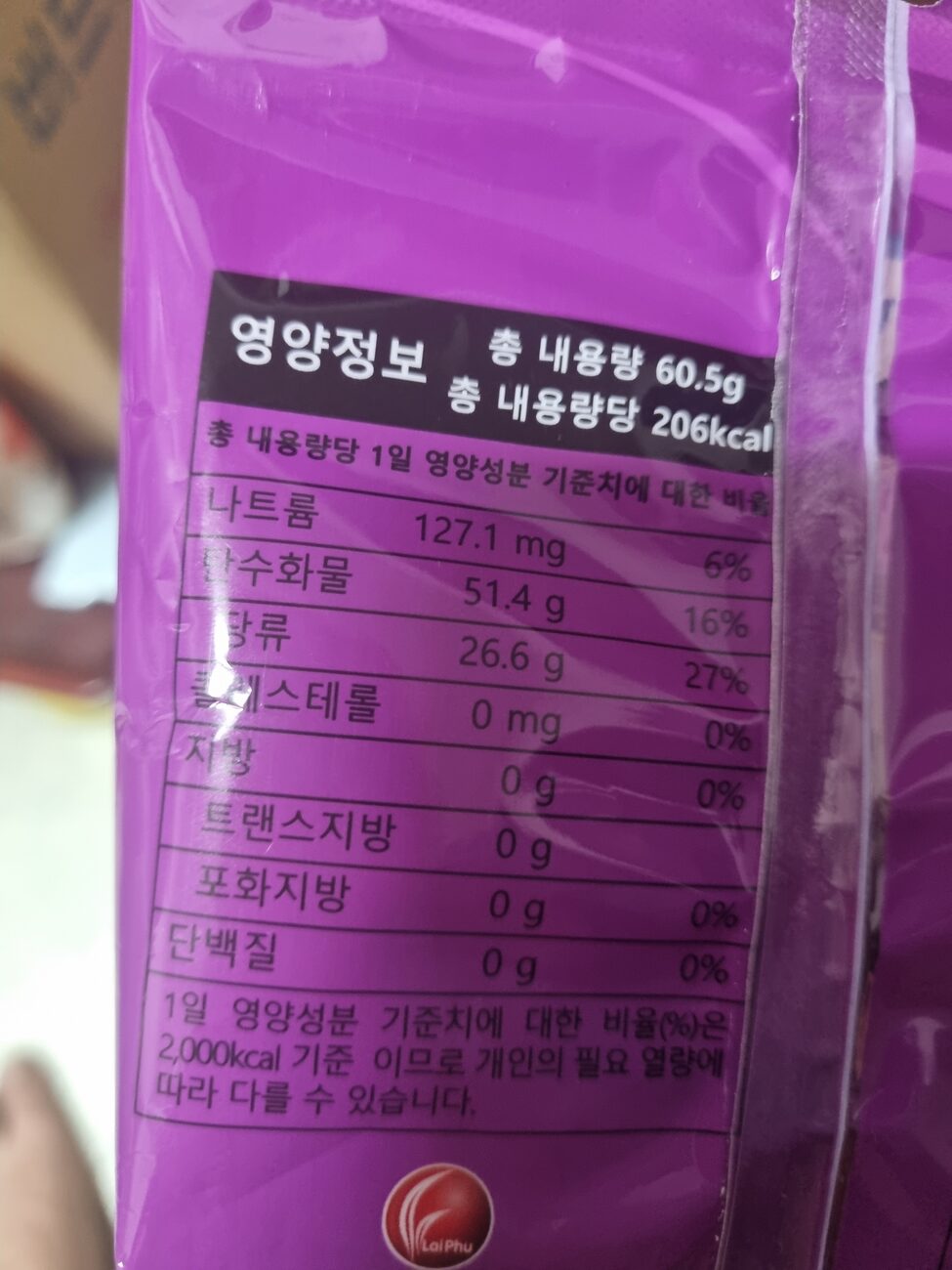
Each piece is a little bigger than a thumbnail. Cloudy white.
1. Opening the bag — a distinctly chemical smell comes up first. Not a great start.
2. Chewing — caramel, not fruit. There’s a faint milky note layered on.
3. Aftertaste — if you’re being generous, there’s a thin fruit brightness in there. Something like biting a green apple. You have to be looking for it.
4. The lingering smell — this is the weak point. A faint musty note, like durian diluted many times over.
Mangosteen? Not really.
Three Things the Label Explains
1. The caramel taste is ingredient #1
Glucose syrup and sugar occupy the top two slots. Then consider how jelly is made:
Carrageenan needs 80–85°C to dissolve. Heating sugar at that temperature starts light caramelization.
So the caramel note isn’t a flaw or a mistake — it’s the number one ingredient doing what it does under heat.
2. There’s real mangosteen in here — it’s just outgunned
10% mangosteen juice is not a token amount. Plenty of “fruit-flavored” products have less.
But it sits behind two sugars. And further down the list sits flavoring, added separately — which tells you the real juice wasn’t carrying enough aroma on its own.
That musty aftertaste is most likely coming from the flavoring rather than the fruit. I can’t confirm that — flavor compositions aren’t disclosed.
3. It’s set with seaweed, not animal collagen
Most jelly and gummy candy uses gelatin, made from animal collagen — usually pork or beef. That rules it out for a lot of people.
This uses carrageenan, extracted from red seaweed.
| Gelatin | Carrageenan | |
|---|---|---|
| Source | Animal collagen (often pork) | Red seaweed |
| Texture | Stretchy, elastic | Snaps cleanly, less stretch |
| Vegan | ❌ | ✅ |
| Pork-derived | Possibly | No |
If you’re vegetarian, vegan, or avoid pork, this is a rare convenience store option. That’s worth more than the flavor, honestly.
4. About the titanium dioxide
Last on the list: titanium dioxide (colorant). It’s a white pigment — the same one used in paint and sunscreen.
Why here? Mangosteen flesh is white. Look at the package illustration — the white segments inside the purple rind. The colorant is there to match that.
Regulations differ by country:
| Status | |
|---|---|
| EU | Banned in food since January 2022 (E171) |
| Korea | Restricted in 37 food categories. Candy and jelly are permitted |
The European Food Safety Authority concluded in 2021 that genotoxicity concerns for nanoparticles could not be ruled out, and therefore it could no longer be considered safe as a food additive.
⚠️ Read that in context. This product is legal in Korea and sold without issue. I’m not telling you it’s dangerous. I’m telling you that two regulators looked at the same additive and reached different conclusions — and it’s on the label, so you can decide for yourself.
The Strangest Part: Nobody Here Can Check
Mangosteen is called “the queen of fruits” in Southeast Asia. There’s a persistent story that Queen Victoria prized it, though it’s more legend than documented fact.
Here’s the thing about Korea: fresh mangosteen is a quarantine item.
Bringing it in personally is prohibited outright, and tropical fruits like mango and mangosteen are among the most commonly seized items at Korean customs. Commercial imports clear quarantine, but volumes are small and prices are high.
So very few Koreans have eaten a fresh mangosteen.
Which means:
A product can say “mangosteen flavor” and almost nobody in the market is equipped to say whether it’s right.
Caramel notes, musty aftertaste — no one can confidently say “that’s wrong.”
That’s the actual reason a product like this can exist unchallenged. Not dishonesty. Just an absence of anyone able to referee.
Should You Buy It?
| Mangosteen accuracy | ★☆☆☆☆ |
| First impression (smell) | ★★☆☆☆ |
| Texture | ★★★☆☆ |
| Value at ₩182/piece | ★★★☆☆ |
| Label transparency | ★★★★☆ Everything is disclosed properly |
| Overall | ★★☆☆☆ 2.5 / 5 |
The name is close to bait — but it isn’t a lie. 10% mangosteen juice is genuinely in there.
The problem is that two sugars sit on top of it. The fruit disappears; the caramel stays.
Edible, not memorable. I wouldn’t seek it out again.
Good for
✅ Vegetarians and vegans — this is the real reason to buy it
✅ Anyone avoiding pork-derived gelatin
✅ You like caramel-forward chews
✅ Cheap curiosity at $0.13 a piece
Skip if
❌ You've had real mangosteen and want that
❌ You're sensitive to artificial aromas
❌ Durian-adjacent smells bother you
❌ Titanium dioxide is something you avoid
Not sure what to order?
Tell us what you can and cannot eat. We will match you to Korean dishes that actually fit.
Vegan, no pork, shellfish allergy, eating alone, hate chilli — 75 dishes, filtered honestly. We tell you when the answer is “almost nothing”.
Find my dish →