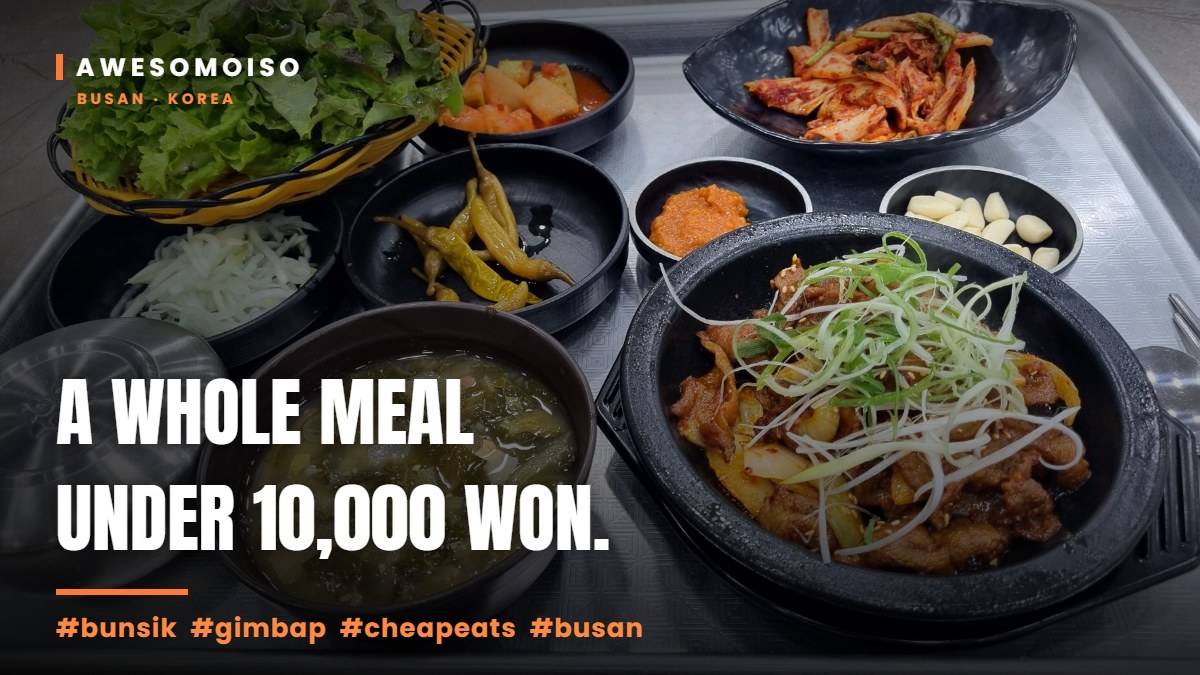
If you want gimbap rolled in front of you rather than pulled out of a chiller, there is one kind of shop left that does it: 분식집 (bunsik-jip).
Dedicated gimbap chains have thinned out across Korea. Convenience stores took the cheap, cold, grab-it-and-go end of the market. What survives in the middle — the shop that rolls to order and also feeds you lunch — is bunsik, and foreigners walk past it constantly because from outside it looks like nothing.
What bunsik actually is
The word means “flour food,” and it points back to an era when wheat was the cheap grain. The name stuck, but the category outgrew it. A bunsik shop today is best understood by three traits:
- Cheap, and consistently so. Nearly the whole menu sits under ₩10,000. There is no expensive corner of the board to accidentally land on.
- It tastes like a home kitchen, not a restaurant. Plain, unfussy, seasoned the way a Korean household seasons. This is the part that is hard to find anywhere else as a visitor.
- The menu is wide. Noodles, rolls, rice dishes, stews and fried snacks all from one small kitchen — a range no specialist restaurant in Korea offers.
Specialist shops in Korea do one thing: a gukbap shop sells gukbap. Bunsik is the opposite principle, and it is why a group that cannot agree on anything ends up there.
What is actually on the board
The spine of a bunsik menu is the same across the country:
- 김밥 gimbap — rolled to order, in several versions
- 라면 ramyeon — instant noodles, cooked properly, often with egg or cheese
- 김치볶음밥 kimchi fried rice
- 제육덮밥 jeyuk-deopbap — spicy stir-fried pork over rice
- 돈까스 donkkaseu — pork cutlet, Korean style
- 비빔밥 bibimbap, including the stone-bowl version 돌솥비빔밥
- 쫄면 jjolmyeon — very springy noodles mixed by hand with raw vegetables and a sweet-hot red sauce. Not a soup; the broth version is listed separately as 물쫄면
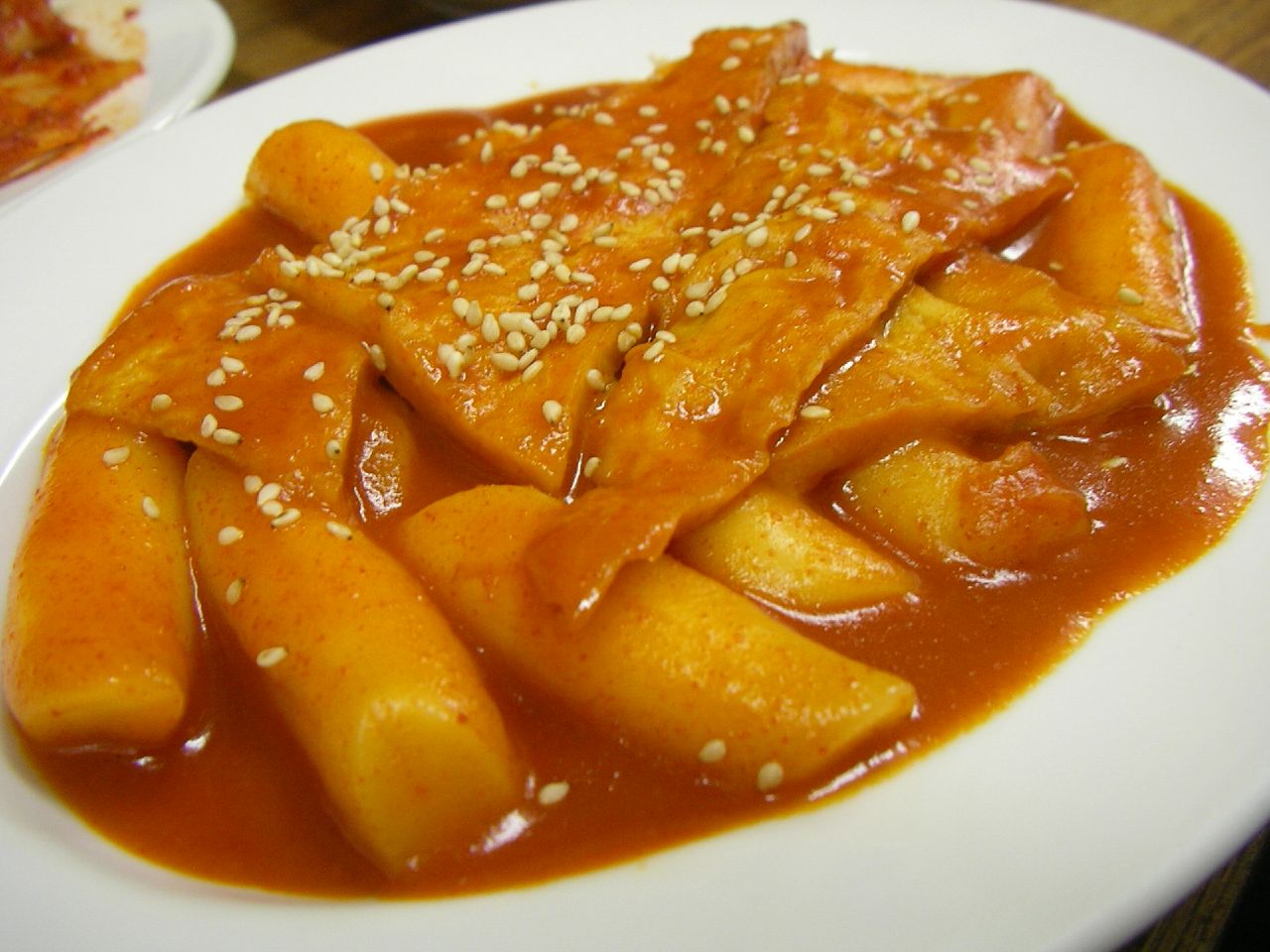
Most shops add 떡볶이 (chewy rice cakes in sweet-hot sauce) and 튀김 (fried snacks) on top of that. Many also run a short list of stews — kimchi, doenjang, sundubu.
⭐ A real board, photographed
Below is the menu of one bunsik shop in Busan. We are showing it because the shape of it is the point — not because these are the prices you will pay. Every shop sets its own, and they move. Read the board in front of you.
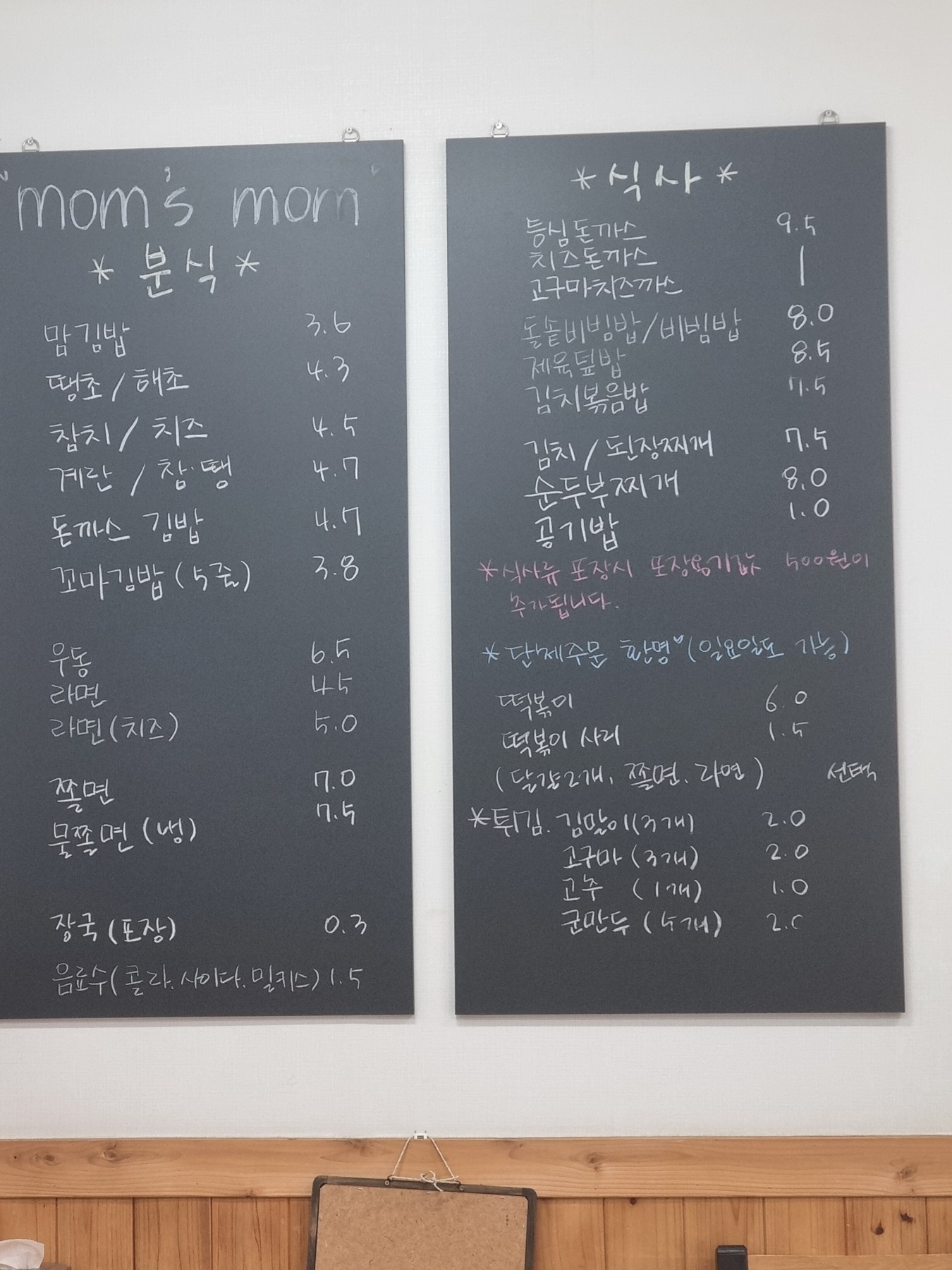
⚠️ Prices on Korean boards are often written in thousands. A line reading 8.0 is ₩8,000, not eight. Once you know that, a wall of handwritten Korean becomes readable even if you cannot read a word of it.
Roughly what that board covers, as bands rather than fixed numbers:
| Group | Band on this board |
|---|---|
| Gimbap — plain through tuna, cheese, cutlet | mid ₩3,000s to high ₩4,000s |
| Ramyeon, udon | mid ₩4,000s to mid ₩6,000s |
| Jjolmyeon — springy noodles tossed with raw vegetables in red sauce | around ₩7,000 |
| Rice meals — bibimbap, jeyuk, kimchi fried rice | mid ₩7,000s to mid ₩8,000s |
| Stews — kimchi, doenjang, sundubu | mid ₩7,000s to ₩8,000 |
| Pork cutlet | around ₩9,500 — the top of the board |
| Tteokbokki | around ₩6,000, plus about ₩1,500 for an add-in |
| Fried snacks, per portion | ₩1,000–2,000 |
| Extra bowl of rice | around ₩1,000 |
⭐ Gimbap starting in the ₩3,000s is the number to carry. It is the cheapest hot-kitchen meal in Korea that is not from a convenience store.
One more line on that board worth knowing: takeaway containers are charged — on this board, ₩500. It is not a scam and it is not a service charge; it is the box. Separately, the side dishes and soup that come with a meal are free, which we explain in full here.
What a meal set actually looks like
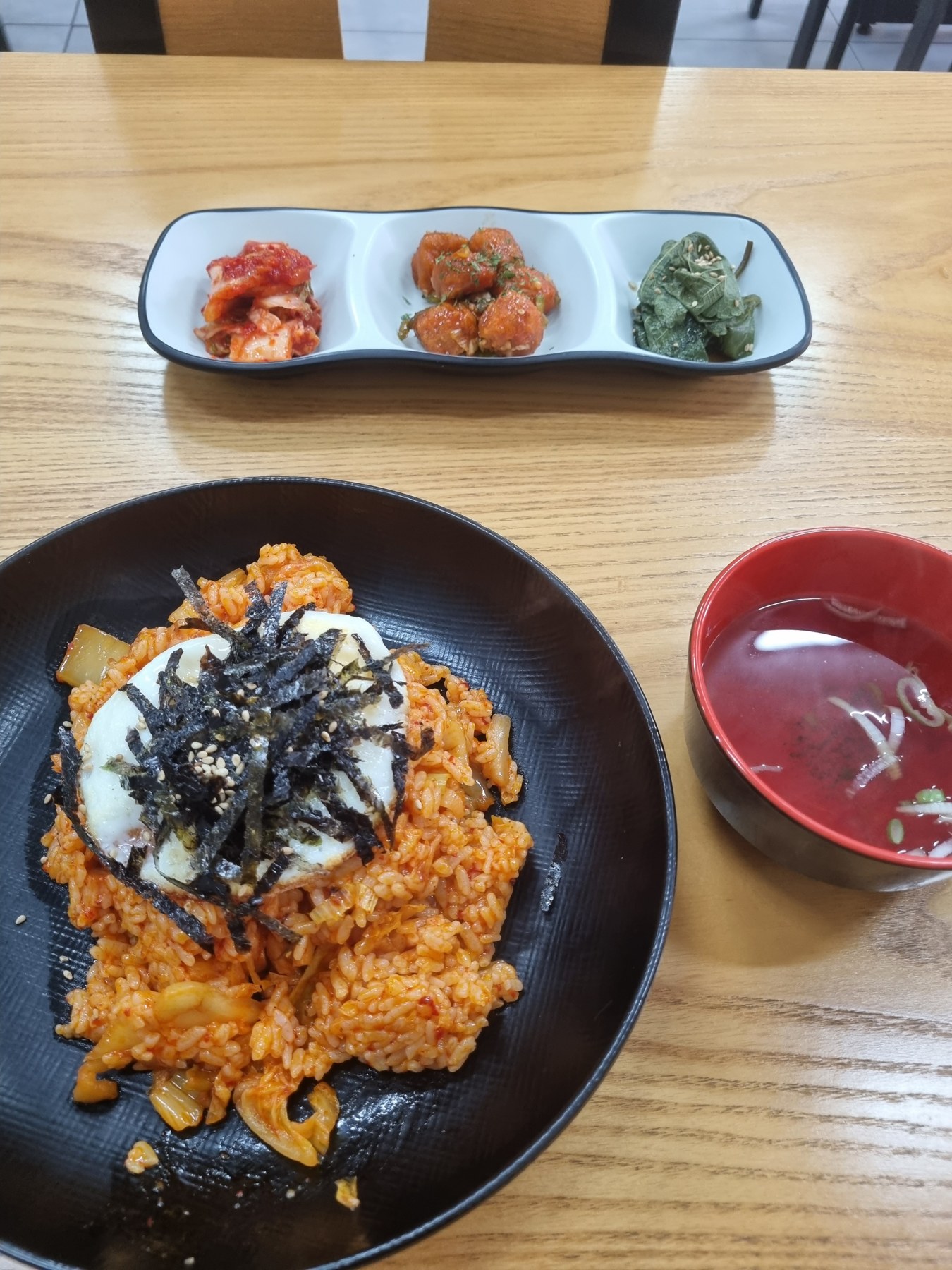
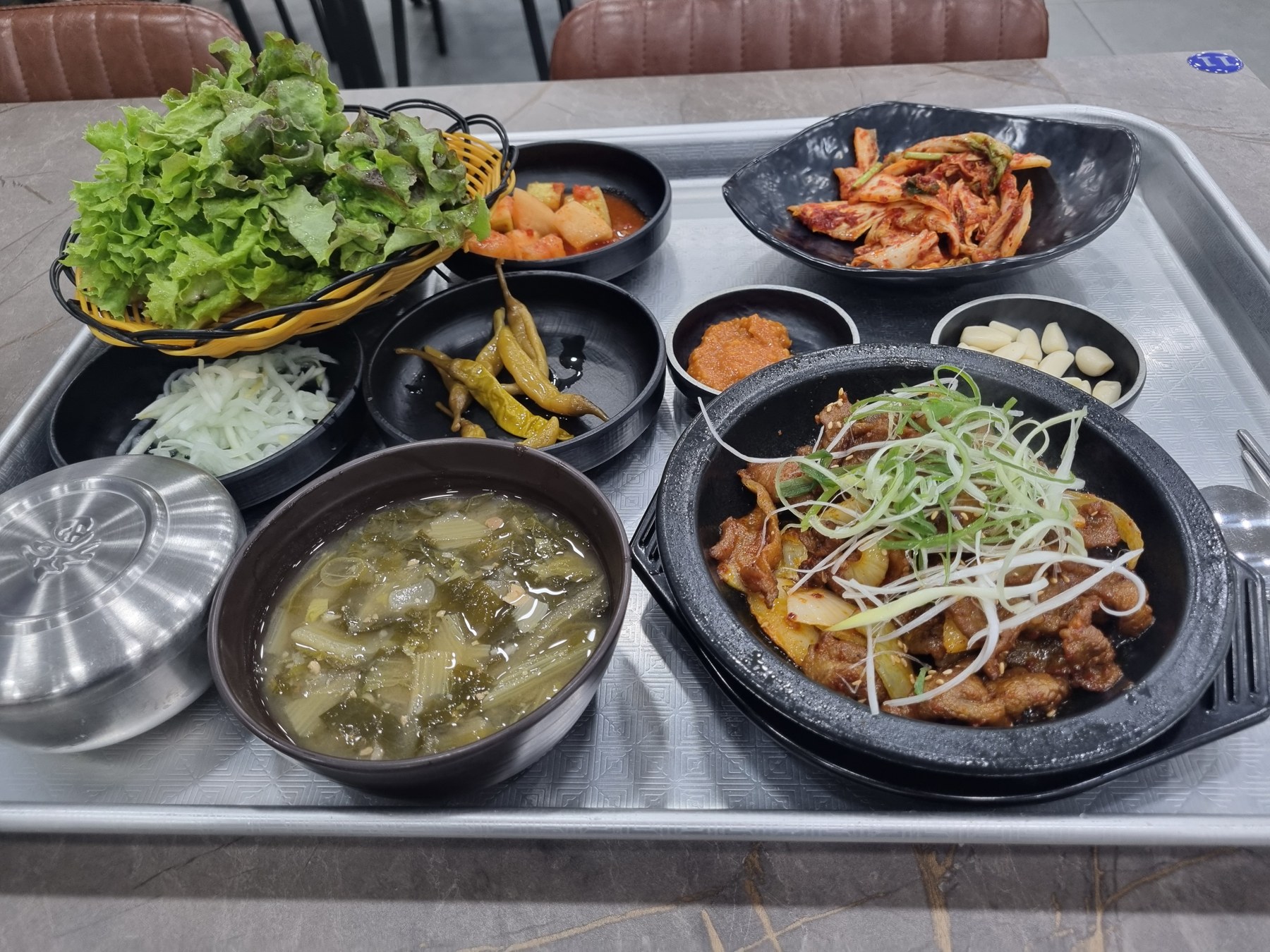
Order one rice dish and this is the shape of what arrives: the dish, a small soup, and two to five side dishes. The soup is usually thin and plain — it is there to drink between bites, not to be a course.
That tray is the reason bunsik is worth knowing about as a visitor. For under ₩10,000 you get the standard structure of a Korean meal, cooked to order, in a room where Koreans are eating lunch.
Gimbap here versus the convenience store
Both are real options, and they are not the same food.
| Bunsik shop | Convenience store | |
|---|---|---|
| Temperature | Room temperature, rolled minutes ago | Chilled, which makes the rice firm |
| The seaweed | Still crisp | Softened by the wrapper and the cold |
| Choice | Several versions, and you can ask for changes | Whatever is in the case |
| Hours | Shop hours, often closed by evening | Always open |
| Rest of the meal | Soup, side dishes, a hot kitchen | Nothing |
If you have only ever had the chilled version and found it dull, that was the chilling, not the dish. What actually goes into a roll is here.
Vegan, Vegetarian, Pescatarian, Halal
Bunsik is a difficult room for restricted diets, and it is better to know that before you sit down than after.
| Realistic position | |
|---|---|
| Vegan | Very hard. Gimbap has egg; kimchi usually has fish sauce; tteokbokki sauce and most broths are built on anchovy or fish cake |
| Vegetarian | Possible but narrow. Vegetable gimbap without fish cake or crab stick is the main route. Ask |
| Pescatarian | Comfortable. Tuna gimbap, most noodles, fish-cake dishes |
| Halal | ⚠️ No. Pork runs through the menu — jeyuk, cutlet, ham in the rolls, pork in the stews. Shared pans and fryers on top of that |
Cross-contact is the bigger issue here than ingredients. One small kitchen, one set of pans, one fryer, one cutting board. A bunsik shop cannot give you a clean preparation, and the person at the counter will usually say so honestly if you ask.
⚠️ Allergens
- Sesame — on the rice and over almost everything
- Egg — in gimbap, on fried rice, in ramyeon
- Fish and shellfish — anchovy broth, fish cake, crab stick, salted shrimp in the kimchi
- Wheat and soy — the category is named after flour
- Shared fryer — fried snacks and cutlets come out of the same oil
How to use one
- Lunch is the time. Many close early evening, and some shut between lunch and dinner
- Photograph the board and translate from the photo. It is handwritten and will defeat a live camera translation. More on reading Korean signage here
- Cash or card both work, but very small shops can be cash-friendlier
- Order at the counter or from the table — it varies, so watch what the table next to you did
- One rice dish plus one roll is the standard order for two people
Copy-paste Korean
| English | Korean |
|---|---|
| One gimbap and one kimchi fried rice, please | 김밥 한 줄이랑 김치볶음밥 하나 주세요 |
| Spicy stir-fried pork over rice, please | 제육덮밥 주세요 |
| Not spicy, please | 안 맵게 해주세요 |
| Is there meat in this? | 이거 고기 들어가요? |
| Is the broth made with anchovy? | 국물 멸치로 만들었어요? |
| To go, please | 포장해 주세요 |
| Can I pay by card? | 카드 돼요? |