Quick Verdict
Korean cup noodles are famous for one disappointment: the toppings are usually an afterthought. A few flakes of dried vegetable, maybe. This one is built to answer that.
The toppings are genuinely good. The price is the problem.
At ₩1,535 (about $1.10) per cup when you buy the 6-pack on Coupang, it costs roughly 50% more than a standard small cup ramen. Whether that’s fair depends entirely on one thing — which I’ll get to.
What Is This?
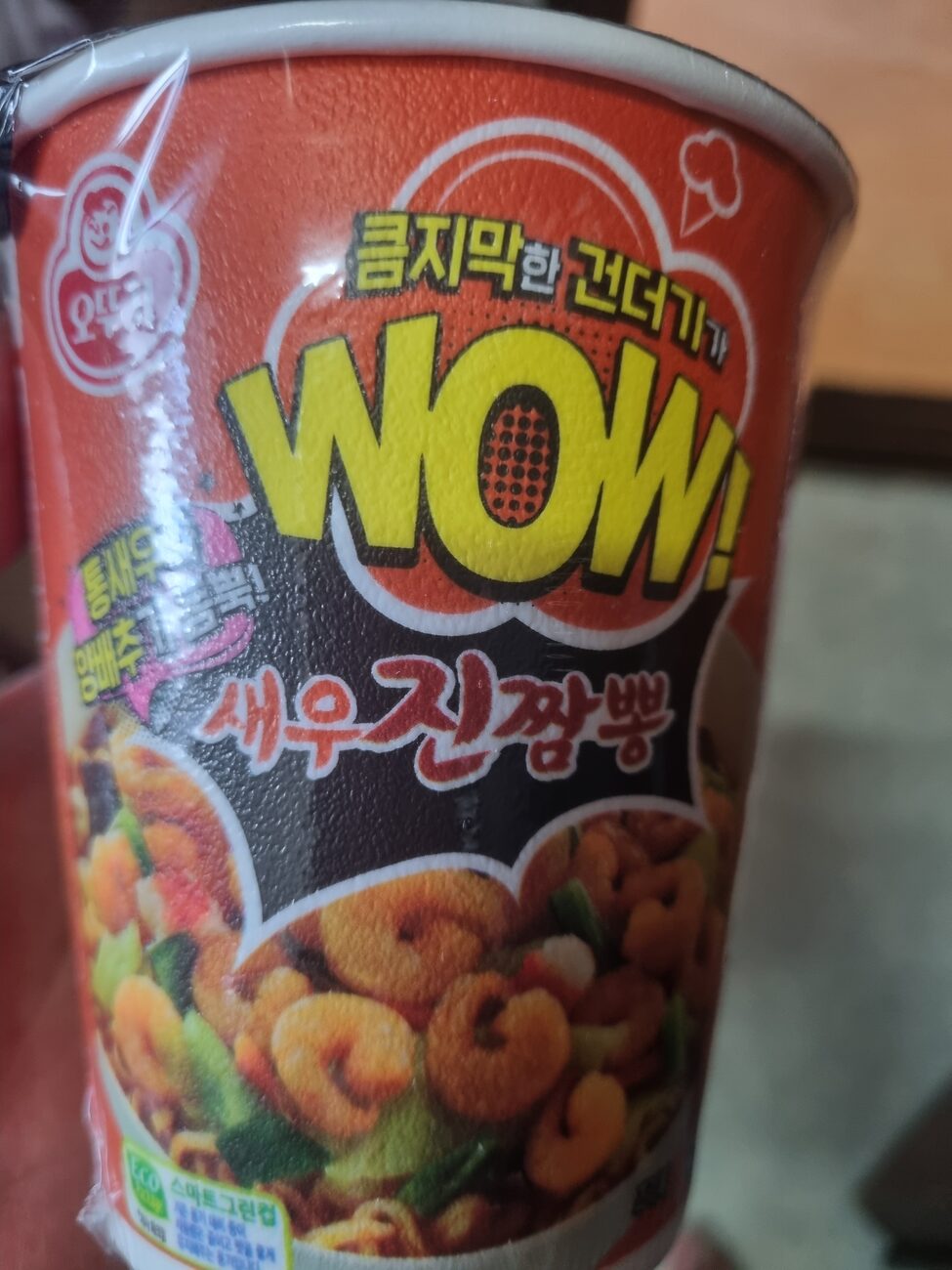
오뚜기 WOW! 새우진짬뽕 — *Ottogi WOW! Shrimp Jin Jjamppong*
Say “wow sae-oo jin jjam-ppong” or just show the Korean name on your phone.
Jjamppong (짬뽕) is a Korean-Chinese spicy seafood noodle soup. Red, garlicky, briny, and smoky. It’s a restaurant dish that Korean instant noodle makers have been trying to replicate for decades.
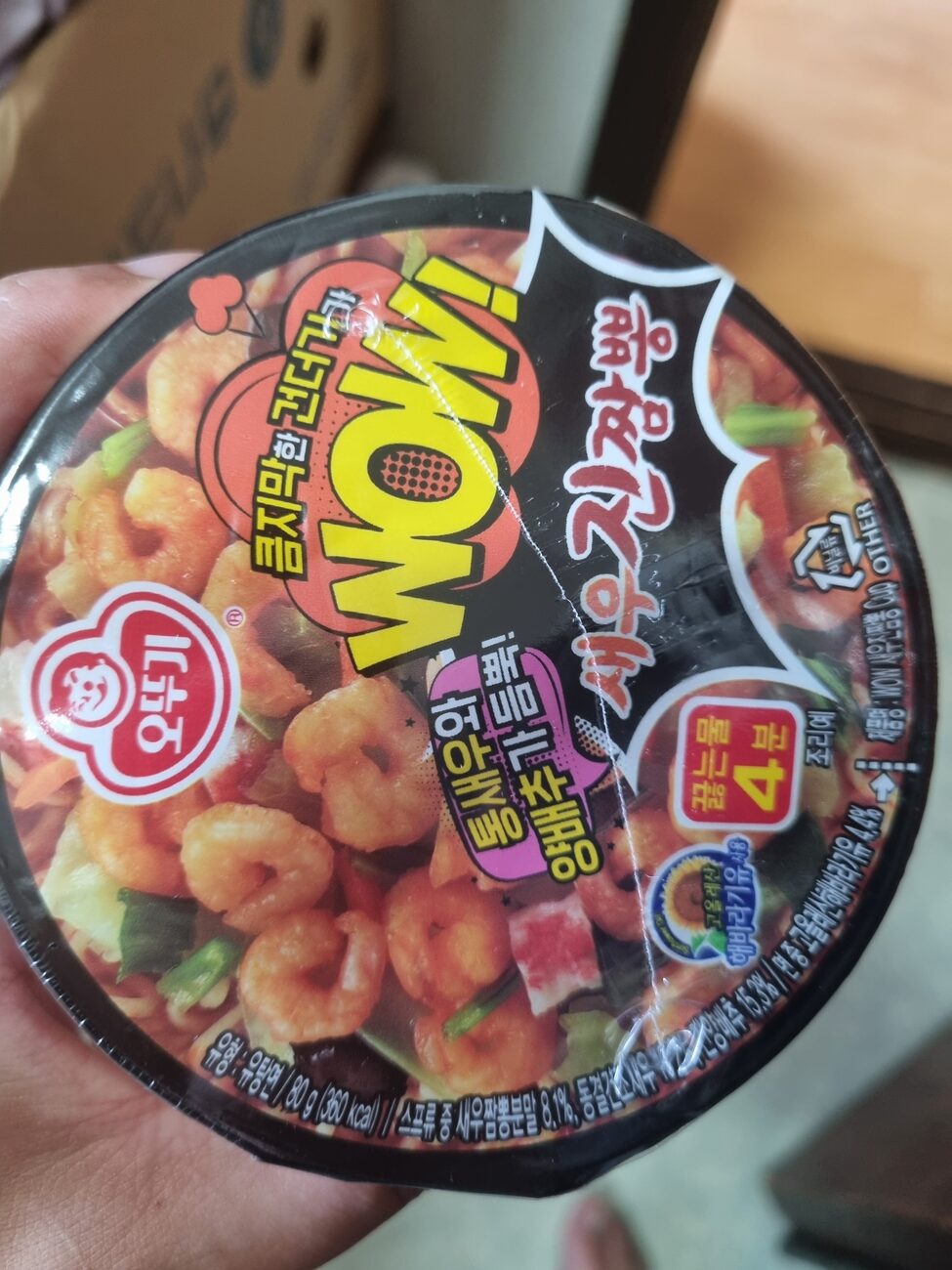
Jin Jjamppong (진짬뽕) is Ottogi’s flagship attempt and it’s a well-regarded product line in Korea. This “WOW!” version is the same soup with the toppings doubled down on — the lid literally says *”큼지막한 건더기가 WOW!”* (the chunky toppings are WOW!).
Where to buy
| Where | Price |
|---|---|
| Coupang, 6-pack | ₩1,535 each (~$1.10) |
| Local supermarket | ₩1,700–1,800 |
| Convenience store (CU / GS25 / 7-Eleven) | ₩2,200 (~$1.60) |
💡 Buy the 6-pack if you’re staying a while. The convenience store price is 43% higher. If you’re a tourist and can’t use Coupang, see [Can Foreigners Actually Use Coupang?] — it depends on whether you have a Korean phone number.
Price in Won & Dollars
₩1,535   ≈  $1.10  /  €1.00  /  ¥165
80 g      ≈  2.8 oz
360 kcal
For reference, a standard small cup ramen in Korea runs ₩1,000–1,200. This sits above that.
⭐ What’s Actually Inside
Korean labels list ingredients in order of quantity, most first. Here’s what matters, translated:
Noodles
Wheat flour (Australia, USA), modified starch, palm oil (Malaysia), potato starch (Denmark, France, Germany), high-oleic sunflower oil
Soup & toppings
Dried cabbage, freeze-dried shrimp (whiteleg shrimp, Vietnam), shrimp jjamppong powder (8.1% of the soup sachets), dried bok choy, chili-infused oil, seasoned broth powder, clam broth powder, jjamppong flavor oil, dried carrot, chili powder, stir-fried vegetable flavor oil, dried wood ear mushroom, squid seasoning powder, mussel concentrate, soy base, pepper, dried seaweed, chili extract
Allergens
Wheat, soy, egg, milk, beef, chicken, squid, shrimp, crab, shellfish (oyster, mussel, abalone)
Dietary check
| Halal? | ❌ No. No certification, and it contains shellfish, squid, and mixed animal broths |
| Vegetarian? | ❌ No. Shrimp, squid, mussel, beef and chicken derivatives |
| Vegan? | ❌ No |
| Pork? | Not listed as an allergen, but the broth base isn’t fully specified |
⚠️ If you avoid pork specifically, this label doesn’t give you a clear answer. I’d skip it.
The thing the label tells you that the package doesn’t
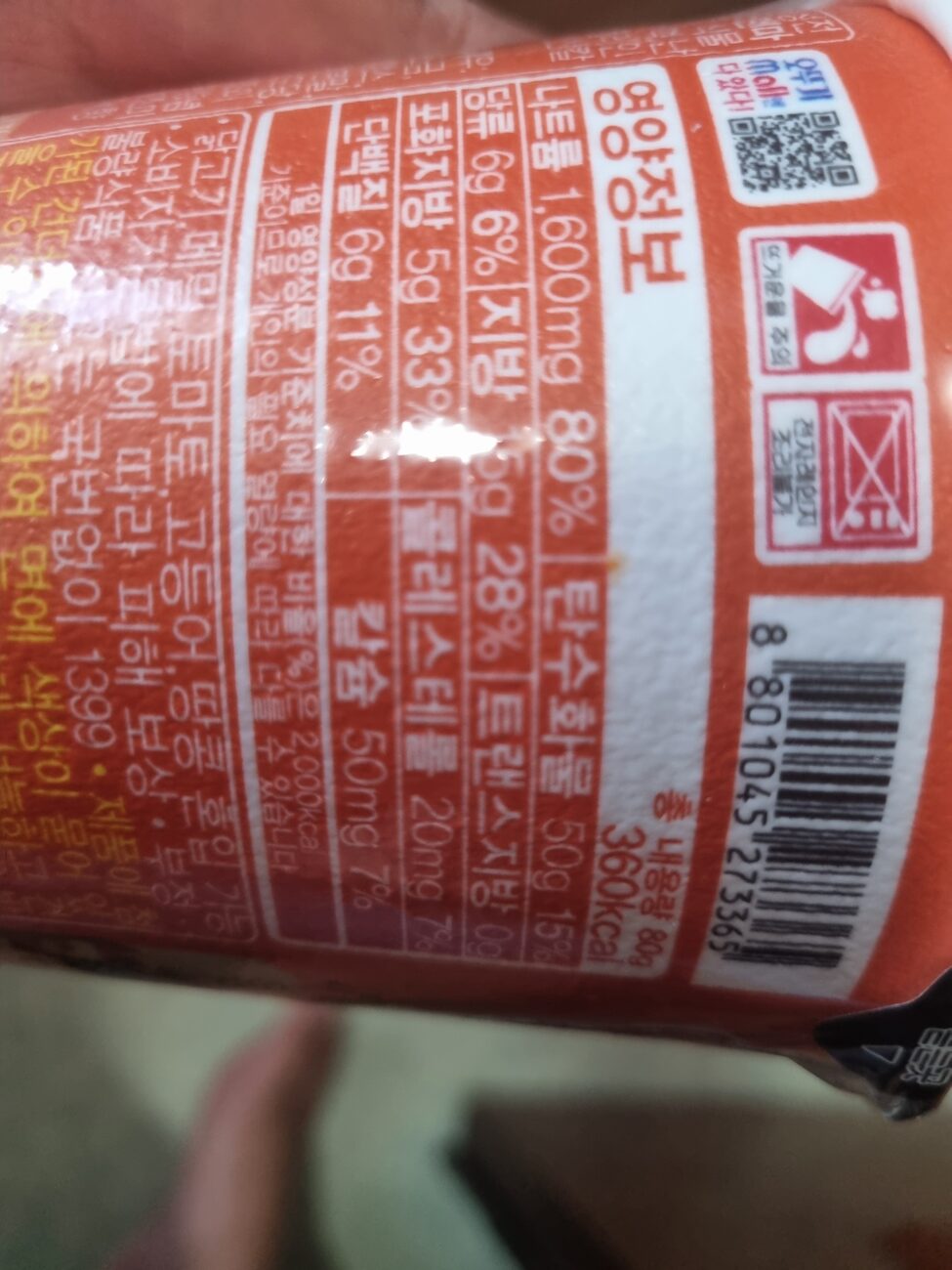
Sodium: 1,600 mg — that’s 80% of a full day’s recommended intake.
In an 80 g cup. That’s the highest single number on this product by a wide margin.
But most of it is in the broth. Korean jjamppong gets its punch from salt, and if you drink the soup down you’re taking all 1,600 mg. Eat the noodles, leave half the broth, and the number drops substantially.
| Per cup (80 g) | % Daily Value | |
|---|---|---|
| Calories | 360 kcal | — |
| Sodium | 1,600 mg | 80% |
| Carbohydrates | 50 g | 15% |
| Sugars | 6 g | 6% |
| Fat | 15 g | 28% |
| Trans fat | 0 g | — |
| Saturated fat | 5 g | 33% |
| Cholesterol | 20 mg | 7% |
| Protein | 6 g | 11% |
| Calcium | 50 mg | 7% |
How It Tastes
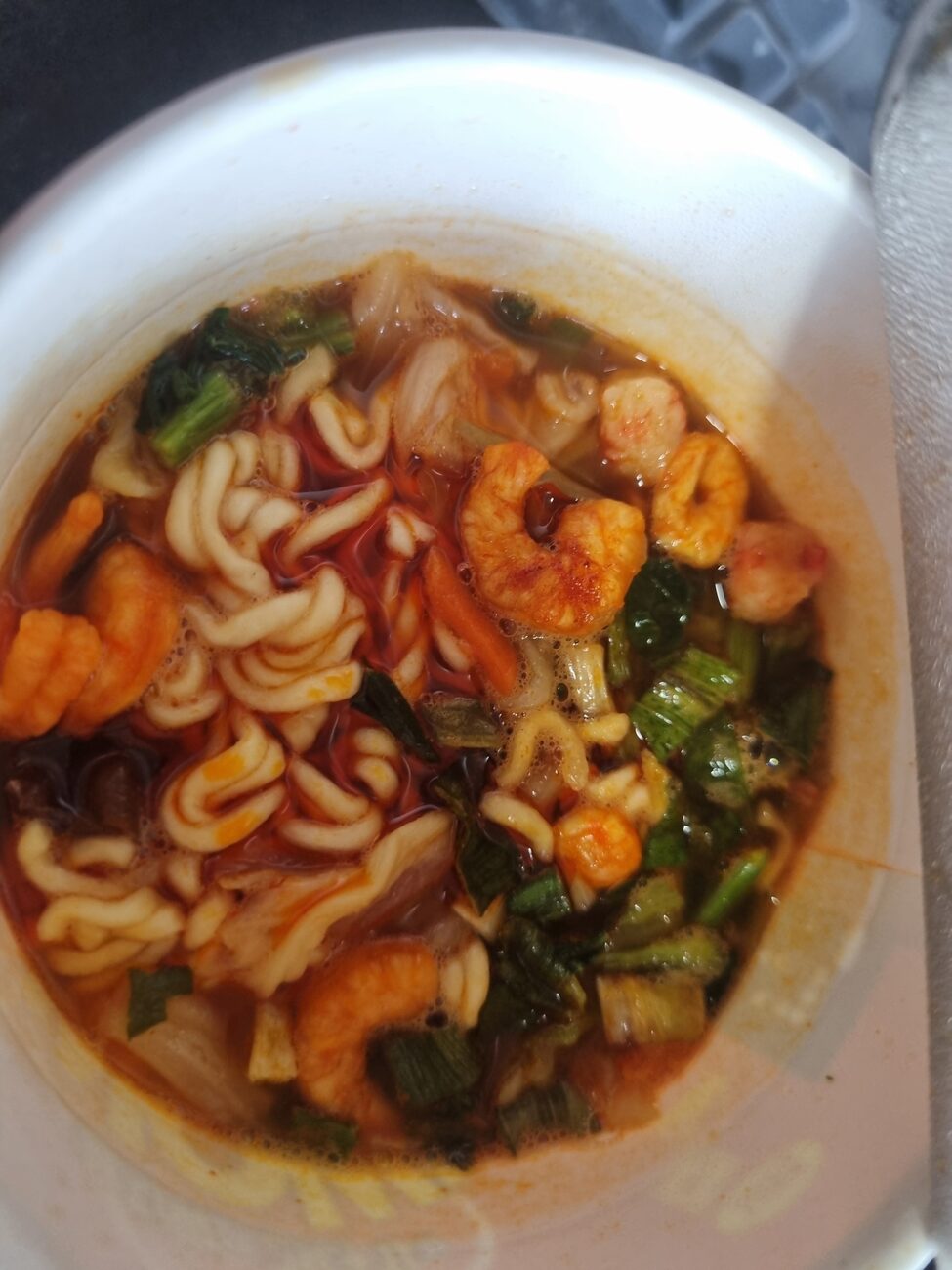
You get two sachets: a powder and an oil. The toppings are already sitting on top of the noodle block, and you can see whole shrimp before you’ve added anything. That’s not normal for a cup this size.
The toppings deliver. Whole shrimp, imitation crab stick, bok choy that still has bite, cabbage, wood ear mushroom, carrot. They don’t dissolve into mush. For a small cup this is genuinely unusual.
The broth is standard Jin Jjamppong with a shrimp note layered on. The shrimp is subtle — it doesn’t dominate.
What surprised me: the smokiness comes through. Jjamppong is supposed to taste like it came out of a screaming-hot wok — Cantonese cooks call it wok hei, “breath of the wok.” Getting that into a paper cup is hard. This one manages a recognizable version of it.
Heat level: 4 out of 5 on Ottogi’s own scale. In practice it’s moderately spicy — noticeable but not punishing. If you handle Buldak, this won’t trouble you.
Two Things Worth Knowing
1. That smoky note comes from oil, not fire
There’s no wok in a cup of instant noodles. So how does the smokiness get there?
Look at the ingredient list: chili-infused oil, jjamppong flavor oil, stir-fried vegetable flavor oil.
Aroma compounds are mostly fat-soluble — they dissolve in oil, not water. So manufacturers cook the aromatics into oil and seal it in a separate sachet. That black packet you tear open is doing the work that a wok would do in a restaurant.
It’s a workaround, and it’s a clever one.
2. The Japanese “topping law” everyone repeats is out of date
There’s a claim that circulates online: *Japanese cup noodles have generous toppings because Japanese law requires a minimum amount.*
It used to be partly true. It isn’t now.
Japan’s JAS (Japanese Agricultural Standards) grading system did set topping ratios — roughly 6% of noodle weight for standard grade with broth, 15% for premium grade.
But the grading tiers for cup noodles were consolidated away in 2009. And JAS certification was never required to sell a product in the first place.
So there’s no current law forcing it. What’s left is habit — Japanese manufacturers kept doing it because that’s how the category developed.
One leftover quirk: Japanese bag ramen still has sparse toppings. The old standard applied to cup noodles, not bags. The habit only stuck where the rule once was.
This Korean cup is Ottogi choosing to compete on that ground. Which brings us to the price.
Should You Buy It?
| Toppings | ★★★★★ Genuinely good for a small cup |
| Smokiness | ★★★★☆ Impressive for instant |
| Flavor | ★★★☆☆ Solid, not novel |
| Texture | ★★★★☆ The freeze-dried shrimp actually holds up |
| Value | ★★☆☆☆ Only if you buy in bulk |
| Overall | ★★★☆☆ 3.5 / 5 |
Here’s the honest framing.
You’re not buying a new flavor. You’re paying about ₩500 (~$0.35) extra for the toppings that were missing.
If you’ve had Korean cup ramen and thought *”where’s the actual food in this,”* this is the answer and it’s worth it.
If you just want a cheap hot meal, the standard cups at ₩1,000–1,200 will do the job.
One clear recommendation: don’t pay ₩2,200 at a convenience store. That’s a 43% markup for the same cup. Either buy the 6-pack or pick something else.
Good for
✅ Anyone who found Korean cup ramen light on toppings
✅ Jjamppong fans who want it in cup form
✅ Stocking a dorm or long-stay apartment (buy the 6-pack)
Skip if
❌ You avoid shellfish or shrimp
❌ You need halal or vegetarian
❌ You're watching sodium closely
❌ You're only buying one, at a convenience store
Not sure what to order?
Tell us what you can and cannot eat. We will match you to Korean dishes that actually fit.
Vegan, no pork, shellfish allergy, eating alone, hate chilli — 75 dishes, filtered honestly. We tell you when the answer is “almost nothing”.
Find my dish →