Quick Verdict
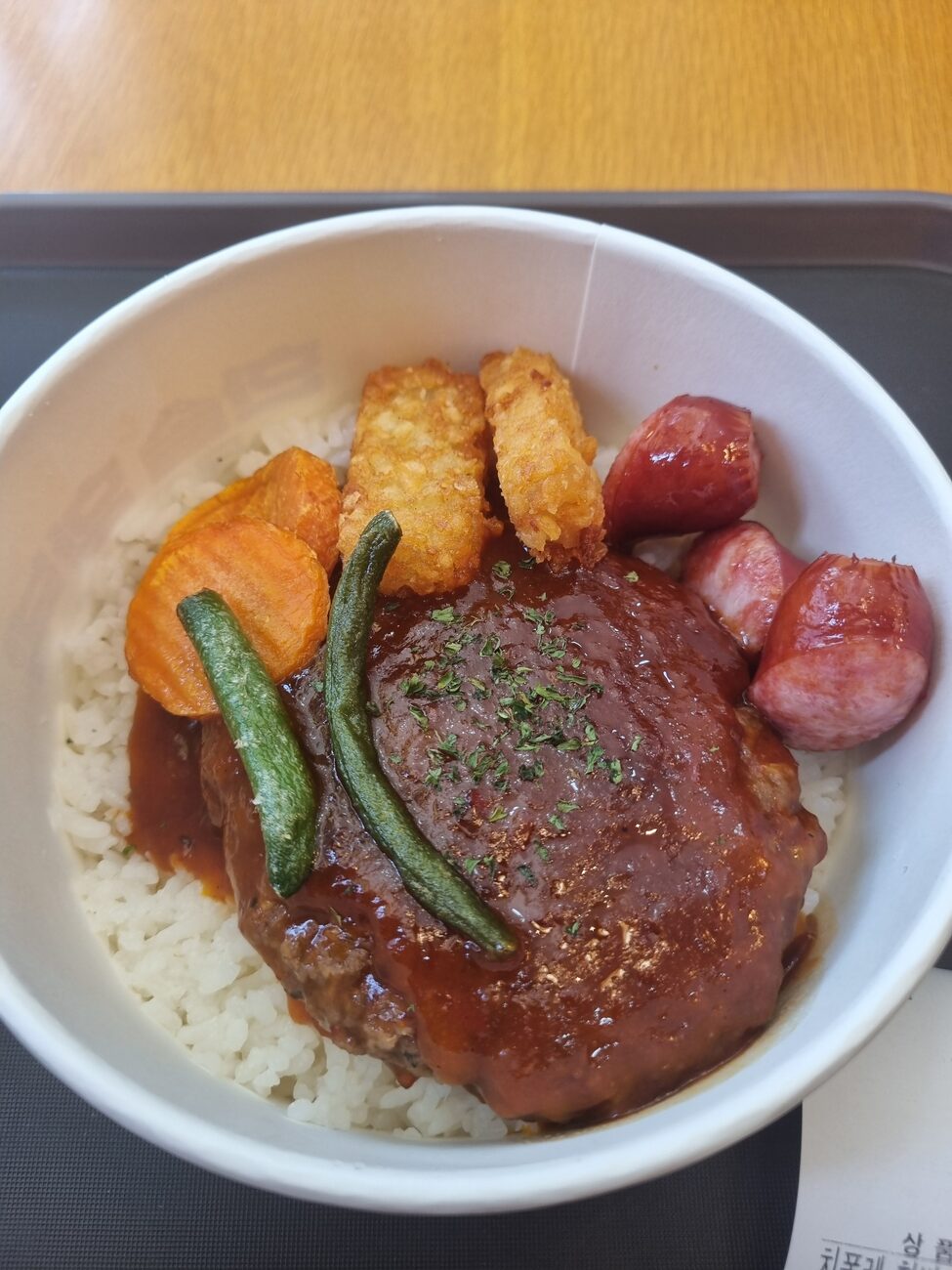
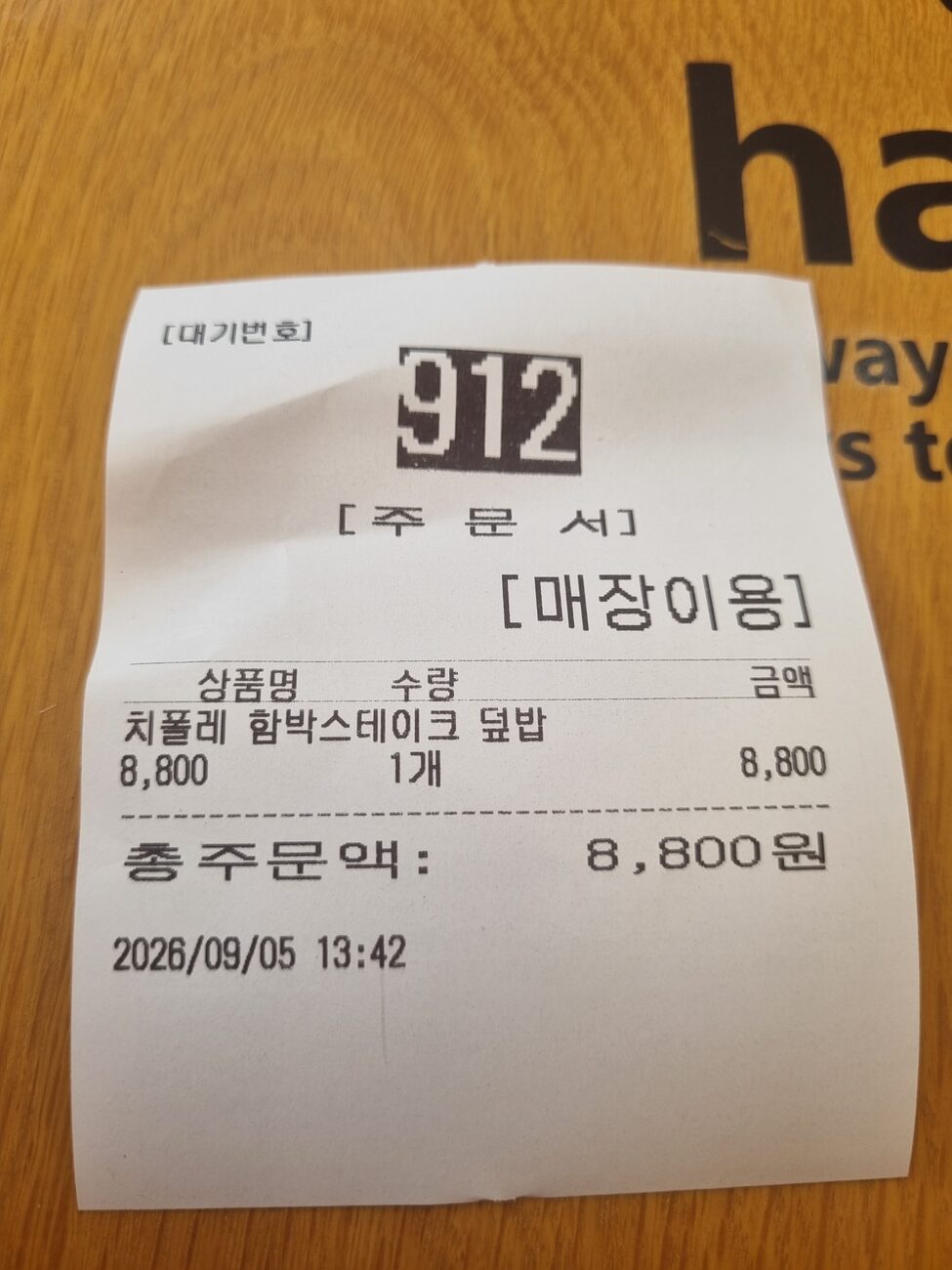
₩8,800 (about $6.30) for rice, a thick hamburg steak, sausages, hash browns and vegetables in one bowl. From Hansot (한솥) — Korea’s biggest takeout lunch-box chain.
Nothing here is badly made. Nothing here is memorable either.
Read this for the chain, not for the dish. If you’re travelling in Korea on a budget, Hansot is genuinely useful to know about, and most guides never mention it. This particular new item is fine — I just wouldn’t order it twice.
What Is Hansot, and Why Should a Visitor Care?
Hansot Dosirak (한솥도시락) is a chain that sells dosirak (도시락) — Korean boxed meals, cooked to order, mostly for takeaway. There are hundreds of branches, they’re all over residential and office areas, and meals start around ₩4,000–5,000 ($3–3.60).
Why this matters if you’re visiting:
· A hot, full meal with rice and protein for $3–6
· Fast — usually under 10 minutes
· Takeaway, so you can eat it at your accommodation
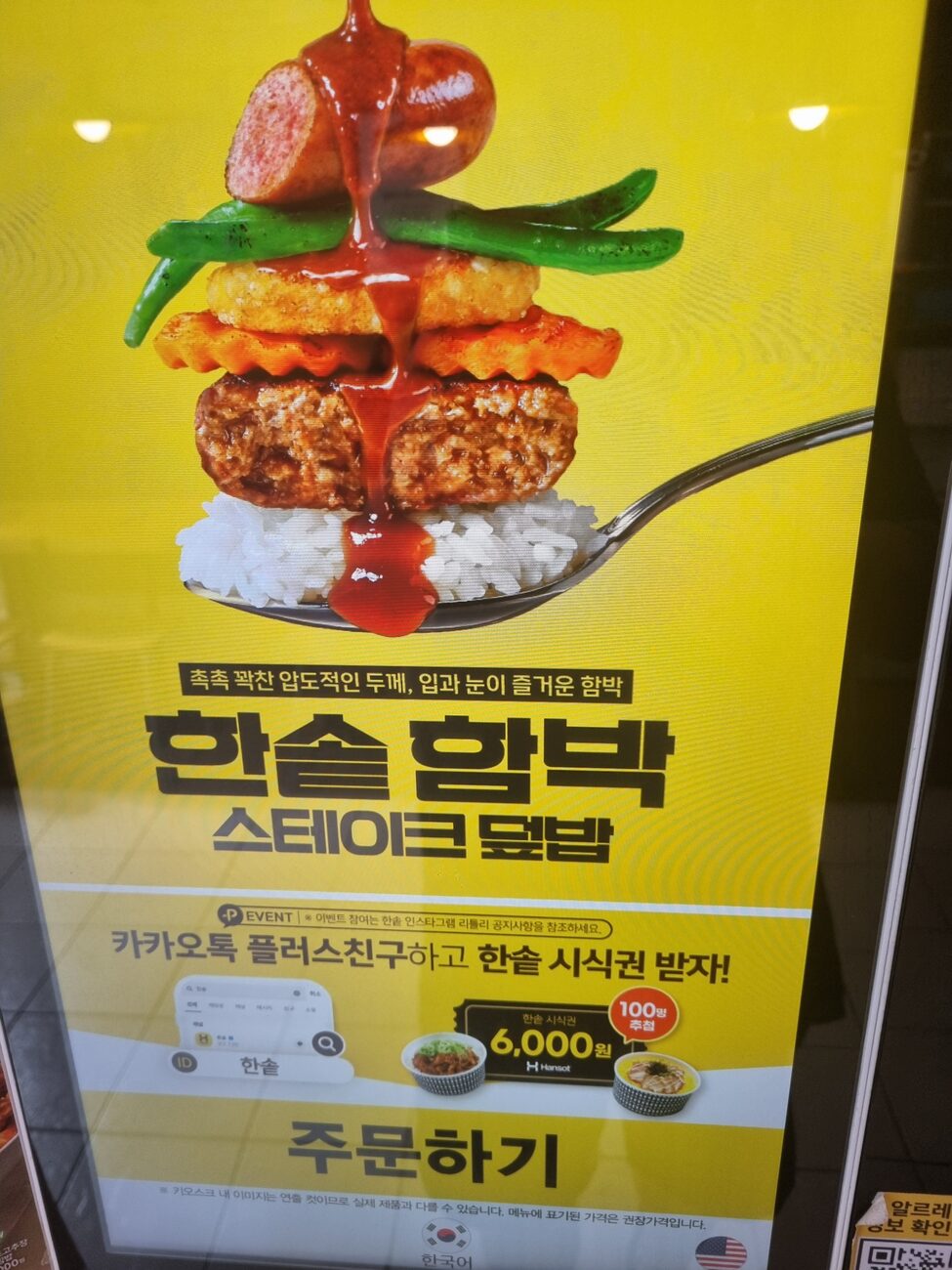
· Ordering is via touchscreen kiosk — ENGLISH IS AVAILABLE
· No tipping, no service charge, no conversation required
💡 The kiosk has a language button. The one I used had Korean and English flags at the bottom of the screen. This removes the single biggest barrier for most visitors — you can order without speaking any Korean.
Restaurant meals in Korea have gotten expensive. A basic sit-down meal in Seoul or Busan now runs ₩10,000–15,000. Hansot is one of the few places left where a hot cooked meal is genuinely cheap.
What Is *Hambak Steak*?
함박스테이크 — *hambak seuteikeu*, from “hamburg steak.”
It’s a seasoned ground-meat patty, pan-cooked and served with sauce — eaten with rice, not in a bun.
The route it took to Korea is the interesting part. Hamburg steak came from Germany to Japan, where it became *hambāgu* (ハンバーグ) — a fixture of Japanese home cooking and *yōshoku* (Western-style Japanese food). From Japan it came to Korea, where it became a staple of *gyeongyangsik* (경양식) — Korea’s own “Western-style” restaurant tradition.
For Koreans of a certain age, hambak steak is childhood nostalgia food. It’s what you got at a *donkkaseu* (pork cutlet) restaurant on a special occasion, served on a hot iron plate with corn and a fried egg.
So this bowl is a German dish, filtered through Japan, adopted by Korea, and now sold by a lunch-box chain over rice. That’s a fairly Korean story in itself.
What Is Chipotle? (It’s Not What Most People Think)
Worth clearing up, because I had it wrong too.
Chipotle is not a variety of pepper. It’s a preparation method.
A chipotle is a ripe red jalapeño that has been smoked and dried.
The name says so directly. It comes from Nahuatl — the Aztec language:
chipotle  ←  chilli (pepper)  +  poctli (smoke)
          =  "smoked pepper"
Heat level: roughly 2,500–8,000 Scoville — the same range as the jalapeño it’s made from. That’s medium. Milder than Korean *cheongyang* chillies.
The point of a chipotle is not heat. It’s smoke and a mellow sweetness. Drying concentrates the sugars and strips out the fresh, grassy note of a raw jalapeño.
How It Tastes
The sauce
It reads as a tomato-based Japanese-style tonkatsu sauce first, with a peppery heat arriving behind it.
It’s slightly sweet — Hansot’s sauces generally are. Here that works, because chipotle is naturally sweet, so the sweetness doesn’t feel out of place the way it sometimes does.
What’s missing is the smoke. Chipotle is literally “smoked pepper,” and on my palate the peppery heat came through well ahead of any smokiness.
⚠️ I’ve never had authentic chipotle sauce, so I have no reference point. Take that as a limitation on the opinion, not a fact about the product.
Heat level: 2 / 5. Noticeable, not challenging.
The hamburg steak
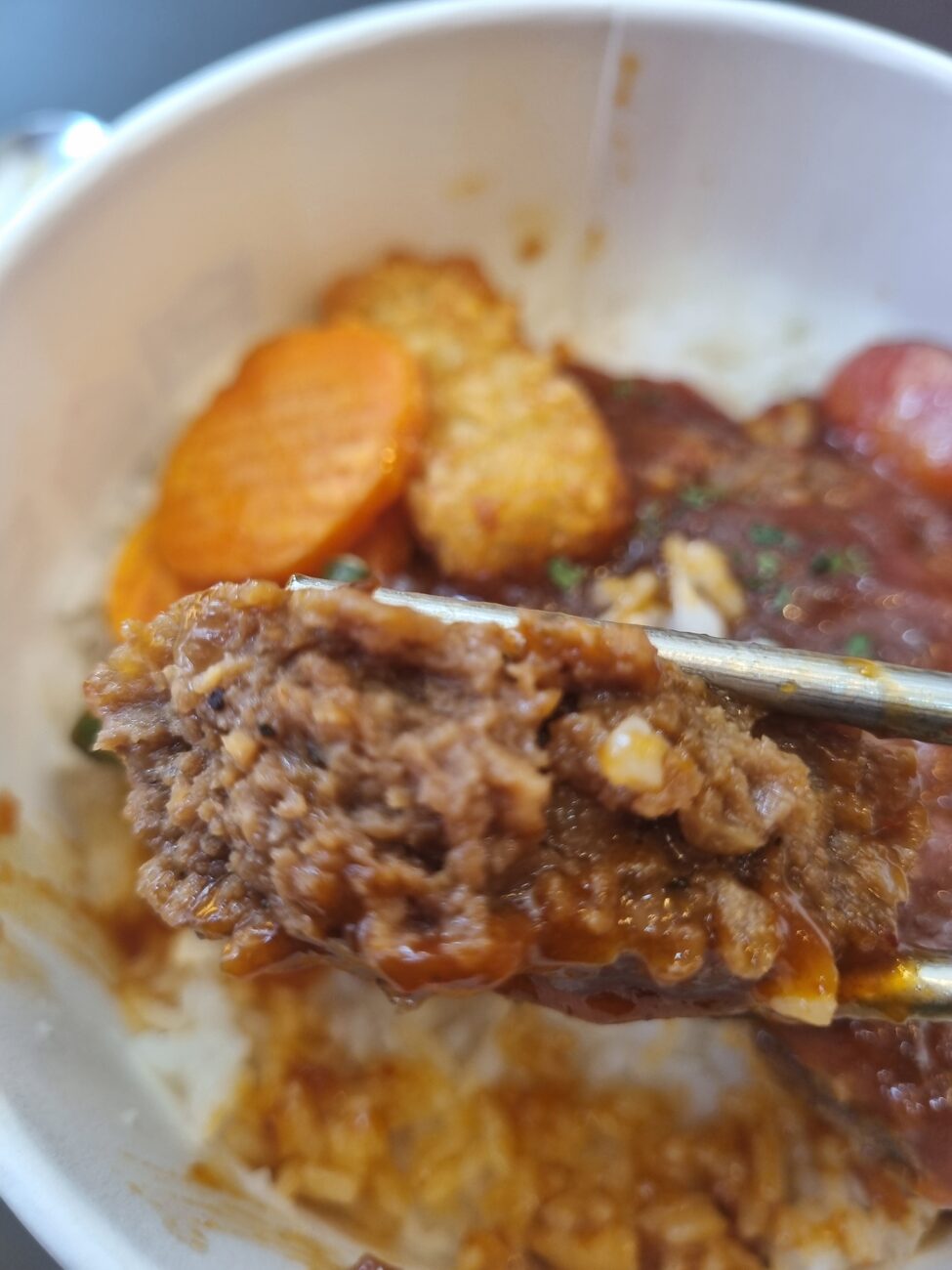
Thick and large — the size is not in question. The texture is soft and springy rather than dense or dry.
But it tastes exactly like the hamburg steak in Hansot’s other menu items. If you’ve eaten one, you’ve eaten this one.
The sausages — the best thing in the bowl
These are properly good. They snap when you bite, then release juice. Salty, smoky, well made.
Ironically, the smokiness I wanted from a chipotle sauce came from the sausages instead.
They’re just small, and there are only three or four. The best component is the one you get least of.
Everything else
Three hash brown pieces, some roasted carrot, a couple of green beans. All fine, none memorable. Eat the hash browns early — they go soft once the sauce reaches them.
The Thing Worth Knowing About Chain “New Menu” Items
Here’s what makes this bowl interesting as a case study.
Hansot launched two of these on the same day, 1 September:
Wang-galbi (king-ribs flavour) Hamburg Steak Bowl   ₩8,800
Chipotle Hamburg Steak Bowl                         ₩8,800
Identical build. Identical price. Only the sauce differs.
And that’s the standard playbook, not a criticism unique to Hansot.
New patty         →  new factory line, new supply chain to hundreds
                     of branches, new freezer space, staff retraining,
                     total loss if it fails

New sauce         →  same patty, one extra pouch
                     → a fraction of the cost and risk
A “new menu item” at a chain is very often a new sauce on an existing product.
Useful to know anywhere, not just in Korea. When something is labelled new, the question worth asking is which part of it is actually new.
⚠️ Allergens
Korean chain restaurants don’t print ingredient labels the way packaged food does.
| Halal? | ❌ No. Not certified, and the sausages and patty formulation are unverified |
| Vegetarian? | ❌ Beef/pork patty, sausages |
| Pork? | ⚠️ Likely — Korean hamburg patties and cocktail sausages commonly contain pork. Not confirmed |
| Gluten? | ⚠️ Sauce and hash browns almost certainly contain wheat |
| Full allergen info | Check Hansot’s official site or ask at the counter |
⚠️ I’m not going to guess at a chain’s formulation. If you avoid pork, assume this one is out unless you can confirm otherwise. There is a printed allergen notice posted in-store — I saw one at the entrance.
Calories: 934.3 kcal — this is a substantial meal, not a snack.
Should You Order It?
| Portion size | ★★★★☆ Genuinely filling |
| Sausages | ★★★★★ The highlight |
| Hamburg steak | ★★★★☆ Big, soft, unremarkable |
| Sauce | ★★★☆☆ Fine, not smoky |
| Novelty | ★★☆☆☆ New sauce, old patty |
| Value at ₩8,800 | ★★☆☆☆ Expensive *for Hansot* |
| Overall | ★★★☆☆ 3.0 / 5 |
On how I score: four stars means I’d order it again. Three means it’s well made and I probably wouldn’t. This is a three.
Go to Hansot. This isn’t the dish I’d send you to it for.
₩8,800 is near the top of Hansot’s range, and the whole reason to know about this chain is that it’s cheap. Their ₩5,000–6,000 items serve that purpose better.
But if you want one bowl with rice, meat, sausage and vegetables that isn’t spicy and isn’t unfamiliar — this does that job perfectly well.
📌 It’s a permanent menu item, not a limited run. No need to rush.
Good for
✅ A cheap, hot, filling meal that isn't spicy
✅ You're tired of unfamiliar food and want something recognisable
✅ Eating at your accommodation (takeaway)
✅ First time at a Korean lunch-box chain
Skip if
❌ You avoid pork (assume it's present)
❌ Vegetarian or vegan
❌ You want the cheapest thing on the menu — this isn't it
❌ You expect real chipotle smokiness
Not sure what to order?
Tell us what you can and cannot eat. We will match you to Korean dishes that actually fit.
Vegan, no pork, shellfish allergy, eating alone, hate chilli — 75 dishes, filtered honestly. We tell you when the answer is “almost nothing”.
Find my dish →