Quick Verdict
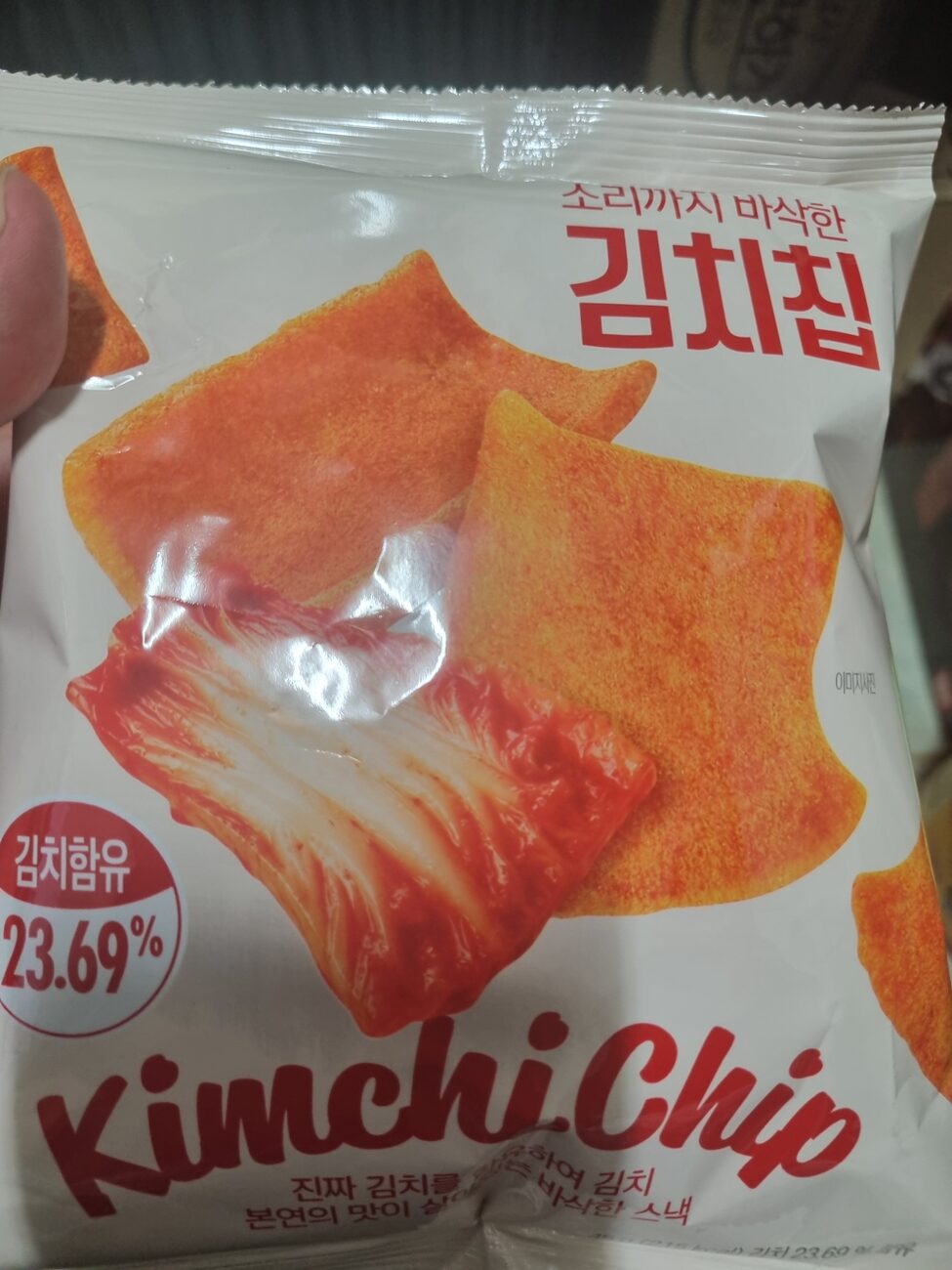
Kimchi-flavoured chips for ₩1,700 (about $1.20) at CU. The kind of thing you photograph and send to friends back home.
It tastes like kimchi pancake, not raw kimchi — and that’s the right call.
But the interesting part is what the bag actually is: the cracker isn’t Korean. It’s an Indonesian snack base with Korean seasoning on it. Once you know that, the texture makes complete sense.
What Is This?
김치칩 — *Kimchi Chip*
Say “gim-chi chip”. Made by Cosmos Confectionery, sold at CU.
If you’re taking snacks home as gifts, this is a strong candidate — it’s visibly, unmistakably Korean in a way that a chocolate bar isn’t.
Price in Won & Dollars
₩1,700  ≈  $1.20 / €1.10 / ¥180
45 g bag → ₩3,778 (~$2.70) per 100 g
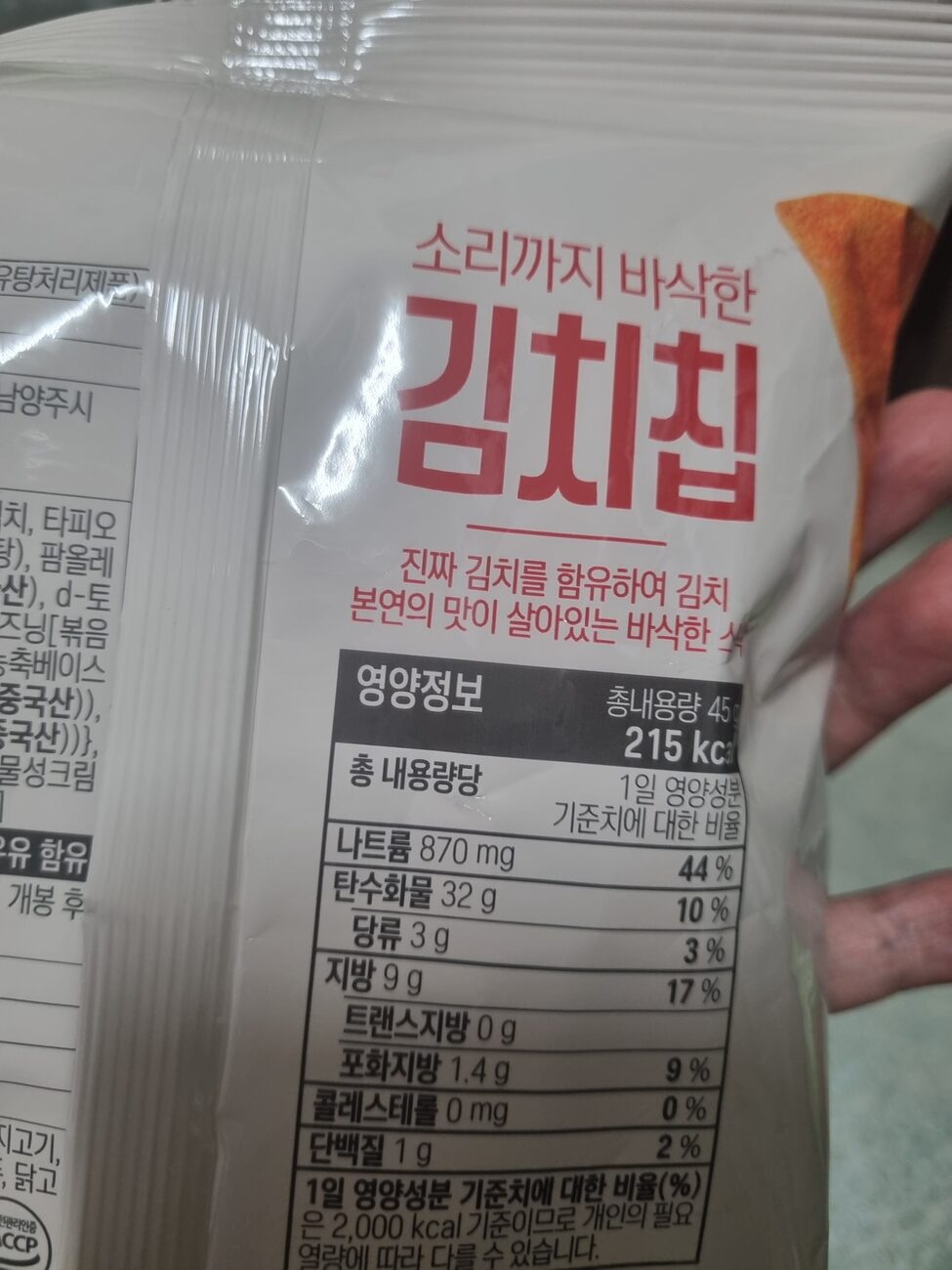
215 kcal per bag
⭐ What’s Actually Inside
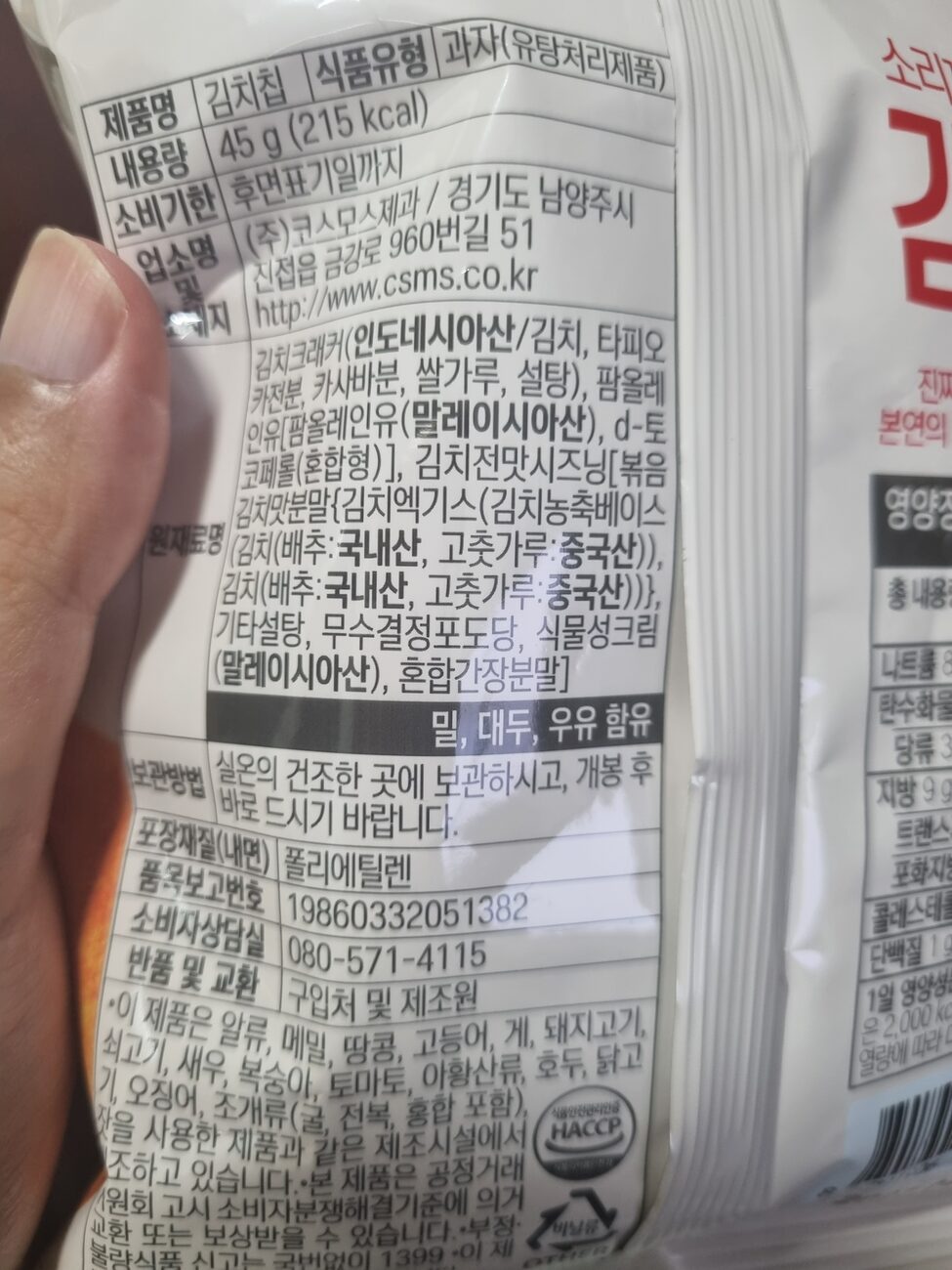
Korean labels list ingredients by quantity, most first:
1. Kimchi cracker (INDONESIA)
   — kimchi, tapioca starch, cassava flour, rice flour, sugar
2. Palm olein oil (Malaysia)
3. Kimchi-pancake seasoning
   — stir-fried kimchi powder, kimchi extract, kimchi concentrate base
4. Other sugars
5. Anhydrous dextrose
6. Vegetable cream (Malaysia)
7. Mixed soy sauce powder
Origins are split across four countries:
| Component | From |
|---|---|
| Cracker base | Indonesia |
| Palm olein oil | Malaysia |
| Vegetable cream | Malaysia |
| Napa cabbage | Korea |
| Chili powder | China |
Allergens
Wheat, soy, milk
Dietary check
| Halal? | ⚠️ No certification. No obvious animal ingredients, but the seasoning base isn’t fully specified. Check for a mark if you need certainty |
| Vegetarian? | ⚠️ Likely, but kimchi is often made with fish sauce or shrimp paste and the label doesn’t say |
| Vegan? | ❌ Contains milk (vegetable cream) |
| Pork? | Not listed |
⚠️ On the kimchi question: traditional kimchi usually contains fermented fish sauce (jeotgal) or salted shrimp. This label doesn’t break down the kimchi component. If you’re strictly vegetarian, treat it as uncertain.
The number to know
| Per bag (45 g) | % Daily Value | |
|---|---|---|
| Calories | 215 kcal | — |
| Sodium | 870 mg | 44% |
| Carbohydrates | 32 g | 10% |
| Sugars | 3 g | 3% |
| Fat | 9 g | 17% |
| Saturated fat | 1.4 g | 9% |
| Trans fat | 0 g | — |
Sodium is 44% of a day’s intake in a 45 g bag. Not unusual for a savoury snack, but worth knowing before you eat the whole thing.
How It Tastes
It doesn’t taste like raw kimchi. It tastes like kimchi-jeon (김치전) — the pan-fried kimchi pancake Koreans eat with makgeolli.
That’s a smart choice. Raw kimchi flavour is sour and funky in a way that doesn’t scale to a chip. The fried-pancake angle keeps the recognisable notes — chili, garlic, fermented tang — and adds a toasty depth.
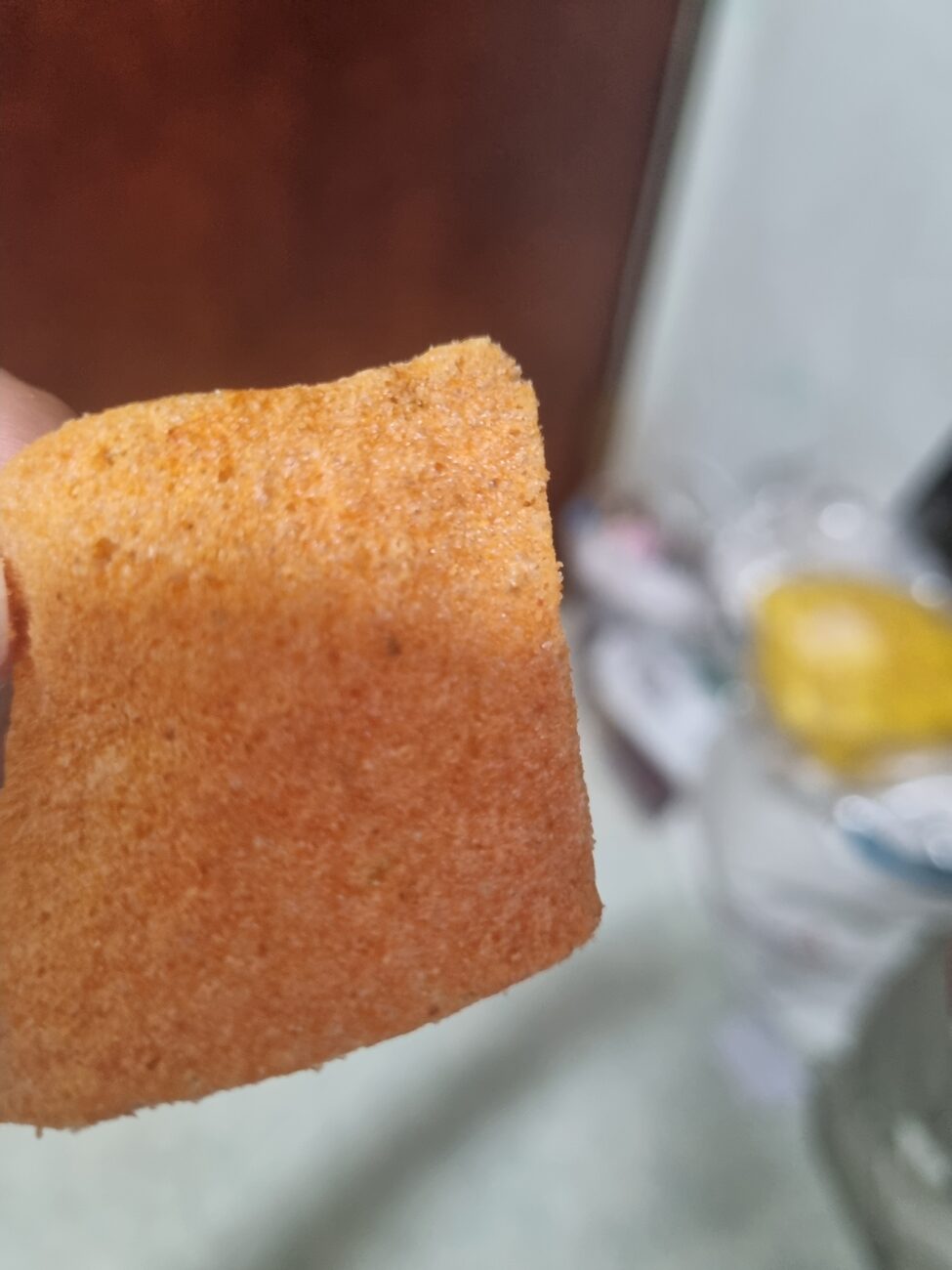
The texture is where it gets interesting. It’s not a potato chip. It’s light, airy, and it shatters — it puffs rather than snaps.
That’s not a Korean chip texture. And there’s a reason.
What This Actually Is
Look at ingredient #1: kimchi cracker, made in Indonesia, from tapioca starch and cassava flour.
That’s krupuk.
Krupuk (kerupuk) is an Indonesian and Southeast Asian snack tradition — a starch-based cracker, usually tapioca or cassava, often with shrimp or fish worked in. It’s dried into hard discs, then deep-fried, at which point it expands to several times its original size.
That expansion is the whole point. It’s what creates the airy, brittle, melt-on-the-tongue texture that starch chips have and potato chips don’t.
Potato chip  →  sliced, fried, dense and crisp
Krupuk       →  starch dough, dried, then puffed in oil
                → light, airy, shatters
So this product is: an Indonesian krupuk base, coated in Korean kimchi-pancake seasoning.
The kimchi is real — Korean napa cabbage, right there in the origin table. The cracker underneath it is from a completely different snack tradition.
That’s not a criticism. Southeast Asian starch crackers are an efficient, well-established platform for bold seasoning. Korean manufacturers use them constantly.
But it does explain why the texture felt unfamiliar if you were expecting a Korean chip.
Should You Buy It?
| Kimchi flavour | ★★★★☆ Reads as kimchi-jeon, and that works |
| Texture | ★★★☆☆ Airy — depends what you expected |
| Novelty | ★★★★★ Unmistakably Korean as a gift |
| Value at ₩1,700 | ★★★☆☆ Small bag |
| Overall | ★★★☆☆ 3.0 / 5 |
Worth trying once, and worth buying as a souvenir.
It’s not a snack you’ll crave, but it does the job it’s there for: it tastes like something you’d only find in Korea, and it explains itself in one bite.
Good for
✅ Souvenirs and gifts — instantly recognisable as Korean
✅ You like kimchi-jeon
✅ Trying something you genuinely can't get at home
✅ Light, airy snack textures
Skip if
❌ You want a substantial potato chip
❌ You're watching sodium
❌ You're strictly vegetarian (the kimchi isn't broken down)
❌ You dislike fermented flavours
Not sure what to order?
Tell us what you can and cannot eat. We will match you to Korean dishes that actually fit.
Vegan, no pork, shellfish allergy, eating alone, hate chilli — 75 dishes, filtered honestly. We tell you when the answer is “almost nothing”.
Find my dish →